A recirculation pump keeps hot water moving so it reaches the tap in seconds instead of running cold water down the drain. Homes with a dedicated return line mount the pump at the water heater. Homes without one use an under-sink crossover kit that sends cooled water back through the cold line from the farthest fixture. Run it on a timer or on demand rather than continuously: continuous recirculation can waste more energy in heat loss from the pipes than it saves in water.
The two system types
| Dedicated return line | Under-sink crossover | |
|---|---|---|
| Plumbing needed | A separate hot-water return pipe to the heater | None; uses the existing cold line |
| Pump location | At the water heater | At the heater, with a crossover valve under the farthest sink |
| Side effect | None | The cold tap at that sink runs lukewarm briefly |
| Best for | New builds, homes already plumbed with a return | Retrofits in existing homes |
Timer, thermostat or on demand
- Continuous: instant hot water always, but pipes lose heat all day; the least efficient option.
- Timer: runs during morning and evening peaks only; a good balance.
- Thermostatic (aquastat): runs until the return water reaches a set temperature, then stops; saves energy versus continuous.
- On demand: a button, motion sensor or app starts the pump for a minute before you use the tap; the most efficient.
Running costs
Most residential recirculation pumps draw roughly 10 to 50 W, so the pump's own electricity is small. The bigger cost is heat lost through pipe walls while the loop stays hot. Insulating the hot and return lines reduces that loss substantially and is worth doing alongside any recirculation install.
Installation notes
- Use a pump rated for potable water: bronze or stainless, not cast iron.
- Put the crossover valve under the sink farthest from the heater.
- Fit check valves as the instructions specify so water does not flow backwards when the pump is off.
- Insulate exposed hot and return lines.
Products mentioned
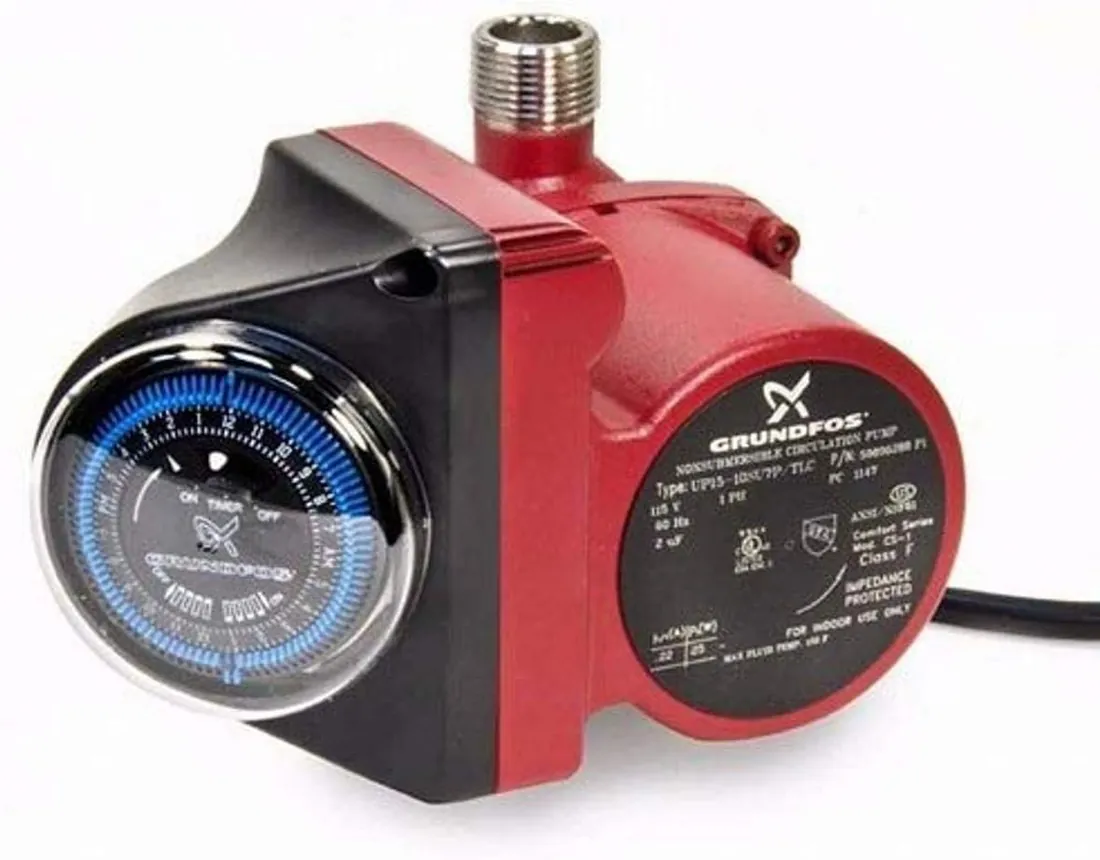
Grundfos Comfort System 595916 Recirculation Pump
Timer, 0-9 GPM.
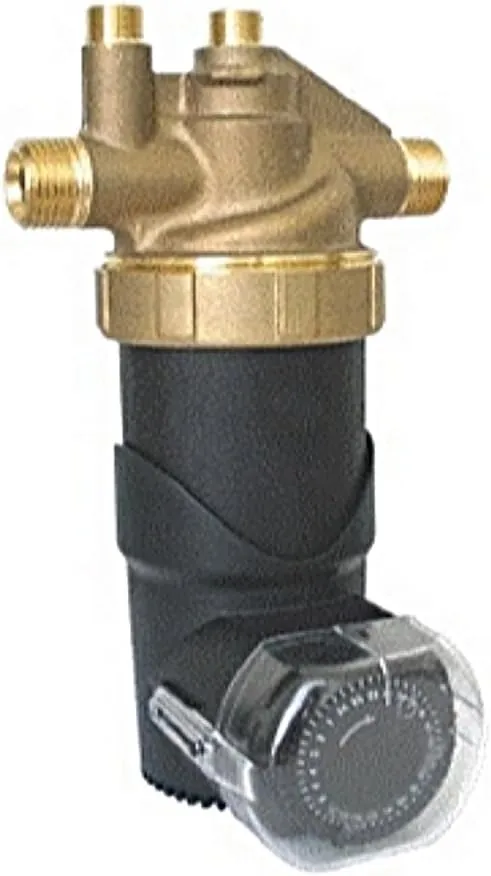
Laing AutoCirc LHB08100092 Recirculation Pump
14 W, 24-hour timer.
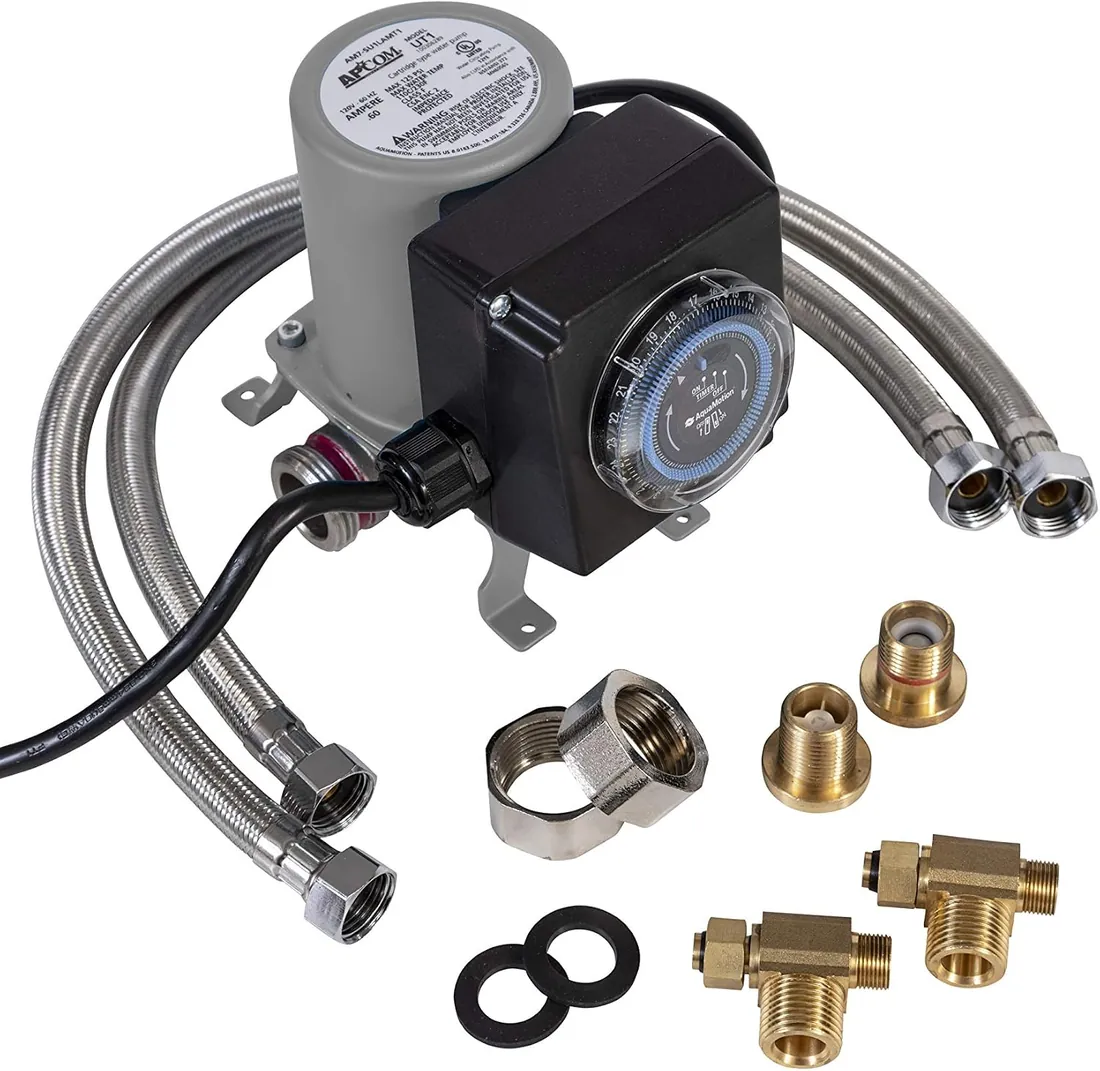
A. O. Smith APCOM UT1 Recirculation Pump
Thermostat plus timer.