A sump pump has to do two things: lift water to the discharge height and move it fast enough to keep up with the water coming in. Add the vertical lift to the friction loss in the pipe and fittings to get total dynamic head, then choose a pump whose flow at that head beats your inflow. For most basements with a lift under about 10 ft, a 1/3 HP pump is enough.
Total dynamic head
Vertical lift is the height from the pump to the highest point of the discharge pipe, usually where it leaves the rim joist. Friction adds to it: every foot of pipe, elbow and check valve costs a little pressure. A 9 ft lift with 25 ft of 1-1/2 in pipe and a few elbows is often around 11 to 12 ft of total head.
Our sizing calculator adds the friction for you from your pipe size, run length and fittings.
How much water comes in
Time how long the water takes to rise from the pump's off point to its on point during heavy rain. An 18 in round basin holds about 1.1 gallons per inch of depth, so a 6 in rise is roughly 6.6 gallons. Divide by the minutes it took to get gallons per minute of inflow.
The basin cycle calculator does the arithmetic for other basin sizes.
Choosing horsepower
| Situation | Typical choice |
|---|---|
| Lift under about 10 ft, normal inflow | 1/3 HP |
| Lift 10 to 15 ft or heavy inflow | 1/2 HP |
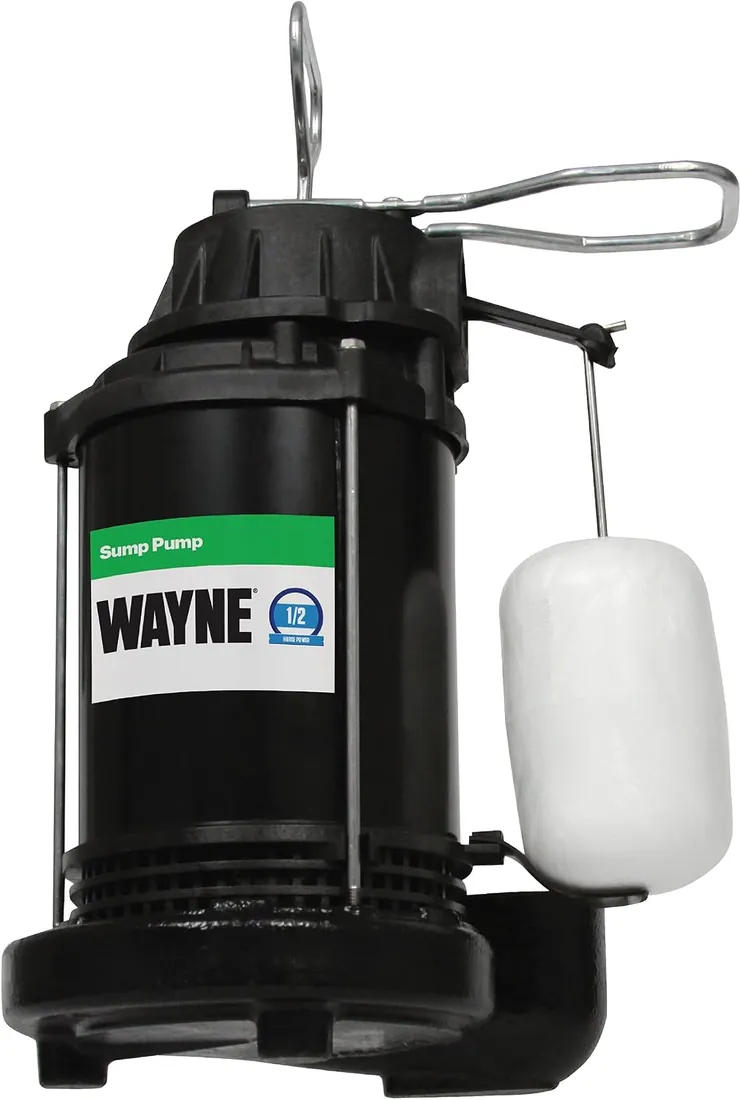
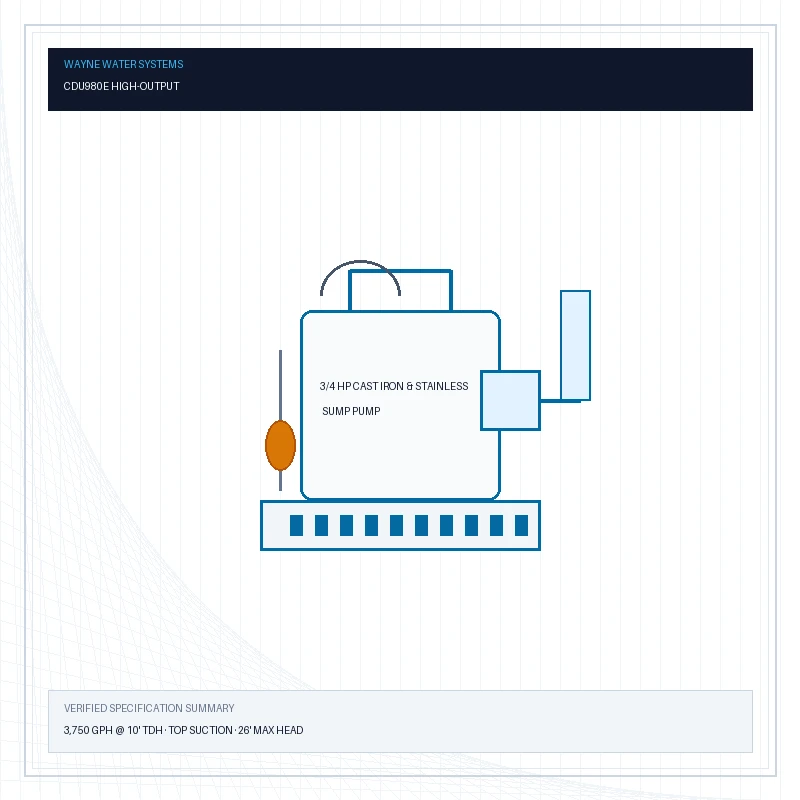
| High water table, long or high discharge | 3/4 to 1 HP |
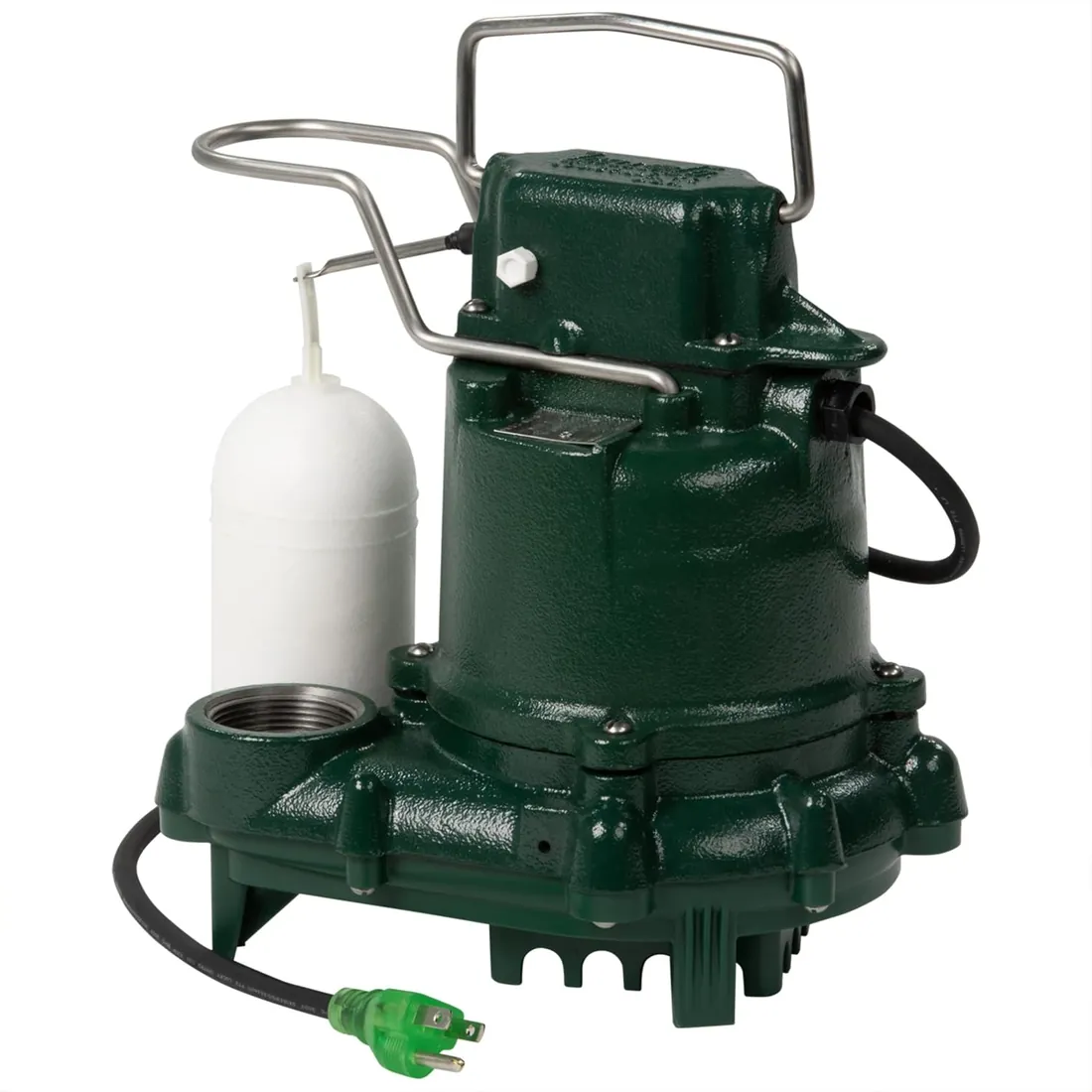
Bigger isn't automatically better: in a small pit a large pump empties it in seconds and short-cycles, which wears the switch. Compare the 1/3 HP Zoeller M53 with the 3/4 HP Wayne CDU980E to see the range.