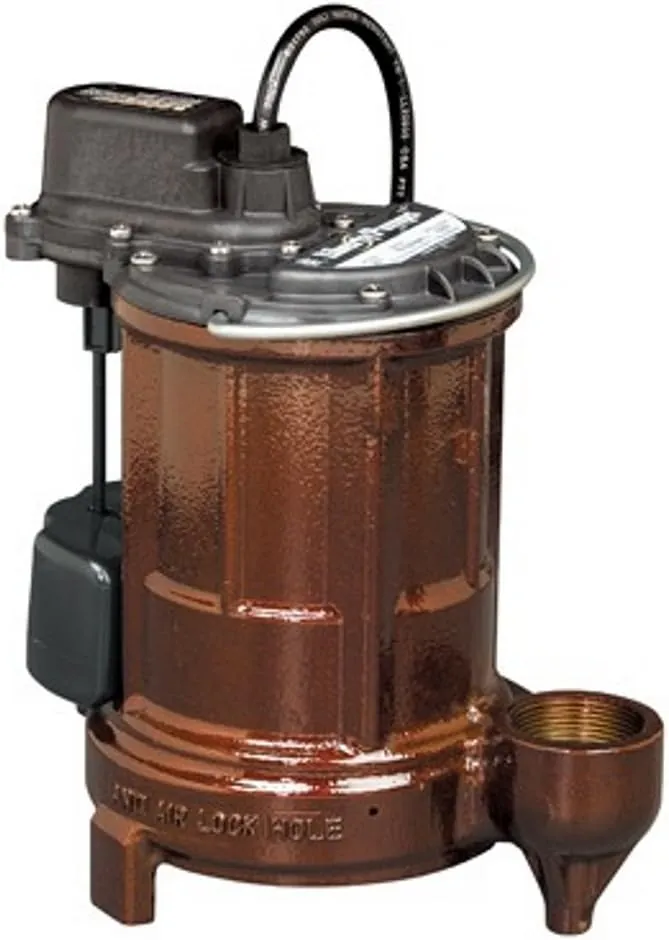
Choose the Liberty 257 when the pit is as narrow as 10 in, you want a one-piece cast iron body with a magnetic float, and a 10 ft cord helps reach the outlet.
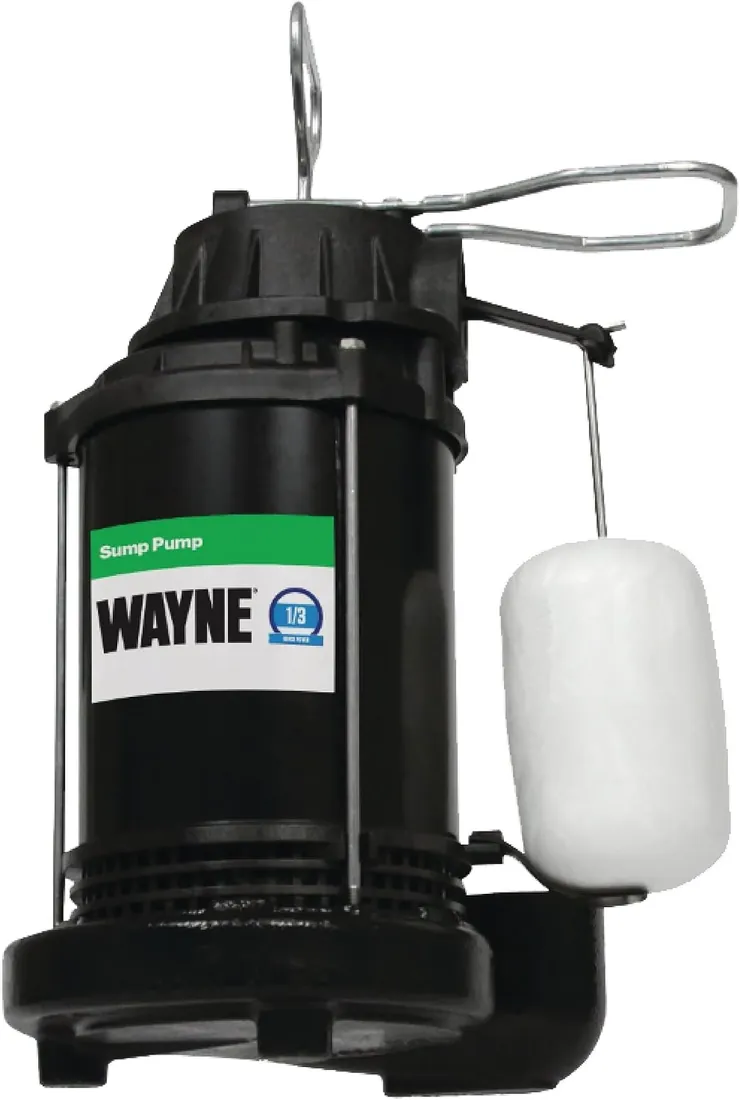
Choose the Wayne CDU790 when the pit collects silt, the lift is on the high side, and you want flow figures at every height plus replaceable float kits.
Key specifications
| Specification | Liberty Pumps 257 Sump Pump | Wayne CDU790 Sump Pump |
|---|---|---|
| Horsepower | 1/3 hp | 1/3 HP |
| Motor | Split capacitor, 115 V, 5.2 A | Split capacitor, 120 V, oil-filled |
| Max flow | 50 gpm (retail listing figure) | 77 GPM (4,600 GPH) |
| Flow at 10 ft | Curve published as a graphic only | 51 GPM (3,060 GPH) |
| Flow at 20 ft | Curve published as a graphic only | 20 GPM (1,200 GPH) |
| Max head | 21 ft (retail listing figure) | Not stated; still pumping at 20 ft |
| Intake | Bottom intake, vortex impeller, 1/2 in solids | Top suction, glass-reinforced polycarbonate impeller |
| Switch | Vertical magnetic float, on 7 in, off 4 in | Vertical float with guard, on 9 in, off 4 in |
| Smallest basin | 10 in diameter | 11 in diameter |
| Housing | One-piece class 25 cast iron | Epoxy-coated steel with cast iron volute |
| Bearings | Upper and lower ball bearings | Upper and lower ball bearings in oil |
| Cord | 10 ft quick-connect | 8 ft |
| Weight | 21 lb | 22 lb |
| Warranty | 3-year limited | 3-year limited |
Figures: Liberty Pumps 250-Series engineering specification 250_P1 R04/2025; Wayne CDU790 product page; Amazon listing for Liberty Pumps 257; Wayne CDU790 and CDU800 sell sheet; Liberty Pumps 250-Series sales literature LLIT002500; Liberty Pumps installation manual 7035000R (250, 280 and 290 series).
Scorecard
| Criterion | Edge | Why |
|---|---|---|
| Published capacity data | Wayne CDU790 Sump Pump | Wayne prints flow at 0, 5, 10, 15 and 20 ft; Liberty shows its 250-Series curve only as a chart image. |
| Dirty or silty pits | Wayne CDU790 Sump Pump | The CDU790 draws water from the top of the pump, away from grit that settles on the pit floor. |
| Narrowest pit | Liberty Pumps 257 Sump Pump | Liberty allows the 257 in a 10 in basin; Wayne asks for 11 in and an inch of clearance beside the float. |
| Housing material | Liberty Pumps 257 Sump Pump | The 257 body is one casting of cast iron, while the Wayne wraps its motor in coated steel. |
| Warranty | Even | Each brand covers these models for three years from the purchase date with a receipt. |
Why these two models stand for the brands
Searches for Liberty against Wayne rarely name a model, so we compare the pumps each brand is best known for at the common 1/3 HP size. Liberty calls the 257 its best-selling sump pump and a classic. Wayne's CDU790 is its everyday cast iron and coated steel basement pump, sold widely and covered by Wayne's three-year terms.
Both are automatic, plug-in pumps with a 1-1/2 in discharge and a vertical float, so either can replace the other in most basements. The differences below are the ones a homeowner will actually notice: where the water enters, how much room the switch needs, what the motor is wrapped in and what the makers publish.
Bottom intake against top suction
The Liberty 257 pulls water in from below through a screened bottom intake and a vortex impeller that passes solids up to half an inch. That layout can empty the pit lower, but it sits right where sand and fine gravel collect. Liberty sells a pump stand that lifts the intake about 2-1/2 in off the floor for exactly that reason.
Wayne designs the CDU790 to take water in from the top. Debris that settles in the pit stays below the intake, and Wayne says the layout also prevents air lock, so no weep hole is required. In an old clay or gravel-floored pit, that design is a real advantage. In a clean plastic liner, it matters much less.
What each maker tells you about flow
Wayne publishes a full table for the CDU790: 4,600 GPH at the start of the curve, 3,810 GPH at 5 ft, 3,060 GPH at 10 ft, 2,220 GPH at 15 ft and 1,200 GPH at 20 ft. In gallons per minute that is 77, 64, 51, 37 and 20.
Liberty's current 250-Series documents show the curve only as a graphic, and we do not read figures off a chart image. Its retail listing gives 50 gpm and 21 ft as maximums. What we can say is that the Wayne is still moving 20 GPM at 20 ft, which is beyond the listed 21 ft ceiling of the 257 by very little. For lifts near or above 15 ft, the documented Wayne curve is the safer bet; for ordinary lifts, both are comfortable. Use the sizing calculator to place your own head.
Switch levels and pit room
Liberty's vertical magnetic float uses a magnet to work the switch, so no switch arm passes through a rubber boot. Under manual revision R the 257 starts at 7 in and stops at 4 in, and the levels are fixed. Liberty says it can work in a pit as small as 10 in across, though 14 in or more gives longer, gentler cycles.
The CDU790 float sits in its own guard and starts at about 9 in, stopping at about 4 in. Wayne asks for a basin of at least 11 in and an inch of clear space between the switch and the wall. The Wayne's later start means more water removed per cycle, while the Liberty reacts sooner and holds the water lower. Our basin and cycle guide shows how pit width changes the number of starts.
Iron casting against coated steel
Liberty casts the 257 body as a single piece of class 25 cast iron, which removes the seal ring between motor and volute, and finishes it in powder coat. Stainless steel fasteners and shaft complete it. The motor runs at 5.2 A on 115 V, drawing little current for its size.
Wayne wraps the CDU790 motor in epoxy-coated steel over a cast iron volute and seal plate, with John Crane carbon and ceramic seals and ball bearings in an oil bath that Wayne promotes for quiet running. The two pumps weigh almost the same, about 21 lb for the Liberty and 22 lb for the Wayne. Cast iron holds up better if the coating is scratched; coated steel is lighter for the same stiffness.
Cords, parts and upkeep
The 257 ships with a 10 ft quick-connect cord that can be swapped without opening the motor, and a 25 ft version is sold as the 257-2. The CDU790 has an 8 ft cord. Wayne sells float and float-top replacement kits for the CDU790, so a worn switch can be renewed without replacing the pump.
Wayne suggests inspecting the pump three to four times a year for movement and debris on the float. Liberty recommends checking that the anti-airlock hole in the volute stays clear, and an extra 1/8 in hole in the discharge pipe if air lock is a problem. Both need a check valve and both carry three-year limited warranties tied to a dated receipt.
Who each one fits
The Liberty Pumps 257 Sump Pump fits if
- Your pit is narrow, down to 10 in across, with little room beside the pump.
- You prefer a one-piece cast iron body over coated steel.
- The outlet is a few feet away and the 10 ft quick-connect cord reaches it.
- Water in the pit is clean, so a bottom intake will not pull in grit.
The Wayne CDU790 Sump Pump fits if
- The pit floor collects silt, sand or gravel that could clog a bottom intake.
- You want flow figures at every lift printed by the maker before you buy.
- The discharge climbs toward 15 to 20 ft before leaving the house.
- You would rather replace a float kit than a whole pump when the switch wears.
Questions readers ask
Is Liberty or Wayne the better sump pump brand?
Both build reliable 1/3 HP basement pumps with three-year warranties. Liberty leans on cast iron and its magnetic float; Wayne leans on top suction and a published curve. Choose by your pit width, how dirty the water is and how high the pipe climbs.
Which pumps more water, the Liberty 257 or the Wayne CDU790?
Wayne documents 51 GPM at 10 ft and 20 GPM at 20 ft for the CDU790. Liberty shows the 257 curve only as a graphic, and its listing gives a 50 gpm maximum. On the published numbers, the Wayne has the better documented capacity.
Can I replace a Wayne CDU790 with a Liberty 257?
Usually. Both use a 1-1/2 in discharge, so the existing pipe and check valve stay. The 257 starts at 7 in rather than 9 in, which suits a lower inlet pipe, and it fits a slightly narrower pit than the Wayne.
Do these pumps need a weep hole?
Wayne says the CDU790's top-suction design needs none. Liberty builds an anti-airlock hole into the 257 volute and suggests an extra hole no larger than 1/8 in in the discharge pipe if air lock happens.
Final verdict
Between these brands, the decision is about your pit rather than the logo. The Liberty 257 suits narrow, clean pits and owners who want a one-piece iron body and a longer cord. The Wayne CDU790 suits silty pits and higher lifts, where its top suction and fully published curve give more confidence. Measure the basin and the lift first.