A beeping Basement Watchdog is telling you about one of four things: AC power is off, the backup pump has run, the battery is low or old, or the pump or its fuse has failed. Basement Watchdog says to replace a battery more than five years old, and its maintenance-free battery carries a one-year warranty. Most alarms can be silenced for a day; a low-battery alarm cannot.
Why your Basement Watchdog is beeping
Basement Watchdog's troubleshooting guides for the Special CONNECT and the Emergency group every alarm under a handful of causes. Read the light or display on the controller first, then match it to the table. Many alarms are not faults at all but reports: the backup pump ran because the main pump could not keep up, or the power went out and the system did its job.
| Alarm group | Likely cause | What to do |
|---|---|---|
| Power failure | Outage, tripped breaker, unplugged cord | Check outlet and breaker; the pump runs on battery meanwhile |
| Pump was activated | Main pump failed, stuck float or heavy inflow | Inspect or replace the main pump or its float |
| Battery problem | Corroded or loose terminals, old or flat battery | Clean and tighten; replace an old battery |
| Pump failure | Backup pump unplugged, clogged or broken | Plug in, clean the strainer or replace the pump |
| DC fuse blown | Clogged pump, exposed wires, air lock | Clear the pump and replace the fuse |
| Water will not leave the pit | Missing or faulty check valve, frozen pipe | Fix the valves, clear the pipe, drill the weep hole |
Figures: Basement Watchdog Special CONNECT troubleshooting guide; Basement Watchdog Emergency troubleshooting guide.
What the lights mean
On the Emergency model, the green system light should always flash; it shows the controller has power from the outlet or the battery. The battery light and alarm come on when the controller detects less than half an hour of continuous pumping power left, or a defective battery, and that alarm cannot be silenced. Other lights tell you whether AC power is missing or whether the main pump has failed.
The manual uses those lights together. If the battery light comes on with the power light, the outlet has no power and the battery will recharge once it returns. If it comes on with the pump-activated light, the backup has been running a lot and the main pump may need attention. If the battery light is alone, the terminals may be corroded and not charging. The Special CONNECT and Big Combo controllers show the same information on a display panel.
How long the battery lasts
There are two questions here: how long a charged battery keeps the pump running, and how many years the battery lasts. For runtime, Basement Watchdog lists 40 hours for the Big Dog CONNECT, 48 hours for the Special CONNECT and 80 hours for the Emergency on its maintenance-free battery, based on a 10% duty cycle. Heavy inflow shortens that; the larger pumps use more power per hour of pumping. The battery backup runtime calculator lets you estimate for your own pit.
For service life, the Emergency manual tells owners to replace a battery that is more than five years old when the battery alarm sounds, and to have a younger battery checked with a load test at a battery or auto parts store first. The BW-27AGM maintenance-free battery carries a one-year warranty when used with a Basement Watchdog system. Wet-cell batteries need water added every four to six months, and the FAQ says a battery that runs low every few weeks is ready to retire.
Recharging and 'battery low' on a new battery
Recharge time depends on the charger. Basement Watchdog says the Big Dog's 20 A charger restores a flat battery in about 6 hours, the Special's 1.6 A charger can take up to 3 days, and the Emergency's small trickle charger can take several days. A brand-new battery may show a low-battery message at first; the maker asks owners to allow about 24 hours to reach full charge before calling for help.
If you use another brand of battery, check compatibility. The FAQ notes that systems made before 2014 may give false alarms with maintenance-free batteries, and that older units with a fluid sensor rod need the rod fastened to the positive terminal to stop a false fluid-low alarm. During a long outage, the Emergency manual warns that a battery alarm while pumping leaves at least half an hour of continuous pumping.
Silencing the alarm
On the Big Dog, Special and Big Combo systems, press and hold the reset button for about five seconds to silence the alarm for 24 hours. On the Emergency, slide the alarm switch on the front panel. Not every alarm can be silenced: the low-battery alarm stays on because the basement is at risk. If none of the listed fixes clears an alarm, the Special's guide says to disconnect the system from the outlet and battery, reconnect it and press reset.
- Read which light or message is showing before silencing anything.
- Hold reset about five seconds, or slide the switch on the Emergency.
- Fix the cause listed for that alarm in the table above.
- If it returns, disconnect outlet and battery, reconnect, then press reset.
Installation details that cause false alarms
Many repeat problems come from installation. The dual float switch belongs about six inches above the normal water line, tied firmly to the discharge pipe; the second float takes over if the first sticks, and the controller keeps the pump running briefly after the water drops. Keep the float cord away from the AC power cord, which Basement Watchdog says can cause false activation.
If the backup ties into the main pump's pipe, you need two check valves, both below the Y connector, and a 3/16 in hole drilled about 3 in above the pump at a downward angle to prevent air lock. The maker prefers a separate discharge straight outside, so a bad check valve cannot stop either pump. Plug the controller into a surge protector of at least 1500 joules, but never the main pump.
Common mistakes
- Silencing alarms without reading which light or message caused them.
- Leaving a battery in service well past five years.
- Wrapping the float switch cord around the main pump's power cord.
- Tying into the main discharge pipe with only one check valve.
- Plugging the main AC sump pump into the surge protector.
- Expecting a new battery to show full charge within the first day.
Products that fit
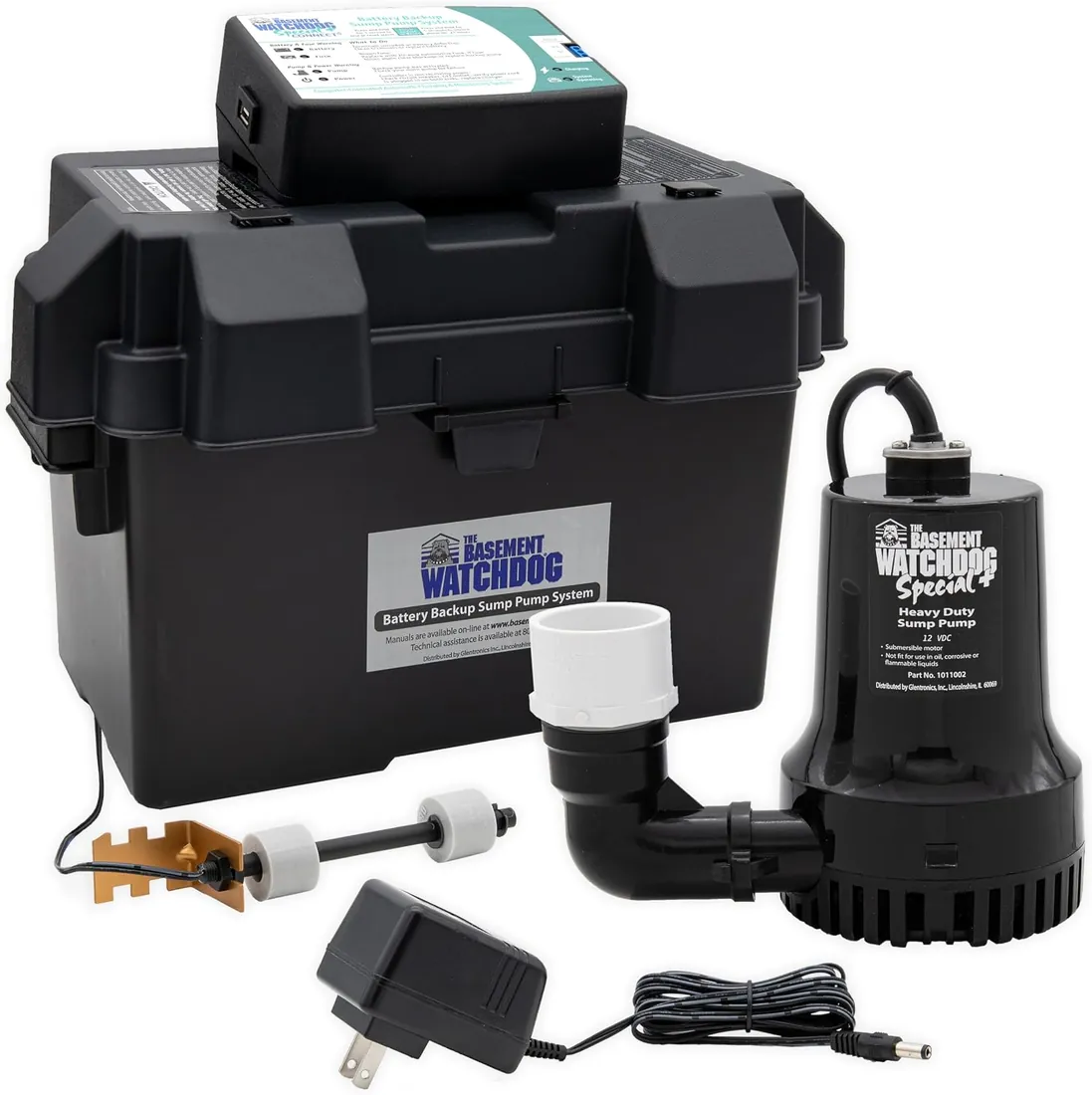
Basement Watchdog Special CONNECT (BWSP) Battery Backup Sump Pump
Display controller and 1.6 A smart charger; maker runtime 48 hours on a maintenance-free battery.
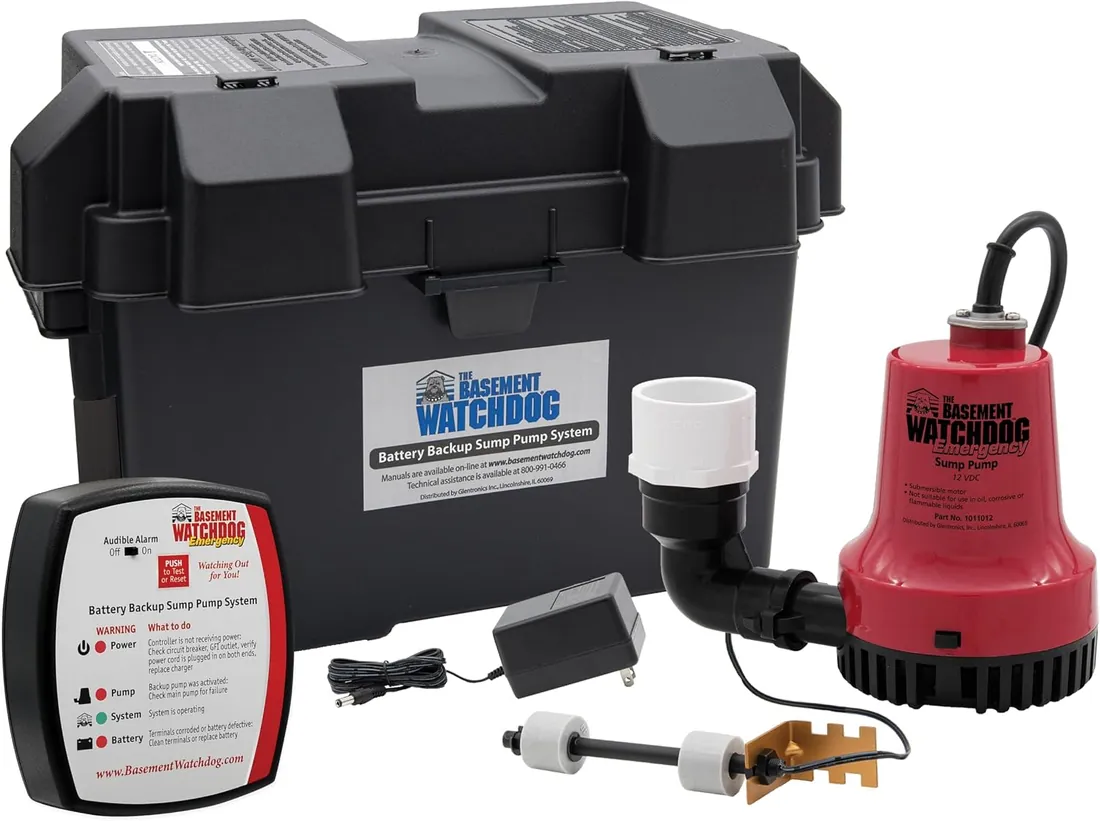
Basement Watchdog Emergency (BWE) Battery Backup Sump Pump
Entry backup with a trickle charger, front-panel lights and a slide alarm switch.
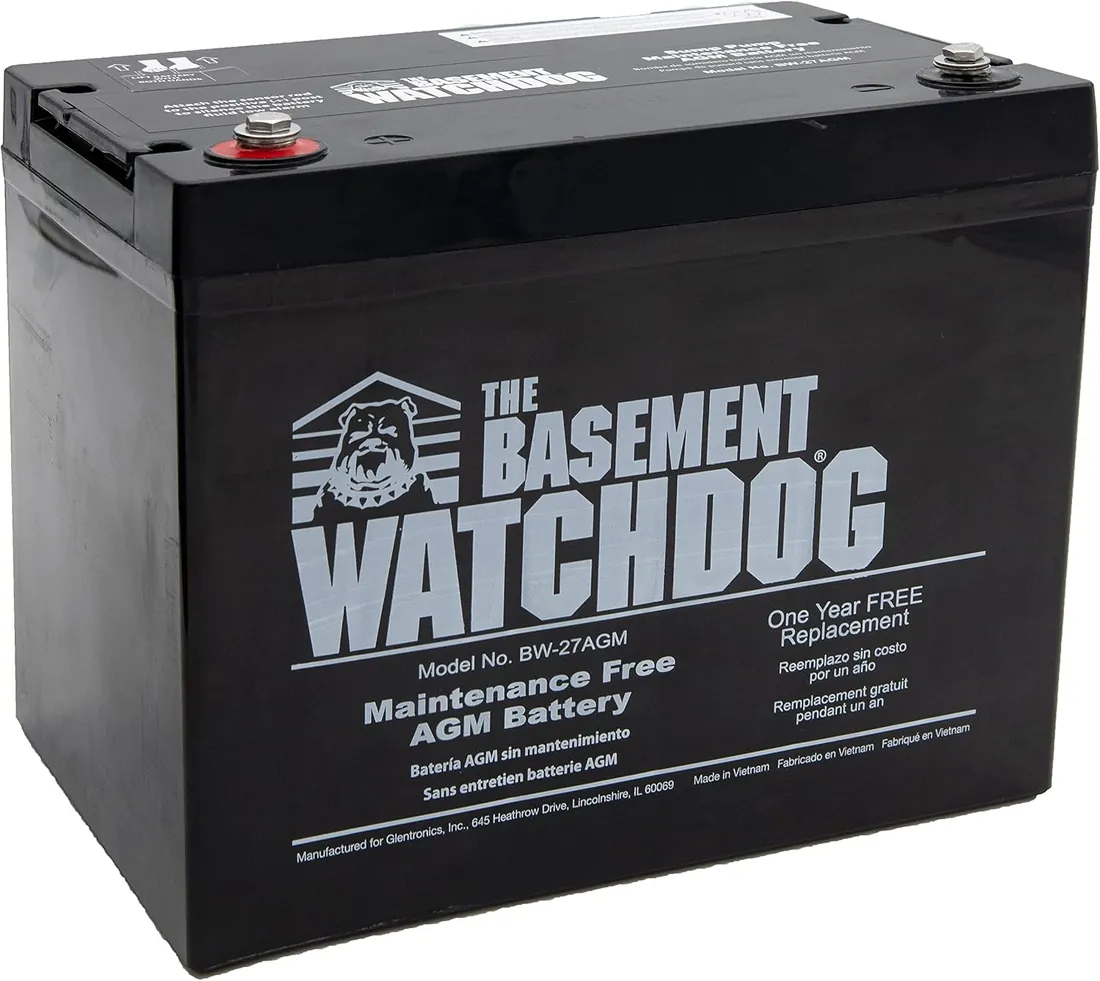
Basement Watchdog BW-27AGM Standby Battery
Maintenance-free standby battery with a one-year warranty on Watchdog systems.
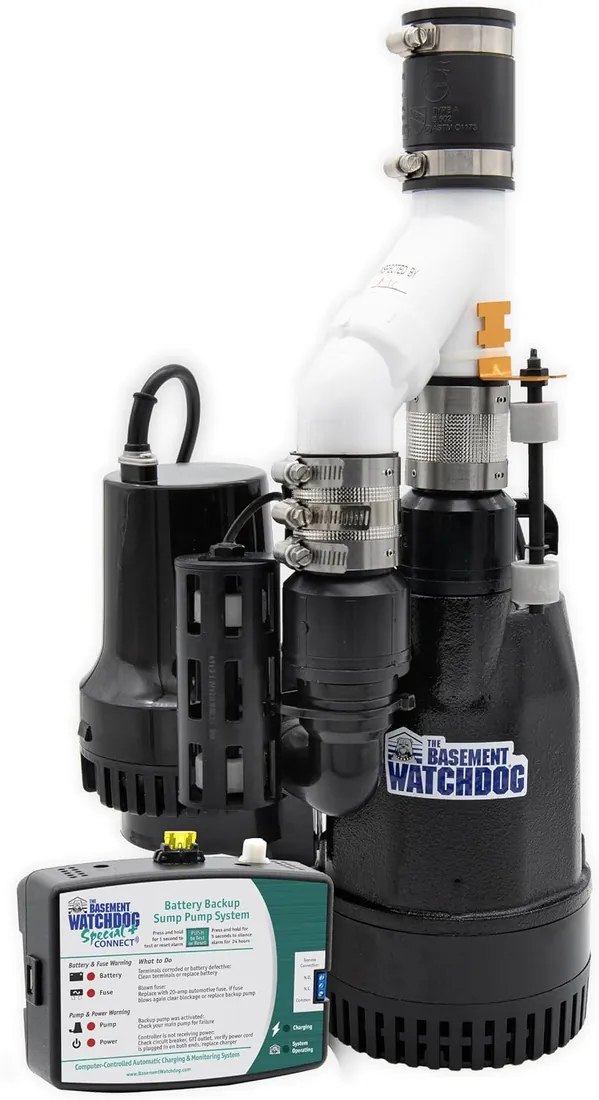
Basement Watchdog CITS-50 Combination Primary and Backup Sump Pump
Combo of primary and backup pumps sharing one monitored controller.
Questions readers ask
How long does a Basement Watchdog battery last?
On a full charge, the maker lists 40 to 80 hours of runtime depending on the system, at a 10% duty cycle. In years, the Emergency manual says to replace a battery more than five years old when the battery alarm sounds.
Why does my Basement Watchdog keep beeping after the power comes back?
After long pumping the battery may be very low, and the alarm continues until it recharges past half an hour of pumping. Charging can take hours on the Big Dog and up to several days on the Special or Emergency.
Can I use a different battery in a Basement Watchdog?
Yes, but check compatibility. The maker says current systems accept maintenance-free batteries, while units made before 2014 may give false alarms with them. Older systems with a fluid sensor rod need it attached to the positive terminal.
Why did my Basement Watchdog backup pump turn on?
Usually the main pump failed, its float stuck, the power went out or inflow outran it. The maker also lists a stuck or misinstalled check valve and a frozen discharge pipe. Check the main pump first.