Most beeping means one of three things: AC power to the charger is off, the battery is low or worn out, or the backup pump has run because the main pump failed or fell behind. Read the warning light first, fix that cause, then reset. On a Basement Watchdog Special, holding RESET for five seconds silences most alarms for 24 hours; the low-battery alarm cannot be silenced.
Why the backup is beeping
Battery backup controllers watch three things: whether AC power reaches the charger, the state of the battery, and whether the backup pump has had to run. Each has its own light and alarm, and the light tells you which one tripped. Silencing the sound without reading the light is the usual way a backup ends up dead when it is needed.
On the Basement Watchdog Special CONNECT, some lights clear themselves once the problem is fixed and others need the RESET button. Wayne's ESP25n uses tones rather than a constant alarm: a single 30-second tone when power is lost, a three-second tone every time the backup pump starts, and chirping with a red light when the battery needs attention.
| System | Signal | Meaning | Can it be silenced? |
|---|---|---|---|
| Basement Watchdog Special | Battery light and alarm | Under half an hour of pumping left, or battery defective | No |
| Basement Watchdog Special | Power light (bottom) | Charger not receiving AC power | Yes, 24 hours |
| Basement Watchdog Special | Pump light | Backup pump has run | Yes, 24 hours |
| Wayne ESP25n | Single 30-second tone | AC power to the system interrupted | Clears when power returns |
| Wayne ESP25n | Chirp with red light | Battery may need attention or replacement | Not stated in the manual |
Figures: Basement Watchdog Special CONNECT instruction manual; Wayne ESP25n operating instructions and parts manual 600005W-001 J.
Power alarm: the charger has lost AC
If the power light is on and the house has power, the fault is between the outlet and the controller. Basement Watchdog's troubleshooting sheet lists a failed outlet, a blown fuse or tripped breaker, and an unplugged cord, and suggests trying another outlet. It also lists low voltage: if the charger gets less than 110 V, brownouts are the cause and nothing can be done, but otherwise the fix is fewer appliances on the circuit. Wayne lists a failed transformer, a loose connection under the lid, and a tripped branch breaker.
During a real outage the alarm is expected. On the Special you can silence it for 24 hours with a five-second press of RESET; a one-second press quiets the pump and power alarms for only two minutes. The BWE uses a switch instead: slide the audible alarm to off during the outage and back on when power returns. The ESP25n light goes out by itself when power is restored.
Battery alarm: low, worn or badly connected
Basement Watchdog's battery light means less than half an hour of continuous pumping remains, or that the battery is defective, and it cannot be silenced. Before buying a new battery, read the other lights. If the power light is also on, the battery has been running the pump during an outage and will recharge once AC returns. If the pump light is also on, the backup has been working because the main pump failed or could not keep up. If no other light is on, the terminals may be corroded so the battery cannot charge: unplug the charger, then clean and tighten the cables.
Age matters. The Special manual says to replace a battery more than five years old, and suggests a charge and load test at an auto parts or battery store when the cause is unclear. On the ESP25n, the charge lights show charging state rather than true health while AC is connected, so Wayne's check is to unplug the main pump and transformer, press self-test and read the light after the run: green is charged, yellow partly charged, red discharged or defective, and blinking red means the motor is locked out until the battery recovers. The battery guide covers replacements, including the WSB1275.
Pump alarm: the backup had to run
A pump alarm is a message about the main pump. Basement Watchdog lists the reasons the backup activates: a power outage, a stuck or failed float switch on the main pump, a broken main pump, or inflow faster than the main pump can handle. It also lists stuck or wrongly installed check valves, a clogged or frozen discharge pipe, and a rare false start if the backup float cord is wrapped around the main pump's power cord.
So when this alarm sounds with power on, go to the main pump first. Lift its float to see whether it starts, and pour water into the pit. If the main pump works but the backup still keeps running in storms, the main pump is undersized; Basement Watchdog's advice for a recurring problem is a higher-capacity main pump. The battery backup list and the runtime calculator help when replacing a system.
Backup pump won't run, or runs but won't pump
A backup that never starts has a short list of suspects. The pump may be unplugged from the back of the controller, its strainer may be clogged, or the float switch may be disconnected or stuck. Both makers use a 20 A DC fuse: Basement Watchdog lists a blown fuse alongside a clogged pump or exposed pump wires, and Wayne puts its fuse inside the ESP25n control box. A fuse that blows again after replacement means the pump is jammed or damaged.
If the backup runs but the pit does not drop, check the plumbing. Where the backup ties into the main discharge pipe, each pump needs its own check valve below the tie-in, or the water simply circulates. Air lock is the other common cause; Basement Watchdog calls for a 3/16 in weep hole in the discharge pipe below the check valve but above the water line, kept clear of debris. A system that does nothing at all right after installation most often has its battery cables reversed.
- Unplug the main pump so the backup is the only pump in play.
- Check that the backup pump and float are plugged into the controller.
- Inspect the DC fuse and the strainer.
- Confirm a check valve on each pipe below any tie-in.
- Clear the weep hole and run water into the pit.
Reset and the monthly check
When the fault is fixed, reset the controller as its manual describes. If nothing on the troubleshooting sheet helps, Basement Watchdog's last step is to disconnect the system from the outlet and the battery, reconnect it, and press RESET. Wayne asks owners to check the ESP25n battery once a month: unplug the transformer, clean and tighten the terminals, unplug the main pump and fill the pit until the backup runs, twice, then plug everything back in.
That routine catches most failures before a storm does. A backup with a dead battery or a disconnected float looks exactly like a working one until the power goes out.
Common mistakes
- Silencing the alarm without reading which warning light is on.
- Replacing the battery when corroded terminals were stopping it from charging.
- Tying the backup into the main discharge without a check valve on each pipe.
- Leaving the weep hole out, so the backup air locks.
- Ignoring repeated pump alarms that show the main pump cannot keep up.
Products that fit
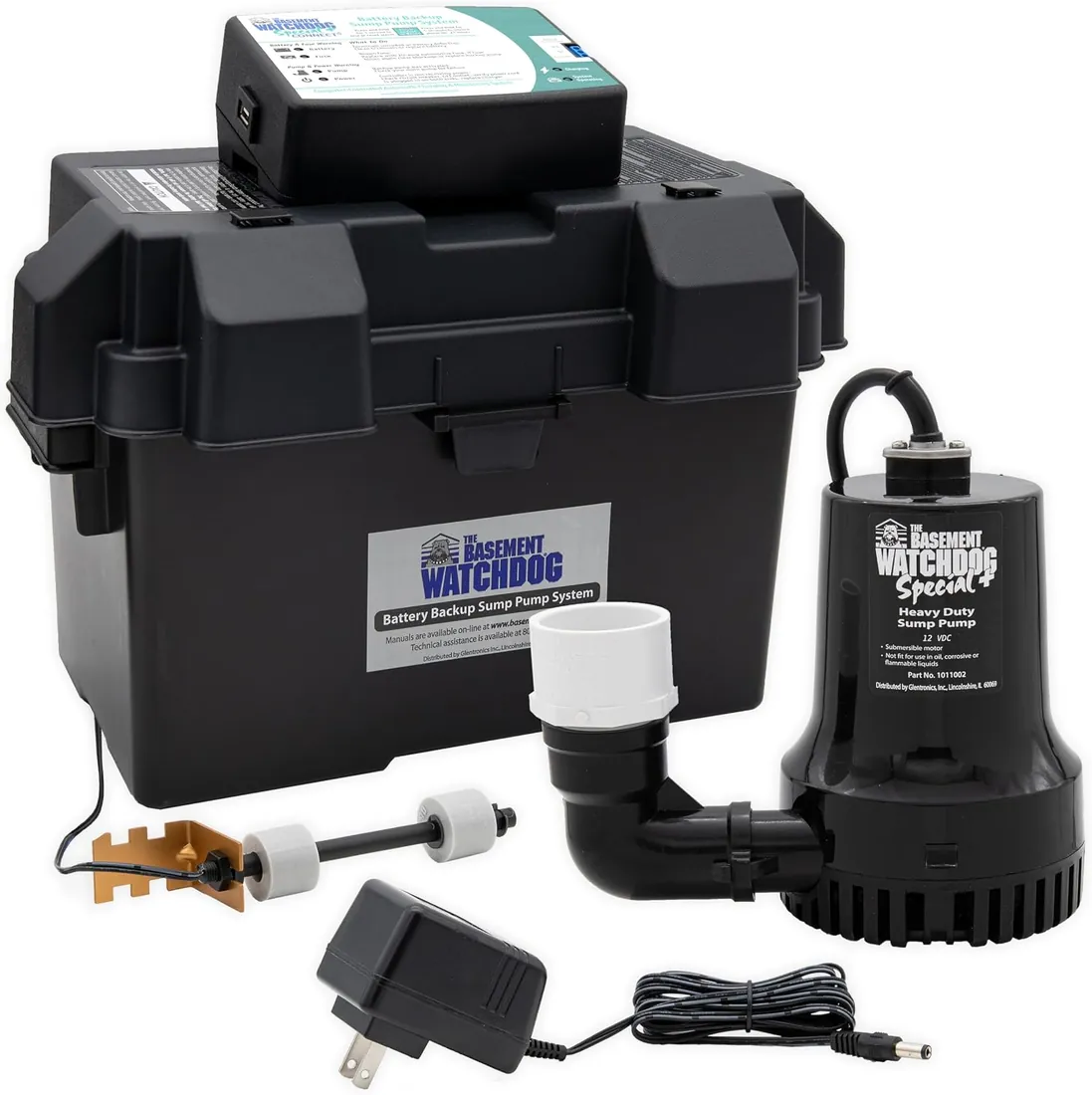
Basement Watchdog Special CONNECT (BWSP) Battery Backup Sump Pump
Controller with separate battery, power and pump lights and a 24-hour silence.
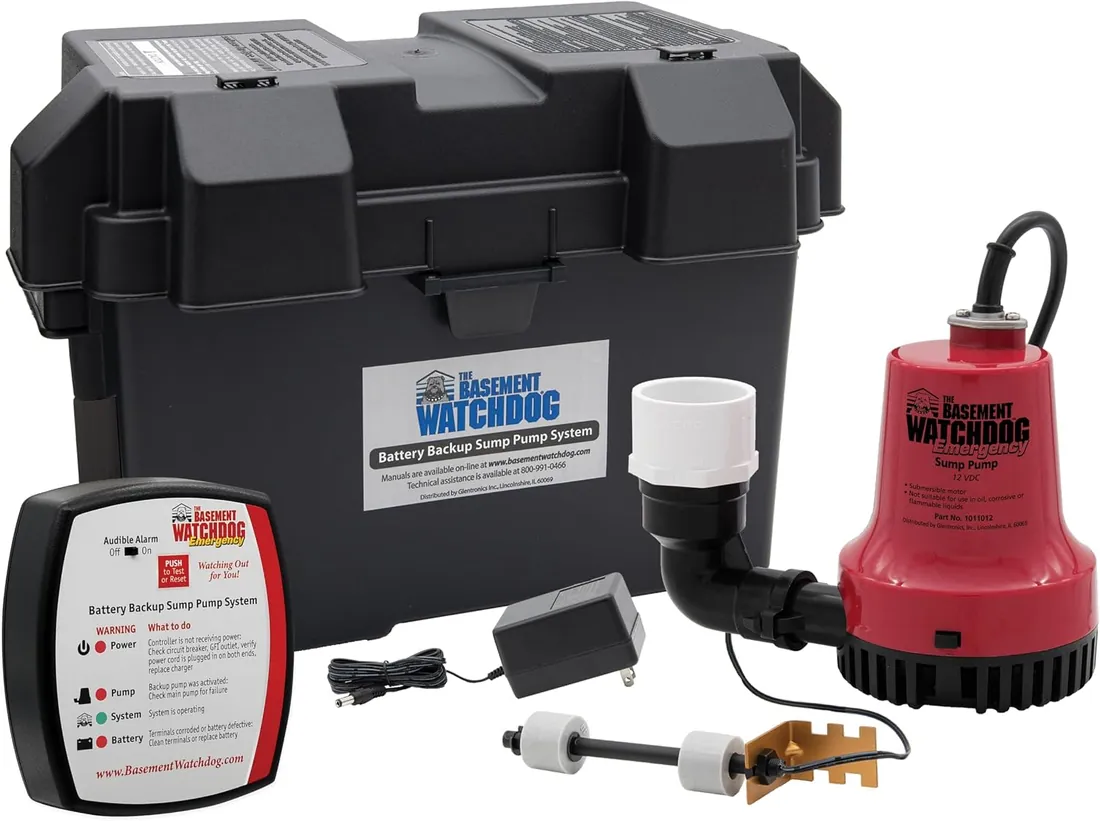
Basement Watchdog Emergency (BWE) Battery Backup Sump Pump
Simpler system with an audible alarm switch to turn off during outages.
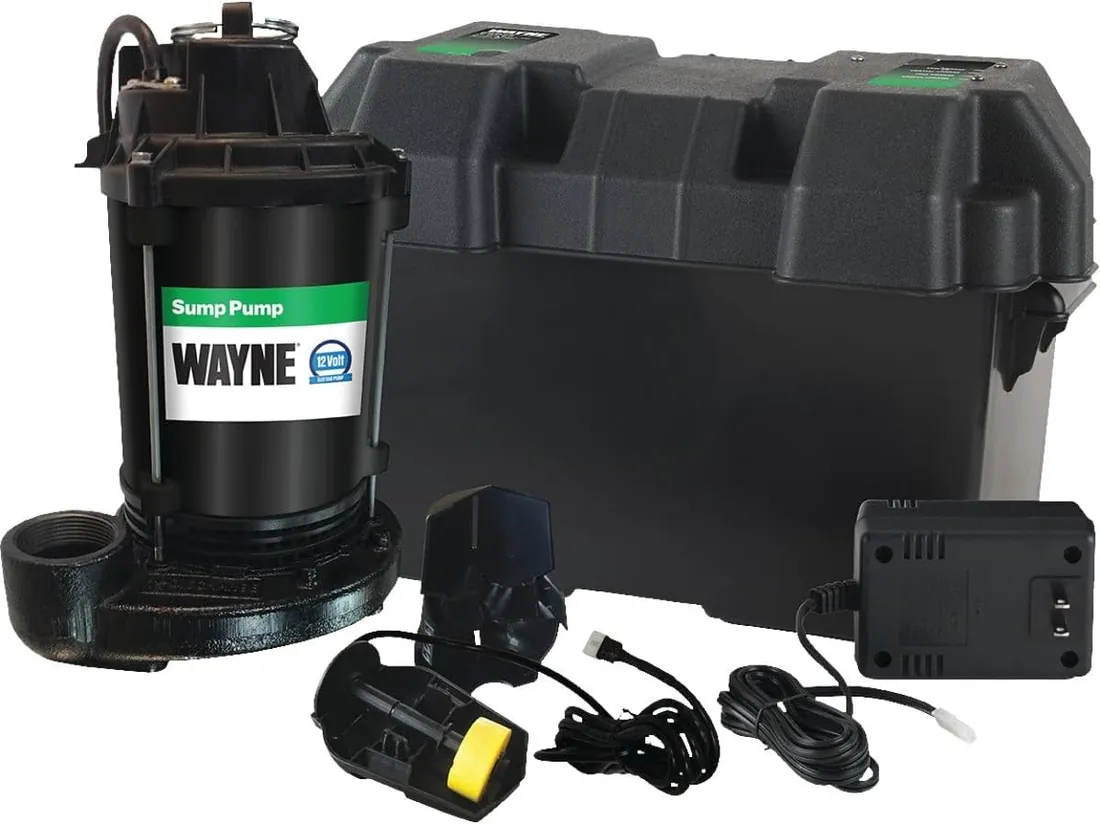
Wayne ESP25n Battery Backup Sump Pump
Uses tones and colored charge lights, with a self-test button for battery checks.
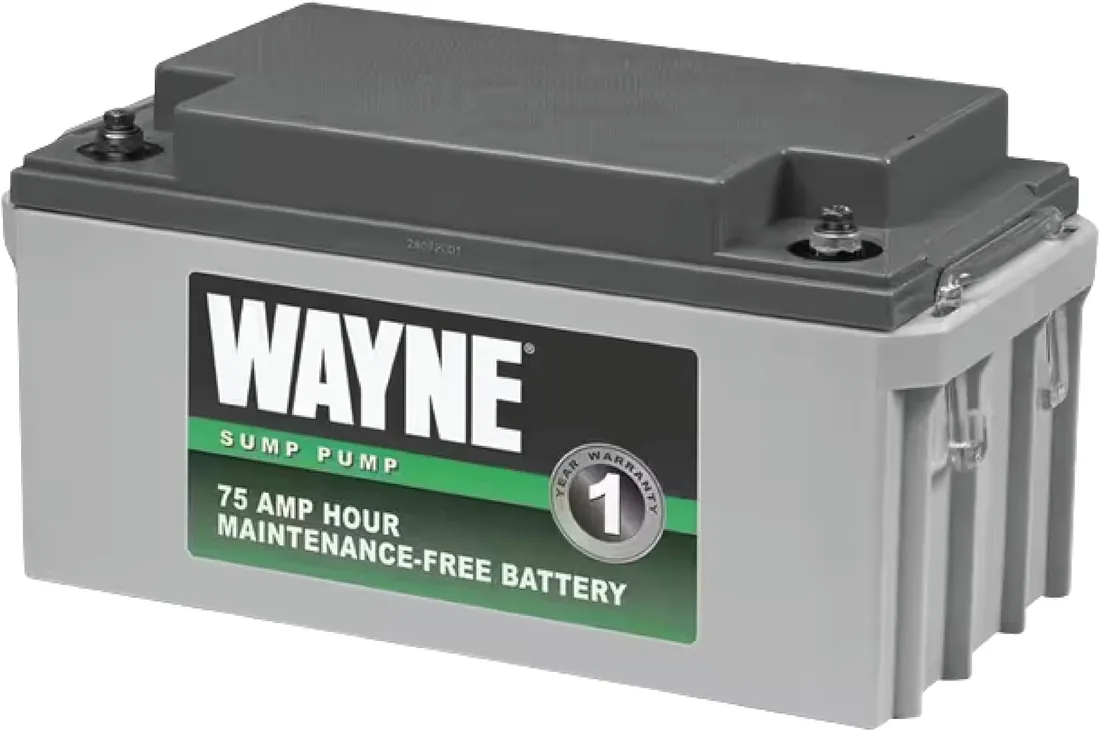
Wayne WSB1275 Standby Battery
The battery Wayne recommends for the ESP25n when the old one fails.
Questions readers ask
How do I stop my battery backup sump pump from beeping?
Find the cause first using the warning light. On a Basement Watchdog Special, hold RESET for five seconds to silence pump and power alarms for 24 hours. The low-battery alarm cannot be silenced, because it needs action before the battery runs out.
Why does my backup beep when the power is on?
Usually the charger is not getting AC (a tripped breaker, bad outlet or loose plug), the battery is weak or corroded, or the backup pump ran because the main pump failed. Check the main pump and the outlet before the battery.
How long does a backup sump pump battery last?
Basement Watchdog says to replace a battery more than five years old. A battery that keeps triggering the low-battery light sooner may have corroded terminals or a charging problem, so clean the connections and have a battery shop run a load check first.
Why does my backup sump pump run when the main pump is fine?
The backup float may be set too low or tangled with the main pump cord, or the main pump may be falling behind in heavy inflow. Basement Watchdog also lists stuck check valves and frozen discharge pipes.