A battery backup pump is the most common answer: it sits in the pit beside the main pump and runs from a 12 V battery when AC fails. A water-powered backup uses city water pressure and needs no electricity, but not a well. A generator can run the main pump only if the pump maker allows it and the generator can handle the starting surge.
The four options side by side
When the grid goes down, a standard 120 V sump pump stops. You can either give it another power source, a generator or an inverter, or add a second pump that does not need grid power at all. Each route has a different weak point: a battery runs down, a water-powered pump needs municipal pressure, and a generator needs fuel, someone at home to start it, and a pump that tolerates it.
The table summarizes what the maker documents say about each. Run times and capacities come straight from those documents; how long your system actually lasts depends on how often the pit fills, which the battery backup runtime calculator estimates for your own pit.
| Option | Example | Published capacity | Main limit |
|---|---|---|---|
| Battery backup pump | Basement Watchdog Special | 2,600 GPH at 0 ft, 1,850 GPH at 10 ft | Battery charge and age |
| Battery backup pump | Wayne ESP25n | 2,700 GPH at 0 ft, 1,500 GPH at 10 ft | Battery charge and age |
| Water-powered backup | Liberty SJ10 SumpJet | At least 9 GPM at 8 ft with 30 psi | Needs municipal water |
| Combination unit | Wayne WSS30VN | Primary 85 GPM maximum; backup curve on sell sheet | Battery charge and age |
| Generator or inverter | Main AC pump | The pump's own rating | Maker approval and starting surge |
Figures: Basement Watchdog Special CONNECT product flyer; Wayne ESP25n operating instructions and parts manual 600005W-001 J; Liberty Pumps SumpJet installation manual 5824000K; Wayne WSS30VN combination system sell sheet.
Battery backup pumps
A battery backup is a 12 V DC pump with its own float, set a little above the main pump's on level, plus a charger and controller that keep a deep-cycle battery topped up. When the water rises past the main pump's level, because the power is out or the main pump has failed, the backup starts. It also alarms, which is half its value.
Run time is the question everyone asks. Basement Watchdog says its BW-27AGM battery will run the Special system for 48 hours at a 10 percent duty cycle, meaning the pump runs about six minutes in every hour, and that in normal intermittent use it lasts for days. Wayne recommends its 75 amp-hour WSB1275 for the ESP25n. Basement Watchdog warns against car batteries, which are not built for deep discharge. For a ready-built system, the battery backup sump pump list compares the options.
Water-powered backup pumps
A water-powered backup uses the pressure in your city water line to create suction through a venturi, pulling sump water out with it. No battery, no power, no run-time limit while the water main holds pressure. Liberty's SJ10 SumpJet is rated for at least 9 GPM at 8 ft of head at 30 psi.
The catch is in Liberty's own manual. The SumpJet is designed for municipal water, so it is not an option on a private well, whose pump stops in an outage. It needs at least 30 psi ahead of the backflow device, and the plumbing code it cites calls for an RPZ backflow preventer, which costs pressure. It also uses water: about 1 gallon of supply for every 2 gallons removed, depending on lift. Its discharge must not connect to the main pump's pipe or directly to a drain. The battery vs water-powered guide weighs the two in detail.
Running a sump pump on a generator
A generator keeps your main pump, with its full capacity, running for as long as you have fuel. Before relying on one, read your pump manual. Wayne states plainly that its CDU sump pumps are not designed to be used with a portable generator. Other makers' sump manuals in our library do not address generators, so ask the maker if yours is silent.
If generator use is allowed, size for the start, not the run. Liberty publishes locked-rotor current for its pumps: 8 A at 115 V for the 1/3 HP 257 and 23 A for the 1/2 HP 287, roughly 920 and 2,645 volt-amps at start. Add whatever else will share the generator. Never run the pump through a long, light extension cord to reach it; makers forbid extension cords on these pumps. A transfer switch fitted by an electrician is the safe way to feed a hard-wired circuit. The amps and watts guide lists maker figures for more pumps.
- Confirm the pump manual allows generator use.
- Find the starting current or use a generous margin if none is published.
- Add every other load the generator will carry.
- Have an electrician connect it through a transfer switch.
Inverters and battery-to-AC systems
An inverter turns battery DC into 120 V AC so the main pump can run from a battery. It avoids a second pump in the pit, but it has to supply the main pump's starting surge and its full running current, which drains a battery far faster than a 12 V backup pump does. Inverter output quality matters too; the pump makers in our library do not publish approvals for any particular inverter, so treat the pump maker's silence as a reason to ask rather than as permission.
For most homes a dedicated 12 V backup pump is the simpler route, because the pump, controller and alarm are designed together and the backup also covers a failed main pump, which an inverter does not.
After the power comes back
When AC returns, check that the main pump restarts on its own. If it was on a GFCI, the outlet may have tripped during the outage or the power surge; reset it. A battery backup will need time to recharge; Basement Watchdog says its battery may need 24 to 48 hours. Run the backup's self-test once it has recharged, and replace the battery if the low-battery light stays on.
If the backup ran for a long time, check its strainer and the check valves before the next storm, and look at whether the main pump kept up while the power was on. A backup that ran often with power present is a sign the main pump needs attention.
Common mistakes
- Running a pump on a generator that its maker says is not designed for one.
- Sizing a generator on running watts and forgetting the starting surge.
- Fitting a water-powered backup to a home on a private well.
- Using a car battery in a backup system.
- Not checking that the main pump and GFCI came back on after the outage.
Products that fit
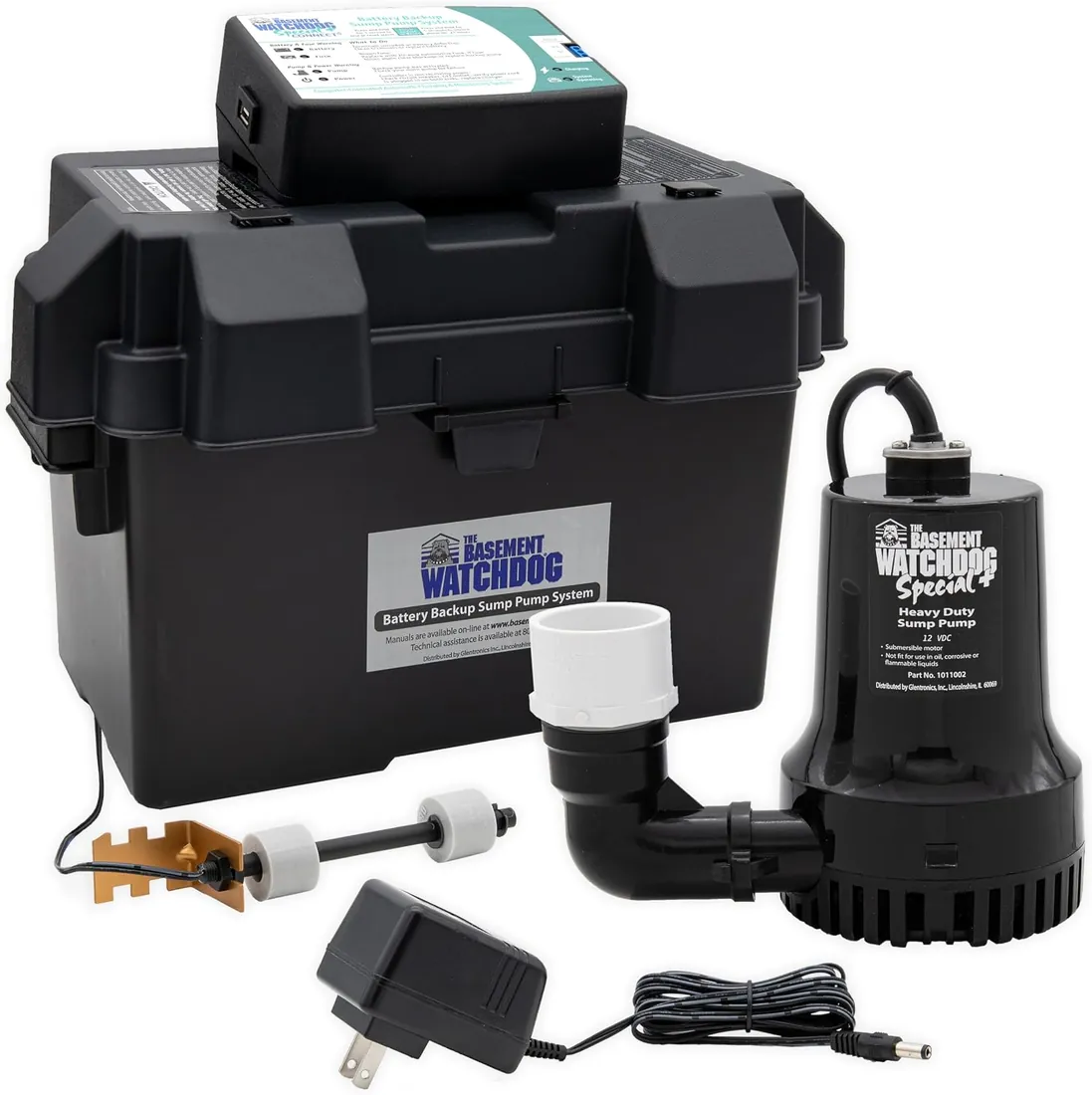
Basement Watchdog Special CONNECT (BWSP) Battery Backup Sump Pump
Battery backup rated 1,850 GPH at a 10 ft lift with a dedicated AGM battery.
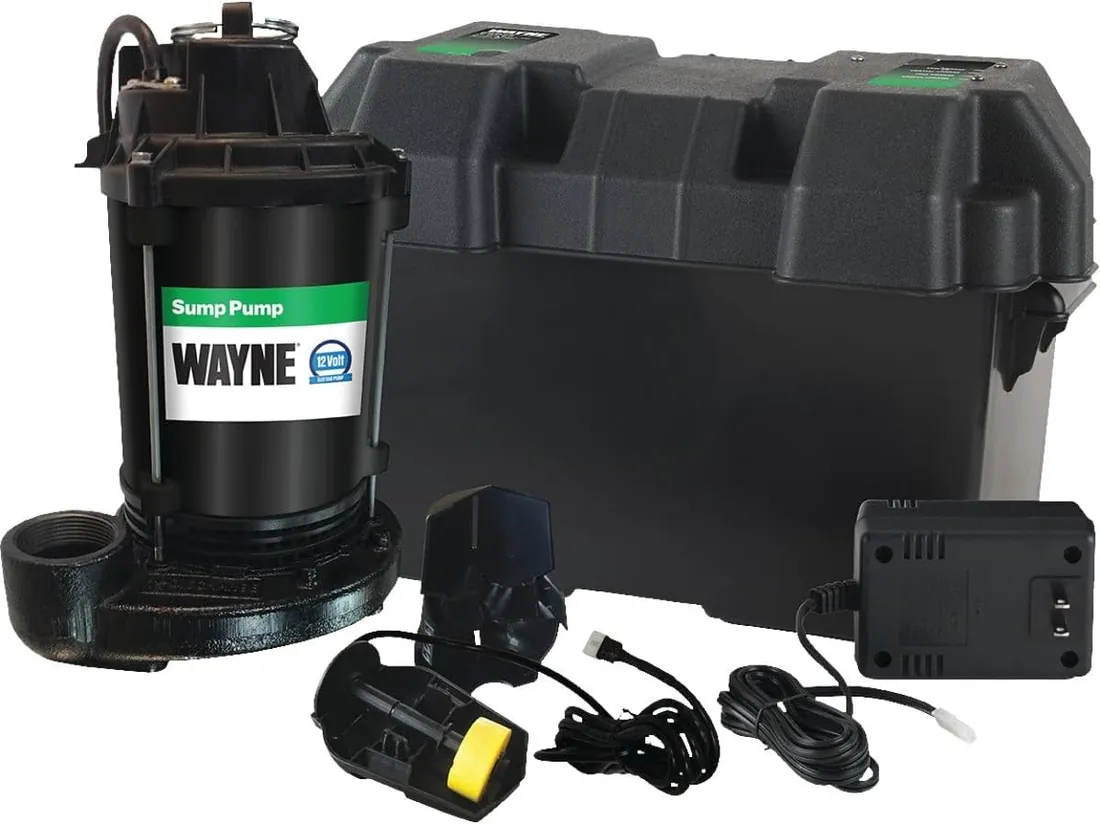
Wayne ESP25n Battery Backup Sump Pump
12 V backup pump that runs from a 75 amp-hour battery.
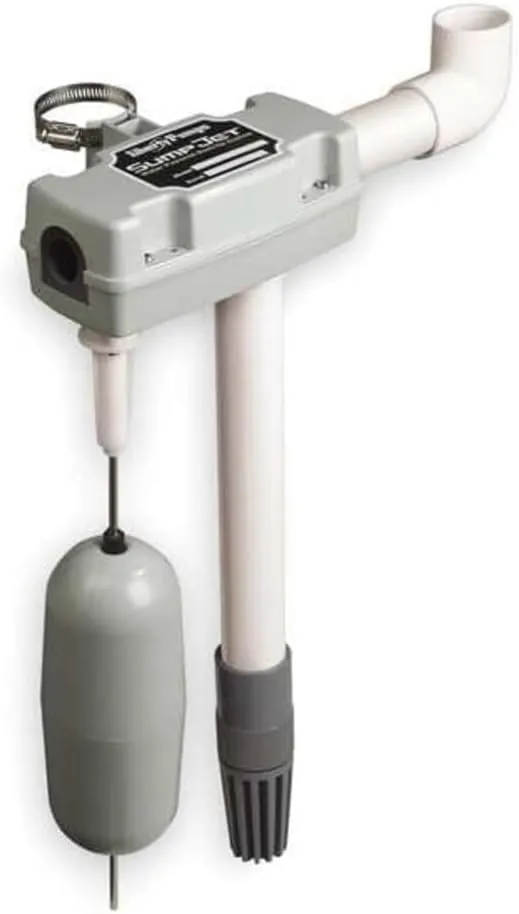
Liberty SumpJet SJ10 Water-Powered Backup Pump
Water-powered backup for homes on municipal water at 30 psi or more.
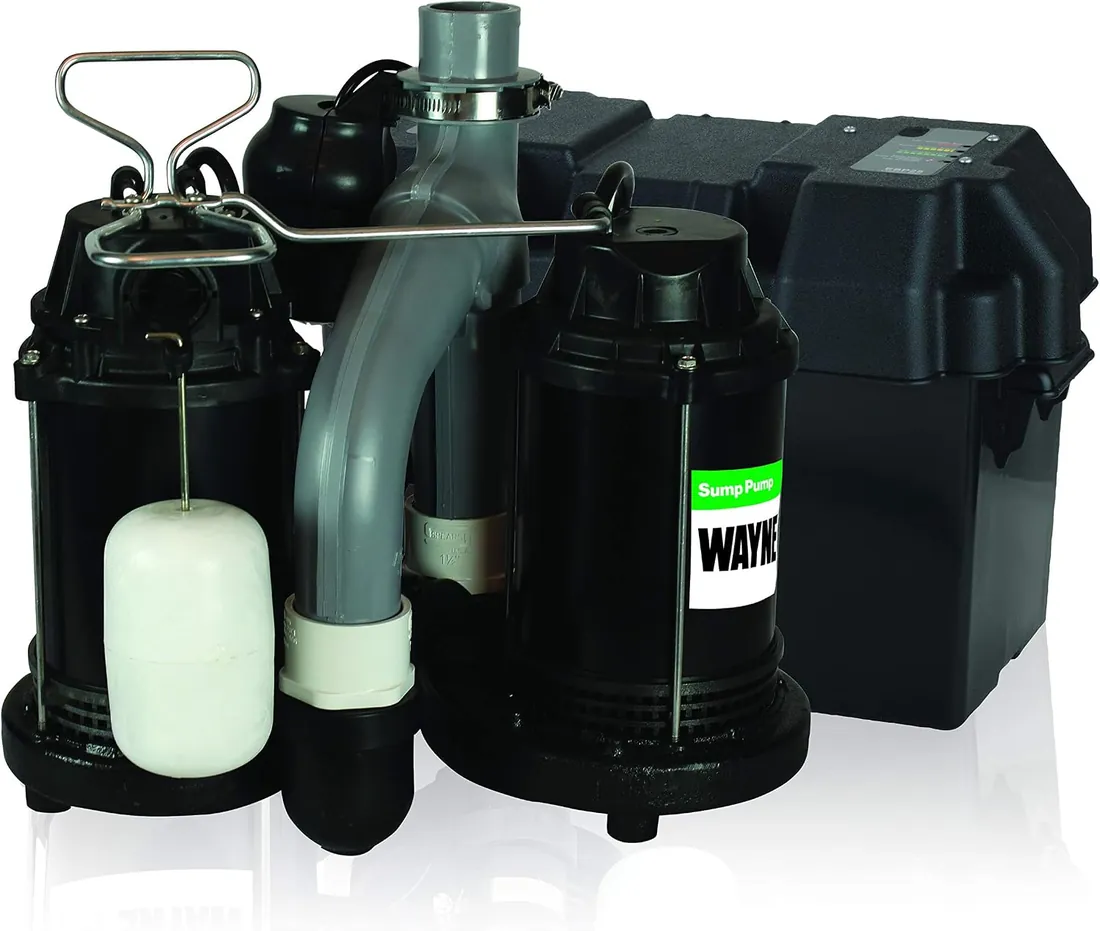
Wayne WSS30VN Primary and Battery Backup Sump Pump System
Preassembled 1/2 HP primary and 12 V backup in one unit.
Questions readers ask
Can I run my sump pump on a generator?
Only if the pump maker allows it and the generator can handle the start. Wayne says its CDU sump pumps are not designed for portable generators. Liberty's figures show a 1/2 HP pump can draw 23 A for a moment at start.
Is a battery backup or a generator better for a sump pump?
A battery backup works automatically when nobody is home and also covers a failed main pump. A generator gives unlimited run time but needs fuel, someone to start it, and a pump that tolerates it. Many homes use a battery backup and keep a generator for long outages.
How long will a battery backup sump pump run?
Basement Watchdog rates its BW-27AGM for 48 hours of the Special system at a 10 percent duty cycle. Real run time depends on how often your pit fills; heavy inflow can drain any battery in hours.
Does a water-powered sump pump work without electricity?
Yes, as long as city water pressure holds. Liberty's SJ10 needs at least 30 psi and municipal supply, so it does not work on a private well, whose pump stops in an outage.