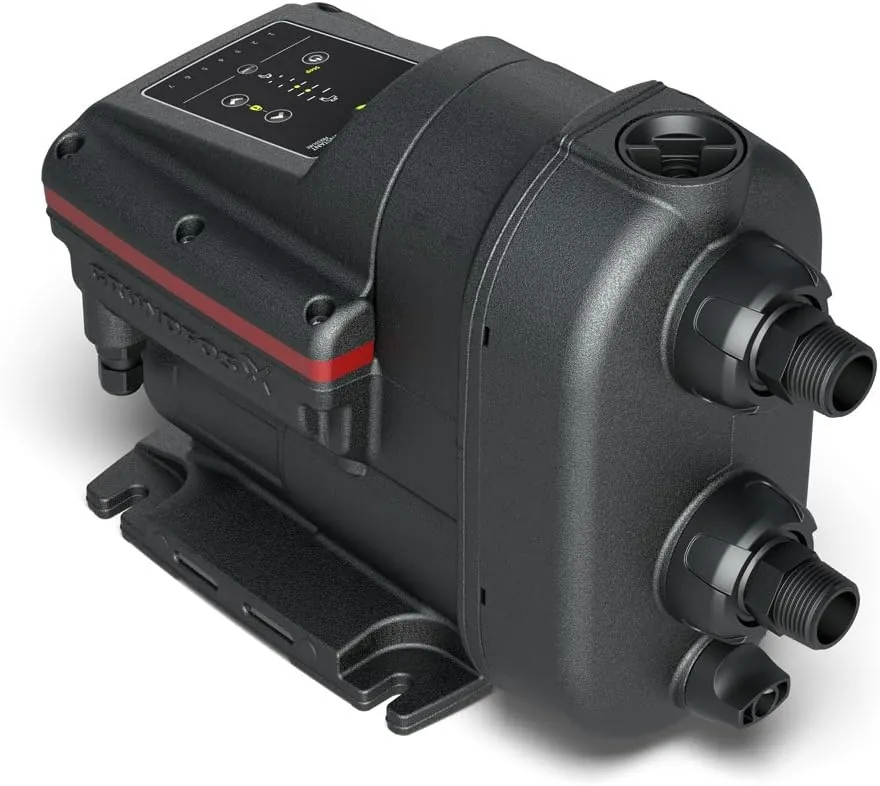
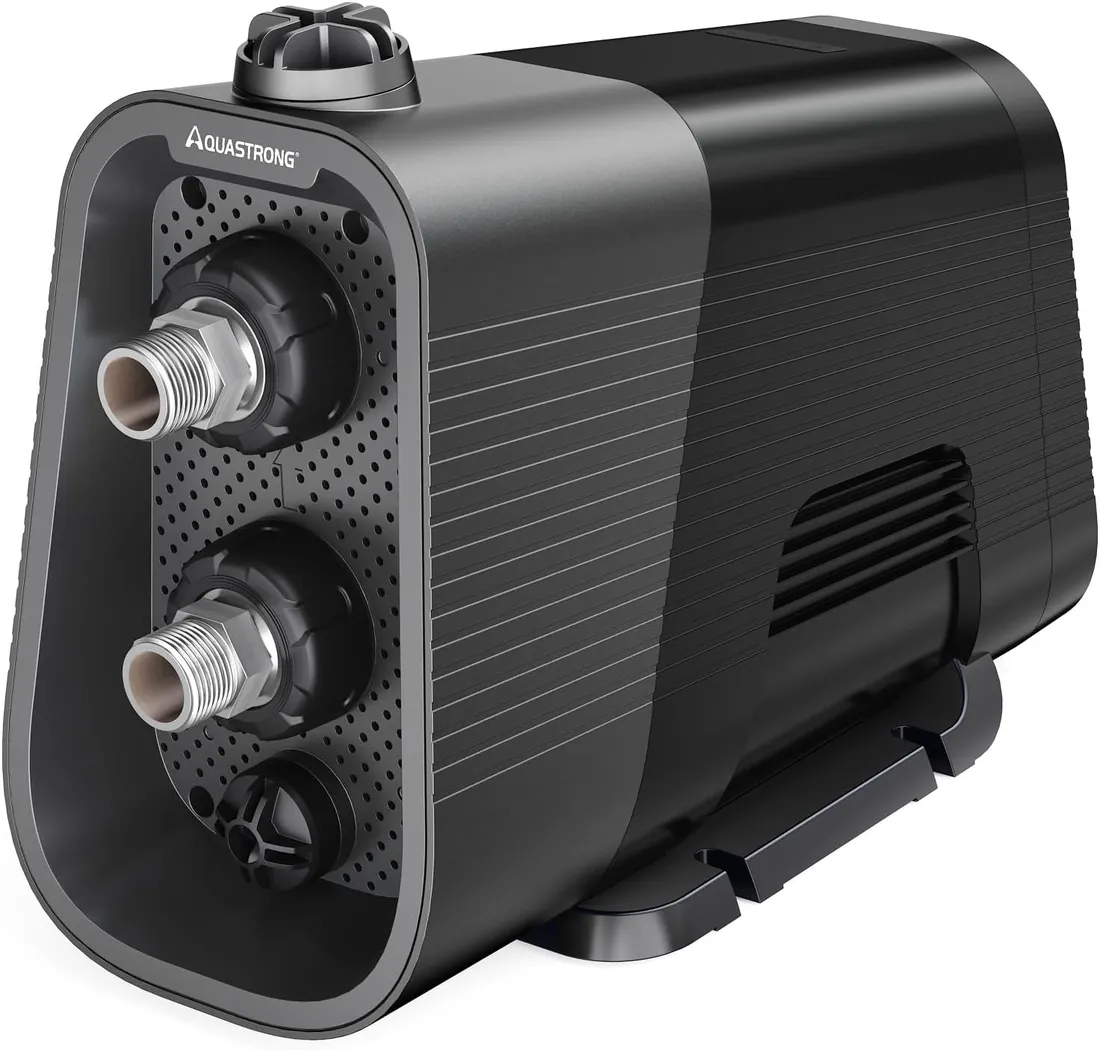
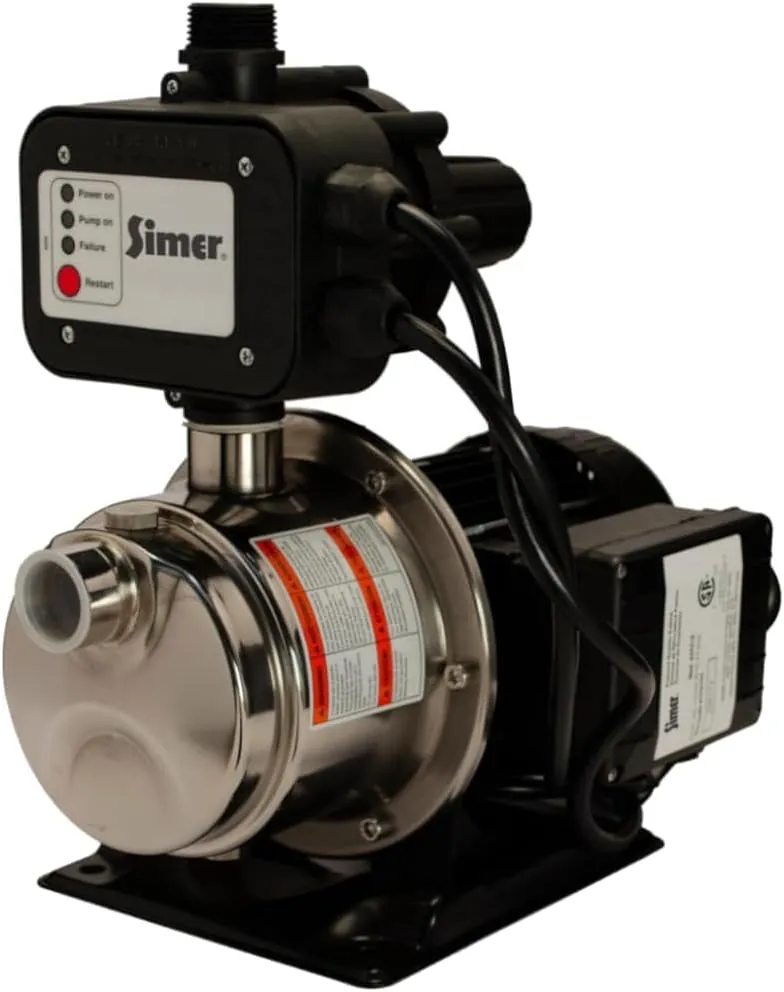
You may need a booster if a gauge on an outdoor spigot reads below about 40 psi with no water running, or pressure collapses when two fixtures run, and the cause is the supply itself (a weak city main, a gravity tank or a long uphill run). Before buying one, check the pressure-reducing valve, clogged aerators and filters, partly closed valves and, on a well, the pressure switch and tank. A booster cannot fix low flow caused by undersized or clogged pipes.
Measure your pressure
- Buy a hose-thread pressure gauge (inexpensive at hardware stores).
- Screw it onto an outdoor spigot or the washer valve nearest the meter, with all water off in the house.
- Read the static pressure; 40 to 60 psi is normal, 60 to 80 is high-normal, below 40 is low.
- Open a tub faucet and watch the gauge; a drop of more than about 15 psi points to a flow restriction rather than low supply pressure.
| Reading | Likely cause | First fix |
|---|---|---|
| Low everywhere, steady | Low supply pressure or a PRV set low | Adjust or replace the PRV; ask the utility about main pressure |
| Normal static, drops sharply with flow | Restriction: clogged pipes, a partly closed valve, undersized line | Find the restriction |
| Low at one fixture only | Clogged aerator, cartridge or shower head | Clean or replace the fixture parts |
| Swings between low and high (well) | Pressure switch settings or a waterlogged tank | Adjust the switch; check the tank precharge |
Rule out the cheaper fixes
- Pressure-reducing valve (PRV): a bell-shaped valve near the main shut-off. Turning its screw clockwise raises pressure; a failed PRV can drop pressure sharply.
- Main shut-off: make sure it is fully open.
- Water softener or whole-house filter: a clogged cartridge or resin bed restricts flow; bypass it to test.
- Aerators and shower heads: mineral scale reduces flow at single fixtures.
- Well systems: raise the pressure switch from 30/50 to 40/60 if the pump can reach it (see pressure switch settings).
When a booster is the right answer
- The city main delivers under about 40 psi and the utility cannot raise it.
- A home or upper floor sits high above the main, losing about 1 psi for every 2.31 ft of elevation.
- Water comes from a gravity-fed tank or cistern.
- A tankless water heater or appliance needs a minimum pressure it is not getting.
Compare whole-house constant-pressure, conventional and single-fixture boosters in water pressure booster pumps.
What it costs
Single-fixture inline boosters cost about $90 to $120. Whole-house conventional boosters run from about $150 for budget models to $700 for stainless units, and constant-pressure units about $700 to $900. Professional installation, a dedicated circuit, bypass valves and any required backflow preventer add several hundred dollars.