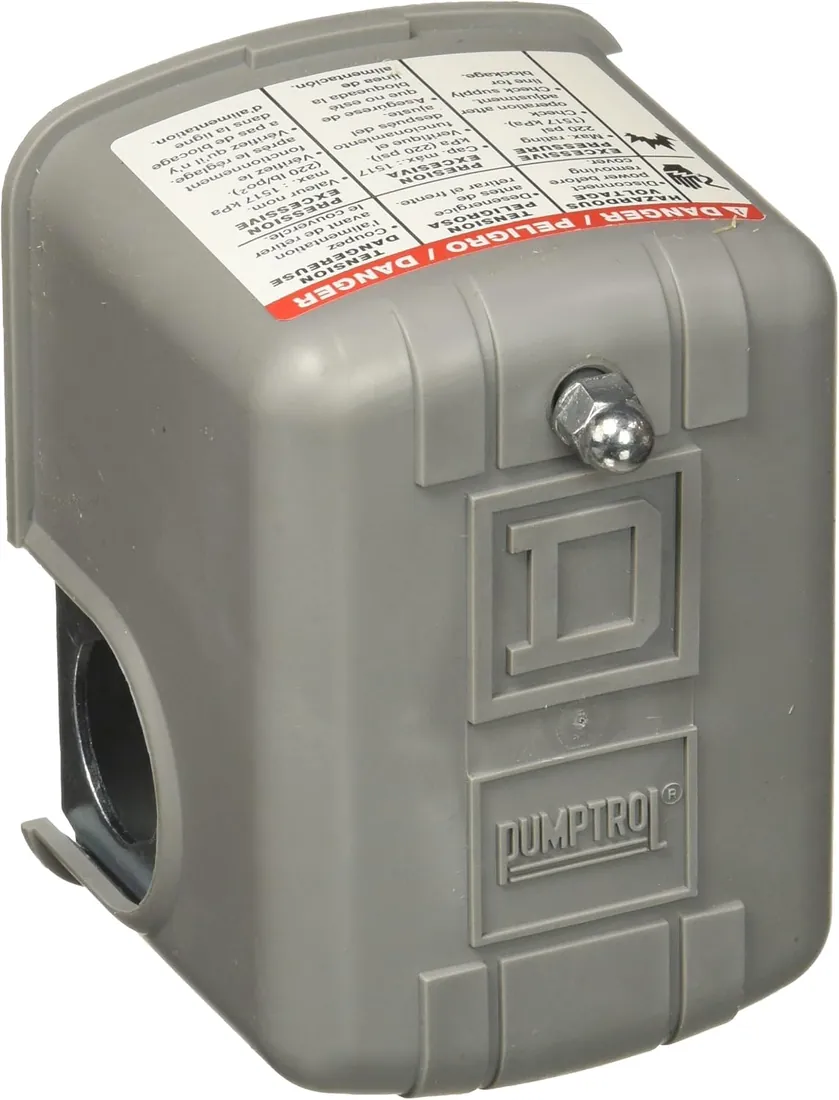
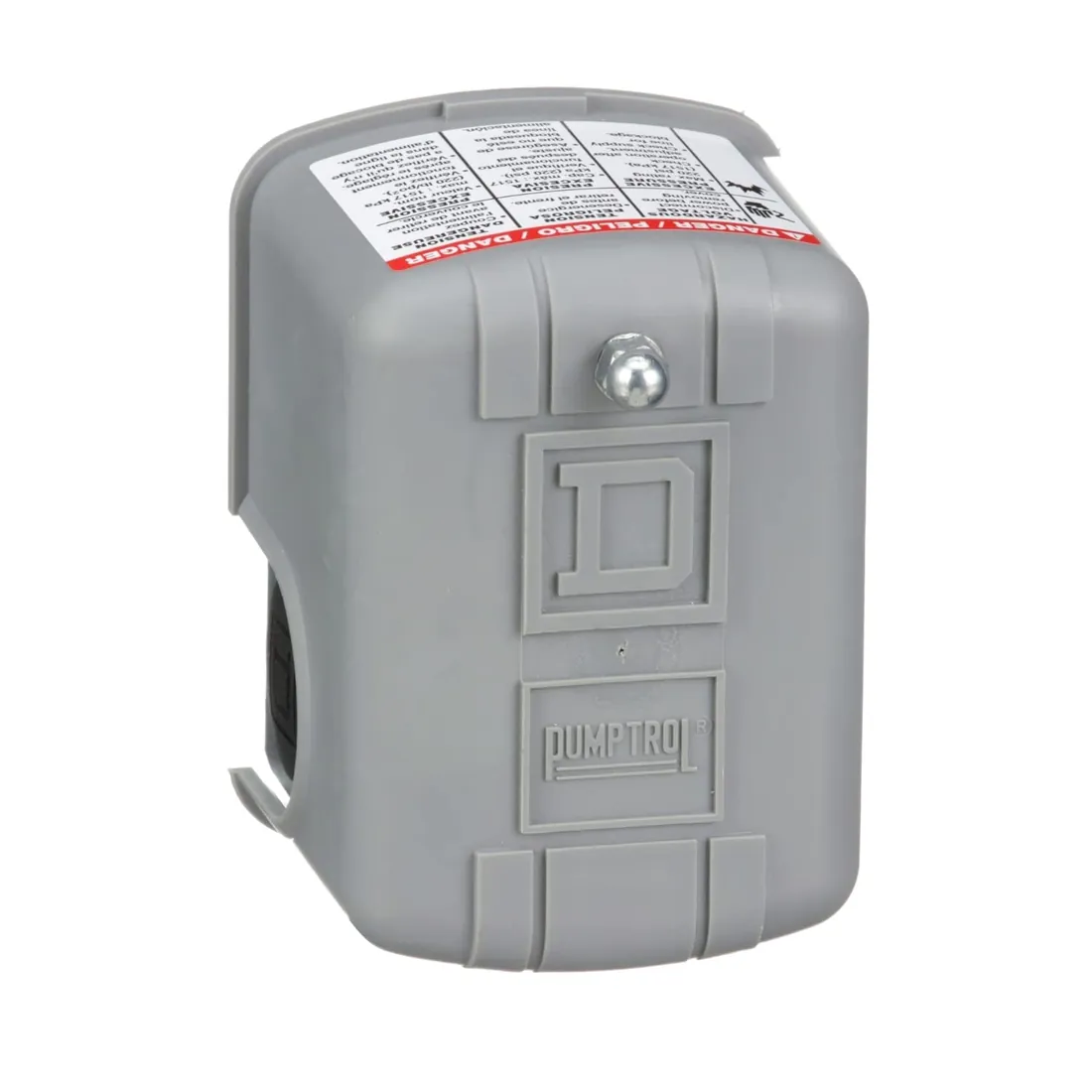
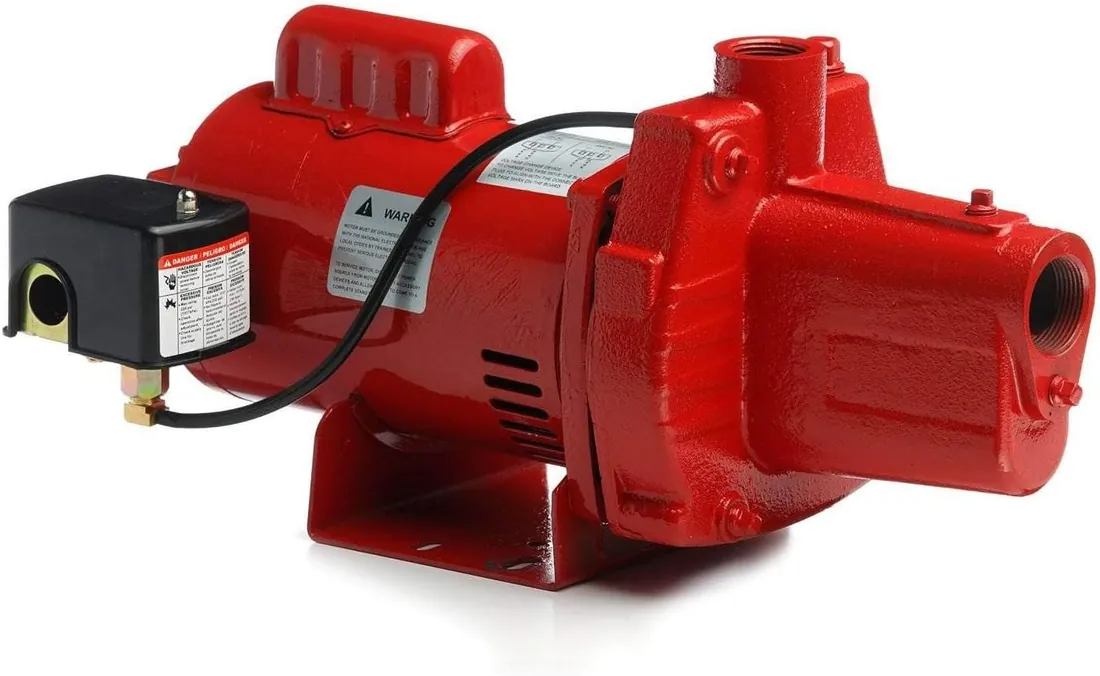
A pressure switch starts the well pump at the cut-in pressure and stops it at the cut-out. Most homes use 30/50 or 40/60 psi. Moving from 30/50 to 40/60 gives noticeably stronger showers, provided the pump can comfortably build 60 psi at your well depth and you reset the tank precharge to 38 psi. Adjust with the power off: turning the large nut clockwise raises both settings together; the small nut changes the gap between them.
What the numbers mean
| Setting | Feels like | Tank precharge | Notes |
|---|---|---|---|
| 20/40 | Weak | 18 psi | Older or low-head systems |
| 30/50 | Adequate | 28 psi | Common factory default |
| 40/60 | Strong | 38 psi | The usual upgrade; pump must reach 60 psi |
| 50/70 | Very strong | 48 psi | Needs a pump and switch rated for it; more pipe stress |
The 20 psi gap between cut-in and cut-out is standard; a wider gap means longer pump runs and fewer starts, but bigger pressure swings at the tap.
Can your pump reach the higher setting?
After raising the setting, watch a full cycle. If the pump runs for a long time near the top and never shuts off, it cannot reach the cut-out; lower the setting or upgrade the pump. See deep well submersible pumps.
Adjusting the switch
- Note the current cut-in and cut-out on the system gauge by running water and watching when the pump starts and stops.
- Turn off the pump breaker and remove the switch cover.
- To raise both settings together, turn the large nut on the tall spring clockwise; each full turn adds about 2 to 3 psi on common switches.
- To change only the cut-out (widen the gap), turn the small nut on the short spring.
- Drain the system, set the tank precharge to 2 psi below the new cut-in, then restore power and watch a full cycle.
A switch rated 30/50 can often be adjusted to 40/60, but buying a switch factory-set at 40/60 is simple and cheap. Replace switches with pitted or burned contacts. Related: pressure tank sizing and precharge.
Troubleshooting
- Pump short-cycles: usually low precharge or a waterlogged tank, not the switch.
- Pump will not stop: cut-out set higher than the pump can reach, or a leak.
- Pump will not start: burned contacts, a clogged pressure tube under the switch, or a tripped low-pressure cutoff lever on switches that have one.
- Chattering contacts: a clogged switch nipple or a failing switch.