The short answer
First make the space safe: shut off power to the basement at the breaker panel without standing in water, and do not enter if water may be touching outlets or appliances. Then use a submersible utility pump for water deeper than about an inch, discharging through a garden or lay-flat hose at least 20 ft from the foundation. Finish shallow water with a wet/dry vacuum or a low-water pump, and if the ground outside is still saturated, pump down about a third of the depth per day to avoid stressing the walls.
Safety first
SafetyNever walk into flooded basement water while the power is on. Shut off the basement circuits at the main panel from a dry location; if you cannot reach the panel without standing in water, call the utility or an electrician to disconnect the power.
- Do not use gas-powered pumps or generators indoors or near open windows; carbon monoxide builds up quickly.
- Sewage-contaminated water needs protective gear (boots, gloves, eye protection) and professional cleanup in most cases.
- Turn off gas appliances whose burners may have been submerged and have them checked before restarting.
Which pump for the job
| Water depth | Best tool | Why |
|---|---|---|
| More than 2 inches | Submersible utility pump (1/3 to 1.5 hp) | Moves thousands of gallons per hour |
| About 1/8 to 2 inches | Low-water or 'water removal' utility pump | Designed to pump down to a thin film |
| Puddles and the last film | Wet/dry shop vacuum | Picks up what pumps leave behind |
Pumpendium mathWater volume = floor area × depth. A 30 × 40 ft basement under 6 inches of water holds 1,200 sq ft × 0.5 ft = 600 cubic feet, or about 4,500 gallons. A utility pump moving 2,000 gallons per hour at low lift empties it in a little over two hours of pumping.
Step by step
- Confirm the power is off to the basement and find a dry GFCI outlet upstairs or an outdoor outlet for the pump, using a heavy-duty outdoor extension cord if needed.
- Run the discharge hose outside and downhill, at least 20 ft from the foundation, away from neighbors' properties and not into the septic system.
- Set the pump on a flat surface at the lowest point (often the floor drain or sump pit). Raise it on a brick if debris is on the floor.
- Pump in stages if the soil outside is saturated: about a third of the water depth per day, so pressure from outside does not crack the walls.
- Switch tools as the water gets shallow: low-water pump, then wet/dry vacuum.
- Clear debris from the pump intake regularly; leaves and silt clog it quickly.
After the water is out
- Remove wet carpet, padding and cardboard within 24 to 48 hours; mold starts quickly.
- Run a dehumidifier and fans; aim to get the space below 50% relative humidity within a few days.
- Photograph damage for insurance before you discard anything.
- Find the cause: a failed sump pump, a blocked discharge, or surface water that needs grading or a backup pump (see backup sump pumps).
Products mentioned
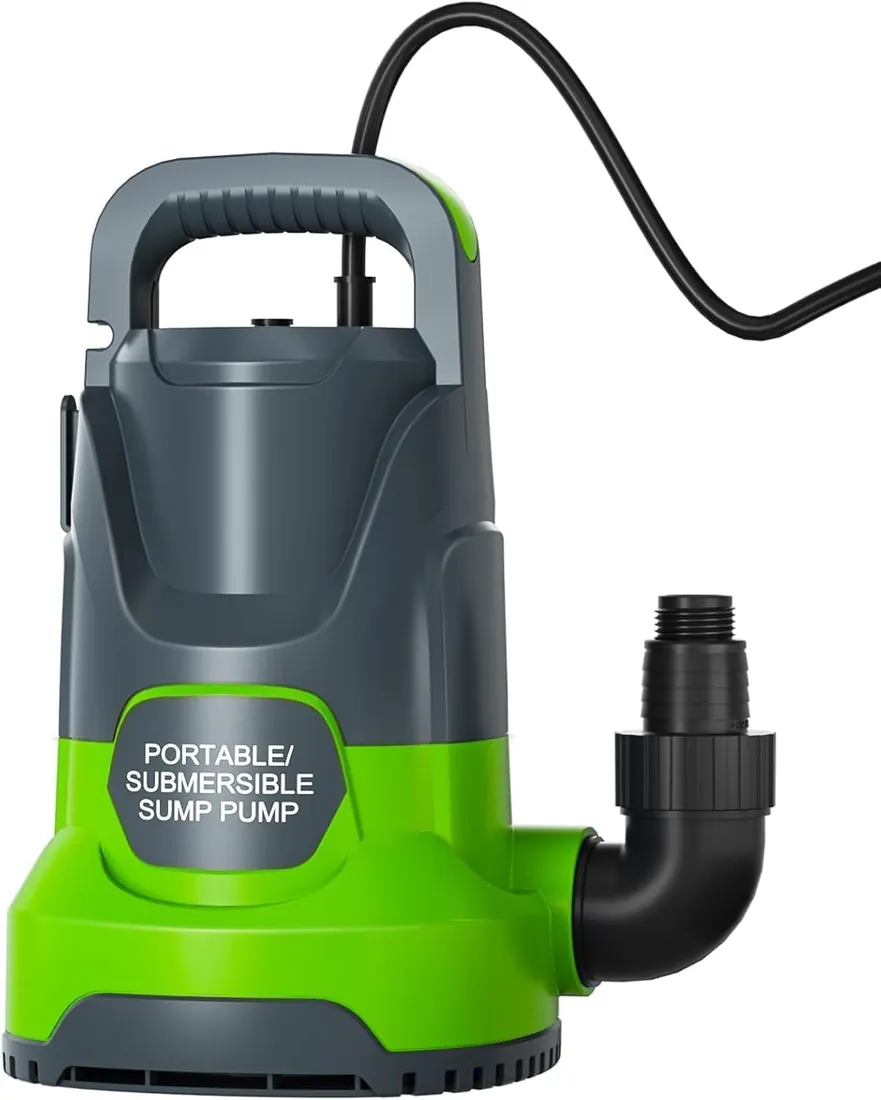
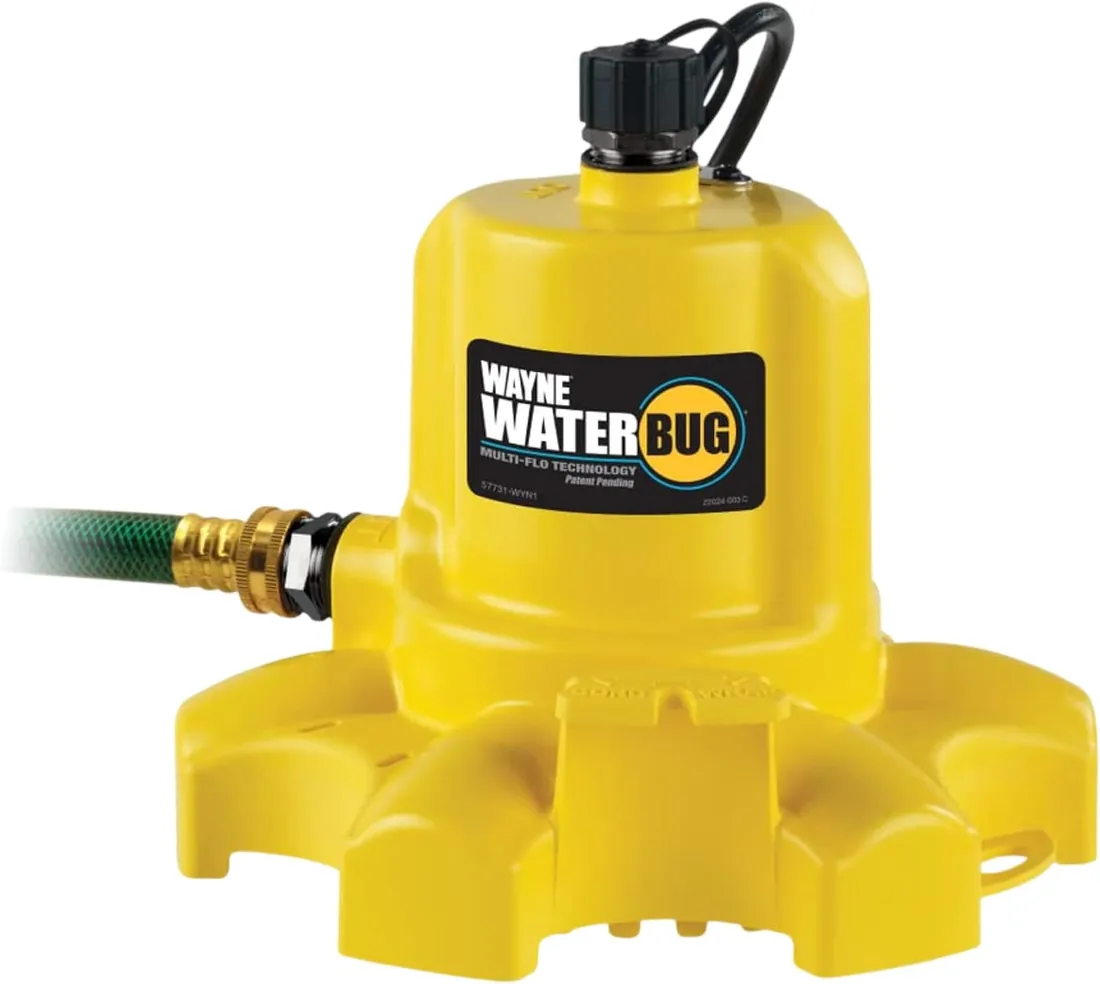
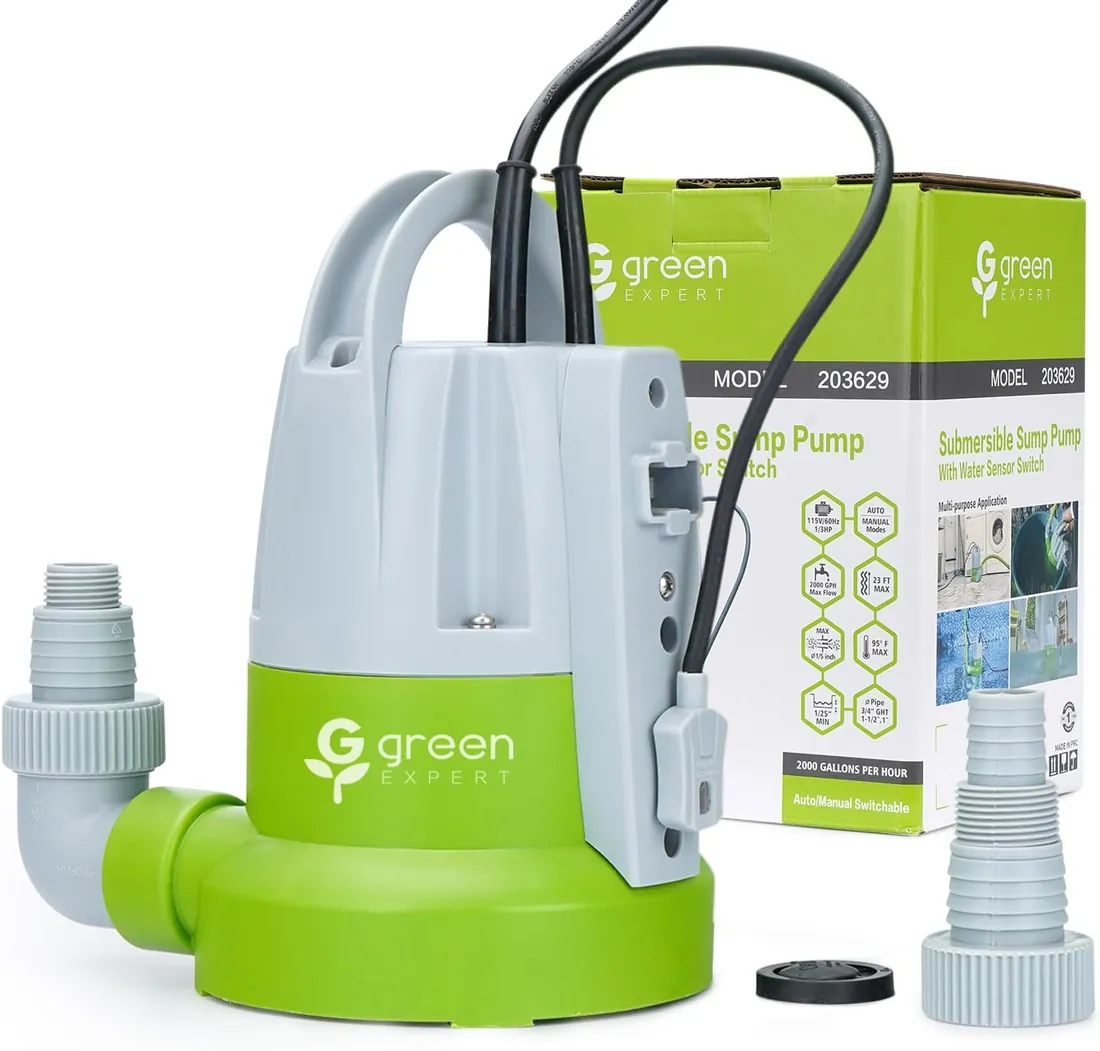
Questions readers ask
What is the fastest way to remove water from a basement?
A submersible utility pump of 1/3 hp or larger, discharging through a garden or lay-flat hose. Pumps move thousands of gallons per hour; wet/dry vacuums are for the last film of water.
Should I pump out a flooded basement right away?
Remove it promptly once the power is safely off, but if the ground outside is still saturated, pump down gradually (about a third of the depth per day) to avoid stressing the foundation walls.
Where should I discharge the water?
Outside, downhill and at least 20 ft from the foundation, not into the septic system and not onto a neighbor's property.
Can a sump pump be used to drain a flooded basement?
A spare sump pump works if you can power it safely, but a utility pump with a hose connection is designed for portable use and is easier to move and place.