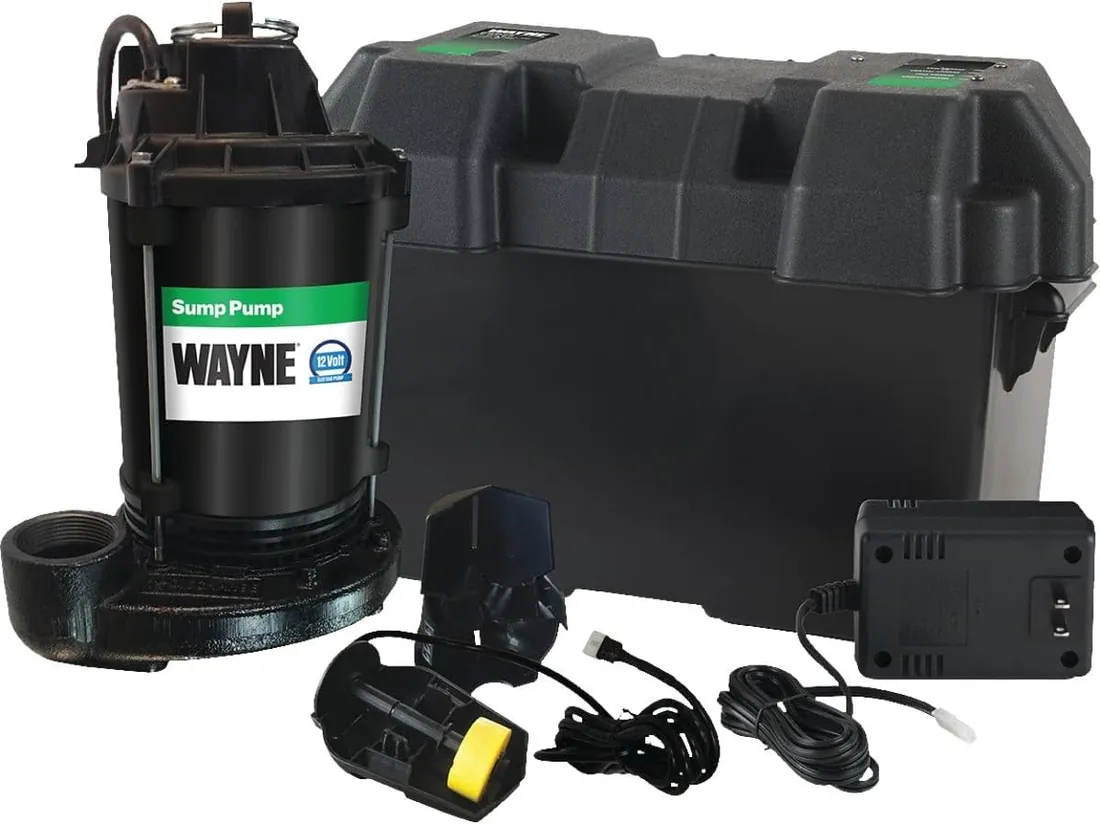
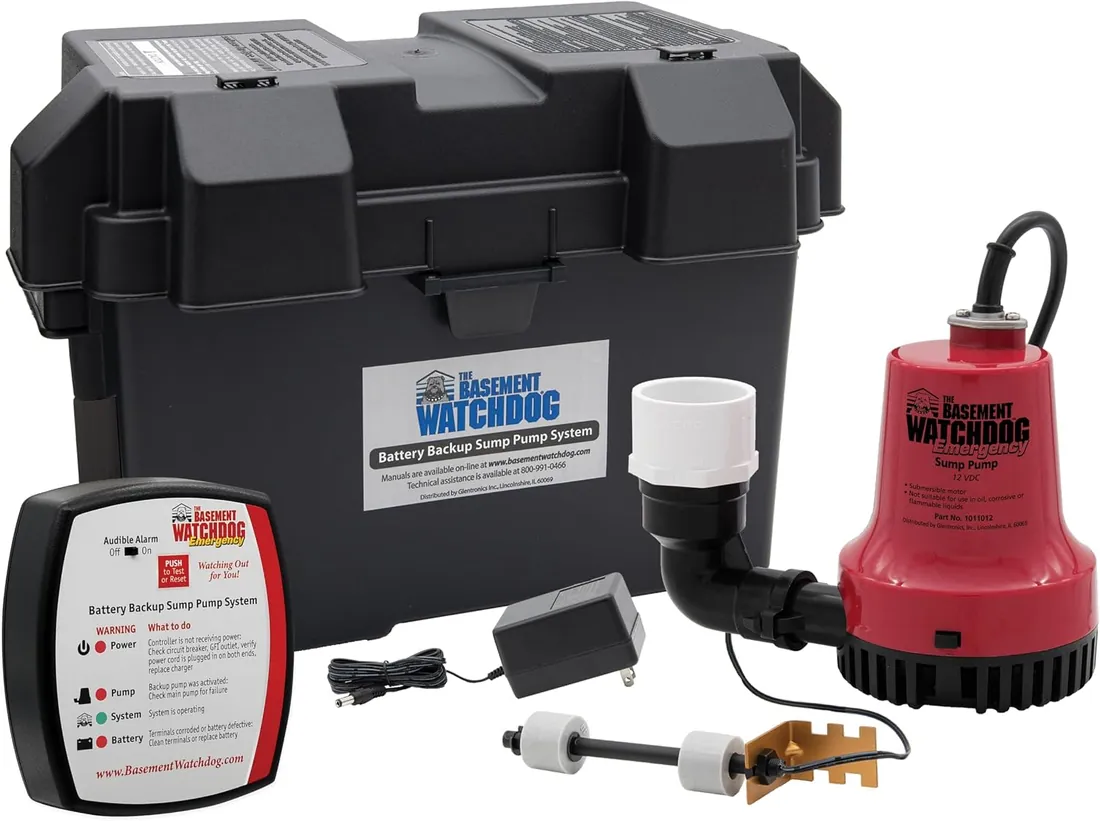
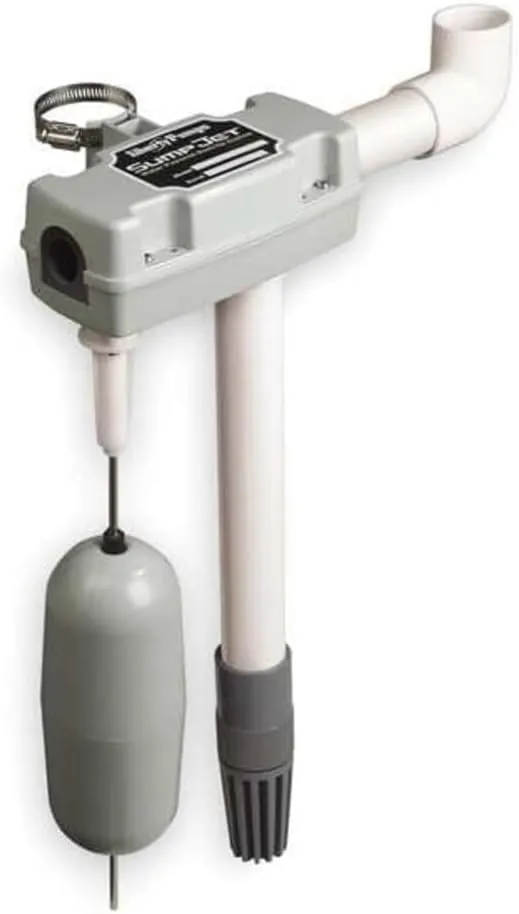
A battery backup runs a 12 V pump from a deep-cycle battery when the power fails or the main pump stops; it works anywhere but only for as long as the battery lasts, typically hours to a day or two depending on how often it runs. A water-powered backup uses your municipal water pressure to create suction, needs no electricity and never runs out, but it uses about 1 gallon of city water for every 1 to 2 gallons it removes and needs roughly 40 psi or more. Homes on a private well should choose battery backup.
How they compare
| Battery backup | Water-powered backup | |
|---|---|---|
| Power source | 12 V deep-cycle battery, charged from an outlet | Municipal water pressure |
| Runs during a power cut | Yes, until the battery is flat | Yes, indefinitely |
| Works on a private well | Yes | No: the well pump stops when the power does |
| Pumping capacity | Moderate, falls as the battery drains | Lower; depends on water pressure |
| Ongoing cost | Battery replacement every 3 to 5 years | City water used while running |
| Installation | DIY-friendly | Needs a plumbing connection and a backflow preventer |
Battery backups
The backup pump sits in the pit beside the main pump, slightly higher, with its own float, and a charger keeps the battery topped up. Runtime depends on battery capacity, how far the water has to be lifted and how often the pit fills.
- Use the battery type the maker specifies (AGM or flooded deep-cycle, not a car starting battery).
- Test monthly by unplugging the main pump and filling the pit.
- Replace the battery every 3 to 5 years, or sooner if the charger reports a fault.
Water-powered backups
City water flows through a venturi, creating suction that draws water from the pit; both streams leave through the discharge. With no motor and no battery, there is nothing to run down, which is why water-powered units suit long outages.
- Pressure: most need around 40 psi or more at the connection; pumping rate rises with pressure.
- Water use: roughly 1 gallon of city water per 1 to 2 gallons removed, which adds to the water bill during long events.
- Code: a backflow preventer (often a reduced-pressure or double-check assembly) is required to protect drinking water; many areas require a licensed plumber.
- Not for wells: without power, a well pump cannot supply the pressure.
Which to choose
- Private well: battery backup.
- City water with long outages common: water-powered, or both.
- Finished basement: a battery backup with an alarm, plus a water-powered unit for the longest storms, gives the most protection.
- Budget: a battery backup is usually the lower installed cost.
A backup also covers a failed main pump, not only power cuts, so an alarm on the backup tells you the main pump needs attention. See check valves and discharge lines.