On a plain float alarm, sound means water has risen above the normal on level: the main pump has failed, stuck or cannot keep up, so act now. On a battery backup, separate alarms cover power loss, backup pump use, a blown fuse and a weak battery. Read the light that is on, fix that cause, then reset the unit.
High-water alarms: act straight away
A standalone sump alarm is a float set above the pump's normal on level, wired to a horn. Superior's 92060, for example, hangs a 15 ft tether float in the pit and sounds an 87 dB horn, with a 9 V battery so it still works when the power is out. When it sounds, the water is higher than it should ever get with a working pump.
Go to the pit. If the main pump is silent, check the breaker, the GFCI outlet and the float: Wayne's maintenance notes point out that GFCIs in damp basements trip and quietly switch the pump off. If the pump is running but the level still rises, it is losing to the inflow or its discharge is blocked or frozen. Free the float, clear the line, or run a portable pump while you sort out the cause.
Once the level is back down, check the alarm float itself. It should hang clear of the pump, the discharge pipe and the walls, and sit high enough that normal cycling never reaches it. A float set too low turns every heavy rain into a false alarm, and people who hear false alarms learn to ignore real ones.
- Check whether the main pump is running.
- If silent, reset the breaker or GFCI and lift the float.
- If running, check the discharge line outside for ice or blockage.
- Once the water drops, silence the alarm and find the root cause.
Battery backup alarms: read the light first
Combination units such as the Basement Watchdog systems have several alarm lights, and each points to a different fix. The table follows Basement Watchdog's own manual for its Special CONNECT unit. Note which ones you can silence: a battery alarm cannot be silenced, because the battery needs attention before the next storm, while power and pump alarms can be muted during an outage.
| Alarm | What it means | Clears on its own? |
|---|---|---|
| Battery | Less than ½ hour of pumping left, or a defective battery | No, press RESET |
| Fuse | The 20 A DC fuse has blown | Yes, once fixed |
| Pump | The backup pump has run | No, press RESET |
| Power | No AC power, or under 110 V at the charger | Yes, when power returns |
Figures: Basement Watchdog Special CONNECT instruction manual; Basement Watchdog Special CONNECT troubleshooting guide.
The pump alarm: the backup did the work
A pump alarm on a backup system means the backup float rose and its pump ran. That is a warning about the main pump, not the backup. Basement Watchdog's troubleshooting sheet lists the usual reasons: a power outage, a stuck or defective main float switch, a broken main pump, a main pump that could not keep up, a stuck check valve, or a clogged or frozen discharge. It even notes a small chance of false activation when the float cord wraps around the AC power cord.
Find which one applies before you press reset. If the main pump is struggling in normal storms, size up using the sizing calculator; if its float is the problem, see the float switch guide linked below.
Battery and power alarms
Basement Watchdog tells owners to replace a battery more than five years old when the battery alarm comes on. If the battery is younger, look at the other lights: power off at the same time means the charger has no AC, and a pump light means the backup has been draining it. With no other light on, clean and tighten corroded terminals. After a long run, the maker allows 24 to 48 hours for a deep recharge, during which the battery alarm may keep sounding.
The power alarm on the BWE model trips when the charger sees less than 110 V. Check the breaker, the outlet and the GFCI, and that the charger is plugged firmly into both the wall and the control unit. Brownouts or a heavy load on the same circuit can trigger it too.
Wi-Fi monitors and their beep patterns
Smart monitors use the timing of the beep to separate urgent from routine. Moen's monitor, for example, sounds a constant beep when water passes its overflow level and a high-pitched beep every few seconds above its high-water level, while a low-pitched beep about every ten minutes only means its own backup battery is low. The table summarizes Moen's light chart.
If you want an alarm that also reaches your phone, the Moen smart sump monitor and the Basement Watchdog Wi-Fi module both send notices, and a simple horn like the Superior 92060 covers a pit with no network.
| Light and sound | Meaning |
|---|---|
| Red blink, constant beep | Water above overflow level or leak sensor wet |
| Red blink, high beep every 3 seconds | Water above high-water level |
| Yellow blink, low beep every 600 seconds | Monitor battery low or dead |
| Yellow blink, no beep | Running on battery power |
Figures: Moen smart sump pump monitor installation guide INS11985.
Common mistakes
- Silencing a high-water alarm and going back to bed.
- Replacing the backup battery when the real fault is the main pump.
- Letting the float cord wrap around a power cord in the pit.
- Running the alarm on the same circuit as the pump it watches.
- Ignoring a low-battery chirp until the next power cut.
Products that fit
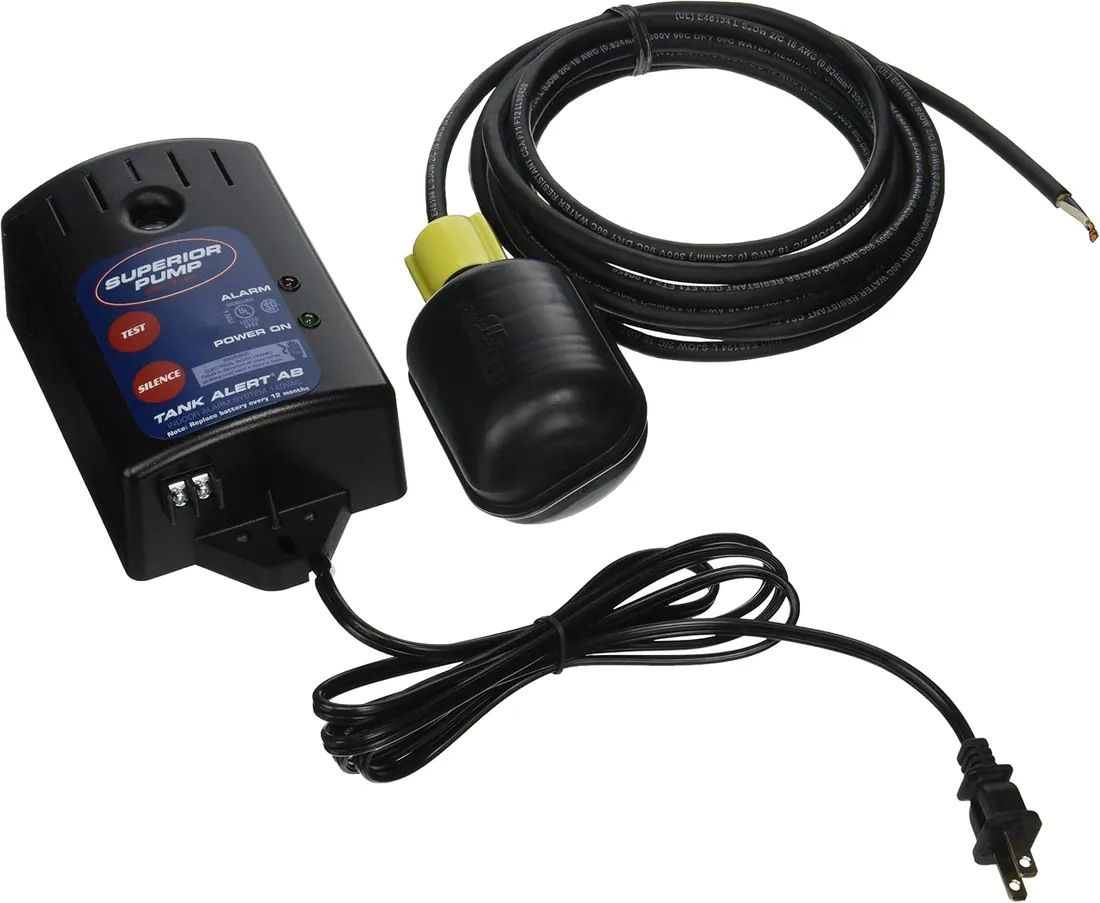
Superior Pump 92060 Sump Alarm
Standalone high-water horn with a tether float and battery backup.
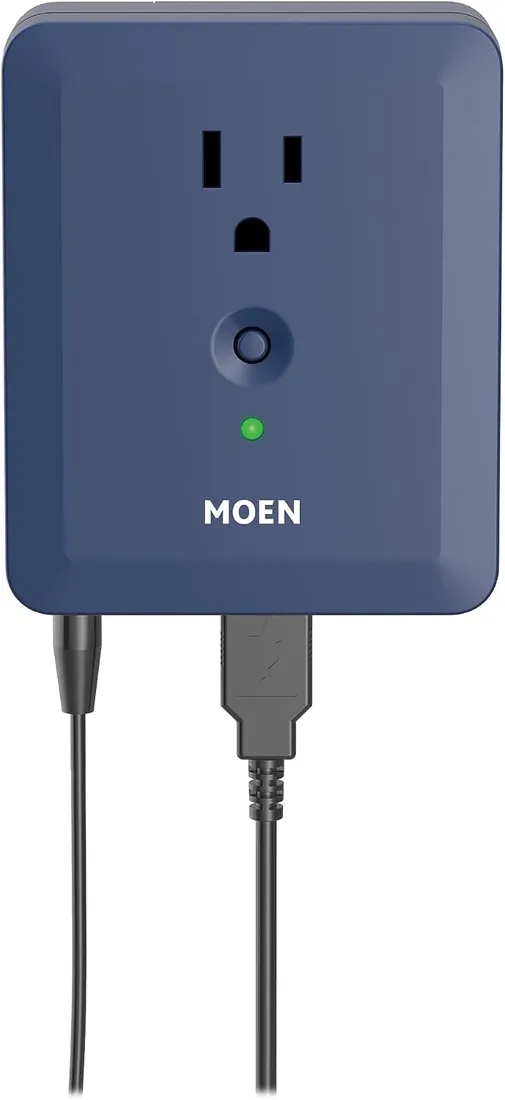
Moen S2000ESUSA Smart Sump Pump Monitor
Wi-Fi monitor with distinct beep patterns for each alert level.
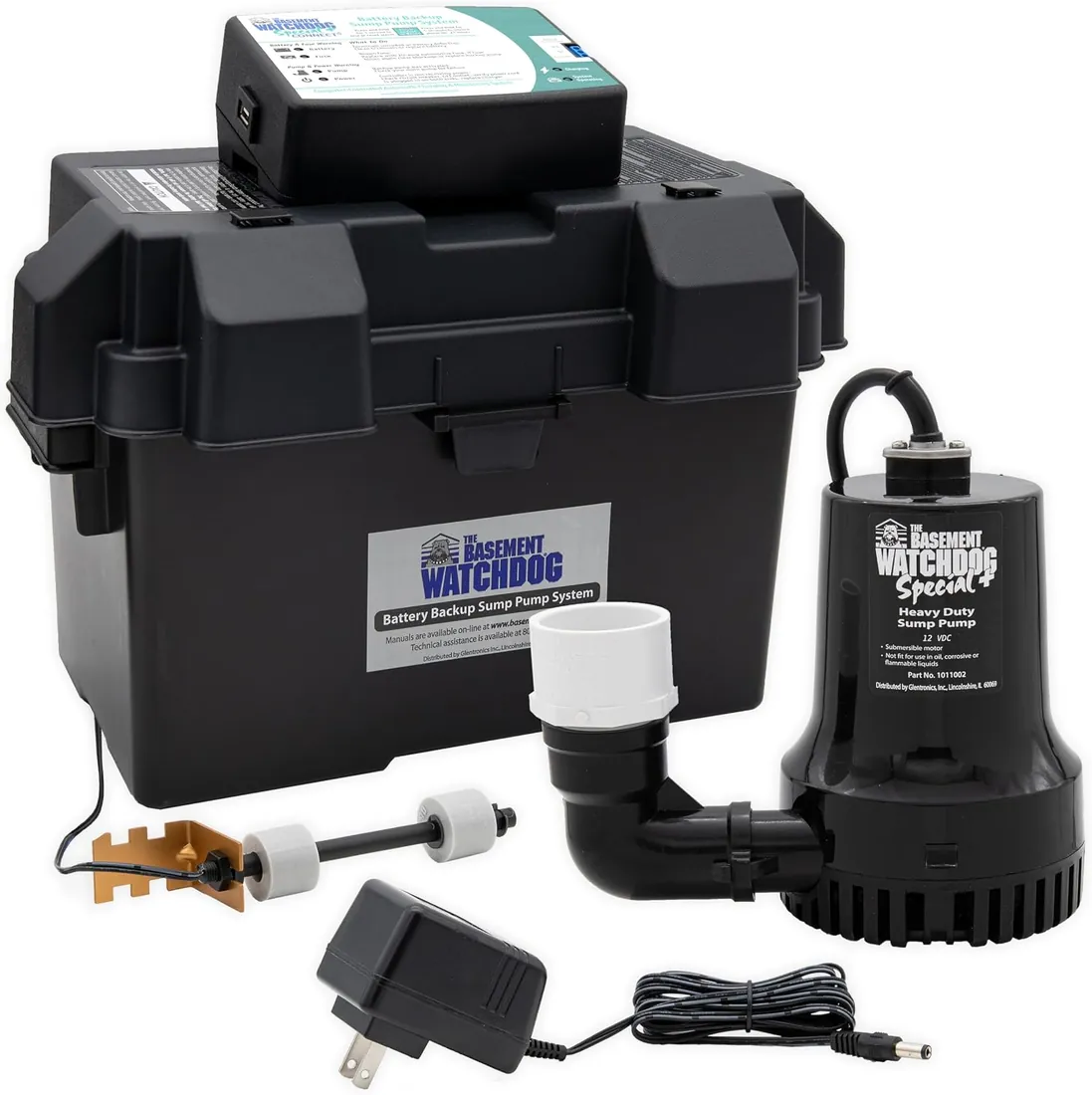
Basement Watchdog Special CONNECT (BWSP) Battery Backup Sump Pump
Backup pump with separate battery, fuse, pump and power alarms.
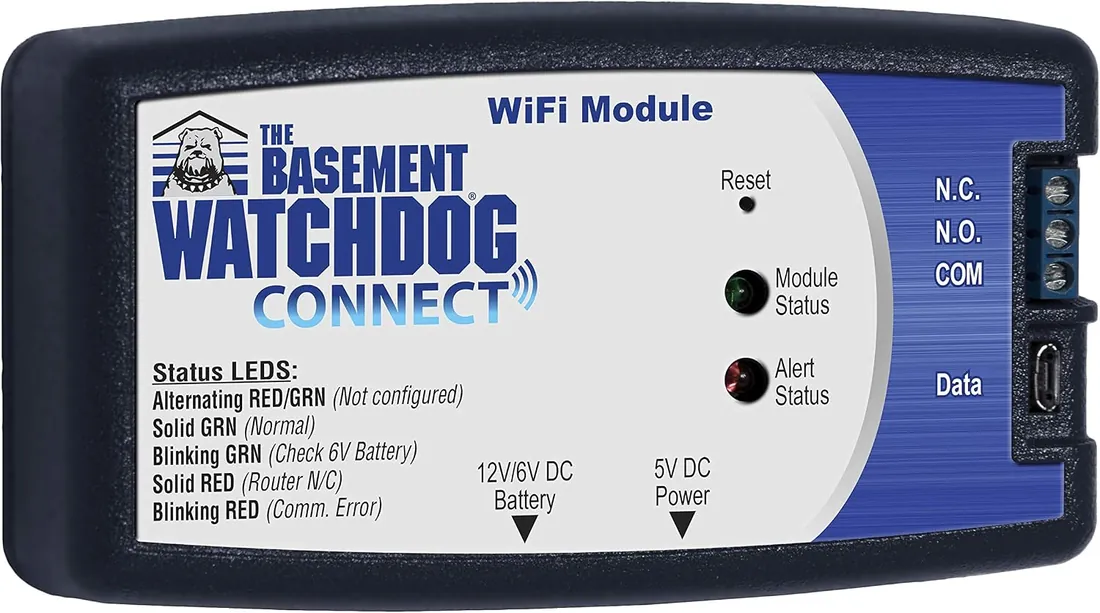
Basement Watchdog BW-WIFI Module
Adds phone alerts to a compatible Basement Watchdog backup system.
Questions readers ask
How do I turn off my sump pump alarm?
Fix the cause first, then use the unit's reset. On the Basement Watchdog Special, a one-second press mutes pump and power alarms for two minutes and a five-second press for a day; the battery alarm cannot be muted. A plain float alarm stops when the water falls.
Why does my sump alarm go off when the pump seems fine?
The pump may be running but losing to the inflow, or a backup pump ran during a power cut and its alarm stays latched until reset. A float alarm mounted too low, or a cord wrapped around its float, can also sound early.
Why is my battery backup beeping?
Usually the battery is low, old or has corroded terminals, or the charger has lost AC power. Check which light is on. Basement Watchdog advises replacing batteries older than five years and allowing a day or two to recharge after a long run.
Should a sump alarm be on its own circuit?
Liberty asks that an alarm be connected to a separate circuit from the pump, so a tripped pump breaker does not also silence the warning. Battery-powered alarms avoid the problem entirely.