Unplug the pump and lift the float by hand. If it binds, clear debris and move the pump so the float swings freely. If it moves but the pump will not respond, plug the pump straight into the outlet: if it runs, the switch has failed. Only tethered piggyback floats adjust much; most vertical and built-in switches are preset.
What a bad float looks like
Float trouble shows up in three ways. The pump never starts although the pit is full, the pump never stops although the pit is empty, or the pump only works after someone taps the discharge pipe. Zoeller's support page addresses that last one directly: on a pump with a built-in float switch it means the switch assembly is failing, and the switch, switch arm and case gasket should be replaced.
The maker charts agree on the usual causes. Wayne lists the switch itself and an obstruction to its travel under pumps that will not start, will not stop and cycle too often. Liberty adds a float that cannot rise because something in the basin is in the way, and Superior names a switch that is stuck or obstructed against the pit wall.
Stuck float or failed switch: a quick test
Work through the test below with the power off between steps. The piggyback plug, where the pump cord plugs into the back of the switch plug, makes the decisive check easy. Liberty designed it for exactly this: in the event of a float switch failure the pump cord can be separated and plugged straight into the outlet. Superior's manual uses the same idea in reverse during setup. With everything plugged in and the float down, the pump should stay silent; if it runs, either the switch is stuck up or the pump was plugged in directly by mistake.
- Unplug the pump and any switch plug from the outlet.
- Lift the float by hand; it should rise and fall without catching.
- Clear grit, string or sludge from the float, rod or guard.
- Plug the pump cord directly into the outlet for a few seconds.
- If the motor runs now, the switch is the fault.
- If it stays silent, check the breaker and GFCI, then the pump.
Which floats can be adjusted, and how far
Adjustment depends on the switch type. On a tethered float, the length of cord between the clip and the float sets the pumping range. Liberty requires at least 3-1/2 in of cord from the tether point to the top of the float for the switch to work, and Superior notes that on its vertical switches the off setting is the only adjustment available.
Many switches are not adjustable at all. Liberty states that its models 251, 257, 281, 287, 291 and 297 have factory-preset floats; other ranges come from tethering a separate switch. Wayne says its tether switch is not adjustable and that changing it alters the pump's application and life expectancy. Zoeller says an automatic unit with a self-contained float cannot be adjusted, but it can be converted with its long-cycle kit or replaced by a non-automatic pump on a piggyback variable-level switch.
Whatever you change, keep the off level high enough. Liberty treats its published off level as the minimum depth that keeps the motor cooled and the impeller covered, so never set a float lower than the maker allows.
Give the float room to work
A float that touches anything will eventually stick. Wayne wants at least 1 in between the switch and the basin wall, with the switch facing away from the inlet so incoming water does not push it around. Zoeller recommends a pit of 18 in or more across for variable-level floats and rigid piping so the pump cannot shift. Liberty's manual lets its vertical magnetic float models work in a pit as narrow as 10 in, but asks for 14 in for ordinary groundwater use.
Where a pit holds a backup pump or an alarm float as well, Zoeller suggests mounting the switches on a separate hanger so they cannot hang up on pumps, pipes or valves. Tie every cord to the discharge pipe, clear of the float's travel.
| Maker | Guidance |
|---|---|
| Wayne | At least 1 in from switch to basin wall; 11 in pit minimum for vertical models |
| Zoeller | Pit 18 in or larger for variable-level floats; rigid piping |
| Liberty | 14 in pit recommended; 10 in allowed for vertical magnetic float models |
| Superior | 14 in minimum pit; float must swing without touching the sides |
Figures: Wayne submersible sump pump manual 600002W-001 J; Zoeller installation instructions FM2676; Liberty Pumps installation manual 7035000R; Superior Pump submersible sump pump owner's manual (10/08).
Replacing a float switch
For pumps with a separate piggyback switch, replacement is a plug-in job. A tethered switch such as the Superior 92005 gives a wide range for big pits, while a vertical piggyback switch suits narrow ones. An electronic switch like the HydroCheck HC6000 has no swinging float to snag. Check that any switch is rated for your pump's current before you plug it in.
Built-in switches need the maker's own kit. Wayne sells float and switch kits for its models and asks for a new tether switch every two years. Zoeller says its integral switches last four to seven years on average and that service should go through its authorized centers. If a pump with a fixed switch is several years old, replacing the whole pump is often simpler. After any change, run the basin cycle calculator with the new on and off levels to see how often it will start.
| Kit | Wayne part number |
|---|---|
| Float kit | 60038-WYN1 |
| Vertical float switch kit | 30074-WYN1 |
| Tether switch | 56835-002 |
Common mistakes
- Shortening a tether to stop short cycling, which makes cycles shorter still.
- Setting a float below the maker's minimum off level and exposing the motor.
- Mounting a tethered float where it can swing into a backup pump.
- Running a 208/230 V pump by unplugging the switch instead of using the breaker.
- Plugging a new switch into a pump that draws more current than it is rated for.
Products that fit
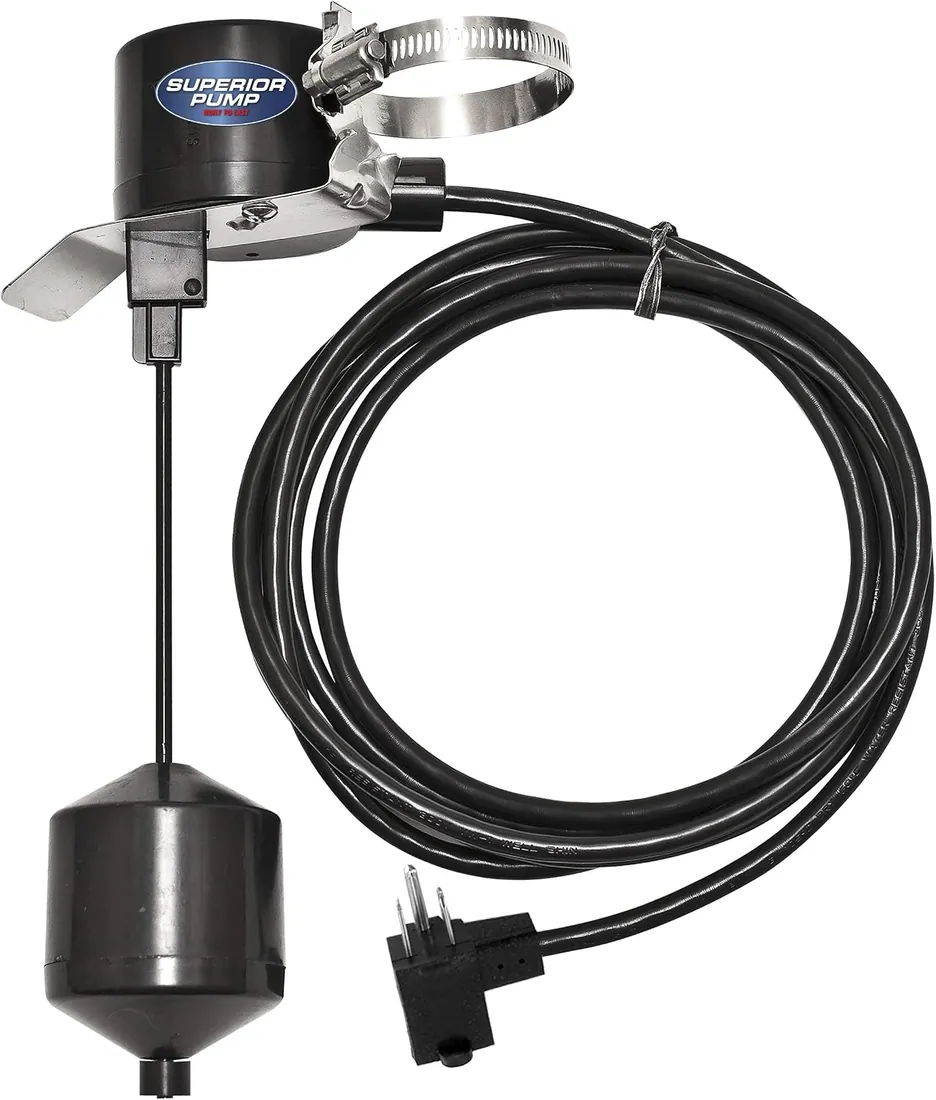
Superior Pump 92010 Vertical Float Switch
Vertical piggyback switch for pits too narrow for a swinging float.
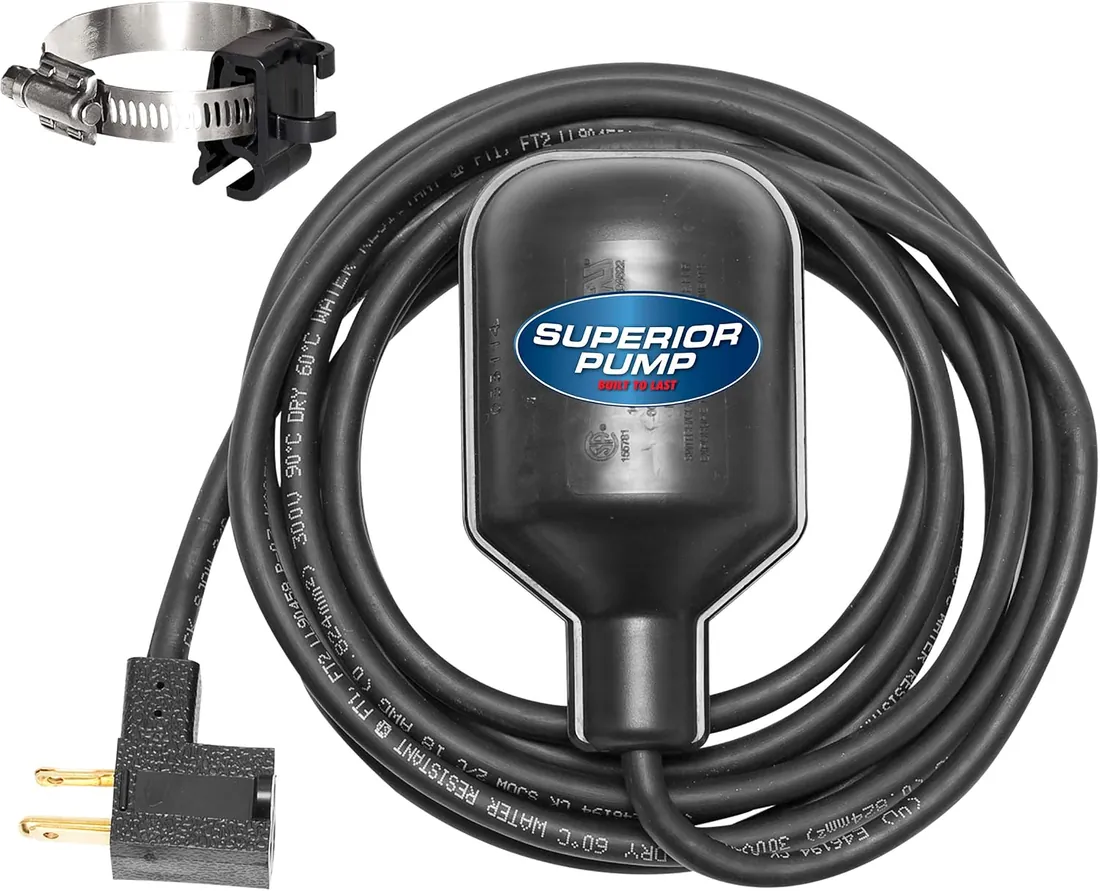
Superior Pump 92005 Tethered Float Switch (25 ft)
Tethered piggyback switch with a long cord for a wide pumping range.
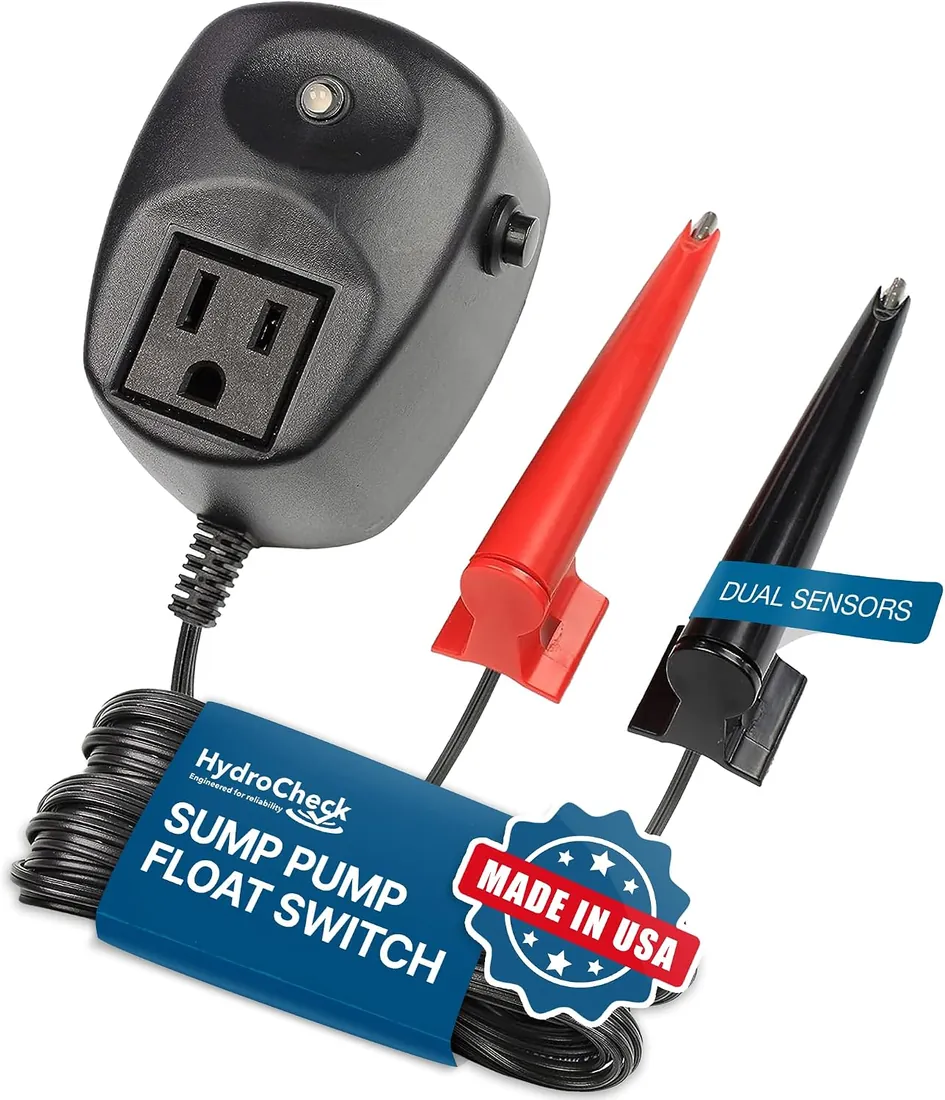
HydroCheck HC6000 Electronic Float Switch
Electronic switch with no moving float to snag on the pit wall.
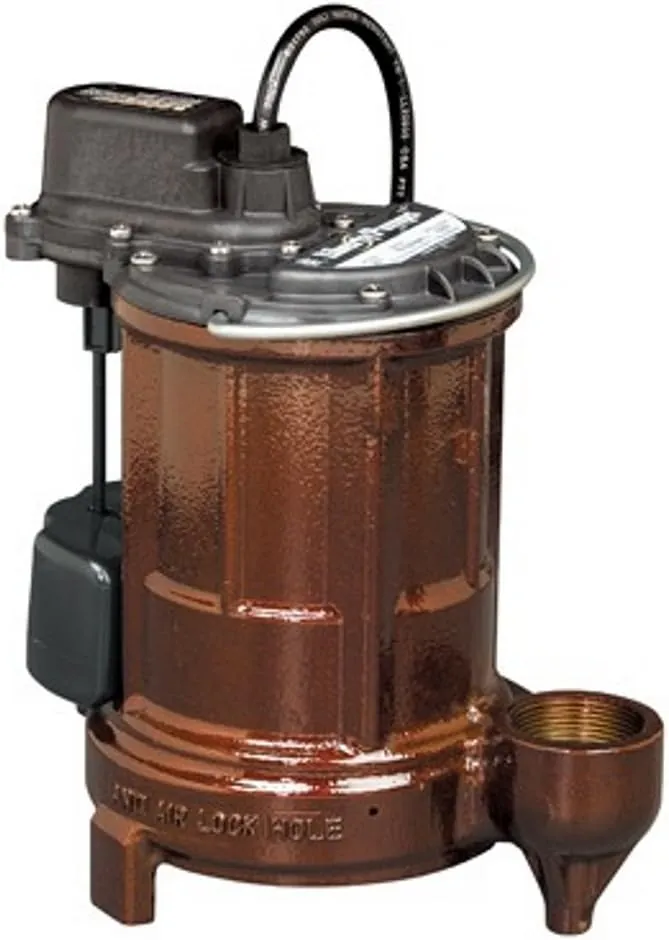
Liberty Pumps 257 Sump Pump
Pump with a preset vertical magnetic float for small pits.
Questions readers ask
How do I adjust the float switch on my sump pump?
On a tethered piggyback switch, move the clip to change the cord length, keeping the length the maker requires. Built-in and most vertical switches are preset and cannot be adjusted; Liberty, Wayne and Zoeller all say so for their fixed-switch models. In that case fit a separate adjustable switch instead.
How long does a sump pump float switch last?
Zoeller puts the average life of its integral switches at four to seven years, depending on use. Wayne asks owners to replace tether switches every two years as routine maintenance, because a worn switch is the most common route to a flooded basement.
How do I know if the float switch is bad or the pump?
Unplug the pump from the switch's piggyback plug and plug it straight into the outlet. If the motor runs, the pump is fine and the switch has failed. If it does not run, check the breaker and GFCI, then suspect the pump.
Why does my float switch get stuck?
Usually it touches the pit wall, the discharge pipe, a cord or a second pump, or debris builds up around it. Level the pump, give the float clear room on every side and tie the cords out of its path.