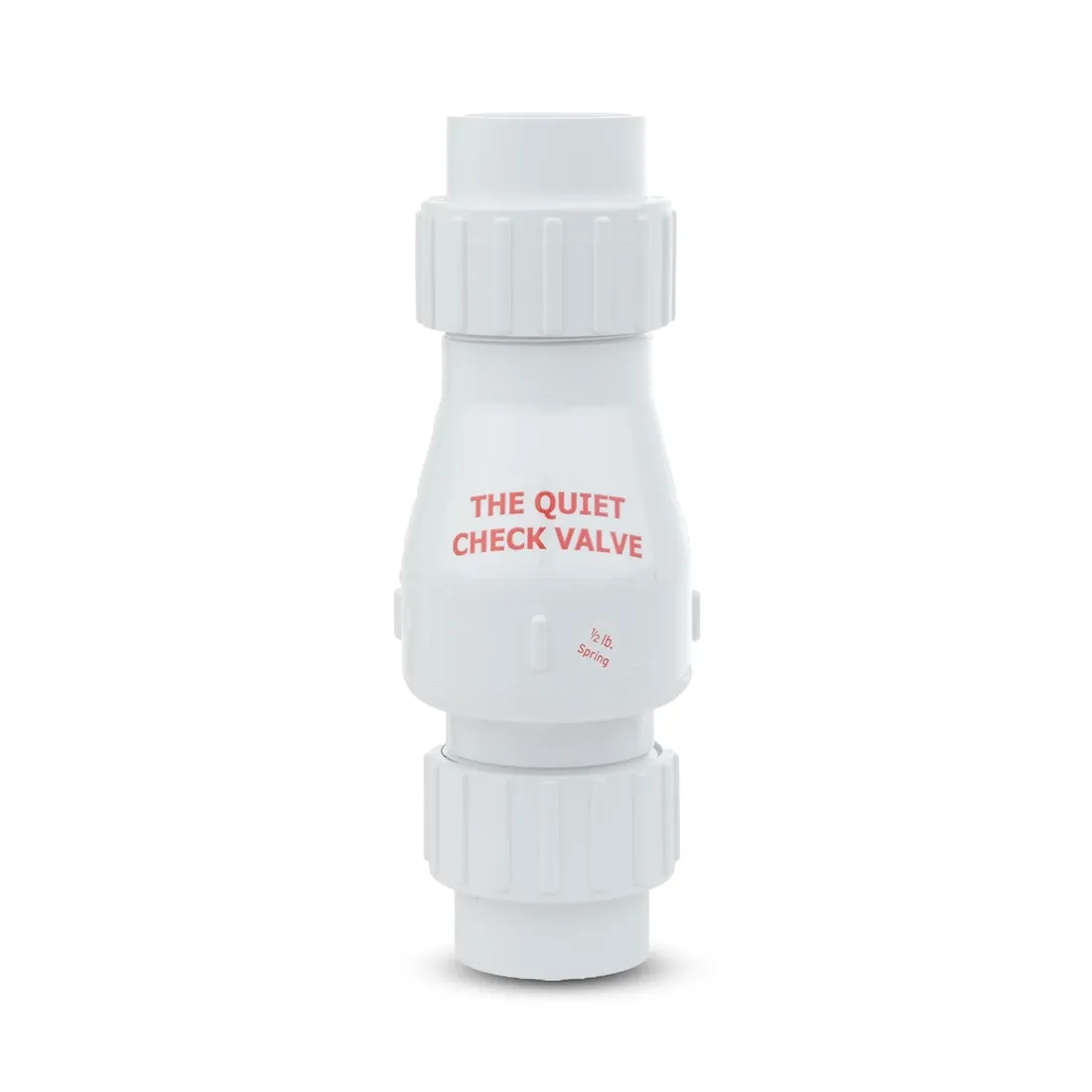
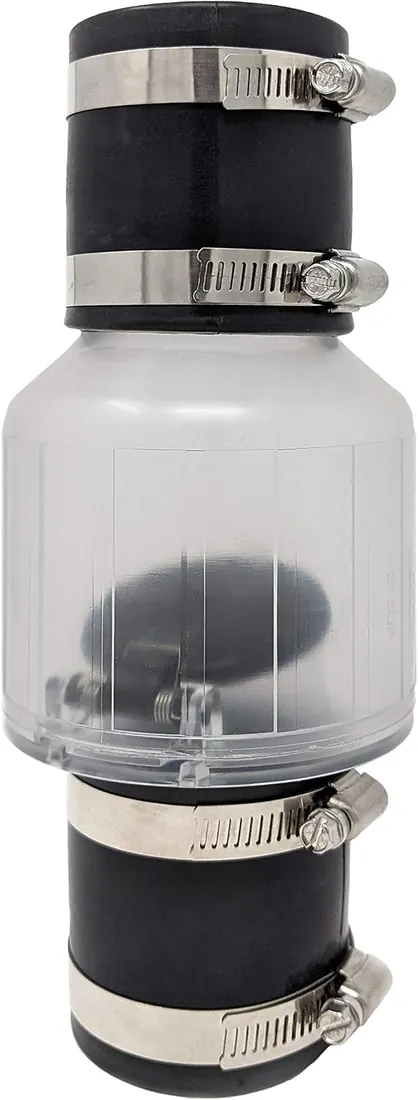
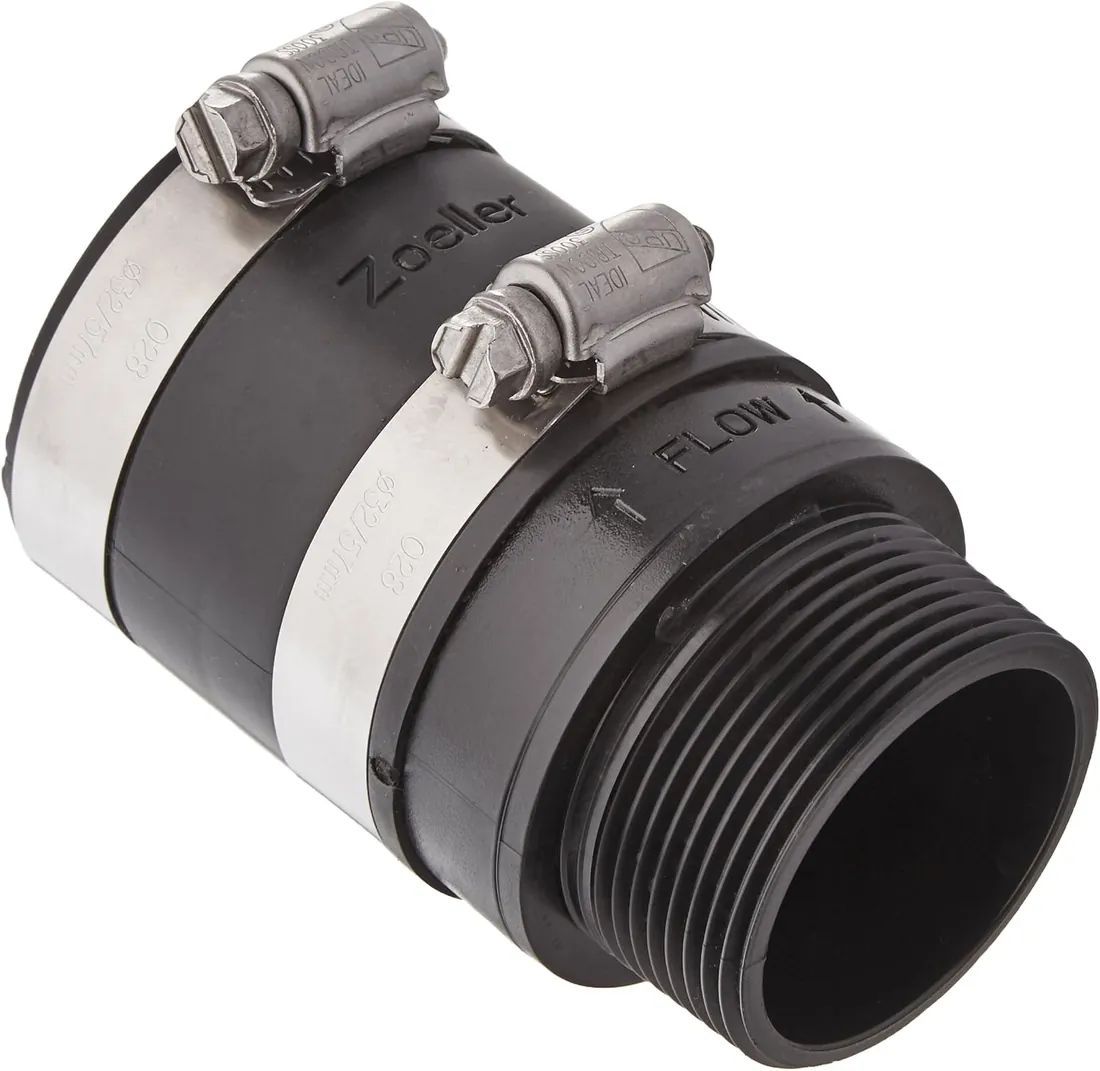
A check valve stops the water in the discharge pipe from falling back into the sump pit every time the pump shuts off. Without one, the pump re-pumps the same water, cycles more often and wears out sooner. Install it on the vertical discharge pipe a foot or two above the pit lid, with the arrow pointing up (toward the outlet), and drill a small weep hole in the pipe below the valve, inside the pit, so the pump does not air-lock.
Why a sump pump needs one
A typical 1.5-inch discharge pipe holds about 0.1 gallons per foot. With 12 ft of pipe, more than a gallon falls back into the pit after every cycle. In a small pit that can be enough to lift the float again, so the pump starts more often than it needs to. Each start is wear on the motor and switch, and the backflow makes a loud thump.
Swing vs spring (silent) check valves
| Type | How it closes | Pros | Cons |
|---|---|---|---|
| Swing (flapper) | A hinged flap falls shut | Cheap, low flow resistance | Loud thump on closing; must be installed in the right orientation |
| Spring-loaded 'quiet' or 'silent' | A spring closes the valve before water reverses | Much quieter; works vertically or horizontally | Slightly more resistance; can be blocked by debris |
| Clear-body | Either type, with a transparent housing | You can see whether it is working | Usually costs more |
For a basement near living space, a spring-loaded quiet check valve is worth the small extra cost. Most sump check valves connect with rubber couplings and hose clamps, which makes them easy to remove for cleaning.
Where and how to install it
- Position: on the vertical discharge, about 1 to 2 ft above the pit lid, where you can reach it.
- Direction: the arrow on the body points in the direction of flow, up and away from the pump.
- Weep hole: drill a 1/8 to 3/16 inch hole in the discharge pipe a few inches above the pump, angled down, inside the pit. It lets trapped air escape so the pump can prime.
- Unions: use the rubber couplings or a union so the valve and pump can be removed without cutting pipe.
- Test: fill the pit with a bucket of water and watch a full cycle; listen for a soft click rather than a thump.
Signs a check valve is failing
- The pump turns on again within seconds of shutting off, with no new water coming in.
- You hear water rushing back into the pit after the pump stops.
- A loud bang when the pump shuts off (water hammer from a slow-closing flapper).
- Water dripping from the valve's couplings.
Debris holding the valve open is the usual cause; remove it, clean it and reinstall. A cracked body or a weak spring means replacement. Pair a new valve with a check of the discharge line.