The short answer
Run the discharge in pipe at least the size of the pump outlet, usually 1.5 inch PVC, with a check valve above the pit, a union for servicing, and an exit at least 10 to 20 ft from the foundation on ground that slopes away. Flexible hose kits are fine for temporary use or the final outdoor run. In cold climates, add a freeze-protection fitting near the house so a frozen line does not back up into the basement, and never send sump water into the sanitary sewer unless your local code allows it.
Pipe size and material
| Option | Best for | Watch out for |
|---|---|---|
| 1.5 inch Schedule 40 PVC | Permanent indoor runs | Use solvent-weld joints and support every few feet |
| 1.25 inch PVC | Smaller pumps with 1.25 inch outlets | Do not reduce below the pump outlet size |
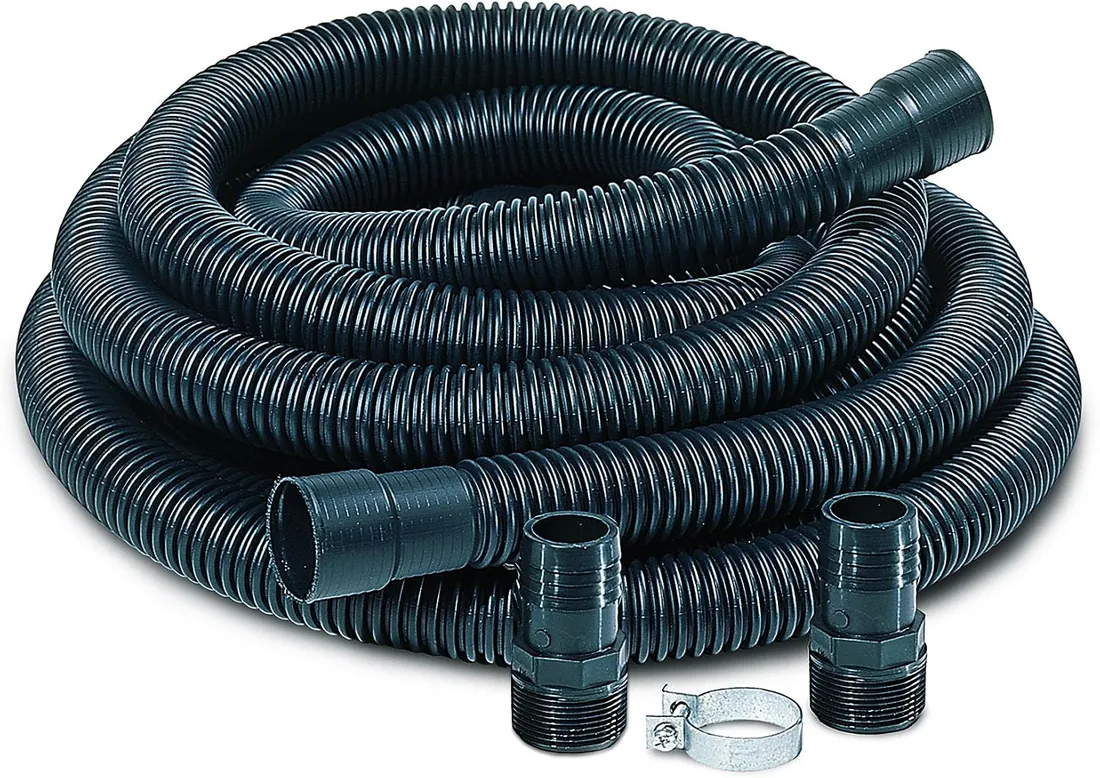
| Flexible corrugated hose kit | Temporary use, the outdoor run beyond the wall | Kinks and low spots that hold water |
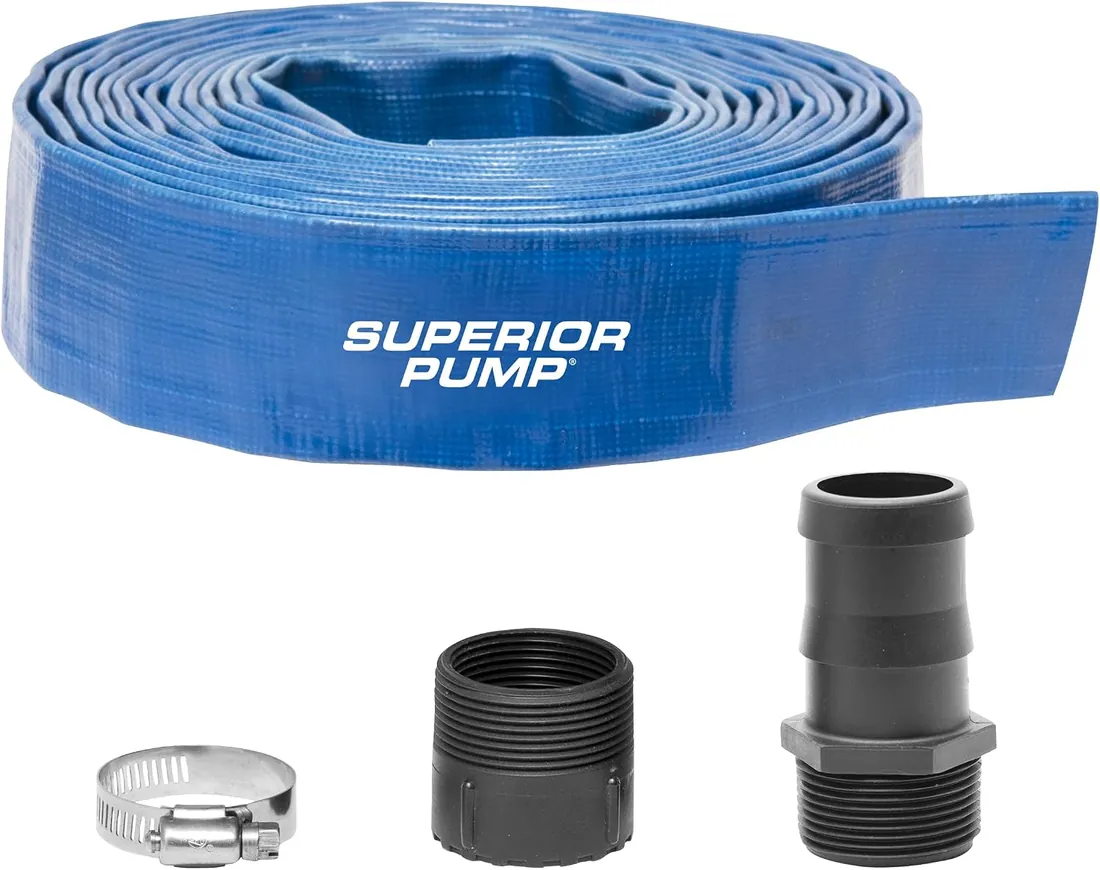
| Lay-flat hose | Portable and emergency pumping | Not for permanent installs |
Pumpendium mathFriction adds up: at 30 gpm, 1.5 inch PVC loses roughly 2 to 3 ft of head per 100 ft, while 1.25 inch loses roughly 8 to 9 ft. On a long run, reducing the pipe size can cut a pump's output noticeably.
Layout from pit to yard
- Vertical riser from the pump, with a weep hole just above the pump.
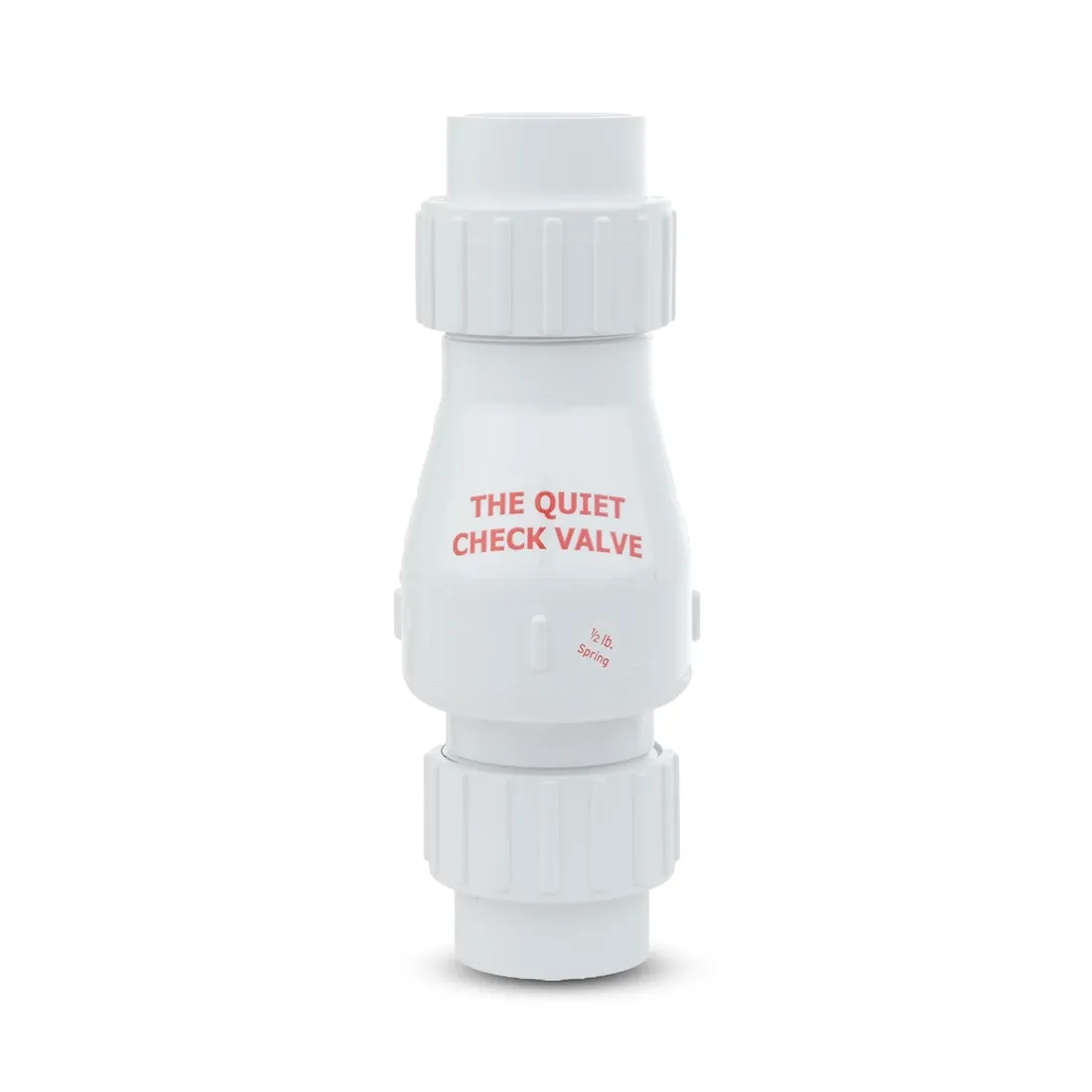
- Check valve a foot or two above the pit lid (see sump pump check valves).
- Union or rubber coupling above the valve so the pump can be lifted out.
- Horizontal run to the wall with a slight slope back toward the pit, so water drains out of the pipe after each cycle.
- Exit through the rim joist with a sealed sleeve, then outside to a splash block, drain tile or dry well 10 to 20 ft from the house.
Discharging right next to the foundation sends water straight back into the drain tile, so the pump runs again and again.
Freeze protection
- Slope the outdoor line so it drains completely; standing water freezes first.
- Fit a freeze-protection or 'ice guard' fitting at the wall, which lets water escape if the line beyond is frozen.
- Bury permanent outdoor lines below the frost line or use a larger diameter that is less likely to freeze solid.
- Disconnect temporary hose kits in winter.
Where sump water can and cannot go
- Usually allowed: the yard, a dry well, a rain garden, or a storm drain where permitted.
- Usually prohibited: the sanitary sewer or septic system (it overloads treatment), a neighbor's property, or across a sidewalk where it can freeze.
- Rules vary by municipality; check before connecting to any public drain.
Related: sump pump vs utility pump and backup sump pumps.
Products mentioned
Questions readers ask
What size pipe should a sump pump discharge be?
At least the size of the pump outlet, usually 1.5 inch. Do not reduce it; smaller pipe adds friction and cuts flow.
How far should a sump pump discharge be from the house?
At least 10 to 20 ft, onto ground that slopes away, so the water does not return to the foundation drain.
Can I connect my sump pump to the sewer?
In most places, no. Sump water must go to the yard or a storm system; sending it to the sanitary sewer is usually prohibited.
How do I stop my sump pump line from freezing?
Slope the line so it drains, fit a freeze-protection fitting at the wall, and bury permanent lines below the frost line.