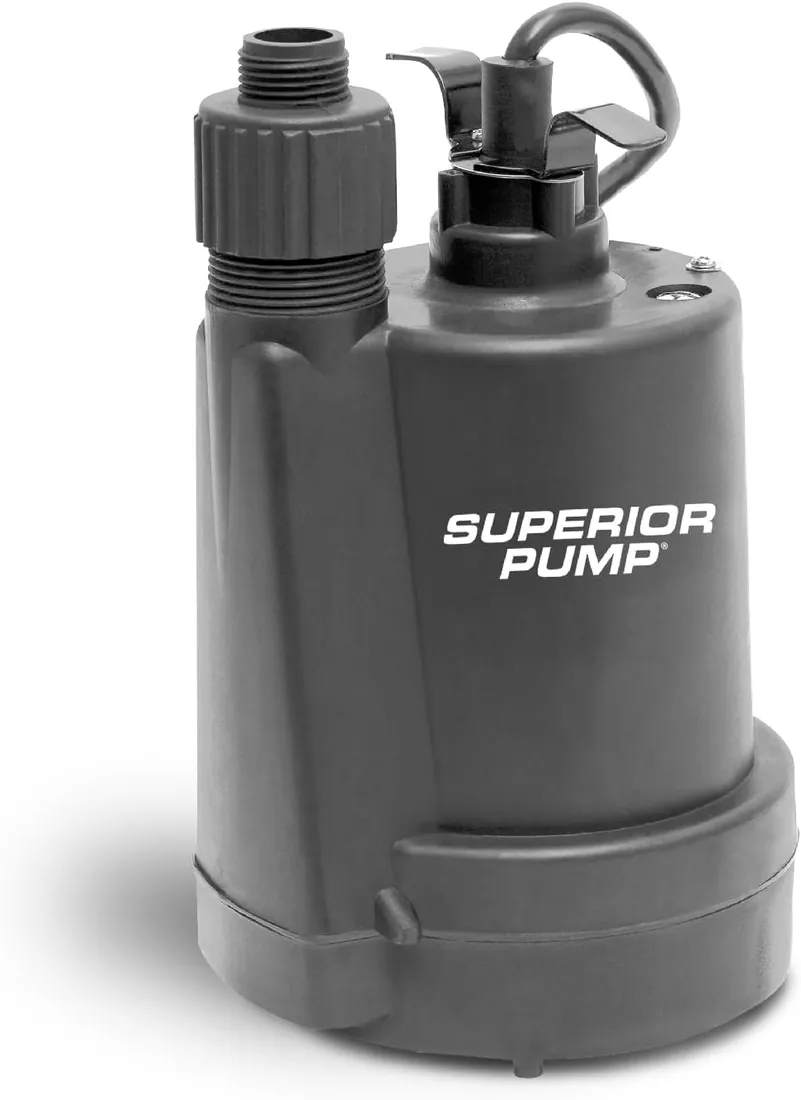
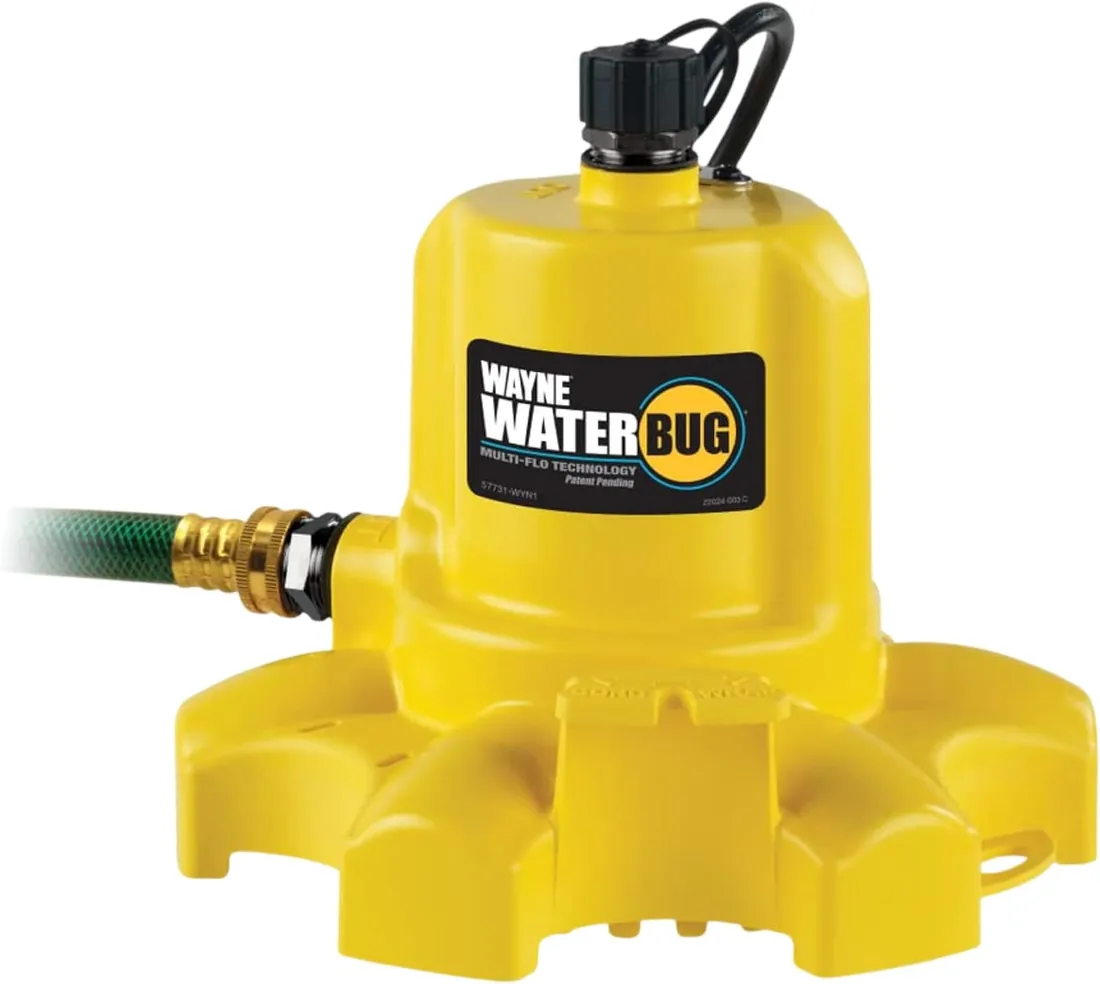
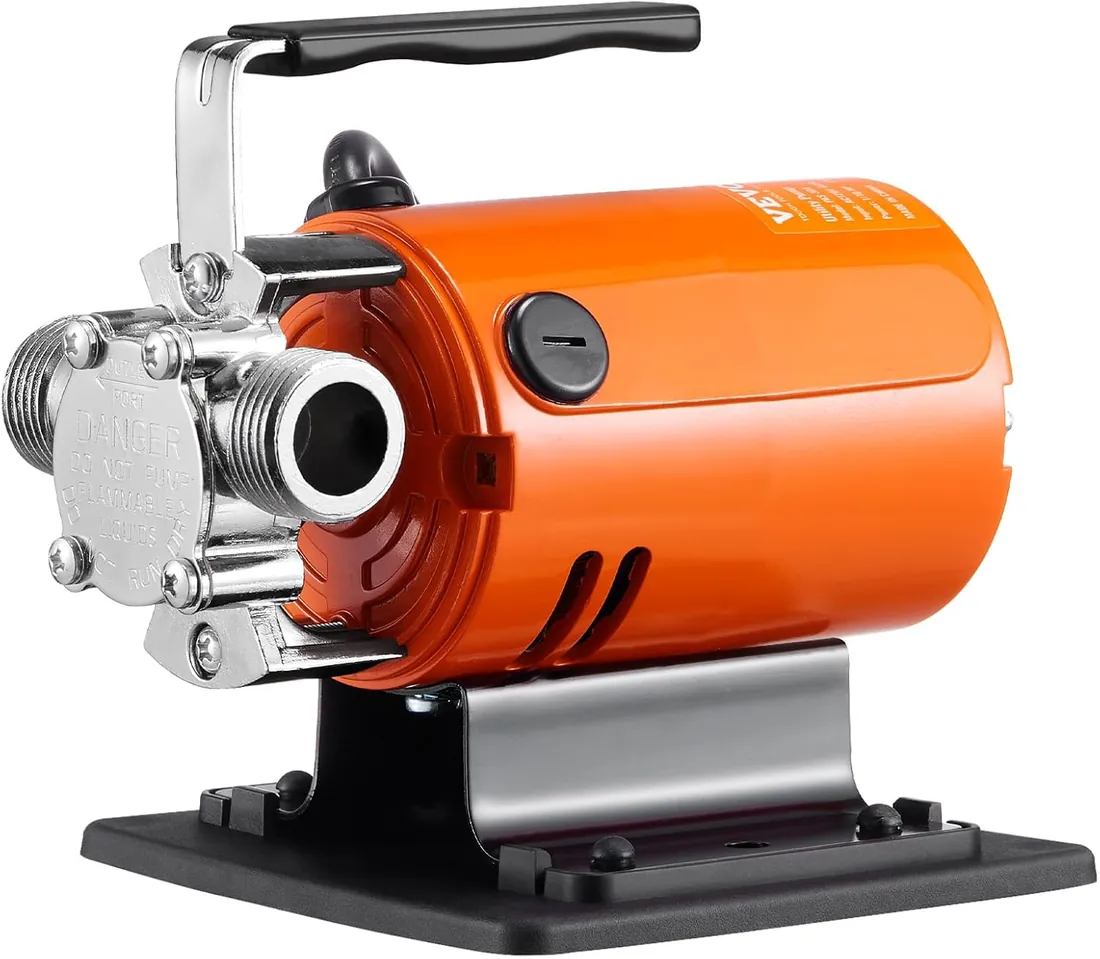
A utility pump is usually submersible: you drop it into the water and it pushes water out through a hose, so it never needs priming and handles flooding well. A transfer pump sits outside the water and draws it through an inlet hose, then pushes it through an outlet hose; it is lighter and better for moving water between containers, but most need priming and can lift water only about 15 to 25 ft by suction. For a flooded basement, use a utility pump; for emptying a rain barrel into a tank or draining a water heater from a dry spot, a transfer pump is convenient.
Side by side
| Utility pump (submersible) | Transfer pump (surface) | |
|---|---|---|
| Position | In the water | Beside the water, on a dry surface |
| Priming | Not needed | Usually needed; some self-priming |
| Suction lift | Not applicable | Limited to about 15 to 25 ft |
| Hoses | Outlet only | Inlet and outlet |
| Pumping down to | About 1/8 to 1/2 inch with low-water models | As far as the inlet hose reaches |
| Best for | Flooding, pits, tanks you can reach into | Moving water between containers, from tanks, rain barrels |
Which pump for which job
- Flooded basement or crawl space: utility pump.
- Pool cover: utility pump; some are made specifically for covers with automatic switches.
- Draining a tank water heater: either; a transfer pump with a short inlet hose on the drain valve keeps the pump dry.
- Flushing a tankless water heater: a small submersible utility pump in a bucket of descaler (see flushing a tankless heater).
- Rain barrel to garden or tank: transfer pump.
- Boosting pressure for a hose: neither is designed for it; use a booster pump.
Reading the performance numbers
Pump makers quote maximum flow at zero lift and maximum head (lift) at zero flow. Real jobs sit in between: a utility pump rated for 1,800 gallons per hour might deliver half that through 50 ft of garden hose lifting water 10 ft. Check the flow chart at your lift, and use the largest hose the pump accepts.
Tips for either pump
- Never run either pump dry for more than a few seconds; the seals depend on water for cooling.
- Use a GFCI outlet and keep the plug and connections out of the water.
- Fit a strainer on transfer pump inlets to keep debris out.
- Flush with clean water after pumping dirty or chemical-laden water.
Related: sump pump vs utility pump.