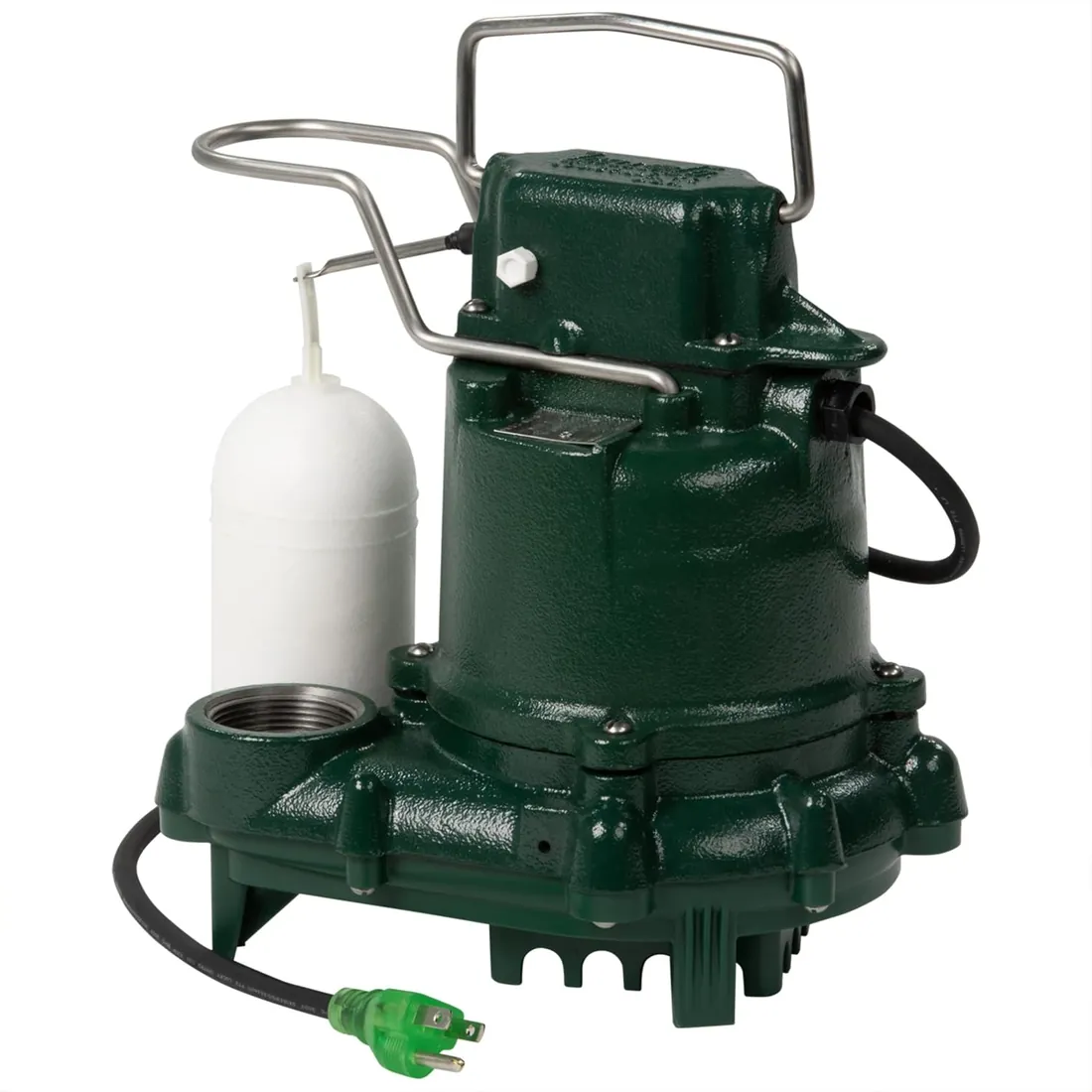
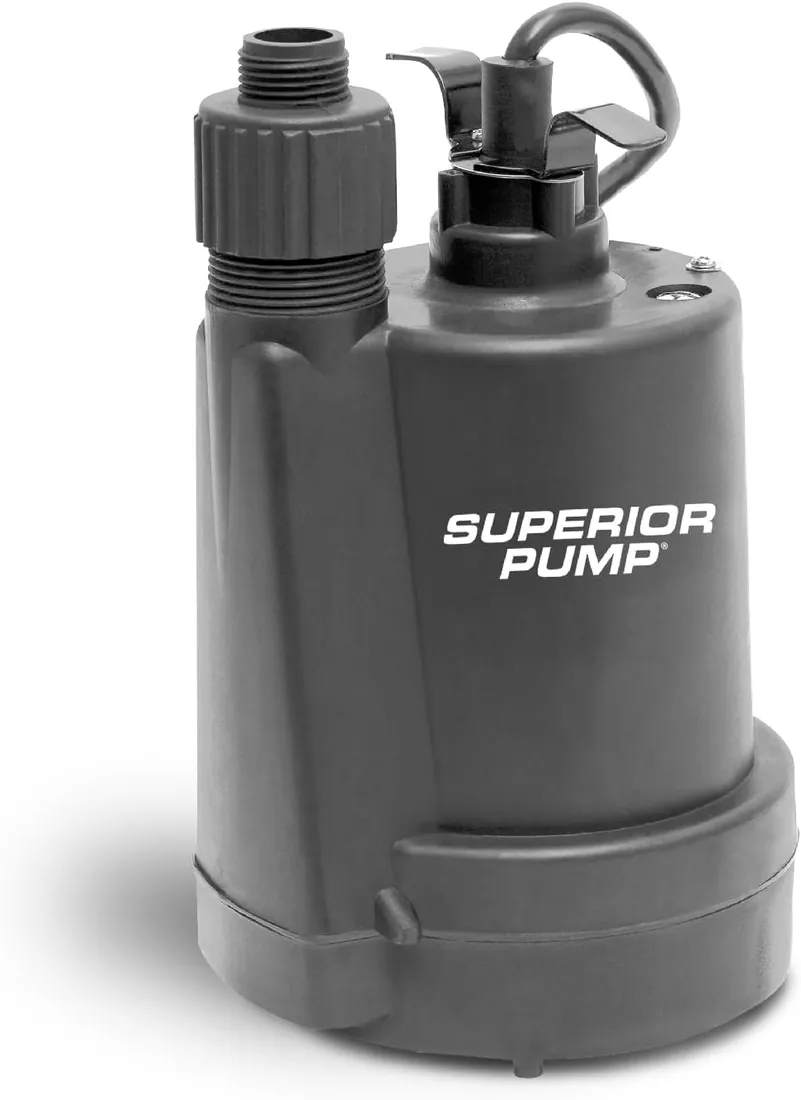
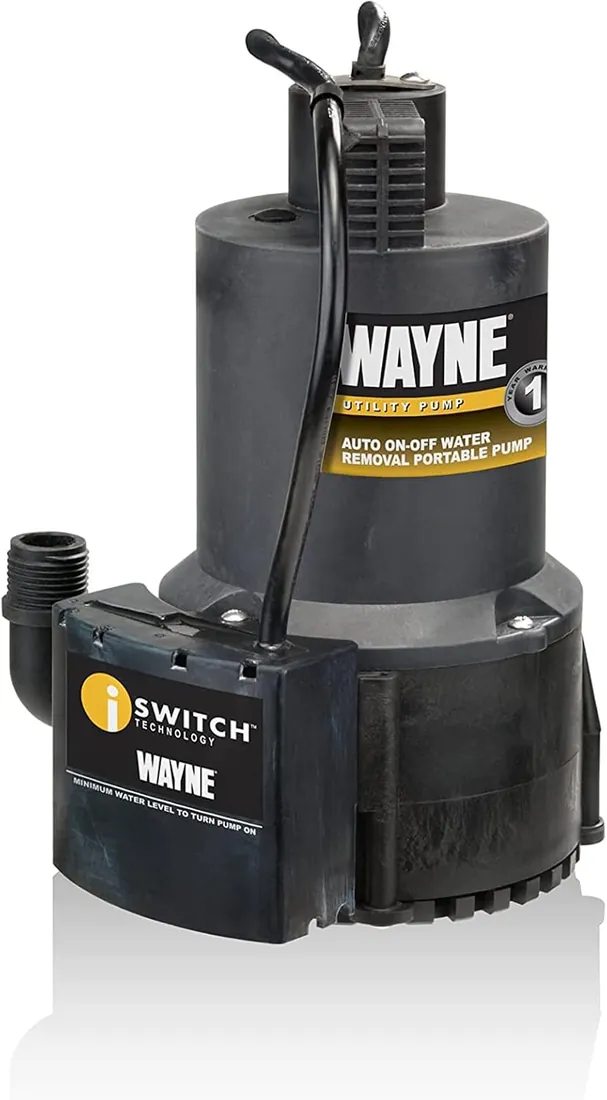
A sump pump lives permanently in a basement pit, switches itself on with a float when water rises and discharges through a rigid pipe outside. A utility pump is portable: you place it in standing water, connect a garden hose, and usually start it by hand (some have automatic switches). Use a sump pump for ongoing groundwater control; use a utility pump to drain a flooded floor, a water heater, a pool cover or a hot tub. A utility pump in a sump pit is a short-term stopgap, not a replacement.
The key differences
| Sump pump | Utility pump | |
|---|---|---|
| Installation | Permanent, in a pit | Portable |
| Switching | Automatic float switch | Usually manual; some automatic |
| Discharge | 1.25 to 1.5 inch rigid pipe with check valve | Garden hose thread, sometimes a larger hose |
| Duty | Built for repeated cycling over years | Built for occasional jobs |
| Typical flow | Higher, to keep up with storms | Moderate; limited by the hose |
| Typical uses | Groundwater, basement flood prevention | Draining floors, tanks, pool covers, water heaters |
When to use each
- Your basement has a sump pit: it needs a sump pump with a float switch and, ideally, a backup.
- Water on the floor after a leak or storm: a utility pump, then a wet/dry vacuum (see pumping out a flooded basement).
- Draining a water heater or flushing a tankless heater: a small utility pump (see flushing a tankless heater).
- Moving water between containers or from a well or tank: a transfer pump may suit better (see utility pump vs transfer pump).
Using a utility pump in a sump pit
If the sump pump fails during a storm, a utility pump can keep the pit down for a while. It will need someone to switch it on and off unless it has an automatic switch, and a garden hose carries much less water than a 1.5-inch discharge pipe. Replace the sump pump as soon as you can.
What to look for
- Sump pump: cast-iron or stainless housing for longevity, a vertical or tethered float that suits your pit size, and flow at your actual lift.
- Utility pump: a low-water design if you need to pump down to a thin film, a long cord, and a removable intake screen.
- Both: plug into a GFCI outlet and never run dry for long.