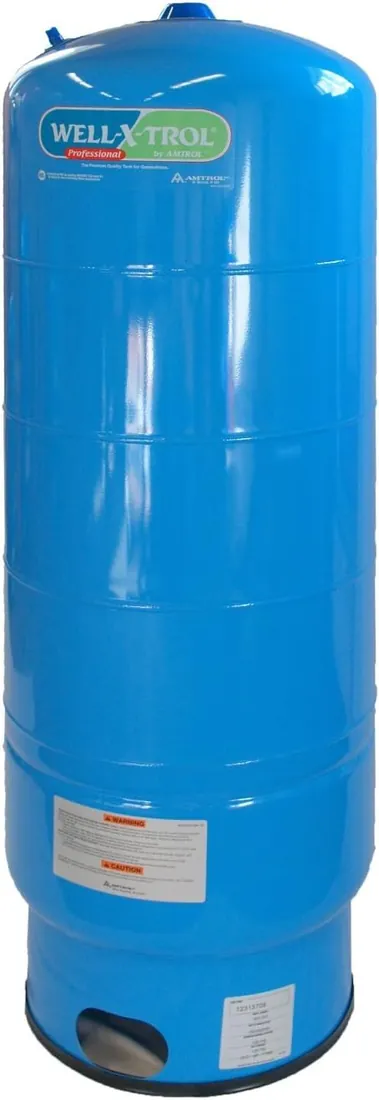
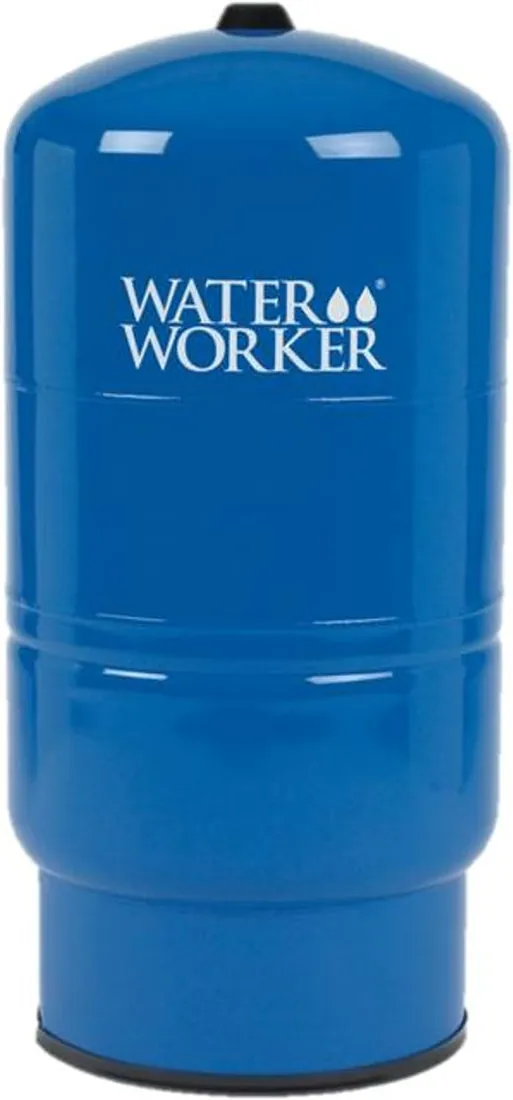
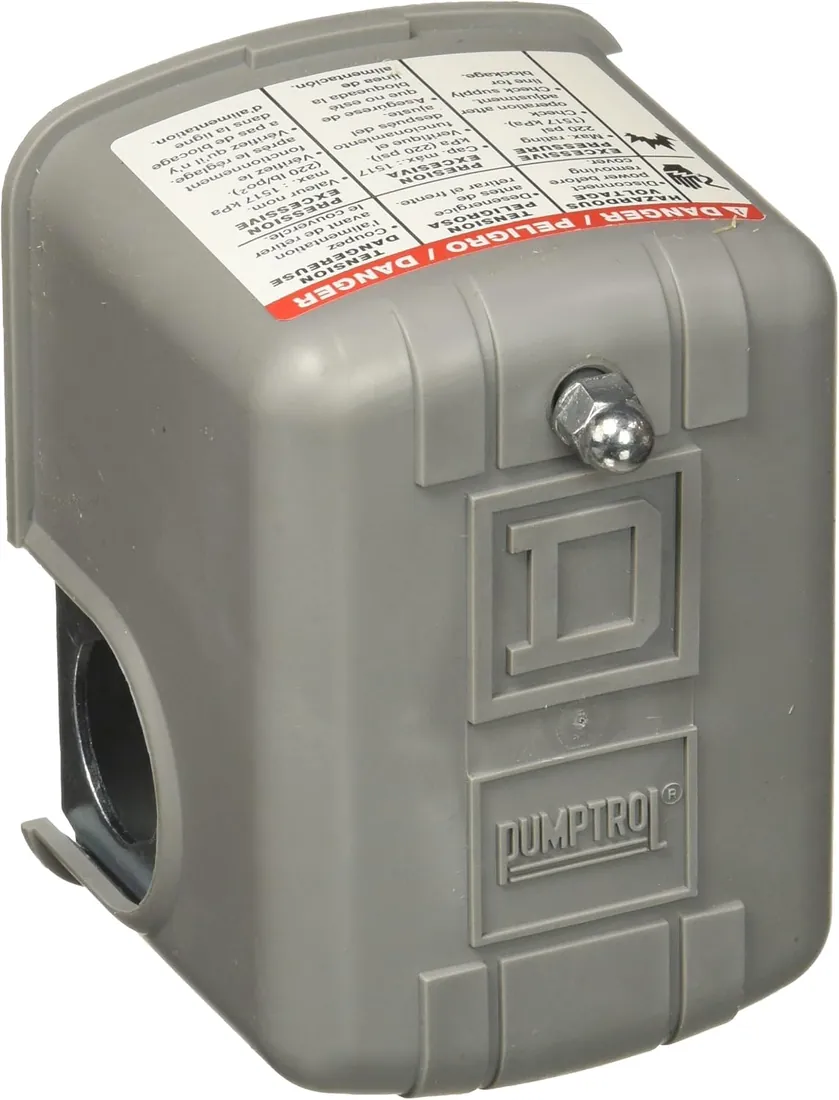
Size a well pressure tank so the pump runs at least 1 minute per cycle (many makers recommend 1 to 2): drawdown needed = pump flow in gpm × minimum run time. A 10 gpm pump needs about 10 to 20 gallons of drawdown, which at a 40/60 setting usually means a tank sold as 44 to 86 gallons, because drawdown is only about a quarter to a third of the tank's total volume. Set the tank's air precharge 2 psi below the cut-in pressure with the pump off and the tank drained.
Why tank size matters
Every pump start causes a surge of current and heat in the motor. A tank that is too small lets pressure fall to the cut-in point quickly, so the pump starts and stops many times an hour, which is called short-cycling. That is the most common cause of early pump, switch and capacitor failure. A correctly sized tank lets the pump run longer and start less often.
Sizing by drawdown
Drawdown is the water the tank delivers between the cut-out pressure (pump stops) and the cut-in pressure (pump starts). It depends on the tank's total volume and the pressure setting; makers publish drawdown tables for each tank.
| Pressure setting | Drawdown (approx.) | Tank volume for 10 gal drawdown |
|---|---|---|
| 20/40 psi | About 34% | About 29 gallons |
| 30/50 psi | About 30% | About 33 gallons |
| 40/60 psi | About 26% | About 39 gallons |
| 50/70 psi | About 22% | About 45 gallons |
Tanks are sold by total volume or by an 'equivalent' size, so always read the maker's drawdown chart at your pressure setting. Two smaller tanks plumbed together add their drawdowns.
Setting the precharge
- Switch off power to the pump at the breaker.
- Open a faucet and drain the system until no more water comes out.
- Check the air pressure at the tank's Schrader valve (on top) with a tire gauge.
- Adjust to 2 psi below the cut-in pressure: 38 psi for a 40/60 switch, 28 psi for 30/50.
- Close the faucet, restore power and let the system refill.
Signs of a waterlogged or undersized tank
- The pump clicks on and off every few seconds while a tap runs.
- Pressure swings rapidly between low and high at the shower.
- The pressure gauge needle jumps instead of falling slowly.
- Tapping the tank sounds dull all the way up (full of water) instead of hollow near the top.
Related: pressure switch settings and deep well submersible pumps.