A basement sump pump has one job: keep the pit from overflowing while the motor survives years of short, frequent runs. This list covers primary pumps for an ordinary residential pit with a lift of roughly one storey. Every pick switches itself on, uses a 1-1/2 in discharge that matches most existing plumbing and has a cast iron motor housing or volute to carry heat into the water.
If your pit fills very quickly or the pipe climbs well above the basement ceiling, start with the stronger Zoeller M98 and size it with the sizing calculator. Backup systems, sewage ejectors and utility pumps have their own lists, because they solve different problems.
- Qualifies if
- Automatic switch that needs no separate control box.
- A 1-1/2 in NPT discharge connection.
- Cast iron motor housing or volute named in the maker's documents.
- Horsepower, switch levels and warranty published by the maker.
- On the list
- 5 pumps
The picks
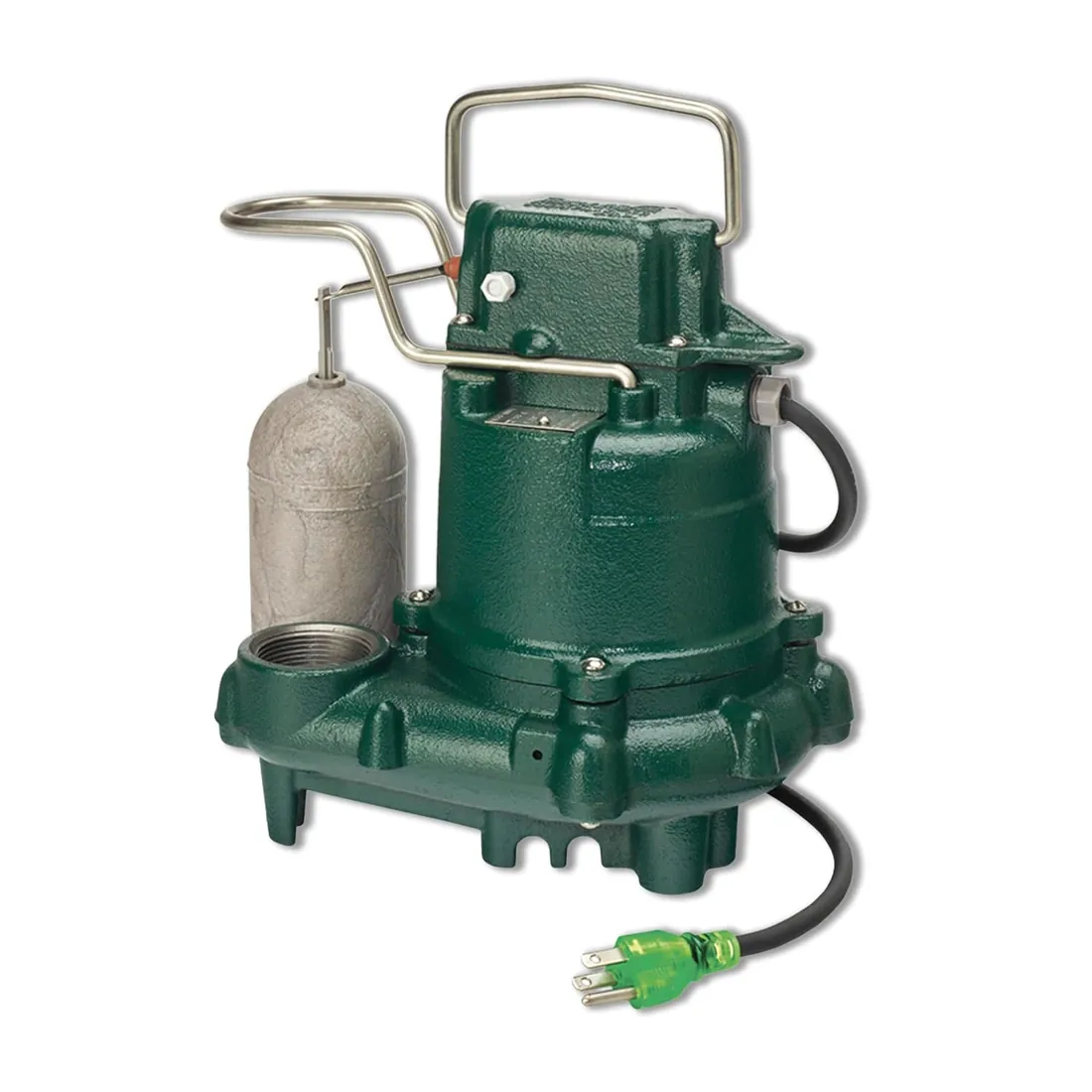
Zoeller M63 Premium Sump Pump
Best for: Owners who want the most iron for a standard pit
The M63 shares the familiar Mighty-Mate curve, 43 GPM at 5 ft and 19.25 ft of shut-off head, but Zoeller casts the impeller and base in iron as well as the housings. Its float switch sits inside a guard, and the maker backs it for five years rather than three, the longest cover on this list.
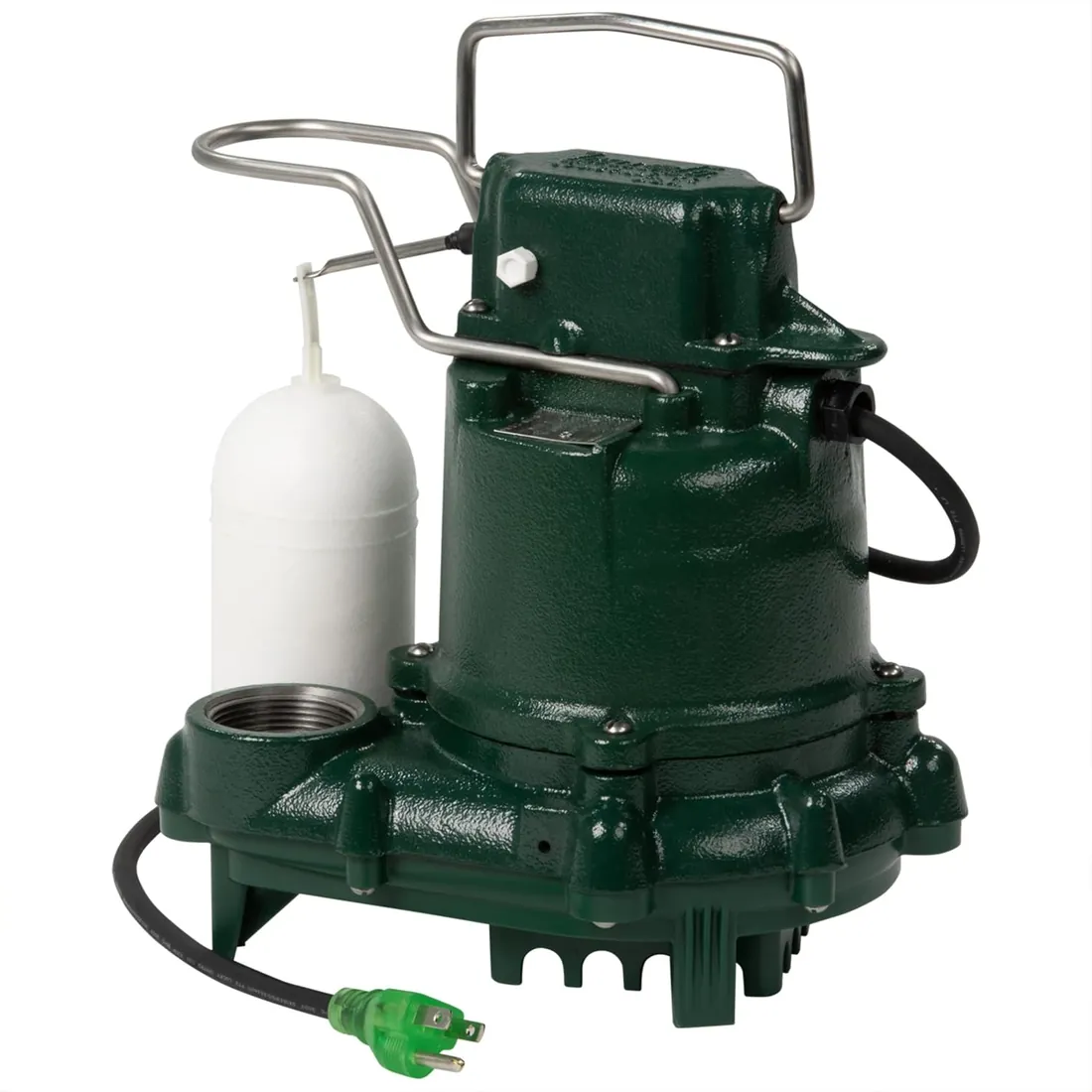
Zoeller M53 Mighty-Mate Sump Pump
Best for: Swapping out a worn pump of similar size
The M53 is the version of the Mighty-Mate most plumbers know. It has the same 3/10 HP motor and switch levels as the M63, 7-1/4 in on and 3 in off, with a plastic impeller and base instead of iron. That makes it the straightforward like-for-like choice when an older pump finally quits.
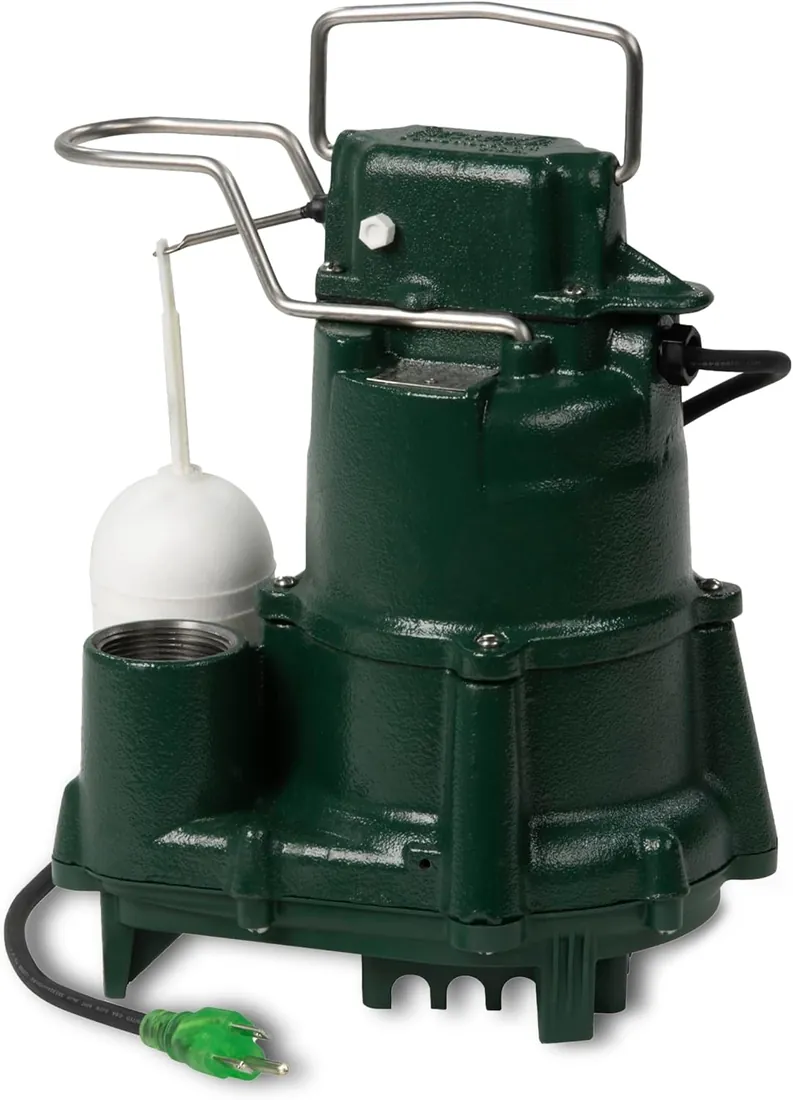
Zoeller M98 Flow-Mate Sump Pump
Best for: Pits that fill fast or pipes that climb higher
Stepping up to 1/2 HP, the M98 is rated for 72 GPM and still moves 61 GPM at 10 ft, where the smaller Zoellers manage 34 GPM. Shut-off head rises to 23 ft. The built-in float starts at 9-1/2 in, so it needs a pit deep enough to hold that much water.
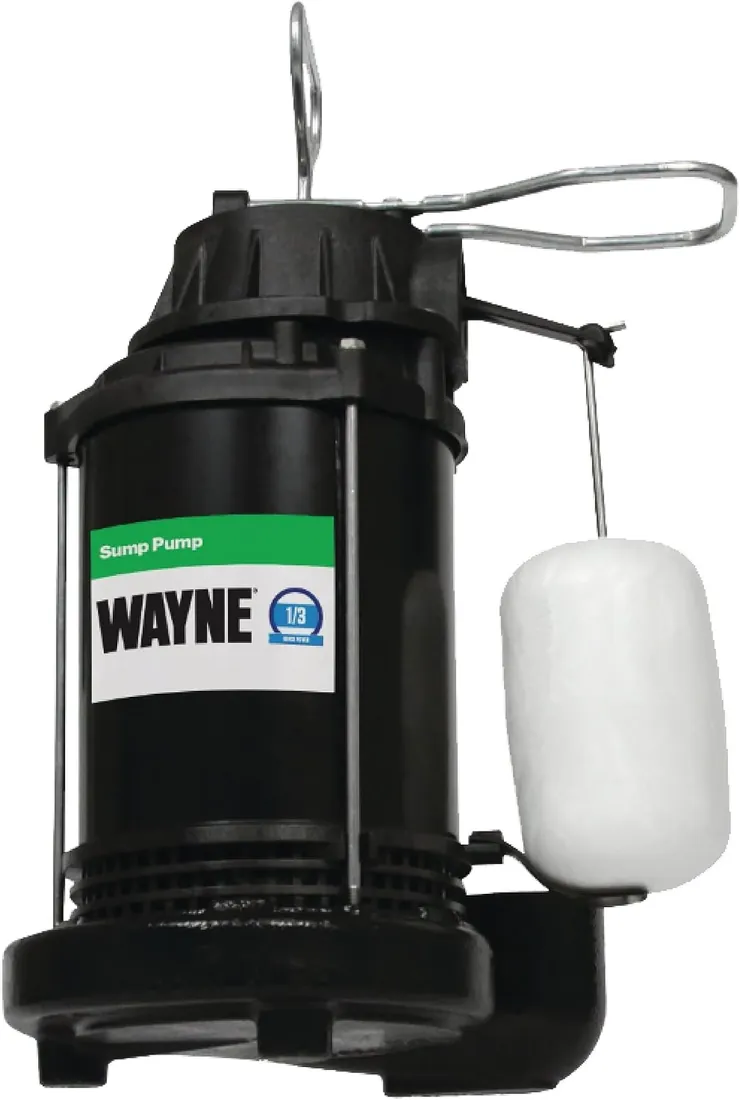
Wayne CDU790 Sump Pump
Best for: Pits that collect silt and gravel
Wayne draws water in from the top of the CDU790, away from the debris that settles on the pit floor, and pairs a coated steel body with a cast iron volute. Its vertical float runs from about 9 in to 4 in. Wayne lists 3,060 GPH at 10 ft, a strong figure for a 1/3 HP pump.
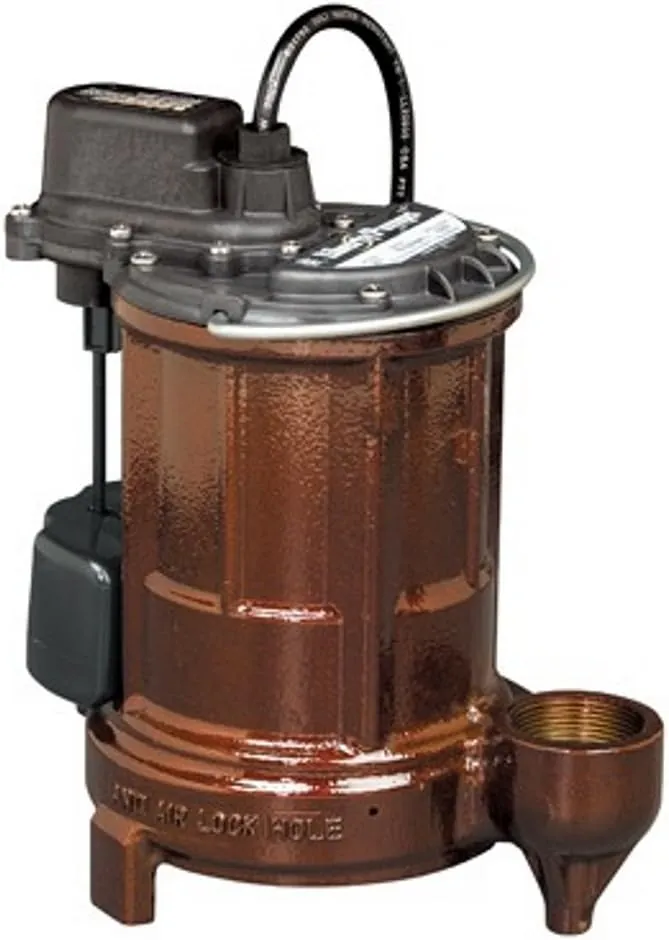
Liberty Pumps 257 Sump Pump
Best for: Small or crowded sump basins
Liberty allows the 257 in a sump as small as 10 in across because its vertical magnetic float barely moves sideways. The one-piece cast iron body is rated for 44 GPM at 5 ft and 23 ft of shut-off head, and the float switches on at 7 in and off at 4 in.
Side by side
| Pump | Power | Switch | Build | Warranty |
|---|---|---|---|---|
| Zoeller M63 Premium Sump Pump | 3/10 HP | Built-in float | Cast iron, including impeller and base | 5 years |
| Zoeller M53 Mighty-Mate Sump Pump | 3/10 HP | Built-in float | Cast iron housings, plastic base | 3 years |
| Zoeller M98 Flow-Mate Sump Pump | 1/2 HP | Built-in float | Cast iron housings | 3 years |
| Wayne CDU790 Sump Pump | 1/3 HP | Vertical float | Coated steel, cast iron volute | 3 years |
| Liberty Pumps 257 Sump Pump | 1/3 HP | Vertical magnetic float | One-piece cast iron | 3 years |
Figures: Zoeller technical data sheet FM2899, Model 63; Zoeller Model 63 installation instructions FM2895; Zoeller technical data sheet FM2778, Mighty-Mate series; Zoeller Model 53 product page; Zoeller technical data sheet FM2779, Model 98; Zoeller Model 98 product page; Wayne submersible sump pump manual 600002W-001; Liberty Pumps 250-Series specification; Liberty Pumps installation manual 7035000.
How the list was narrowed
Candidates came from the sump pumps on this site whose makers publish a technical data sheet or manual. Pumps without stated switch levels or warranty terms were set aside. The remaining models were separated by what changes daily life in a basement: switch design, how much iron is in the build, capacity at a realistic lift and the length of the warranty. Each pick then had to earn a distinct role, so two pumps doing the same job could not both stay on the list.
Who should skip this list
Skip this list if you need protection when the power fails; a primary pump cannot help then, so look at battery backup systems instead. It is also the wrong place for sewage or laundry waste, which need an ejector or a drain pump built for solids and hot water. Pits that only collect water from a dehumidifier or a single floor drain are better served by a small utility or condensate pump.
Final recommendation
Most basements are served well by the Zoeller M63 or M53, and the choice between them comes down to how much iron and warranty you want. Move to the M98 when storms keep a smaller pump running. Choose the Wayne CDU790 for a silty pit and the Liberty 257 when the basin is too narrow for anything with a swinging float. Whichever you pick, fit a check valve and run the pump with a bucket of water before the first storm.
Questions readers ask
How much horsepower does a basement sump pump need?
Most basements with a lift of about one storey are handled by the 3/10 to 1/3 HP pumps on this list. Choose a 1/2 HP model such as the M98 when the pit refills within moments during storms, or when the pipe climbs higher and the smaller pumps' flow falls away.
Is cast iron better than plastic for a sump pump?
Cast iron housings carry motor heat into the surrounding water and resist cracking, which suits a pump that cycles often. Thermoplastic pumps are lighter and cannot rust, and they work well in lighter duty. Every pick here uses iron for the housing or volute because a primary basement pump runs for years.
Do I need a check valve with these pumps?
Yes. Wayne's manual calls a check valve required, and Zoeller's instructions say to install one with a union. Without it, water in the discharge pipe falls back into the pit after each cycle, so the pump runs more often and wears faster.