A 230 V sump pump is the same pump and switch as the 115 V model, wound for the higher voltage so it draws about half the current. Zoeller's D53 and D98 and Liberty's 257HV and 287HV are examples. They suit long cord runs, crowded circuits or a dedicated 230 V supply, and Liberty requires a double-pole disconnect because one leg stays live.
What changes between a 115 V and a 230 V pump
People usually call these two-twenty pumps, but makers rate these motors at 230 V or at 208 to 230 V. Apart from the motor winding and the plug, the pump is usually unchanged. Zoeller's comparison charts list the D53 with the same 3/10 HP, switch type and weight as the M53, and the D98 with the same 1/2 HP as the M98. Liberty does the same with its HV models.
What does change is current. The motor does the same work at twice the voltage, so it draws roughly half the amps. That matters on long cord or wire runs, where a lower current means less voltage drop, and on circuits already carrying other loads. It does not make the pump move more water: flow and head ratings are shared between the two versions.
| Pump | 115 V model | 230 V model |
|---|---|---|
| Zoeller 53 series, 3/10 HP | M53: 9.7 A | D53: 4.8 A |
| Zoeller 98 series, 1/2 HP | M98: 9.4 A | D98: 4.7 A |
| Zoeller 267 sewage, 1/2 HP | M267: 9.4 A | D267: 4.7 A |
| Liberty 257, 1/3 HP | 257: 5.2 A | 257HV: 2.6 A |
| Liberty 287, 1/2 HP | 287: 8 A | 287HV: 4 A, 208-230 V |
Figures: Zoeller technical data sheet FM2778, Mighty-Mate series; Zoeller technical data sheet FM2779, Model 98; Zoeller technical data sheet FM2789, Model 267; Liberty 250-Series engineering specifications 250_P1 R04/2025; Liberty 280-Series sales literature LLIT002000.
When a 230 V sump pump makes sense
For a typical basement with an outlet beside the pit, a 115 V pump is simpler: it plugs into a GFCI receptacle and any replacement off the shelf will fit. A 230 V pump earns its place in a few situations.
The first is distance. If the pit sits far from the panel, a lower current helps keep voltage at the motor where it should be, and both makers offer long cords on these pumps. Zoeller notes that its 50 ft cords are available only on 230 V units, and Liberty offers its 250 series HV models with 25, 35 and 50 ft cords. The second is an existing 230 V circuit, common in older homes, outbuildings and commercial spaces where the previous pump was hard-wired. The third is a heavily loaded 115 V circuit you cannot easily split.
If none of those apply, stay with 115 V. Battery backup systems, piggyback switches, alarms and spare pumps on the shelf are far more common at that voltage.
Float switches on 230 V pumps
The main search behind this topic is how the float switch works on a 230 V pump, and the answer depends on the model. Automatic versions such as the Zoeller D53 and D98 keep the integral float of the M models, so nothing extra is needed. Liberty's 257HV and 287HV keep the vertical magnetic float, with the same 7 in and 9.5 in switch-on levels as the 115 V versions.
Other versions use a separate switch. Zoeller's BE models pair a 230 V pump with a piggyback variable level switch, and its non-automatic E models need an external control. Liberty states that manual models without a float must be run by an approved level control or motor control rated for the pump's full-load amps.
Do not plug a 230 V pump into a switch, alarm or controller rated only for 115 V. Match the voltage and current rating of every device in the circuit to the pump's nameplate.
Wiring rules from the maker manuals
Liberty's 250, 280 and 290 series manual spells out the hazard that sets 230 V apart. On a 208/230 V circuit, one side of the line going to the pump stays live whether the float is on or off, so unplugging the float alone does not make the pump safe. Liberty requires a double-pole disconnect near the pump and, for hard-wired installations, a disconnecting means within sight of the pit.
The same manual says single-phase 208/230 V pumps should only be run without the float by using the breaker or panel disconnect, not by joining wires at the plug. If the plug must come off for a junction box connection, Liberty wants a qualified electrician to do the work under the National Electrical Code; its wiring figure shows the float switch connected in series with the pump motor inside the box.
- Confirm the nameplate voltage and current before you buy a breaker or switch.
- Have an electrician run a dedicated circuit sized for the pump's current.
- Fit a double-pole disconnect within sight of the pit.
- Use only switches, alarms and controls rated for the pump voltage.
- Test by pouring water into the pit and watching a full cycle.
A 230 V pump that keeps tripping the breaker
Liberty's troubleshooting matrix groups tripped breakers with blown fuses and other power interruptions, and pairs them with improper voltage as a cause worth an electrician's check. Zoeller's service checklist lists incorrect voltage, a mechanically bound impeller or seal, a defective capacitor and a shorted motor as reasons a motor overheats and blows a fuse.
Start with the simple causes. Make sure the breaker is a two-pole unit sized for the pump, not a single-pole breaker from an old 115 V setup. Check that the pump has not been wired to 115 V by mistake, or a 115 V pump to 230 V. Clear the inlet screen and spin the impeller by hand with the power off. If the breaker still trips with the pump unplugged from the switch circuit, the fault is in the wiring rather than the pump.
Which pumps come in 230 V
Of the pumps in the catalog, the Zoeller and Liberty lines offer 230 V versions alongside the 115 V models. The Zoeller M53 is sold as the D53, the Zoeller M98 as the D98 and BE98, and the Liberty 257 as the 257HV. Liberty's 287 comes as the 287HV for 208 to 230 V. Wayne's sump manual lists its CDU pumps at 120 V only, so they are not options here. For sewage pits, Zoeller's M267 family adds 230 V, 200 to 208 V and three-phase versions.
Common mistakes
- Plugging a 230 V pump into a float switch or alarm rated only for 115 V.
- Unplugging the float and assuming the pump is dead when one leg is still live.
- Reusing a single-pole breaker from an old 115 V pump circuit.
- Choosing 230 V for a pit right beside an outlet, where 115 V is simpler to replace.
- Splicing a 230 V cord outside a watertight junction box.
Products that fit
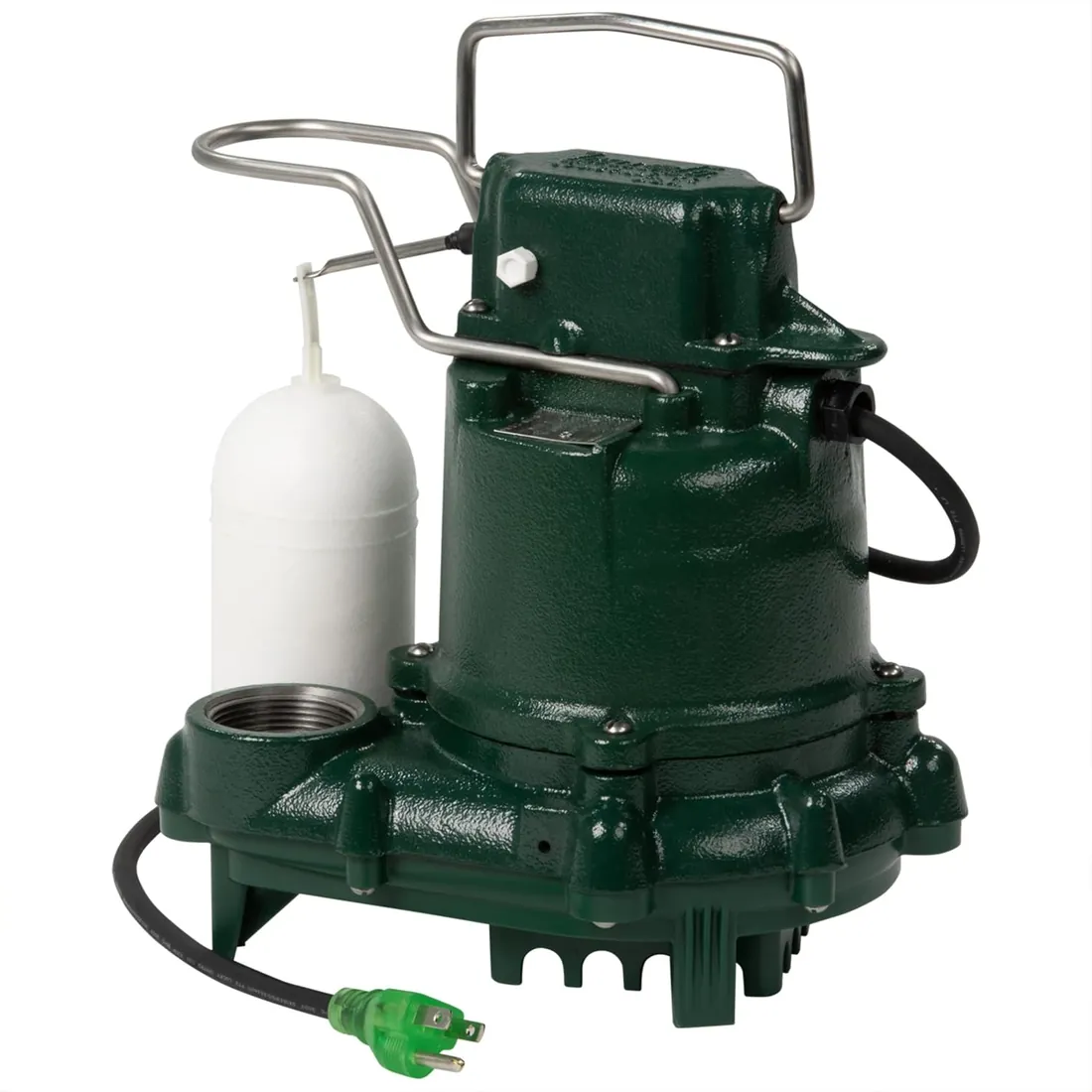
Zoeller M53 Mighty-Mate Sump Pump
Also built as the D53 for 230 V, with the same integral float.
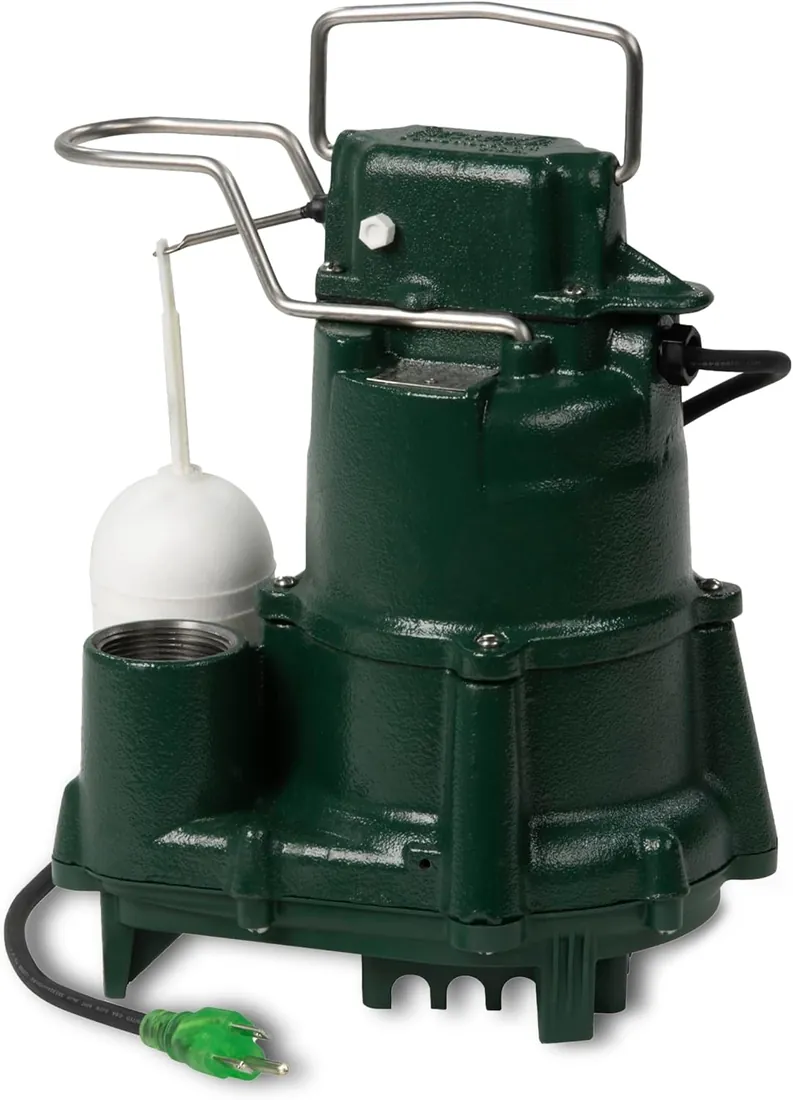
Zoeller M98 Flow-Mate Sump Pump
1/2 HP model offered as the D98 automatic and BE98 piggyback versions.
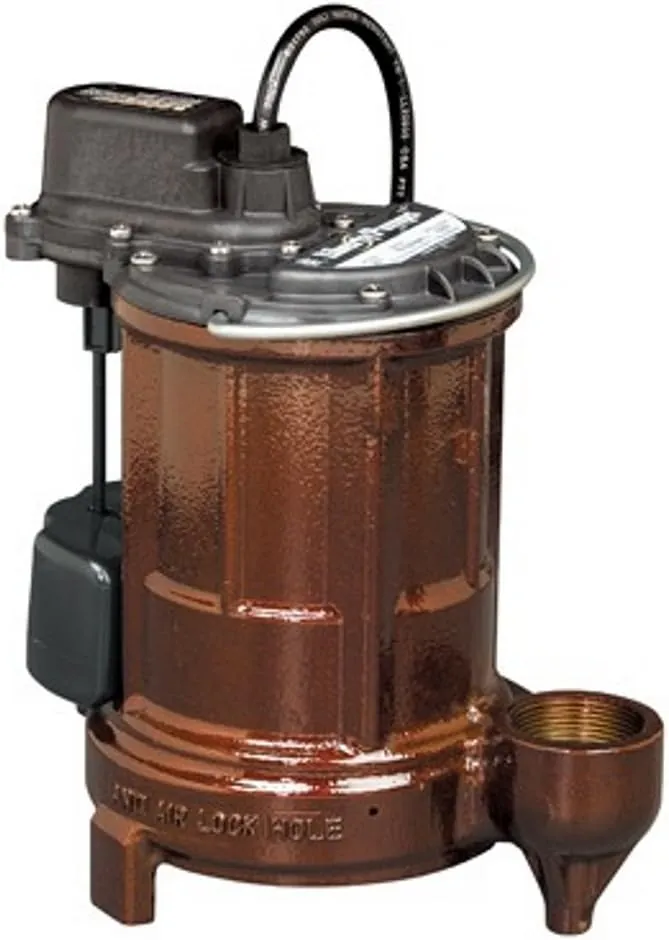
Liberty Pumps 257 Sump Pump
Sold as the 257HV, drawing about half the current of the 115 V model.
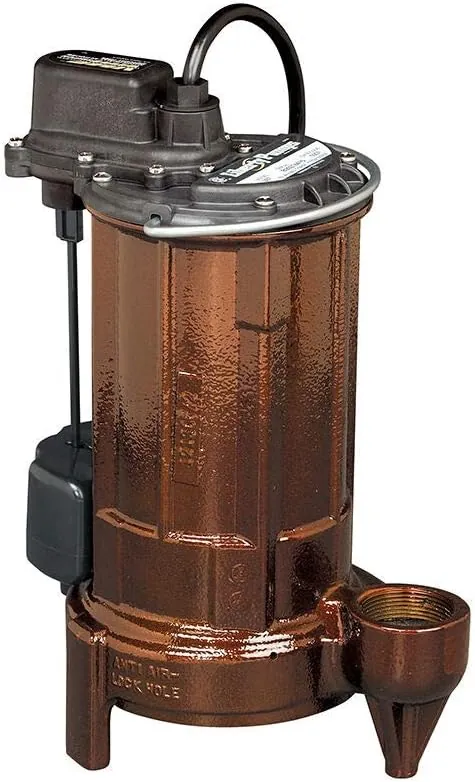
Liberty Pumps 287 Sump Pump
1/2 HP vertical-float pump with a 208 to 230 V HV version.
Questions readers ask
Is a 230 V sump pump better than a 115 V one?
Not in pumping ability. The 230 V version of a pump has the same horsepower and curve as its 115 V twin; it simply draws about half the current. It helps on long runs or busy circuits, but 115 V pumps are easier to replace and back up.
Does a 230 V sump pump need a special float switch?
Automatic versions such as the Zoeller D53 and Liberty 257HV have their float built in. If you add a separate switch, alarm or control, it must be rated for 230 V and for the pump's current.
Why does a 230 V sump pump need a double-pole disconnect?
Liberty explains that on 208/230 V circuits one side of the line to the pump stays live even when the float is off. A double-pole disconnect breaks both legs so the pump can be serviced safely.