Check power first: the breaker, the GFCI outlet and the plug. Next confirm the water has actually reached the pump's switch-on level, which is 7 to 9-1/2 in above the base on common models. Then free the float and bypass any piggyback switch. If the pump still will not run, or only hums, the switch or motor has failed.
Step one: is the pump getting power?
The most common reason a sump pump will not start has nothing to do with the pump. Wayne and Liberty both put a tripped breaker, a blown fuse or a tripped GFCI near the top of their no-start lists, and Wayne warns that ground fault outlets in damp basements trip often enough to deserve a regular look.
Look at the outlet before you touch the pit. Press the GFCI reset button, then plug a lamp or radio into the same outlet to prove it is live. Check the breaker panel for a handle sitting in the middle position. Some pumps make this step easier: Zoeller's M53, M63 and M98 ship with a lighted plug, and the M63 data sheet describes it as showing that power is reaching the pump.
Low voltage counts too. Wayne and Liberty both list improper or low supply voltage as a cause and send owners to an electrician to check the wiring, since a long, thin circuit can stop a motor from starting under load.
Step two: has the water reached the switch-on level?
A pump that seems dead may simply be waiting. Every automatic pump has a fixed or adjustable on level, and until the water climbs that high the motor will not start. Owners who replace a pump often expect it to run as early as the old one did, but switch heights vary by several inches between models.
Measure from the bottom of the pump base to the water surface and compare it with the figures below, all taken from the maker documents. If the water is below the on level, the pump is behaving normally; pour in a bucket to bring it up and watch.
| Pump | Switch | Turns on at | Turns off at |
|---|---|---|---|
| Zoeller M53 and M63 | Integral float | 7-1/4 in | 3 in |
| Zoeller M98 | Integral float | 9-1/2 in | 3 in |
| Wayne CDU790 and CDU800 | Vertical float | About 9 in | About 4 in |
| Liberty 257 | Vertical magnetic float | 7 in | 4 in |
| Liberty 287 | Vertical magnetic float | 9.5 in | 4 in |
Figures: Zoeller technical data sheet FM2778, Mighty-Mate series; Zoeller technical data sheet FM2899, Model 63; Zoeller technical data sheet FM2779, Model 98; Wayne submersible sump pump manual 600002W-001 J; Liberty Pumps installation manual 7035000R.
Step three: can the float move?
Once power and water level check out, look at the float. Liberty's matrix names a float that cannot reach its on position because of interference in the basin. Wayne adds a clogged inlet screen and a switch obstruction, and Zoeller lists a float assembly held down.
The usual culprits are the power cord, the pit wall, a backup pump, a slipped pump that now leans against the side, and gravel or silt packed under the float. Lift the pump if needed and set it level on a brick or a solid base. Wayne specifies at least 1 in of clearance between switch and wall and tells owners to zip-tie the cord to the discharge pipe.
Step four: bypass the switch
This single test splits switch faults from motor faults. On pumps with a piggyback plug, such as Liberty's 253 or any pump fitted with an add-on float, unplug the switch plug and plug the pump cord straight into the outlet. Liberty describes this as temporary manual operation built into the design. If the motor runs bypassed, the switch is the failed part and the pump is fine.
Do not leave a pump running this way unattended; it will not stop when the pit empties. And Liberty warns that its single-phase 208/230 V pumps must only be run without the float by using the breaker or panel disconnect, never by rewiring at the plug.
Pumps with a switch built into the body, such as the Zoeller M53, cannot be bypassed at the outlet. Zoeller's support page says that if you have to tap or shake the pipe to start one, the switch assembly needs replacing.
- Switch off the breaker and unplug both plugs.
- Plug the pump cord directly into the GFCI outlet.
- Restore power and listen for the motor for a few seconds.
- If it runs, unplug it and replace the piggyback switch.
- If it stays silent or hums, move on to the motor checks.
Step five: humming, clicking or total silence
A motor that hums without spinning is usually jammed or failing to start. Zoeller lists an impeller or seal bound mechanically and a defective capacitor among its no-start causes. Unplug the pump, take off the inlet screen and look for a stone or debris wedged against the impeller. Wayne's chart covers the same ground with a clogged inlet screen.
A motor that starts after a long rest and then quits is often its thermal protector at work. Both Wayne and Zoeller fit automatic-reset protectors, so an overheated motor will stop and restart by itself. Repeated trips point to low head, wrong voltage or a pump near the end of its life.
Total silence with confirmed power, a free float and a bypassed switch leaves the motor. Wayne's remedy at that point is to replace the pump; makers do not support opening a sealed motor at home. A model like the Wayne CDU800 or the Zoeller M63 drops into most pits that held a 1/3 or 1/2 HP pump, and the 1/3 HP sump pump list covers the smaller sizes.
When it fails right after heavy rain
A pump that quits mid-storm has usually tripped its overload from running nonstop, tripped a GFCI, or lost power with the rest of the house. While you work out which, get water moving with a backup: Zoeller recommends a second pump with an alarm where a failure would damage property, and a battery backup for power cuts. Once things dry out, check the float, the check valve and the pump's age before relying on it again.
Common mistakes
- Testing the pump before the water has reached its switch-on height.
- Assuming the pump failed when the GFCI outlet had simply tripped.
- Leaving a pump plugged in bypassed, with nothing to stop it when the pit empties.
- Setting the pump straight on gravel, where the float and intake soon clog.
- Reaching into a live pit instead of switching off the breaker first.
Products that fit
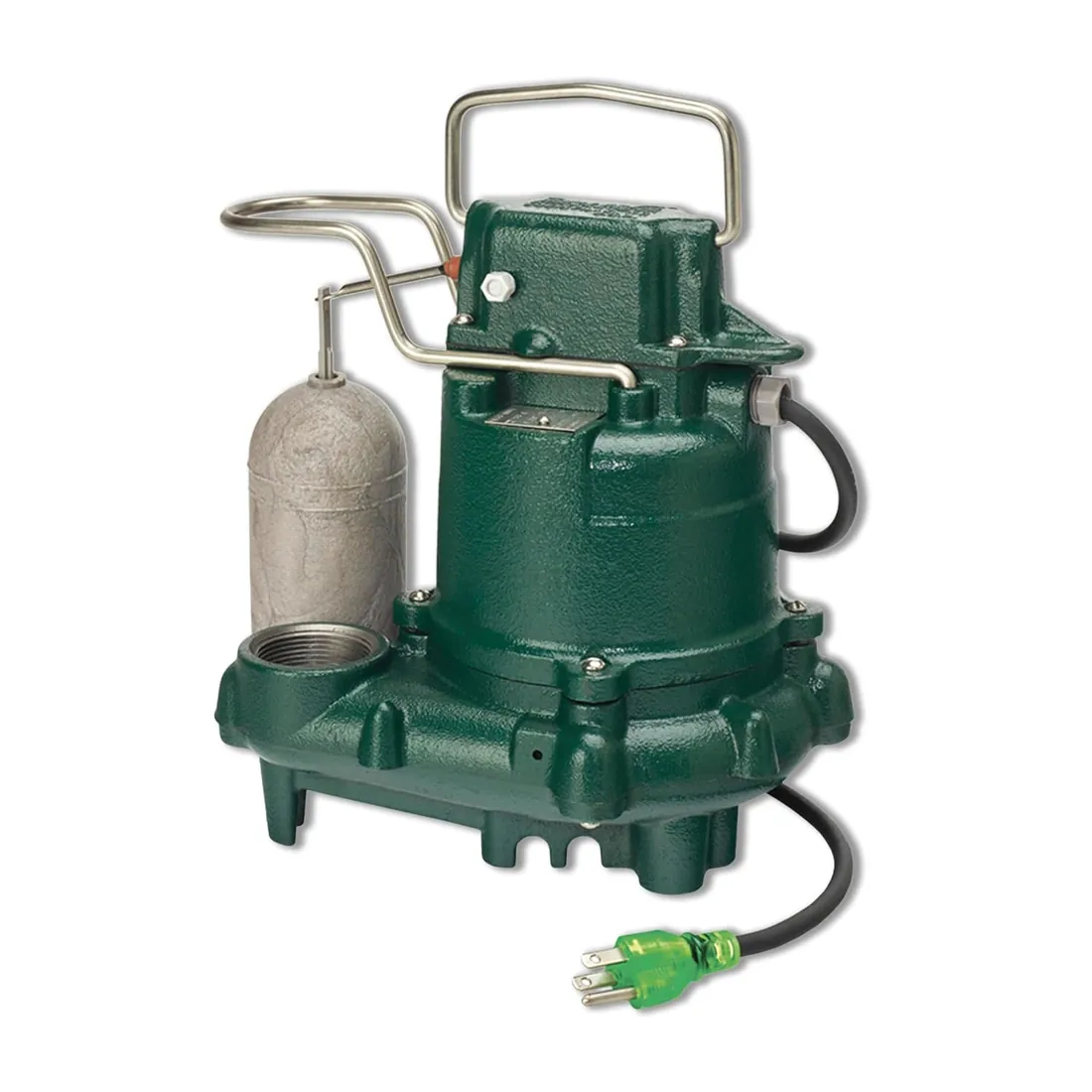
Zoeller M63 Premium Sump Pump
Cast iron automatic pump with a lighted plug that shows when power reaches it.
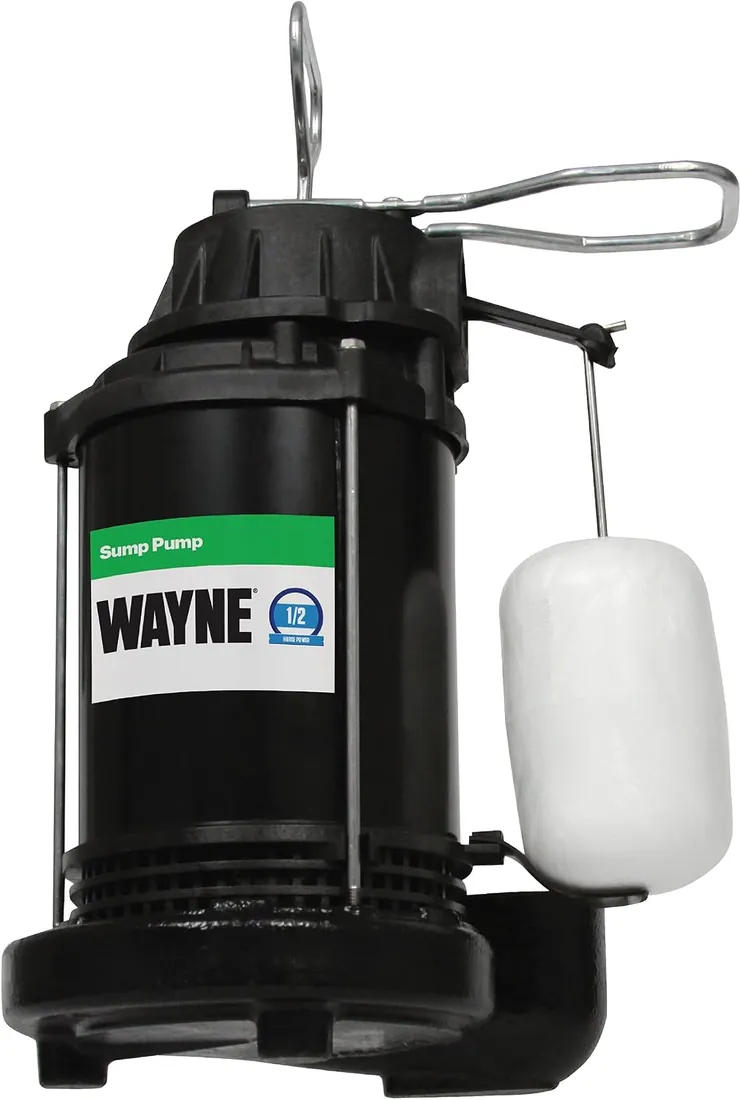
Wayne CDU800 Sump Pump
1/2 HP vertical-float pump with a factory on level of about 9 in.
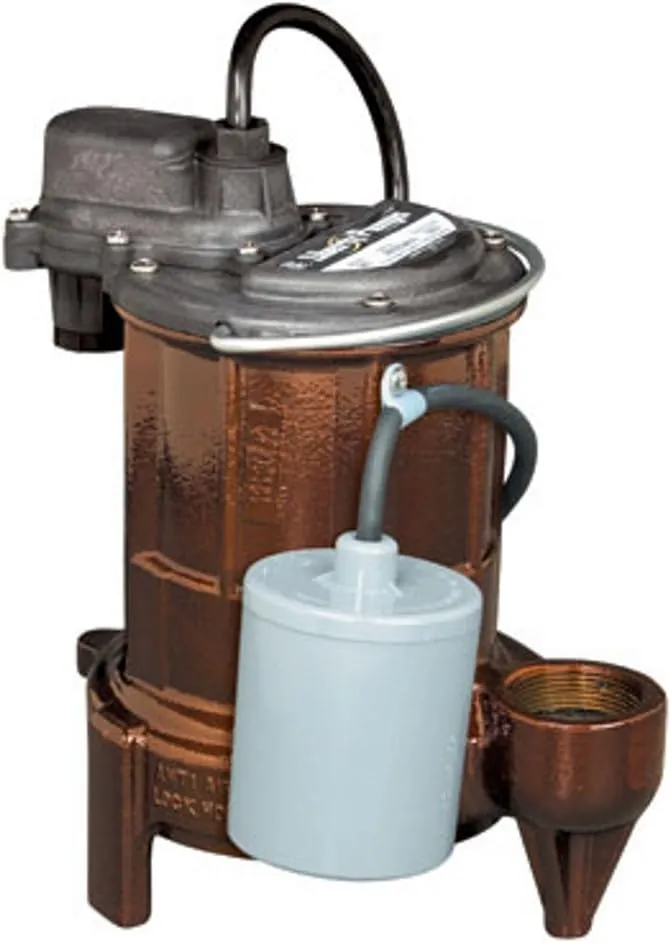
Liberty Pumps 253 Sump Pump
Piggyback float design, so the pump can be run straight from the outlet for a quick test.
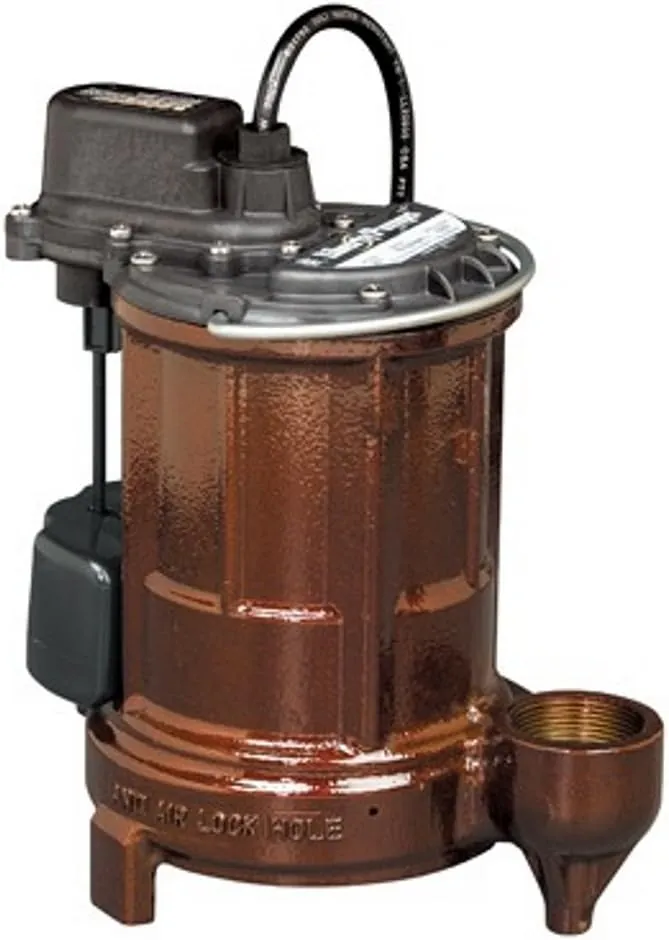
Liberty Pumps 257 Sump Pump
Fixed vertical magnetic float that switches on at 7 in from the base.
Questions readers ask
Why is my sump pump not turning on when the pit is full?
Start with power: a tripped GFCI or breaker is the most common cause. Then check that the float can rise freely and is not caught on the cord or pit wall. If both are fine, bypass the switch; a pump that runs bypassed has a failed switch.
Why does my sump pump hum but not start?
Humming usually means the motor is getting power but cannot turn, often because debris has jammed the impeller. Zoeller also lists a defective capacitor. Unplug the pump, clear the inlet screen and impeller, and replace the pump if it still only hums.
Can a sump pump turn back on by itself after overheating?
Yes. The Wayne and Zoeller pumps covered here use automatic-reset thermal protectors, so the motor stops when it overheats and restarts after cooling. Frequent trips are a warning sign about voltage, head or pump age.