You need a sump pump if your basement has a sump pit fed by drain tile, sits below the water table, or takes on water after heavy rain. Houses on high, dry, well-drained ground often have none. If your pump protects a finished basement or you lose power in storms, makers recommend a backup pump or at least a high water alarm.
Which basements need a sump pump
A sump pump exists to remove groundwater that collects around and under a foundation. Wayne describes the job in exactly those terms: automatic pumps that empty sump pits, most often to keep residential basements from flooding. If your house has a perimeter drain tile system, that tile leads to the pit, and the pump is what keeps the tile from backing up.
Signs that a basement needs one include water at the floor-wall joint after storms, damp patches that grow in spring, efflorescence on block walls, a high water table in the area, or a builder-installed pit with no pump in it. Basements below the level of nearby streams or in clay soils that hold water are the usual candidates. A pump only removes water that reaches the pit, so it works best alongside gutters, downspout extensions and grading that sends surface water away from the walls.
Why some basements have no sump pump
Plenty of houses never need one. Homes built on high ground, on sandy or gravelly soil that drains freely, or in dry climates may never see groundwater rise to the slab. Some foundations drain by gravity: the footing tile runs downhill to daylight or to a storm sewer, so water leaves without a pump. Houses on slabs or crawl spaces with good drainage also skip the pit.
Building practice plays a part too. Some areas require a sump pit in new construction even if no pump is ever installed, while older houses were often built without any drainage system at all. If your basement has stayed dry through several wet seasons, adding a pump is not urgent. If it has not, a pit and pump are usually the most reliable fix for water that comes up from below.
Do you need a battery backup?
Pump makers say yes, wherever flooding would cause real damage. Wayne's manual says an independent high water alarm or backup pump should be used when there is a risk of property damage from high water, and Red Lion's says the same about power outages and blocked discharge lines. Zoeller calls a high water alarm always recommended, especially when a system has only one pump.
The reason is timing. Storms that drive water into a pit are the same storms that knock out power, and a primary pump that fails at night gives no warning. A backup does not need to match the main pump's flow; it needs to buy time. Zoeller gives approximately 7 hours of continuous running at an 8 ft head for its battery pump on a full charge. Use the battery backup runtime calculator to estimate your own, and compare complete systems on the battery backup sump pump list.
When an alarm is enough
A backup pump is the stronger choice, but an alarm alone is a reasonable step for an unfinished basement, a pit that rarely fills, or a household where someone is almost always home. A battery-powered high water alarm sits in the pit above the pump's on level and sounds when water passes it, which tells you the pump has failed before the floor is wet. Wi-Fi monitors add a phone alert for when no one is home.
An alarm cannot move water, though. If the main pump fails during a long power cut while you are away, the alarm only tells you after the fact. For finished basements, stored valuables or a mechanical room with a furnace and water heater, makers' advice points to a working second pump.
Do you need a 1/2 HP pump or will 1/3 HP do?
Horsepower only matters at your lift, the height from the pump to where the pipe leaves the house. Wayne's published figures show the gap clearly: at a 10 ft lift the 1/3 HP CDU790 moves 3,060 gallons per hour and the 1/2 HP CDU800 moves 3,840. At 20 ft the gap widens to 1,200 against 2,040. For a typical basement with a modest lift and normal inflow, the smaller pump is often enough.
Choose the larger motor when the lift is high, when the pit fills quickly in storms, or when the current pump runs almost nonstop in wet weather. The sump pump sizing calculator works out the flow you need from your lift and inflow. The Wayne CDU790 and Wayne CDU800 show the trade in a matched pair.
| Lift | CDU790 (1/3 HP) | CDU800 (1/2 HP) |
|---|---|---|
| 0 ft | 4,600 | 5,100 |
| 10 ft | 3,060 | 3,840 |
| 15 ft | 2,220 | 3,060 |
| 20 ft | 1,200 | 2,040 |
If you decide you need one
A new installation means a pit, a basin, a discharge line through the wall and a grounded GFCI outlet within reach of the pump cord, since Wayne forbids extension cords. If a pit already exists, measure its diameter before buying, because switch types need different space; Wayne lists 11 in as the minimum basin diameter for its vertical-float models and 14 in for tether models.
Plan the discharge with care. Water should leave at least 3 ft from the foundation, and many towns restrict connecting a sump to the sanitary sewer, so ask your local building department before running the pipe.
Common mistakes
- Assuming a dry basement in one season will stay dry in a wet year.
- Relying on a single pump in a finished basement with no alarm or backup.
- Buying a larger motor without checking the actual lift.
- Plugging a new pump into an extension cord because the outlet is too far.
- Ending the discharge so close to the wall that water cycles straight back.
Products that fit
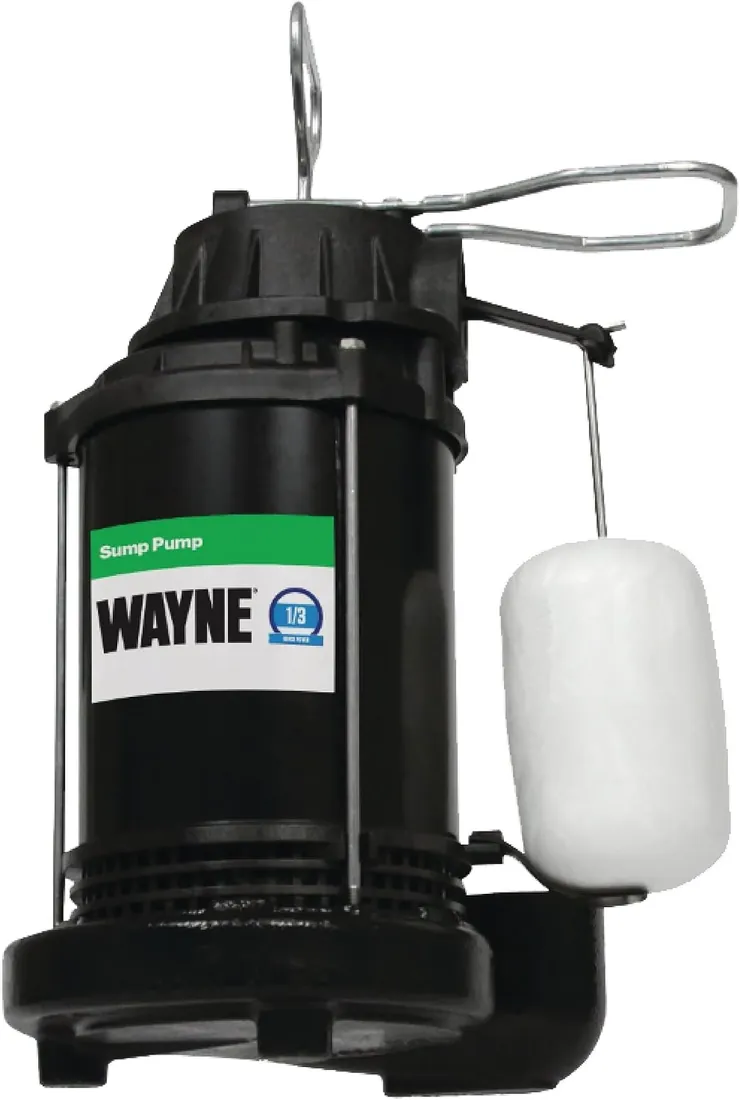
Wayne CDU790 Sump Pump
1/3 HP pump for typical basement lifts and normal inflow.
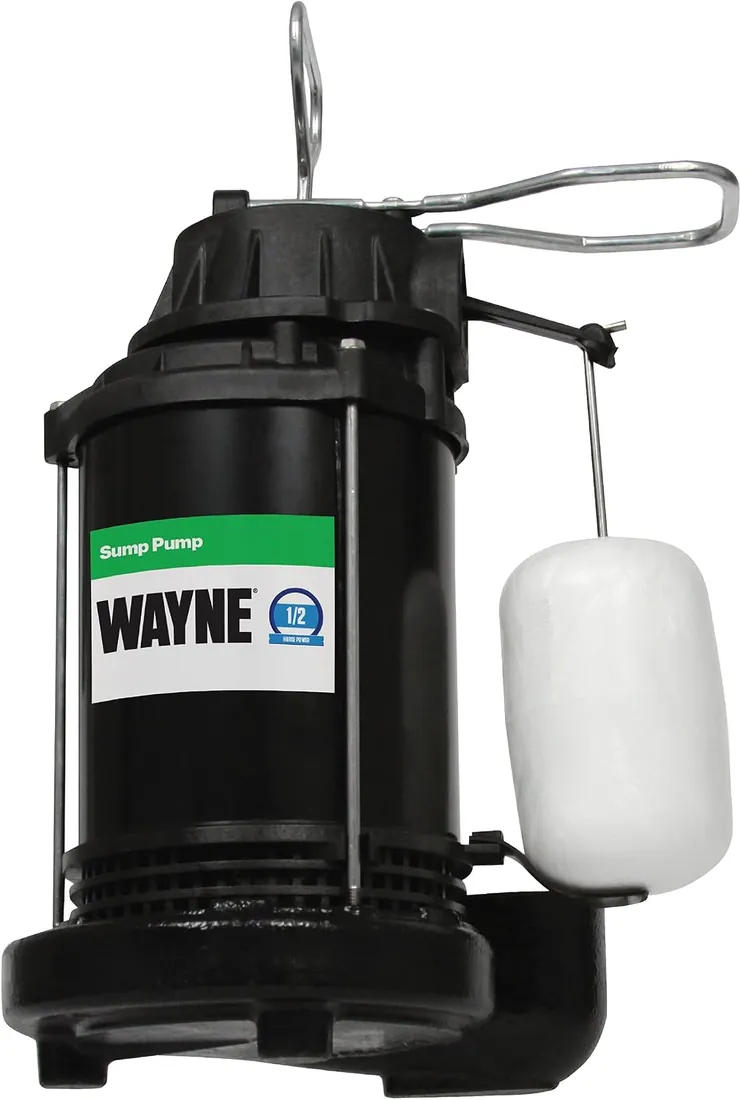
Wayne CDU800 Sump Pump
1/2 HP version for higher lifts or pits that fill quickly.
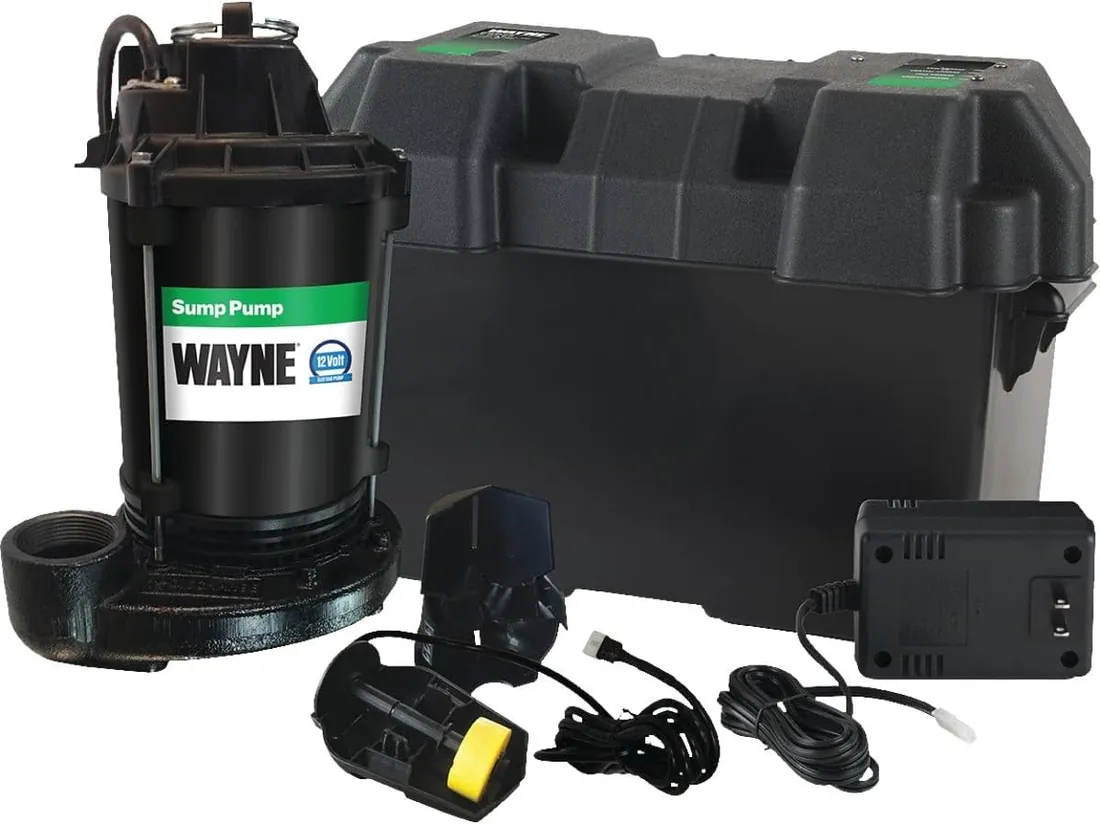
Wayne ESP25n Battery Backup Sump Pump
Battery backup pump that sits beside the main pump in the pit.
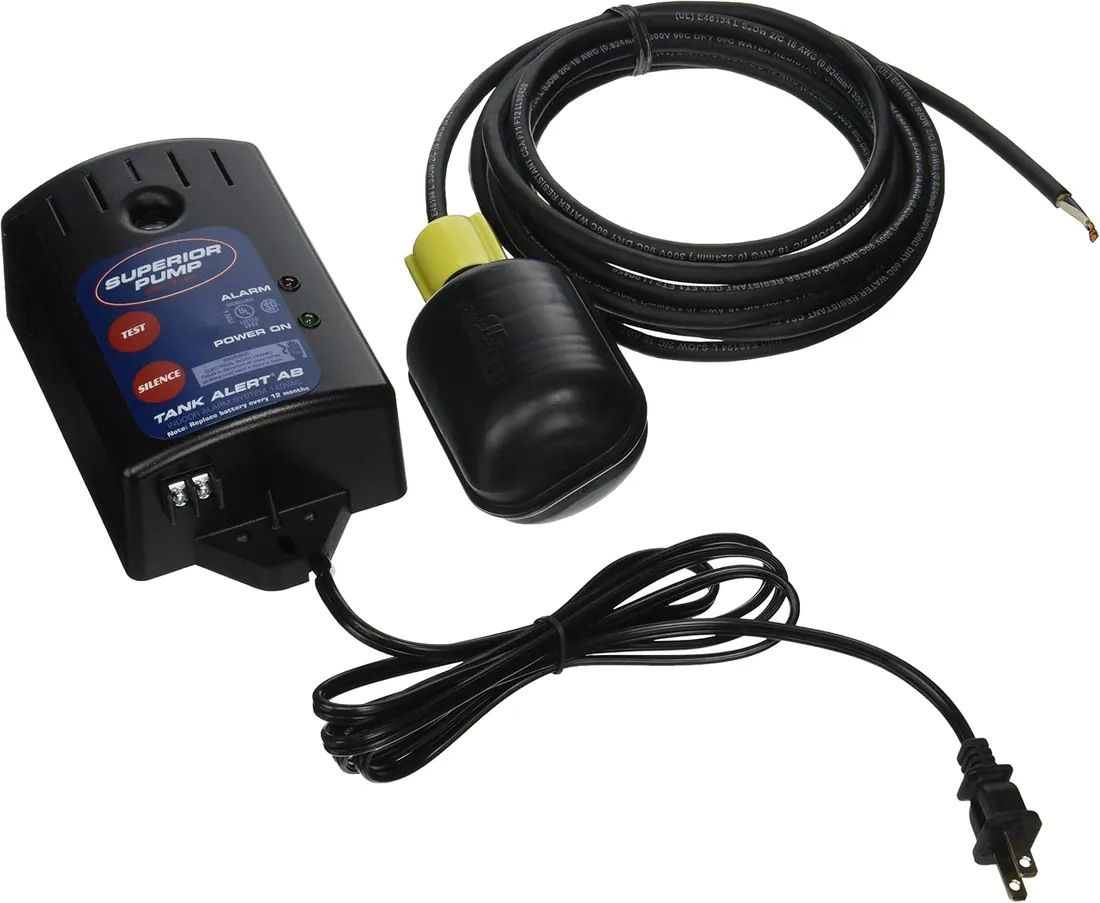
Superior Pump 92060 Sump Alarm
Simple high water alarm for unfinished basements and pits that rarely fill.
Questions readers ask
Is a sump pump required by code?
It depends on where you live. Some areas require a pit in new basements, and others only require a pump where groundwater is present. Your local building department can tell you what applies, and it also sets the rules for where the discharge may go.
Do I need a sump pump if my basement has never flooded?
Not necessarily. If there is no pit, no drain tile and no sign of water after heavy rain, the house may drain well on its own. Watch the floor-wall joint and any existing pit during the next wet season before deciding.
Is a battery backup worth it?
For a finished basement or anything stored below grade, makers consistently recommend a backup pump or at least an alarm. Power cuts and pump failures tend to happen during the storms that bring the most water.
Does a bigger sump pump last longer?
Not by itself. A pump that is too large for a small pit can short cycle, which wears the switch faster. Match the pump to your lift and inflow rather than buying the biggest motor available.