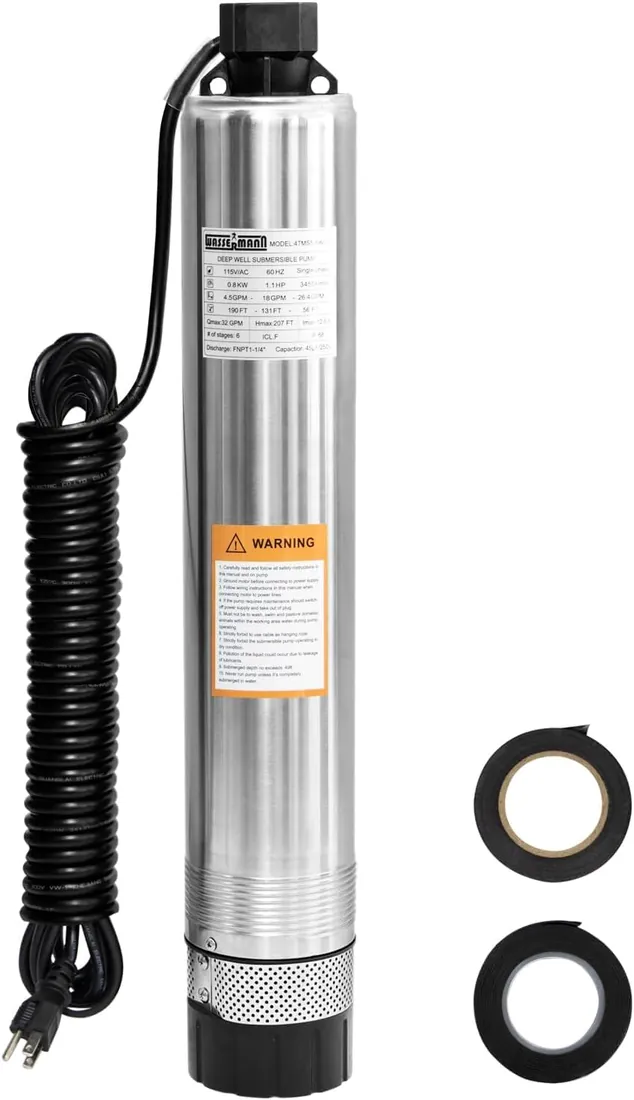
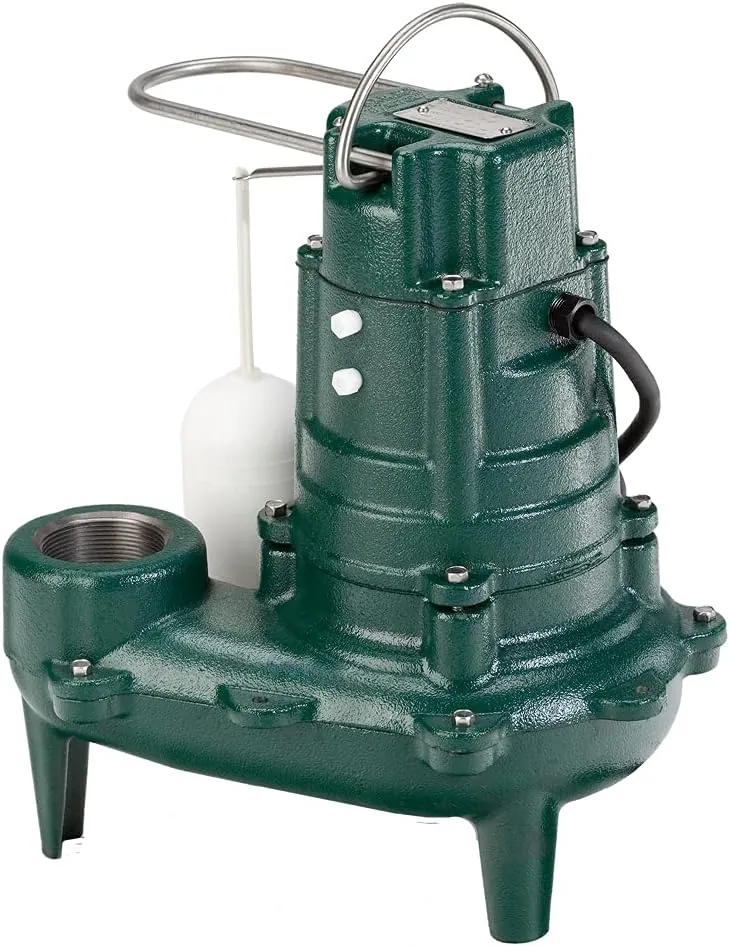
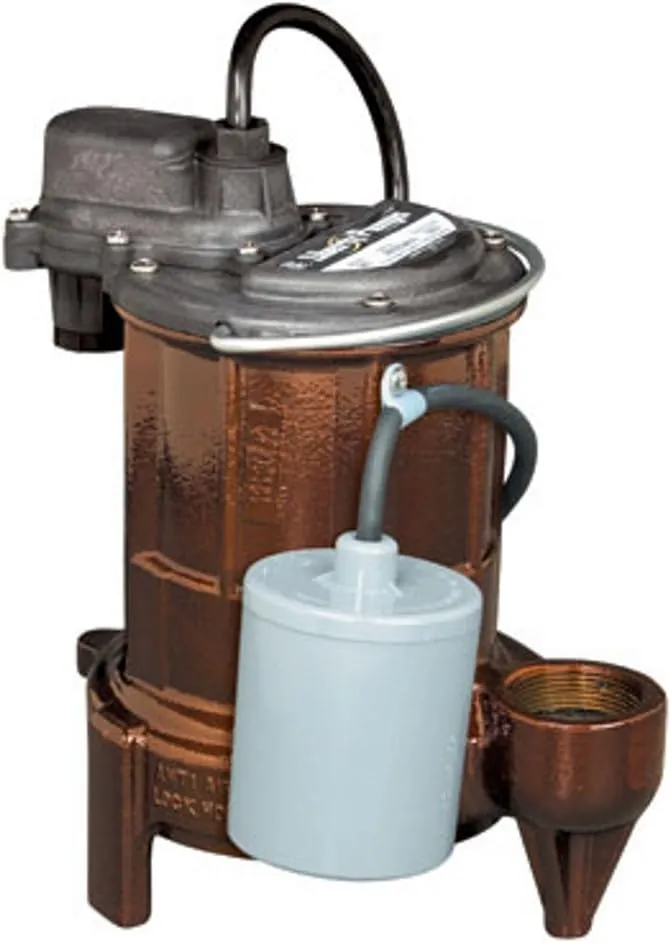
An effluent pump moves liquid that has already settled in a septic tank: mostly water with small suspended solids up to about 3/4 inch. It typically sits in a pump chamber after the septic tank and sends effluent to a drain field, mound or sand filter. A sewage pump (ejector) handles raw sewage with solids up to about 2 inches, before any settling, for example from a basement bathroom to the main drain. Using an effluent pump on raw sewage clogs it; using a sewage pump where an effluent pump belongs wastes energy and can push solids into the drain field.
Side by side
| Effluent pump | Sewage pump (ejector) | |
|---|---|---|
| Handles | Settled septic effluent, gray water | Raw sewage |
| Solids passed | Up to about 1/2 to 3/4 inch | Up to about 2 inches |
| Typical location | Pump chamber or tank after the septic tank | Sewage basin below the fixtures |
| Typical discharge | 1.25 to 2 inch, to drain field or mound | 2 inch, to the house drain or sewer |
| Design focus | Higher head, steady dosing | Passing solids at high flow |
| Screen or filter | Often used with an effluent filter or screened vault | Not used |
Where each goes in a septic system
- House to septic tank: by gravity, or through a sewage ejector or grinder pump if the tank is above the house drain.
- Septic tank: solids settle and scum floats; partly clarified effluent flows to the next stage.
- Pump chamber: an effluent pump, controlled by floats or a timer, doses the drain field, mound or filter.
- Drain field or mound: soil treats the effluent.
Pressure-dosed and mound systems depend on the effluent pump delivering a specific flow at a specific head, set by the system designer. Replace a failed pump with the same rating, not just the same horsepower.
Sizing an effluent pump
- Use the septic design documents if you have them; they specify the dose volume, flow and head.
- Prefer cast-iron or stainless pumps rated for continuous submersion in effluent.
- Fit a high-water alarm on a separate circuit from the pump.
Common mistakes
- Effluent pump on raw sewage: clogs on solids and burns out.
- Oversized pump: doses too fast and can overload a drain field or mound.
- No effluent filter: lets solids reach the pump and the field.
- Float set too low: runs the pump dry or draws in settled solids.