Lower a submersible utility pump to the deepest point, attach the largest hose it takes, run the hose downhill to an approved discharge spot, and plug the pump into a GFCI outlet. Stay with a manual pump so you can unplug it before it runs dry. Let hot tub water cool first, and check with your pool builder before fully emptying an in-ground pool.
Before you drain anything
Decide how far down you need to go. Lowering the level a few inches for winter or to clear rainwater is routine. Emptying a pool completely is a bigger decision: an empty in-ground shell can be pushed upward by groundwater, and vinyl liners can shrink or shift when the water that holds them in place is gone. Ask the pool builder or liner maker before you take the level below what they recommend, especially after heavy rain when the ground is saturated.
Next, find out where the water is allowed to go. Many towns regulate draining treated pool water into storm drains, streets or a neighbour's yard, and some ask you to let chlorine dissipate first. Your local public works or building department can tell you the rule. Finally, keep everyone out of the water: Wayne's pump manual says never to run a pump in a vessel while people are in or touching the water.
Which pump to use
A submersible utility pump is the standard tool. It sits on the pool floor, pushes water up through a hose, and pumps down to a very shallow depth. Superior lists pools and hot tubs among the intended jobs for its 91250, rated at 1,800 gallons per hour with no lift and 1,200 at 10 ft, and able to remove water down to 1/8 in. Larger utility pumps of a full horsepower or more move more water and suit big pools; the high-flow utility pump list compares them.
Read the temperature and chemistry limits. Wayne's WAPC250 manual says to let heated water cool to room temperature before pumping it and warns against salt water, brine and highly chlorinated water. Superior lists a liquid range of 35 °F to 120 °F for the 91250. Pool cover pumps can lower a pool in a pinch, but many are built for rainwater on the cover; Wayne's pool cover pump is rated for use with permanently installed pools, not storable ones.
| Pump | Power | Flow | Pumps down to |
|---|---|---|---|
| Superior 91250 | 1/4 HP | 1,800 GPH at 0 ft; 1,200 GPH at 10 ft | 1/8 in |
| Little Giant 5-MSP | 1/6 HP | 1,500 GPH maximum; 1,191 GPH at 5 ft | 1/8 in with screen |
| Wayne WAPC250 | 1/4 HP | 3,000 GPH at 0 ft; 1,600 GPH at 10 ft | About 3/4 in |
Figures: Superior Pump 91250 product page; Little Giant 5 Series spec sheet 996573; Wayne pool cover pump manual 620015W-001 C.
Draining a pool step by step
Turn off the pool's own circulation pump, heater and any automatic chlorinator at the breaker before the level falls below the skimmer, so they do not run dry. Then set up the submersible pump. Lower it by a rope tied to its handle, never by the cord, and stand it upright on a clean spot of the pool floor so the strainer is not sucking up leaves and grit.
Use the widest hose the pump will take and unroll it fully. A pump with a 1-1/4 in outlet will move far more water through matching hose than through a garden hose on the reducer. Plug into a GFCI outlet; Wayne requires one and allows an extension cord only if it is outdoor rated and of the gauge its chart lists for the length.
- Switch off the pool pump, heater and chlorinator at the breaker.
- Attach the discharge hose and lay it downhill to the approved outlet.
- Lower the pump by rope to the deepest point and stand it upright.
- Plug into a GFCI outlet and confirm water reaches the hose end.
- Check the pump and hose every half hour while it runs.
- Unplug the pump as soon as the hose stops flowing steadily.
Should the pool pump be on or off?
Off. A pool's filter pump draws water through the skimmer and main drain, and once the level drops below the skimmer it starts pulling air. Running it dry can damage its seal and motor. Some filter systems have a waste or drain setting that sends water out through a hose instead of back to the pool; if yours does, follow the pool equipment maker's instructions, and still stop before the pump loses its supply.
For the submersible pump doing the draining, watch the end of the run closely. Wayne notes that as the water nears the pump's minimum level, flow slows and the pump gets noisy as it draws in air, and tells owners to unplug it once water stops coming from the hose.
How long it takes
Divide the pool's volume in gallons by the pump's flow at your lift. Use the flow figure at the height the water climbs over the pool wall, not the maximum figure printed on the box, and add time for hose losses. Little Giant's 5-MSP shows how fast flow falls: 1,500 gallons per hour at the surface, 1,191 at 5 ft and 500 at 20 ft.
Big pools take many hours even with a large pump, which is why a second pump on a second hose roughly halves the job. For a hot tub, a small utility pump usually finishes in well under an hour. Never leave a manual pump running unattended overnight on the last few inches.
Draining without a pump
If the pool sits higher than the ground around it, a garden hose siphon works: fill the hose with water, cap one end, lower it into the pool and release the other end at a lower point. It is slow and stops when the levels equalize, but it is quiet and needs no power. Above-ground pools often have a drain plug that does the same job.
For in-ground pools, a siphon rarely reaches far enough below the deck, and a submersible pump such as the Superior 91250 or Little Giant 5-MSP is the practical choice.
Common mistakes
- Fully emptying an in-ground pool without asking the builder about groundwater pressure.
- Pumping hot tub water before it has cooled.
- Sending treated water into a street drain without checking local rules.
- Leaving the pool's own filter pump running as the level falls below the skimmer.
- Running a manual pump unattended until it runs dry.
Products that fit
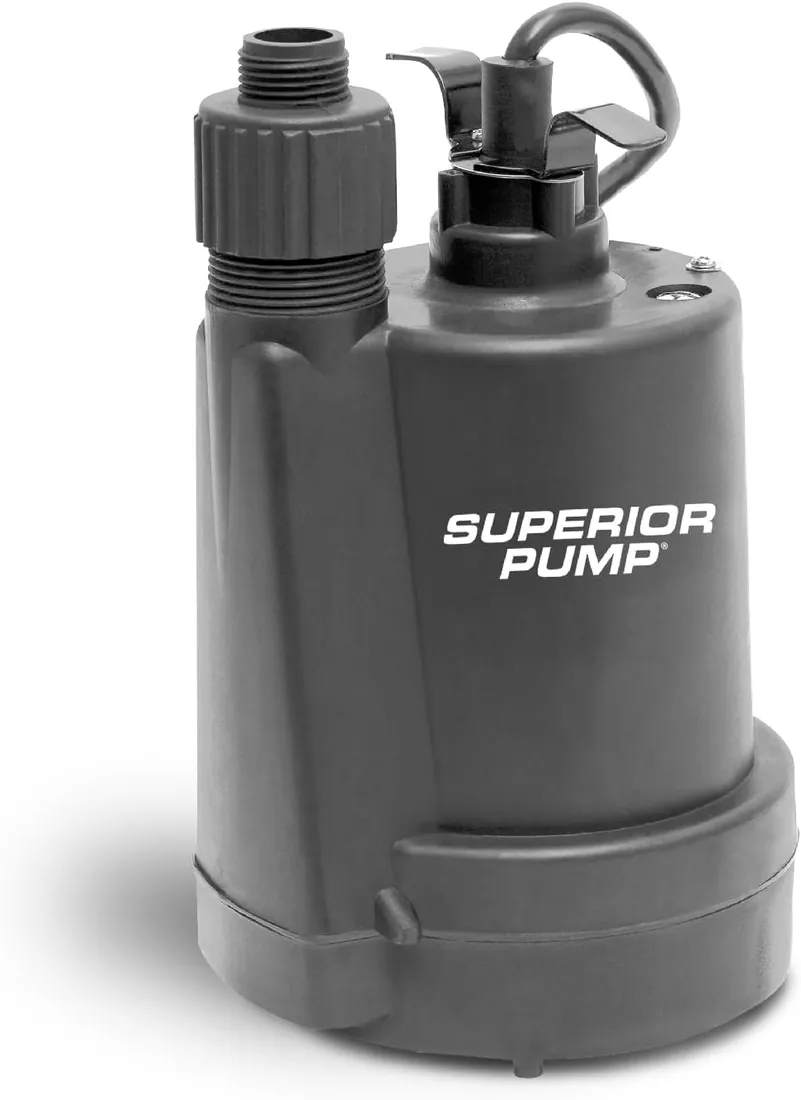
Superior Pump 91250 Thermoplastic Utility Pump
Light 1/4 HP utility pump that lists pools and hot tubs among its uses.
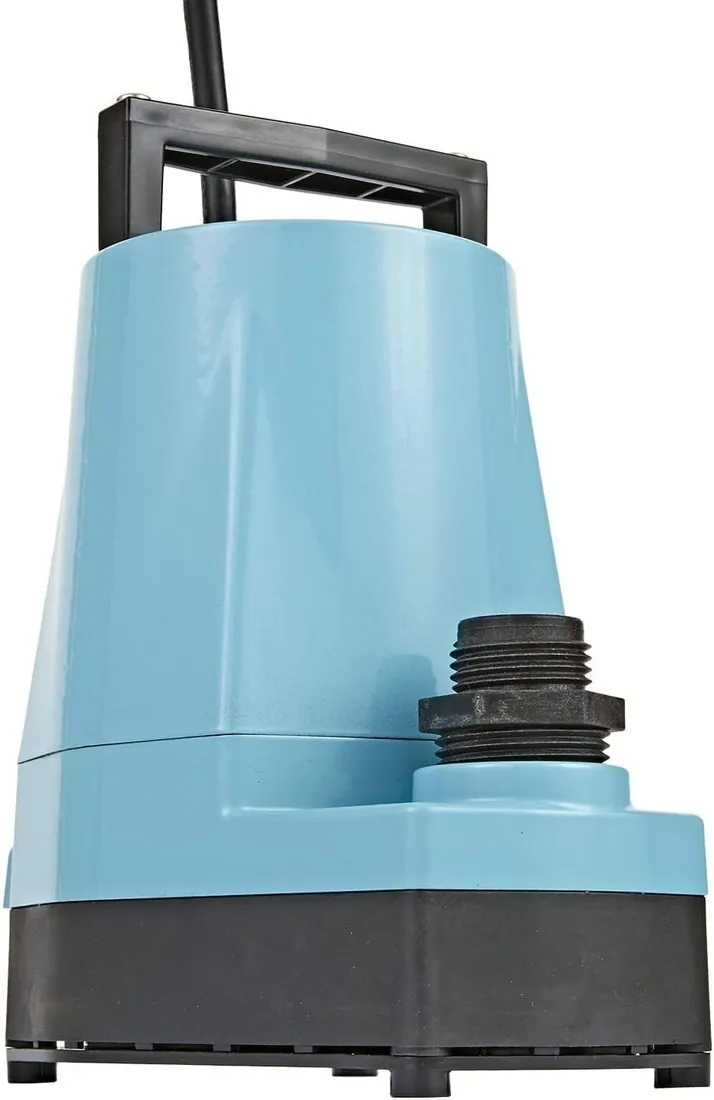
Little Giant 5-MSP Manual Utility Pump
Compact pump rated for continuous duty, handy for hot tubs and spas.
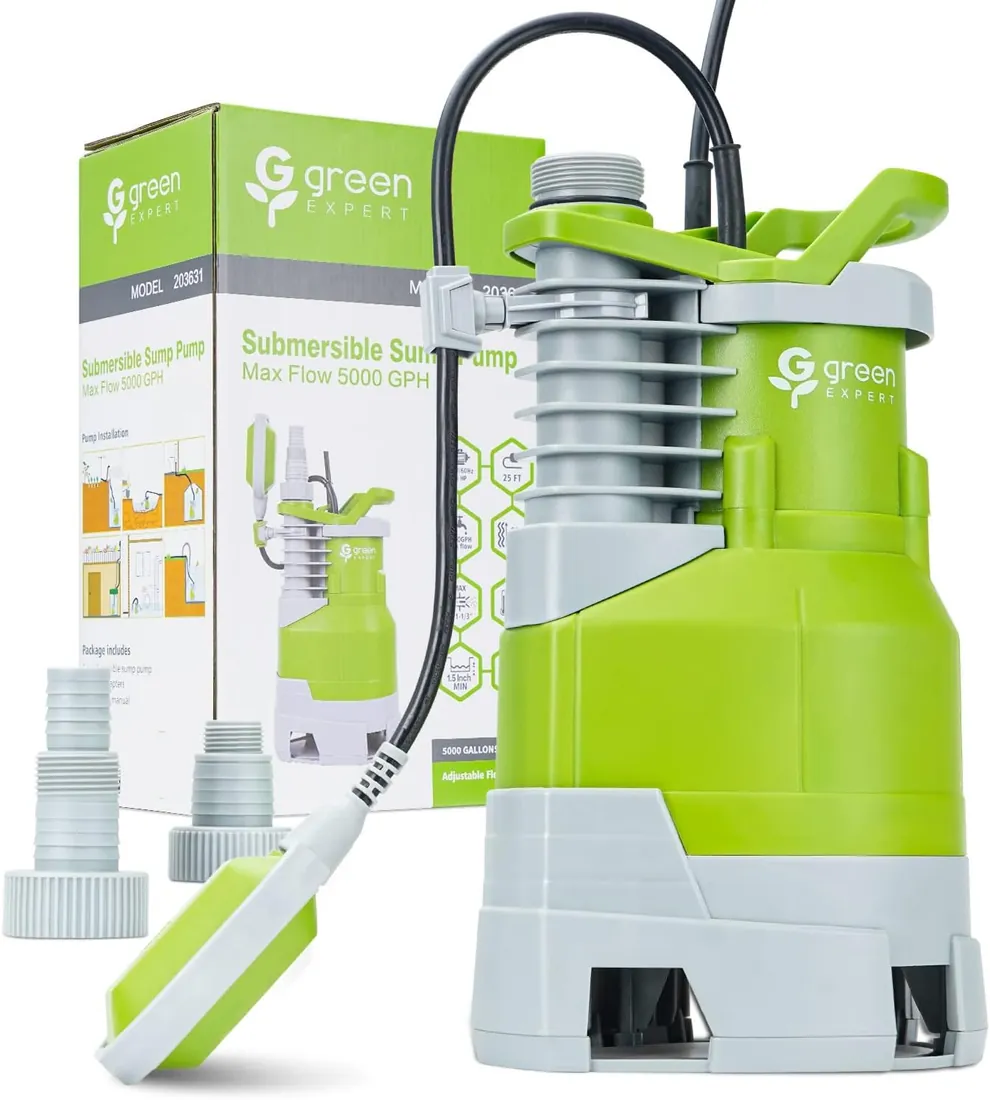
Green Expert 203631 1.5 HP Submersible Pump
Large 1-1/2 HP utility pump for emptying big pools faster.
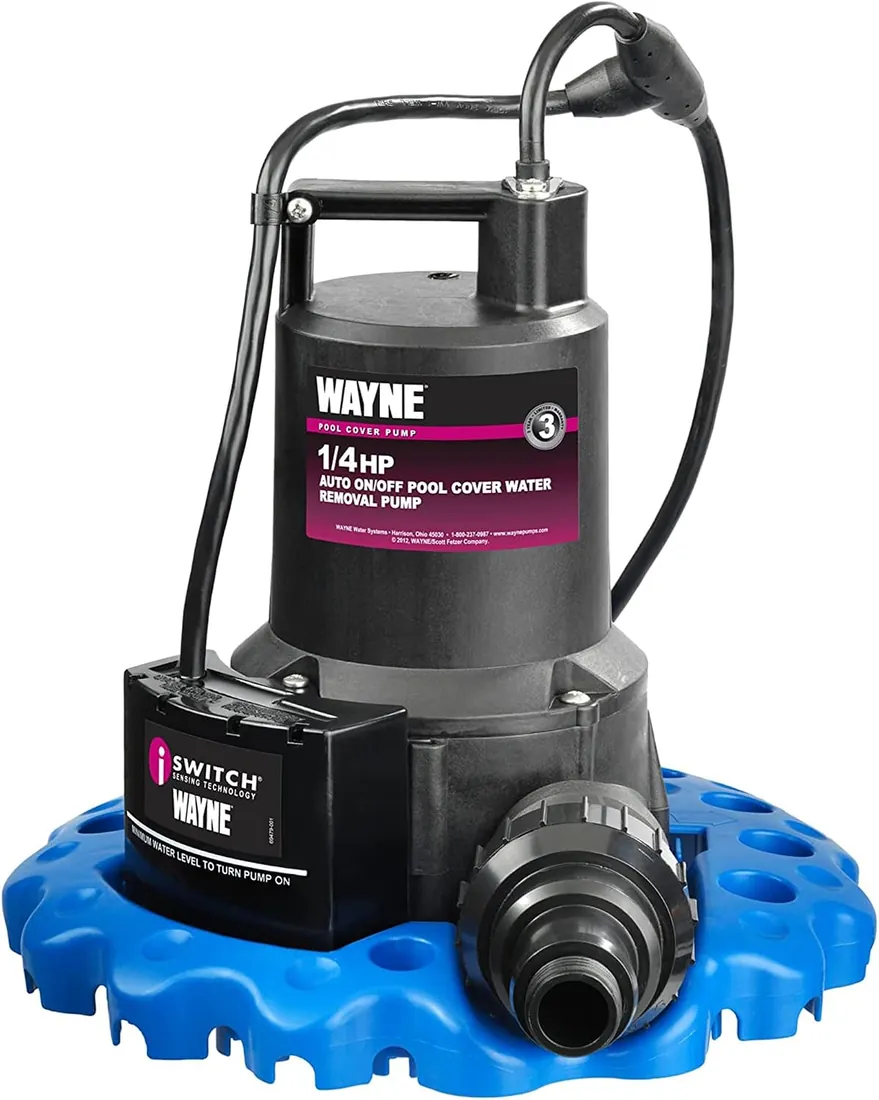
Wayne WAPC250 Automatic Pool Cover Pump
Automatic pump that senses water and shuts itself off before running dry.
Questions readers ask
Can I use a sump pump to drain a pool?
It will work, but a sump pump stops at its switch off level and leaves several inches behind, and it is heavy to move. A submersible utility pump pumps far lower and connects to a hose more easily.
Is it safe to drain an in-ground pool completely?
Not always. High groundwater can push an empty shell upward, and liners can shift. Ask the builder or liner maker how low you can safely go, and avoid draining after heavy rain.
Where should I drain pool water?
Wherever your town allows. Many places restrict sending treated water into storm drains or onto other properties. Check with the local public works department, and keep the outlet away from your foundation and septic field.
Can a pool cover pump drain a pool?
It can lower the level, but slowly and only to its shutoff depth. Wayne's pool cover pump also warns against highly chlorinated and salt water, so read the manual before using one on pool water rather than rain.