If a pool cover pump will not turn on, first confirm the outlet and GFCI have power and that the water on the cover is deep enough to trigger the switch. Then clean the float or electronic sensor, the strainer and the priming or vent hole. A pump that runs but moves no water usually has a kinked hose, an air lock or too much lift.
Pump not turning on
Start with the simple causes. Check that the pump is plugged in, the breaker is on and the GFCI has not tripped. Both makers list these first. Then look at the water: an automatic pool cover pump only starts once the water is deep enough to reach its switch. Wayne's WAPC250 needs at least 2-1/8 in of water before its electronic switch will cycle, prime and run, and Little Giant's APCP-1700 turns on at 2.5 in. A shallow puddle spread across a cover may never reach that depth, so gather it toward the pump or set the pump at the lowest point.
If there is plenty of water and power, the switch is probably dirty. Leaves and grit packed around a float or inside an electronic sensor housing will stop it reading the water. Little Giant tells owners to remove the float access cover and clean the float; Wayne asks you to rinse the switch with clean water.
| Spec | Wayne WAPC250 | Little Giant APCP-1700 |
|---|---|---|
| Horsepower | 1/4 HP | 1/3 HP |
| Starts at | 2-1/8 in | 2.5 in |
| Stops at | About 3/4 in | 1 in |
| Switch | Electronic water sensor | Float |
| Flow at 10 ft | 1,600 GPH | 1,230 GPH |
| Limit | 13 ft maximum pumping height | 26 ft maximum height |
Figures: Wayne pool cover pump manual 620015W-001 C; Little Giant APCP-1700 owner's manual 998295.
Pump runs continuously or will not shut off
A pump that keeps running after the cover is clear is usually being fooled by its switch. On the WAPC250, Wayne points to debris trapped inside the sensor body: unplug the pump, remove the strainer and clear any leaves or dirt from around the sensor probe. On a float pump, a stuck float does the same thing, and the APCP-1700 manual sends you to the float access cover again.
Height is the other cause. Wayne says its automatic feature will not work properly if the pumping height exceeds 13 ft, and lists too much discharge height as a reason the pump will not shut off. Little Giant adds air lock and a frozen discharge hose. Turning the power off for about a minute and restarting several times clears trapped air; if not, clean the vent hole under the outer cover.
Pump turns on and off too often
When a pump lifts water up over the pool edge and then stops, the water still in the hose runs back down onto the cover and can restart it. Wayne supplies a check valve with the WAPC250 for exactly this reason and says it is required in small areas, fitted with its arrows pointing upward. Little Giant lists a missing or leaking check valve as the first cause of a pump that cycles continually.
Wayne gives two more causes: a dirty electronic switch, which you clean with a small brush and soapy water after turning the pump upside down, and a pump sitting unevenly on the cover. A pump tilted on a fold of vinyl may read water on one side and lose it on the other. Set it level on a clean, flat area.
- Unplug the pump and pull it to the edge with its rope.
- Fit or replace the check valve with its arrows pointing up.
- Clean the switch or float and rinse out the strainer.
- Set the pump level at the lowest point of the cover.
- Plug it in and watch two full cycles.
Pump runs but moves little or no water
Check the hose before the pump. Unwind it fully, because coils and kinks choke flow. Wayne suggests a quick test: connect the hose to a faucet, and if water does not run freely through it, the hose is the problem. Little Giant notes that a hose of too small a diameter cuts capacity and recommends 1 in tubing for best performance.
If the hose is clear, clean the pump itself. On the WAPC250, remove the strainer, base screws and impeller plate, clear debris from the impeller and clean the priming hole with a pin or paper clip. A plugged priming hole stops the pump from pushing air out, so it spins without pumping. Lift matters too: the APCP-1700 moves 1,745 gallons per hour at 1 ft but 490 at 20 ft, so a long climb up a raised deck can make a healthy pump look weak.
Pump keeps tripping the breaker or GFCI
Pool cover pumps live outdoors in wet conditions, so GFCI trips are common. Inspect the cord along its full length for cuts where it crosses the pool edge, and keep the plug and any connection off the wet cover and above standing water. Little Giant warns that the electrical connection must never be where rising water can reach it, and recommends giving the pump its own circuit.
Both makers forbid improvised wiring. Little Giant says not to use an extension cord at all; Wayne allows an outdoor-rated cord only at the gauge its manual lists for the length. A trip that happens the moment the pump is plugged in, on a dry outlet with a sound cord, points to a fault in the pump, and makers treat a damaged cord as a reason to replace the whole unit.
Freezing weather and when to replace
Ice is the hidden killer. Wayne asks owners to bring the WAPC250 indoors when temperatures drop below freezing. Its control also detects a locked or frozen impeller and shuts down, then retries for a while before resting for 12 hours; unplugging it briefly resets that delay. Little Giant warns that freezing can crack the pump, though it says a pump left out in freezing weather should stay plugged in.
If the pump fails the bucket test in both manuals, filling a tub to the start depth and watching it run, and cleaning has not helped, replace it. The Wayne WAPC250 and Little Giant APCP-1700 both have full manuals, and the pool cover pump list compares the field.
Common mistakes
- Expecting an automatic pump to start in a shallow film of water.
- Running the discharge hose so water drains back onto the cover.
- Leaving out the check valve when lifting water over a high pool wall.
- Plugging the pump into a long indoor extension cord across wet ground.
- Leaving a pump on a frozen cover so ice locks the impeller.
Products that fit
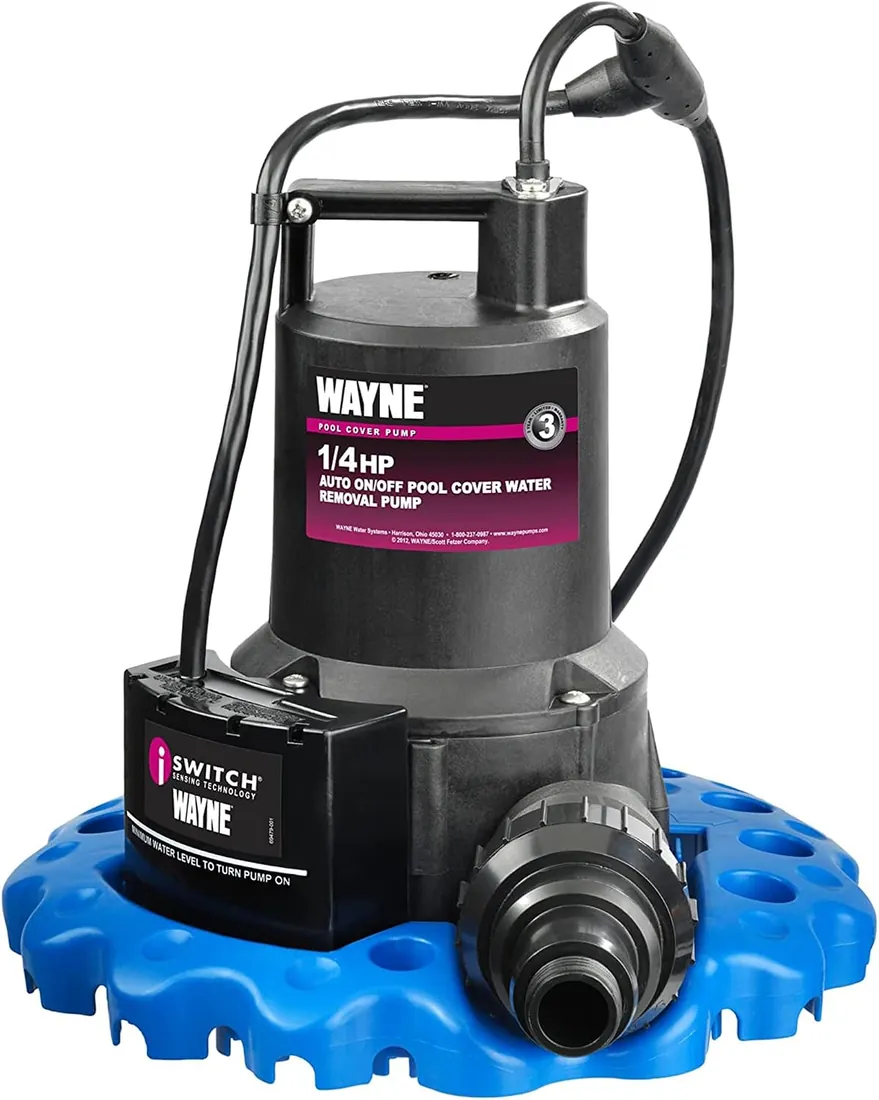
Wayne WAPC250 Automatic Pool Cover Pump
Electronic-switch pool cover pump that will not let itself run dry.
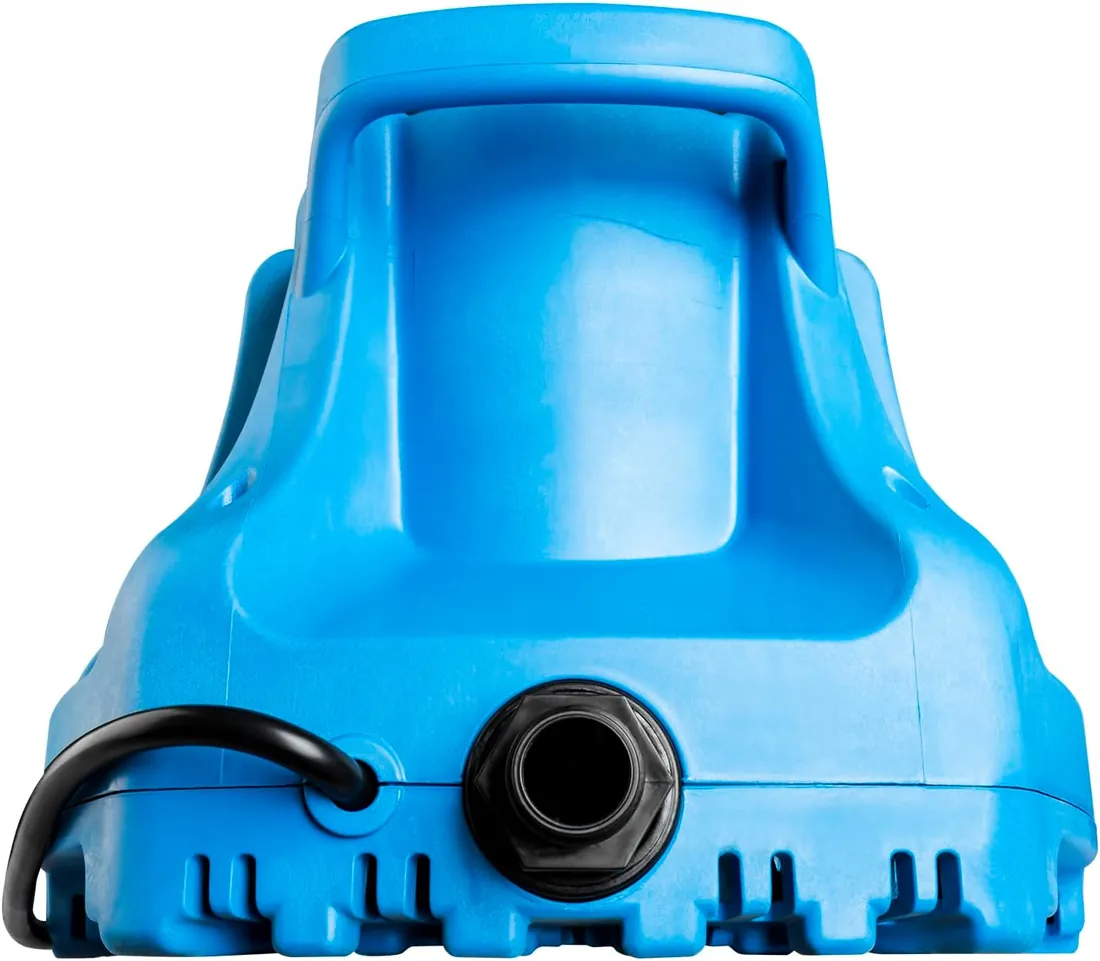
Little Giant APCP-1700 Automatic Pool Cover Pump
Float-switch 1/3 HP pool cover pump with a published flow table.
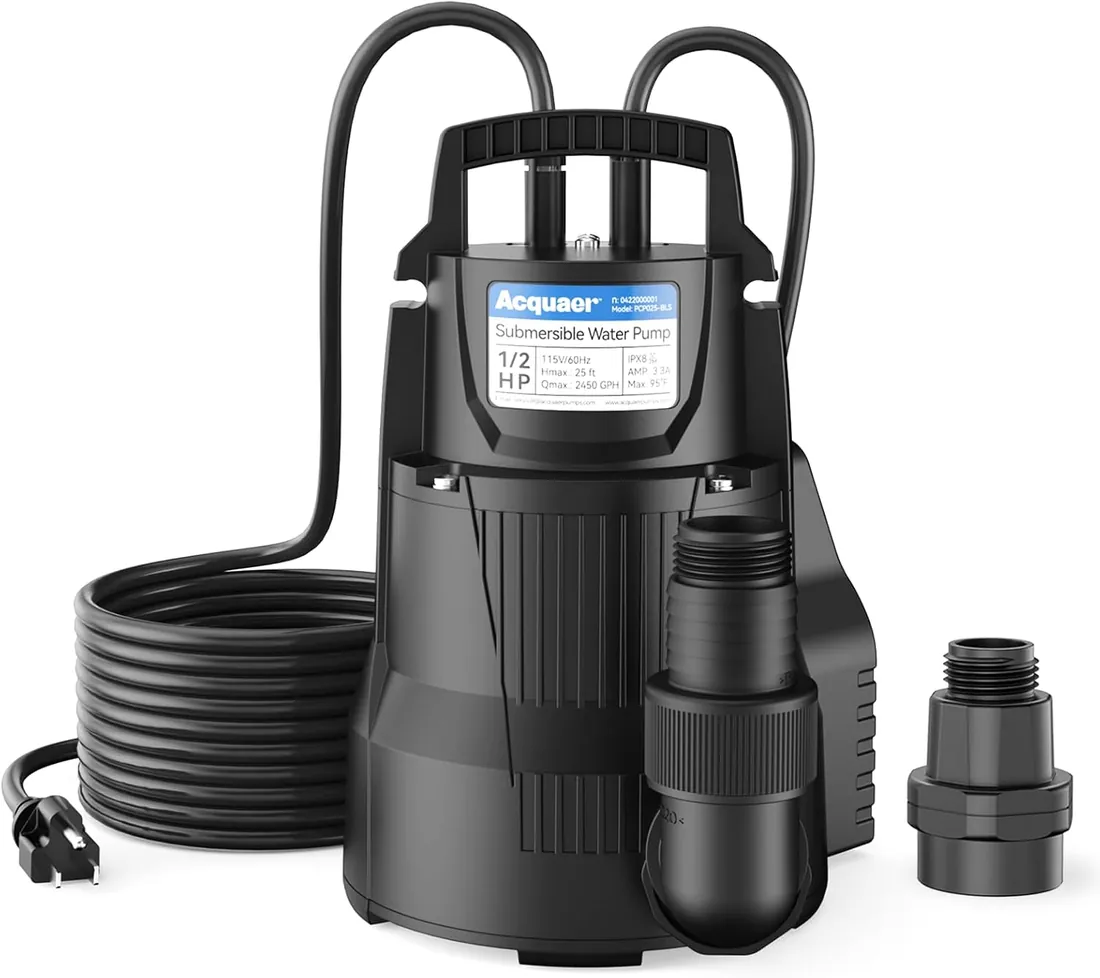
Acquaer PCP025 1/2 HP Automatic Utility Pump
Larger automatic pool cover pump for heavy rain on big covers.
Questions readers ask
Why won't my pool cover pump turn on when there is water on the cover?
The water may not be deep enough at the pump. Wayne's WAPC250 needs 2-1/8 in and Little Giant's APCP-1700 starts at 2.5 in. Move the pump to the lowest point, then clean the switch or float if it still will not start.
Why does my pool cover pump keep running?
Debris in the sensor or a stuck float is the usual cause. Too much lift, an air lock or a frozen hose can also stop it shutting off. Clean the switch first, then check the hose and height.
Do pool cover pumps need a check valve?
When the pump lifts water over a pool wall, yes. Water left in the hose drains back and restarts the pump. Wayne includes a check valve with the WAPC250 and calls it required in small areas.
Can I leave my pool cover pump out all winter?
Wayne advises bringing the WAPC250 indoors below freezing. Little Giant warns freezing can crack its pump and says one left installed should stay connected to power. Check your own manual before leaving any pump on an icy cover.