Unplug the old pump, let it cool, open the union or coupling above the pit and lift it out. Clean the basin, then fit a new pump with the same discharge size and similar switch levels, reusing the riser only if it is sound. Fit a new check valve, keep the anti-airlock hole below it, plug in through a GFCI outlet and watch several cycles.
Match the new pump to the old installation
Read the old pump's nameplate before you buy. Note the horsepower, the discharge size and the switch type, then measure from the pit floor to the water level where the old pump started and stopped. A new pump with a much higher on level can let water reach the drain-tile inlet and back up under the slab; one with a lower off level may run with too little water over the impeller.
The discharge thread matters most for an easy swap. Zoeller's M53 and M98, Wayne's CDU790 and Liberty's 257 all use a 1-1/2 in connection, so they drop onto most existing risers. Superior's smaller thermoplastic pumps use 1-1/4 in, which needs an adapter. Never step the pipe down to a smaller size; Zoeller lists it among the don'ts in its installation checklist.
Plug style matters too. A pump with a separate piggyback switch can be bypassed by hand during a cleanout, while a pump with a switch built into the body cannot, so decide which you prefer before you order.
| Pump | Power | On / off level | Discharge |
|---|---|---|---|
| Zoeller M53 | 3/10 HP | 7-1/4 in / 3 in | 1-1/2 in NPT |
| Zoeller M98 | 1/2 HP | 9-1/2 in / 3 in | 1-1/2 in NPT |
| Liberty 257 | 1/3 HP | 7 in / 4 in | 1-1/2 in |
| Wayne CDU790 | 1/3 HP | About 9 in / about 4 in | 1-1/2 in NPT |
Figures: Zoeller technical data sheet FM2778, Mighty-Mate series; Zoeller technical data sheet FM2779, Model 98; Liberty Pumps installation manual 7035000R; Wayne CDU790 and CDU800 sell sheet.
Remove the old pump safely
Turn off the breaker and unplug the pump, then give it time. Wayne asks for at least two hours of cooling and Zoeller two and a half, because the oil inside a submersible motor runs hot and pressurized. Under flooded conditions, Zoeller says to have the power company or an electrician disconnect service before you touch the pump.
Bail the pit low, open the union or rubber coupling above the basin and lift the pump out by its handle, never the cord. Superior's own advice is that it is best to take out all the old piping and start fresh; at minimum, inspect the riser, check valve and any junction box and replace what is cracked or corroded, as Liberty's manual asks.
- Switch off the breaker and unplug the pump and switch.
- Wait the cooling time the maker gives before handling the pump.
- Lower the water and loosen the union or coupling above the pit.
- Lift the pump by the handle and set it in a bucket.
- Scoop out silt and stones and check the pit floor is solid.
Fit the new pump and its check valve
Stand the new pump on a hard, level base and turn its float away from the inlet. Thread the adapter into the outlet by hand; Liberty warns that over-tightening can crack the pump body. Cut the existing riser to suit and rejoin it with the union or coupling.
This is the moment to replace the check valve. Superior says a new full-flow valve greatly increases pump life, and an old one that sticks or leaks will make a new pump short cycle. Valves are cheap next to a motor. Point the arrow away from the pump. Then make sure the anti-airlock hole exists below the valve: Zoeller wants about 3/16 in, while Liberty uses 1/8 in on its own pumps. Tape the cord to the riser away from the float.
Test before you put the lid back
Plug the pump into a grounded GFCI outlet, through its piggyback plug if it has one. With the pit low, nothing should run. Fill the pit with a hose until the pump starts, and let it run down to its off level. Repeat a few times while you check for leaks, a thin spray from the vent hole and a float that never brushes the wall.
Zoeller tells owners to inspect and test the system at least every three months, and Wayne recommends three or four inspections a year for pump movement and debris on the float. Put a reminder on the calendar now.
What to do with the old pump and the paperwork
If the old pump failed during a flood, keep it. Zoeller states that where property damage results from an alleged pump failure, the owner must keep the product for investigation, and Superior notes that insurers usually need it to support a claim. Otherwise dispose of it properly: Wayne points out that submersible pumps contain dielectric oil and should be disposed of under state environmental rules.
Keep the receipt with the manual. Wayne and Liberty tie warranty coverage to proof of purchase, and Zoeller asks owners to register new products. For a like-for-like swap in a typical basement, the Zoeller M53 and Liberty 257 drop onto a standard riser, and the one-third horsepower list compares them with similar pumps.
Common mistakes
- Buying a pump with a higher on level than the drain-tile inlet allows.
- Reducing the discharge to a smaller pipe to fit an old riser.
- Reusing a check valve that already leaks or sticks.
- Handling a hot pump straight after unplugging it.
- Throwing away a failed pump before an insurance claim is settled.
Products that fit
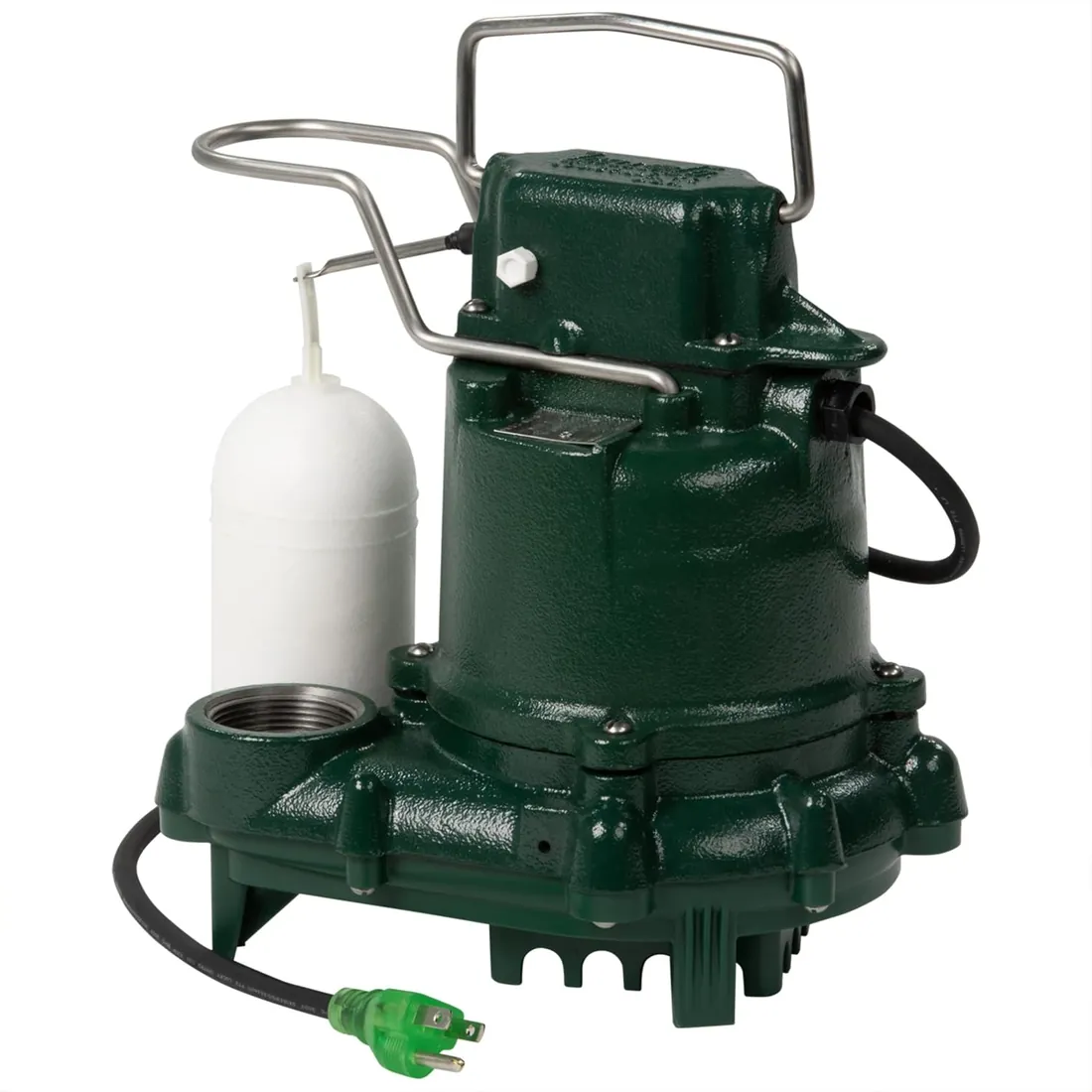
Zoeller M53 Mighty-Mate Sump Pump
Common like-for-like replacement that threads onto a 1-1/2 in NPT riser.
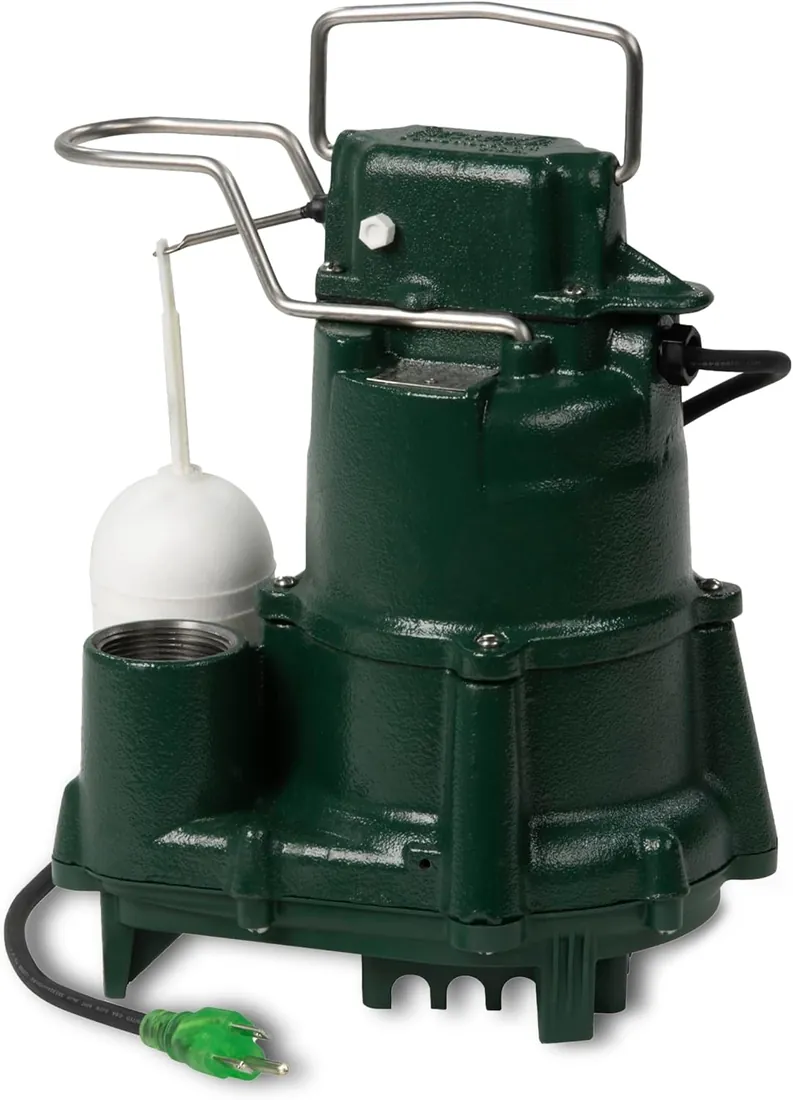
Zoeller M98 Flow-Mate Sump Pump
Half-horsepower upgrade when the old pump could not keep up.
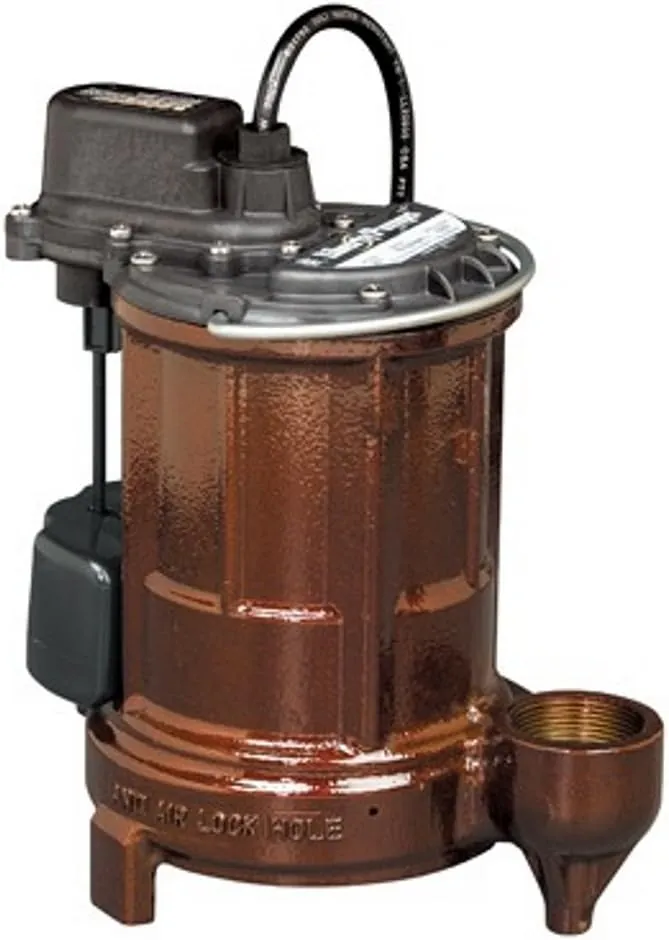
Liberty Pumps 257 Sump Pump
Cast iron pump with a vertical float for tight pits.
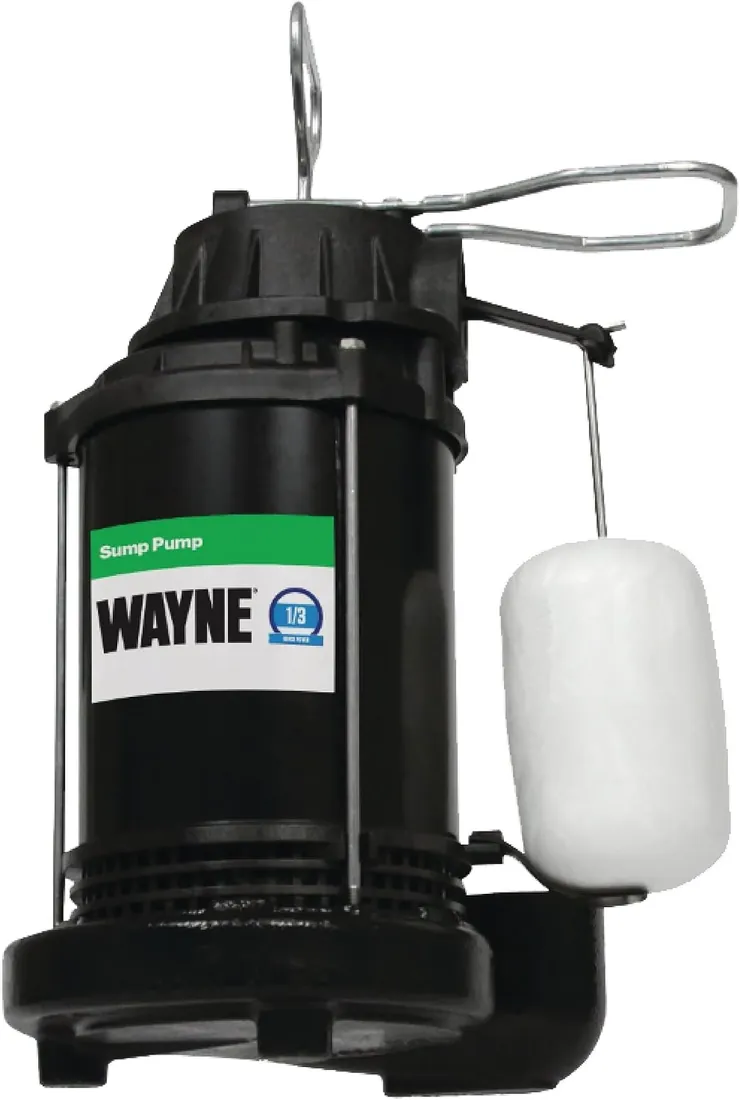
Wayne CDU790 Sump Pump
Top-suction replacement that leaves the silt on the pit floor behind.
Questions readers ask
Can I replace a sump pump myself?
In most homes, yes, if the outlet, riser and basin are in good shape. It is a plumbing swap at a union with a plug-in pump. Call an electrician if the outlet is missing, not grounded or not GFCI protected, or if the basement is flooded.
Should I replace the check valve with the pump?
It is a good idea. Superior says a new full-flow check valve greatly increases pump life, and a worn valve that leaks will make the new pump cycle constantly in dry weather.
Do I need the same brand when replacing a sump pump?
No. Match the discharge size, the switch type, on and off levels that suit your pit and the voltage on the nameplate. Staying with the same model often saves recutting the riser, but any pump that fits those points will work.
How often should a sump pump be replaced?
Zoeller puts normal service life at seven to ten years. Many owners replace a pump in that window, especially a pump in a busy pit, rather than waiting for a failure during a storm.