Pour water into the pit until the pump starts, then watch it empty the pit and shut off near the levels in its manual. If it does not start, unplug a piggyback switch and plug the pump straight into the outlet: if the pump runs, the switch is at fault. A meter across the piggyback plug while you raise and lower the float confirms it.
The bucket test: the one test every owner should do
The most useful test copies a real storm. Remove the lid, then pour water into the pit slowly, from a bucket or a garden hose, until the switch trips. Red Lion's operating test for its cast iron pumps follows exactly this order: run water in until the pump starts, confirm nothing obstructs the switch, check that the on and off levels match the specifications, and let the pump run through several cycles.
Watch three things. The pump should start without hesitation at roughly its rated on level, the water should drop steadily rather than swirl in place, and the pump should stop cleanly at the off level. Then go outside and look at the end of the discharge line. Water arriving there proves the check valve and pipe are clear, which lifting the float by hand never does.
- Remove the pit lid and clear anything resting on the float.
- Pour water in slowly and note the height at which the pump starts.
- Watch the level fall and note where the pump stops.
- Confirm water reaches the outdoor outlet.
- Repeat once more to see a second clean cycle.
What on and off levels to expect
Knowing the factory levels lets you tell a sticky switch from a normal one. A pump that waits until the water is several inches above its rated on level is struggling, and one that stops well short of its off level may be short cycling. The figures below are from maker documents; check the manual for your exact model, since tether and vertical versions of the same pump differ.
Measure from the bottom of the pit with a tape or a marked stick. Small differences of half an inch are normal, because the levels are printed as approximate values.
| Pump | Switch | On | Off |
|---|---|---|---|
| Wayne CDU790 and CDU800 | Vertical float | About 9 in | About 4 in |
| Zoeller M53 | Built-in float | 7-1/4 in | 3 in |
| Red Lion RL-SC vertical models | Vertical float | 7 in | 2.25 in |
| Red Lion RL-SC tether models | Tethered float | 13 in | 5 in |
| Superior 92341 | Piggyback vertical float | 6 in | 2 in |
Figures: Wayne submersible sump pump manual 600002W-001 J; Zoeller technical data sheet FM2778, Mighty-Mate series; Red Lion RL-SC cast iron sump pump owner's manual 998495; Superior Pump 92341 product page.
Pump or switch? The bypass test
If the pump stays silent during the bucket test, find out which half has failed. On pumps with a piggyback switch, the pump cord plugs into the back of the switch plug. Unplug both, then plug the pump cord directly into the outlet. Red Lion gives this as its first check: if the pump runs when plugged straight in, the problem is the float switch.
Keep this test short. Run the pump only with water in the pit and only for a few seconds, because running dry overheats the seal and motor, and makers warn it can void the warranty. If the pump does not run even when plugged in directly, check the breaker and GFCI before blaming the motor. Pumps with a built-in switch, such as the Zoeller M53, cannot be bypassed this way; a pump that hums or stays silent with the float lifted needs the switch repair kit or replacement.
Testing a float switch with a multimeter
A meter gives a definite answer on a piggyback switch. Red Lion's manual tells owners to use an ohmmeter to check for continuity between the incoming and outgoing connections of the piggyback plug while raising and lowering the float. Set the meter to continuity or resistance, unplug the switch completely, and touch the probes to the matching blades: one prong of the male plug and the matching slot of the female socket on the back.
With the float down, the meter should show an open circuit. Lift the float to its on position and it should show continuity, usually with a beep. A switch that stays open when lifted, flickers as you move the float, or shows continuity in both positions is faulty. Never test with the switch plugged in; the socket on the back carries line voltage when the switch closes. Replacement piggyback switches, such as the Superior vertical float switch, can be fitted without touching the pump.
Testing without water in the pit
It is tempting to lift the float by hand and listen for the motor. That proves the switch closes and the motor turns, but nothing more, and it runs the pump dry. Red Lion warns that a pump run dry gets hot enough to burn skin and can be seriously damaged. If you must check a dry pit, lift the float for no more than a second or two.
A better choice is a few gallons of water. Even a shallow fill lets the pump prime, pushes water through the check valve and shows whether the outlet is clear. Battery backups are the exception: Basement Watchdog's own checklist has you lift the backup float and lets the controller run the pump for about 25 seconds, which it accepts even in a dry pit.
Reading the results
If the pump starts and stops at the right levels and water reaches the outlet, you are done. If it hums but moves no water, look for an air lock; Red Lion and Zoeller both call for a small bleed hole in the discharge pipe between the pump and check valve, and Red Lion says water spraying from it is normal. If the pump runs but the pit drains slowly, check that the check valve arrow points up the pipe and that the lift is within the pump's rating.
A pump that fails both the bucket and the bypass test, with power confirmed, is finished. Pumps on the 1/3 HP sump pump list replace most failed basement pumps directly.
Common mistakes
- Lifting the float by hand for a long time and running the pump dry.
- Testing a piggyback switch with a meter while it is still plugged in.
- Skipping the outdoor check, so a frozen or crushed discharge line goes unnoticed.
- Forgetting to plug the switch back in after a bypass test.
- Blaming the pump before checking a tripped GFCI or breaker.
Products that fit
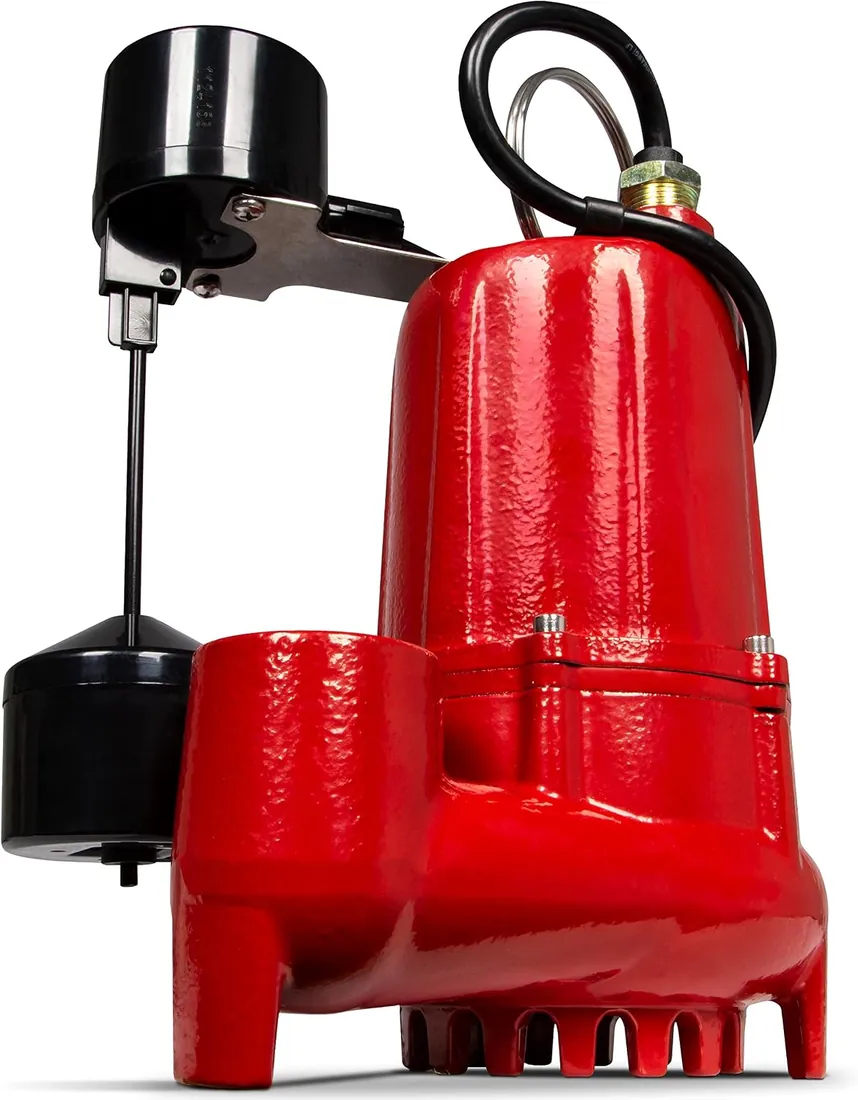
Red Lion RL-SC50V Sump Pump
Cast iron pump whose manual sets out the operation test and meter check.
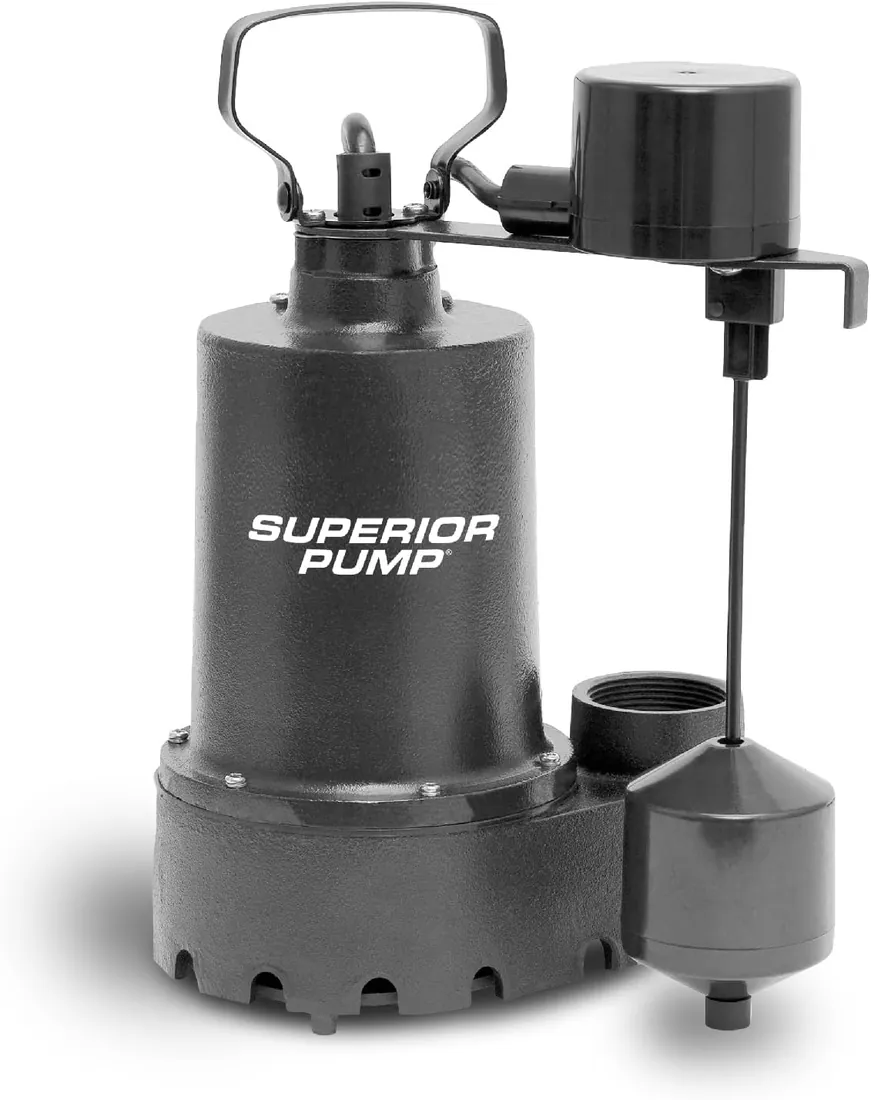
Superior Pump 92341 Cast Iron Sump Pump
Cast iron pump on a piggyback vertical float, so the bypass test takes seconds.
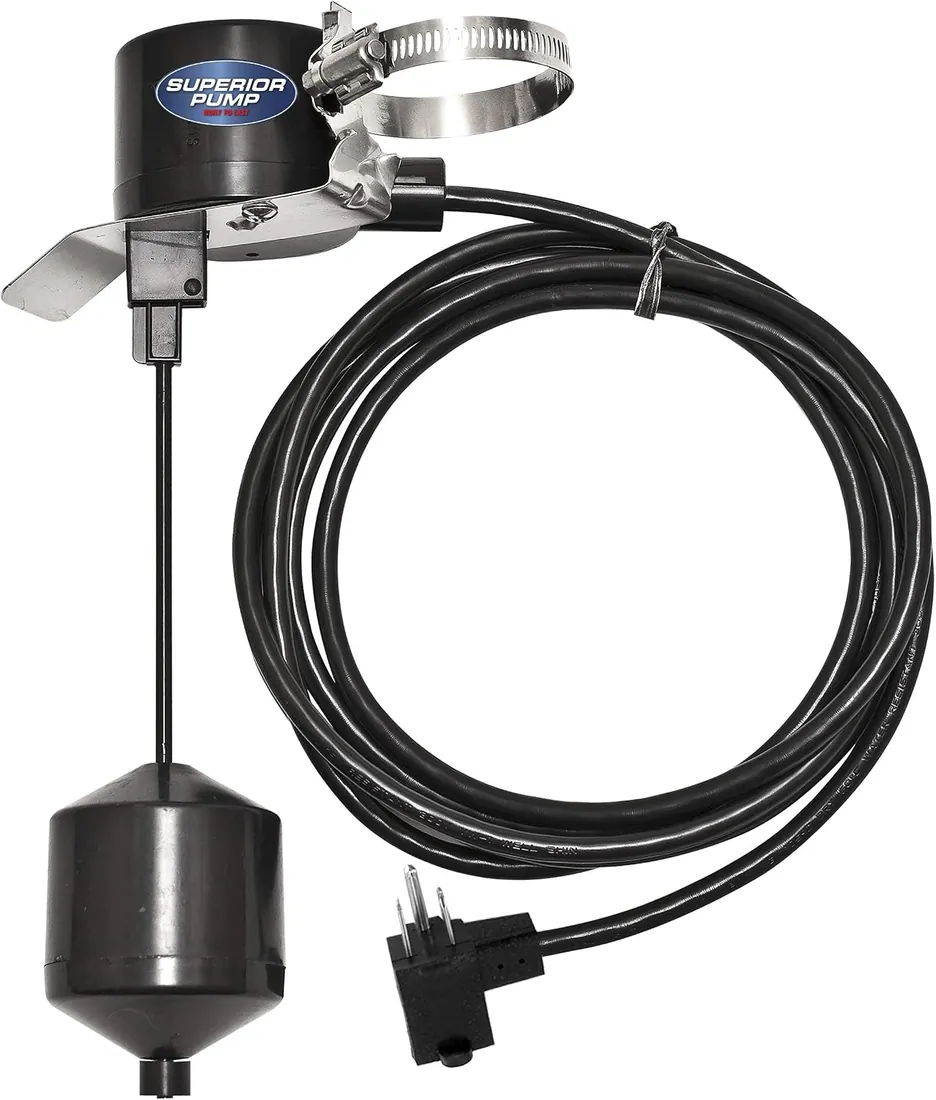
Superior Pump 92010 Vertical Float Switch
Separate piggyback float switch for pumps that need a new switch.
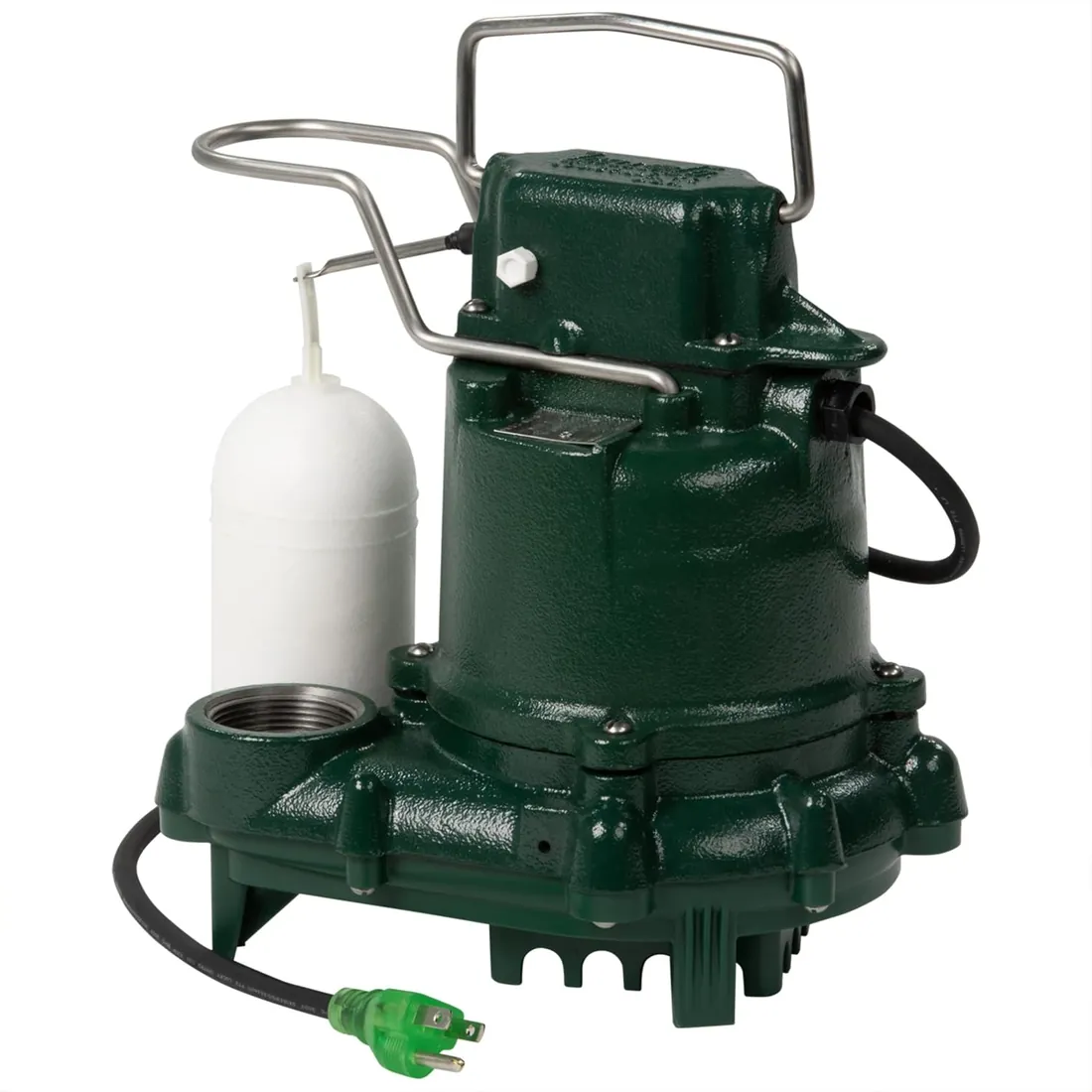
Zoeller M53 Mighty-Mate Sump Pump
Built-in float switch inside a guard, checked with the water method.
Questions readers ask
How do I know if my sump pump float switch is bad?
Plug the pump directly into the outlet. If it runs that way but not through the switch, the switch has failed. On a piggyback switch you can confirm with a meter: it should show continuity only while the float is raised.
How often should I test my sump pump?
Wayne asks for an inspection three to four times a year and Red Lion every three months, more often in heavy use. Test before the wet season and after any long dry spell, since floats can stick after weeks without moving.
Can I test a sump pump without water?
Only for a moment. Lifting the float in a dry pit confirms the switch and motor work, but it runs the pump dry. A few gallons of water gives a far better test and does not risk overheating the seal.
My pump runs when I lift the float but not when water rises. Why?
Something is stopping the float from rising on its own: debris, a tether caught on the wall or pipe, or a pump that has tipped. Clear the area, set the pump level, and make sure the float has free travel.