Inspect the pump three or four times a year: confirm it stands upright on a solid base, clear debris from the float and inlet screen, check the GFCI outlet, and pour in water to watch a full cycle. Clean the basin once a year, replace tether switches on the maker's schedule, and test any battery backup more often than the main pump.
Why routine checks matter more than the pump itself
Most sump pump failures start outside the motor. A float wedged against the pit wall, a tripped GFCI, a check valve stuck shut or an inlet screen packed with grit can all leave a healthy pump sitting idle while water rises. None of these show up until a storm, which is the worst time to discover them.
Makers treat maintenance as part of the deal. Wayne's sump manual says a lack of proper routine maintenance will void the warranty, and Liberty's warranty excludes products that were not installed, operated or maintained per its instructions. The good news is that the work is quick. A full check takes about as long as filling a bucket twice, and it needs no tools beyond a flashlight and, once a year, a wet vacuum.
How often each job needs doing
The intervals below come straight from maker documents. They differ a little because the products differ: a battery backup sits idle for long stretches, so its makers want it exercised more often than the primary pump. Where two makers give different intervals for the same job, follow the manual for the pump you own.
Liberty adds a step many owners miss. A pump that sits idle for more than a month in a dry pit should be run briefly each month so its seals stay lubricated, and a pump left idle in a pit that stays wet should be removed.
| Task | Interval | Maker |
|---|---|---|
| Inspect pump, switch and inlet for debris and movement | 3-4 times per year | Wayne |
| Check corrosion, float operation, check valve | Quarterly | Liberty |
| Run an idle pump in a dry pit | Monthly | Liberty |
| Inspect and clean the basin | Annually | Liberty |
| Replace a tether float switch | Every two years | Wayne |
| Battery backup checklist (BWSP) | Every 4-6 months | Basement Watchdog |
| Combination system checklist (CITS-50) | 1-2 times per year | Basement Watchdog |
Figures: Wayne submersible sump pump manual 600002W-001 J; Liberty Pumps installation manual 7035000R; Basement Watchdog BWSP maintenance checklist; Basement Watchdog combination system maintenance checklist.
The quarterly check, step by step
Start with power. Damp basements trip GFCI outlets, and Wayne warns that a tripped GFCI quietly shuts the pump off, so press the reset button and make sure the cord is undamaged. Then look at the pump itself. Vibration can walk a pump across the pit floor or tip it on its side, which pins the float so it cannot rise.
The water test is the heart of the check. Pour water in slowly until the switch trips, then watch the pump empty the pit and stop. It should start at roughly the on level printed in its manual and stop cleanly. If it hesitates, chatters or never shuts off, the switch or float needs attention before anything else.
- Reset the GFCI and inspect the cord for cuts or crushing.
- Shine a light into the pit and confirm the pump stands upright and level.
- Clear leaves, gravel and string from around the float and inlet screen.
- Pour water in until the pump starts, then watch it run to the off level.
- Go outside and confirm water is leaving the discharge outlet freely.
- Replace the lid and gasket so debris and odors stay contained.
Check valve, vent hole and discharge line
The check valve stops pumped water from falling back into the pit. Liberty asks for a quarterly inspection of it and suggests a gate valve after it so the check valve can be cleaned without draining the whole line. If you hear water rushing back when the pump stops, or the pit refills within seconds, the valve is leaking or stuck open.
Look for a small hole in the discharge pipe between the pump and the check valve. Zoeller recommends a 3/16 in vent hole there to prevent air-locking, and Basement Watchdog's checklist explains that water spraying from it during a run is normal and the hole must not be blocked. Outside, clear the end of the pipe. Wayne wants water carried at least 3 ft from the foundation, sloped so it drains in freezing weather.
The annual pit clean-out
Once a year, unplug the pump, lift it out by its handle rather than the cord, and clean the pit. Silt, gravel and drywall dust settle at the bottom and eventually reach the impeller. A wet vacuum makes quick work of the sludge. While the pump is out, rinse the inlet screen and check the base: Wayne says a pump must sit on a solid, level surface, never directly on clay, gravel or sand, and a brick or block should go underneath if the pit has no floor.
A reddish, slimy coating on the pump and pipe is iron ochre, a bacterial deposit common in some soils. Basement Watchdog's checklists call it out specifically and suggest a pit cleaner. Heavy ochre can foul floats and screens within months, so pits that grow it need cleaning more often than once a year.
Backup pumps and batteries
A backup pump that has never run is an unknown. Basement Watchdog's checklist has you unplug the main pump, lift the backup float and let the controller run the pump for about 25 seconds, then press reset to silence the alarm. Remember to plug the main pump back in afterwards. Systems with wet-cell batteries also need the fluid level checked and the cap and sensor rinsed.
Liberty notes that most backup batteries last three to five years depending on use and conditions. If yours is older or fails its test, replace it before storm season. The battery backup runtime calculator shows how long a given battery should keep a backup pump running, and the battery backup sump pump list compares complete systems.
Signs maintenance is no longer enough
Maintenance keeps a pump working; it does not make it last forever. Zoeller estimates a seven to ten year service life under normal conditions and an average switch life of four to seven years. Repeated thermal trips, loud bearings, a pump that hums without moving water after you have cleared the screen and freed the check valve, or rust breaking through the housing are signs the pump is near the end.
When it is time, a cast iron pump such as the Zoeller M53 or the Liberty 287 drops into most standard pits, and a replacement before failure is far cheaper than a flooded floor.
Common mistakes
- Testing by lifting the float only, which never checks the discharge line or check valve.
- Leaving the main pump unplugged after testing the battery backup.
- Sealing over the small vent hole in the discharge pipe during a repair.
- Setting the pump straight onto gravel or clay after cleaning the pit.
- Ignoring a GFCI that trips now and then until the day it trips during a storm.
Products that fit
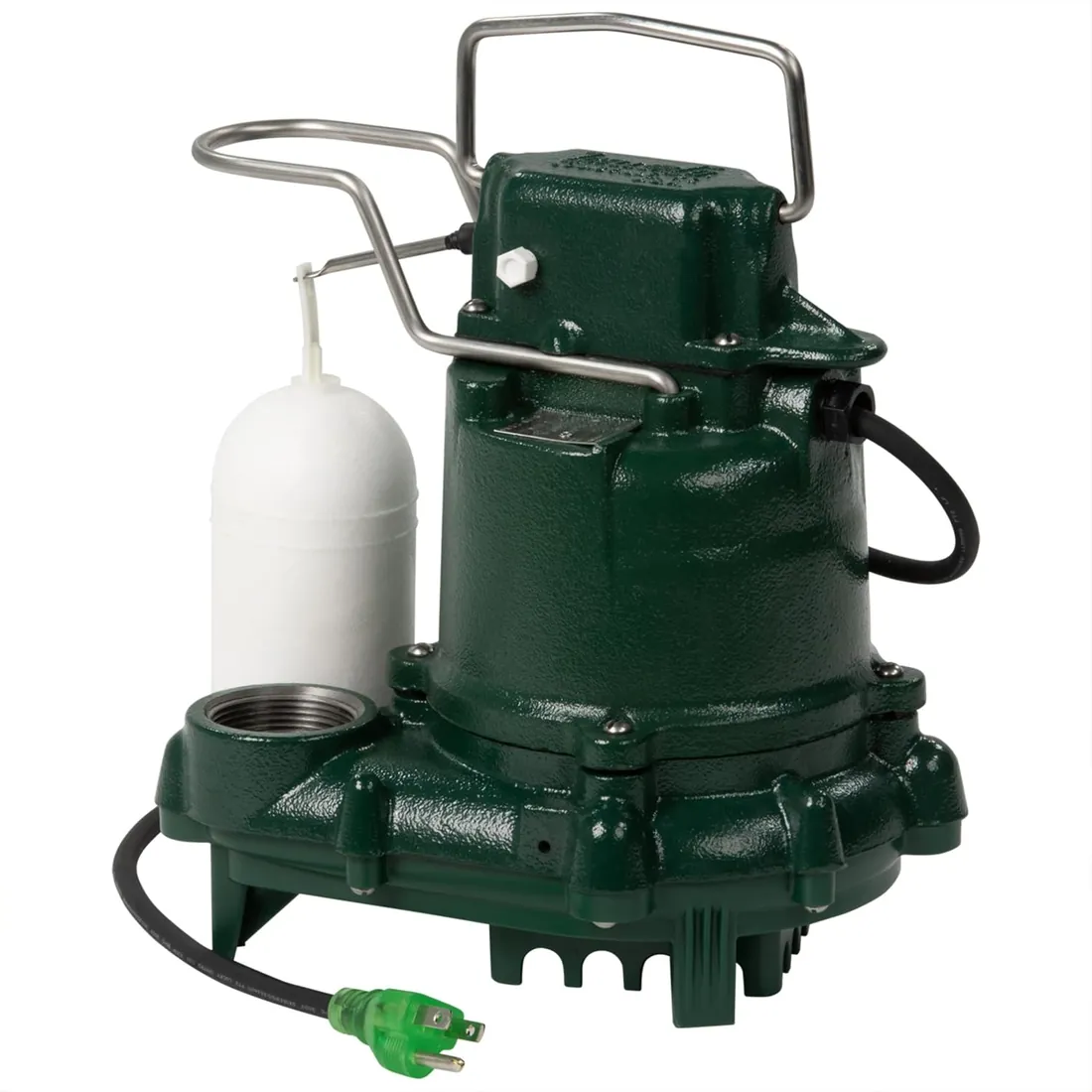
Zoeller M53 Mighty-Mate Sump Pump
Built-in float inside a guard, so there is no tether to replace.
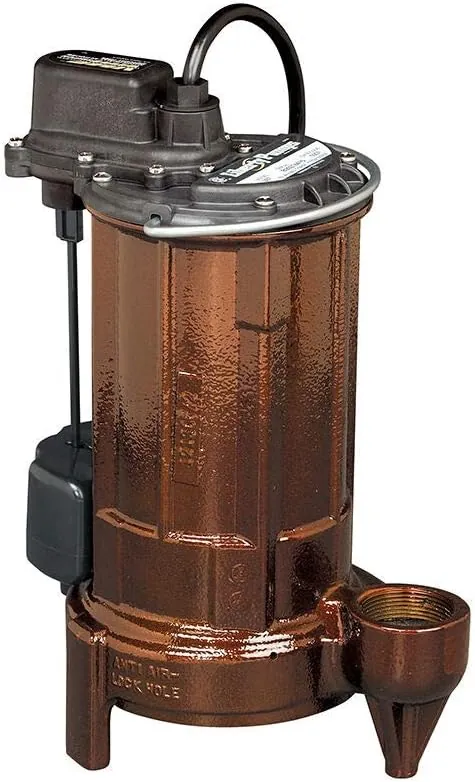
Liberty Pumps 287 Sump Pump
Cast iron pump with a vertical magnetic float that needs only clear space to work.
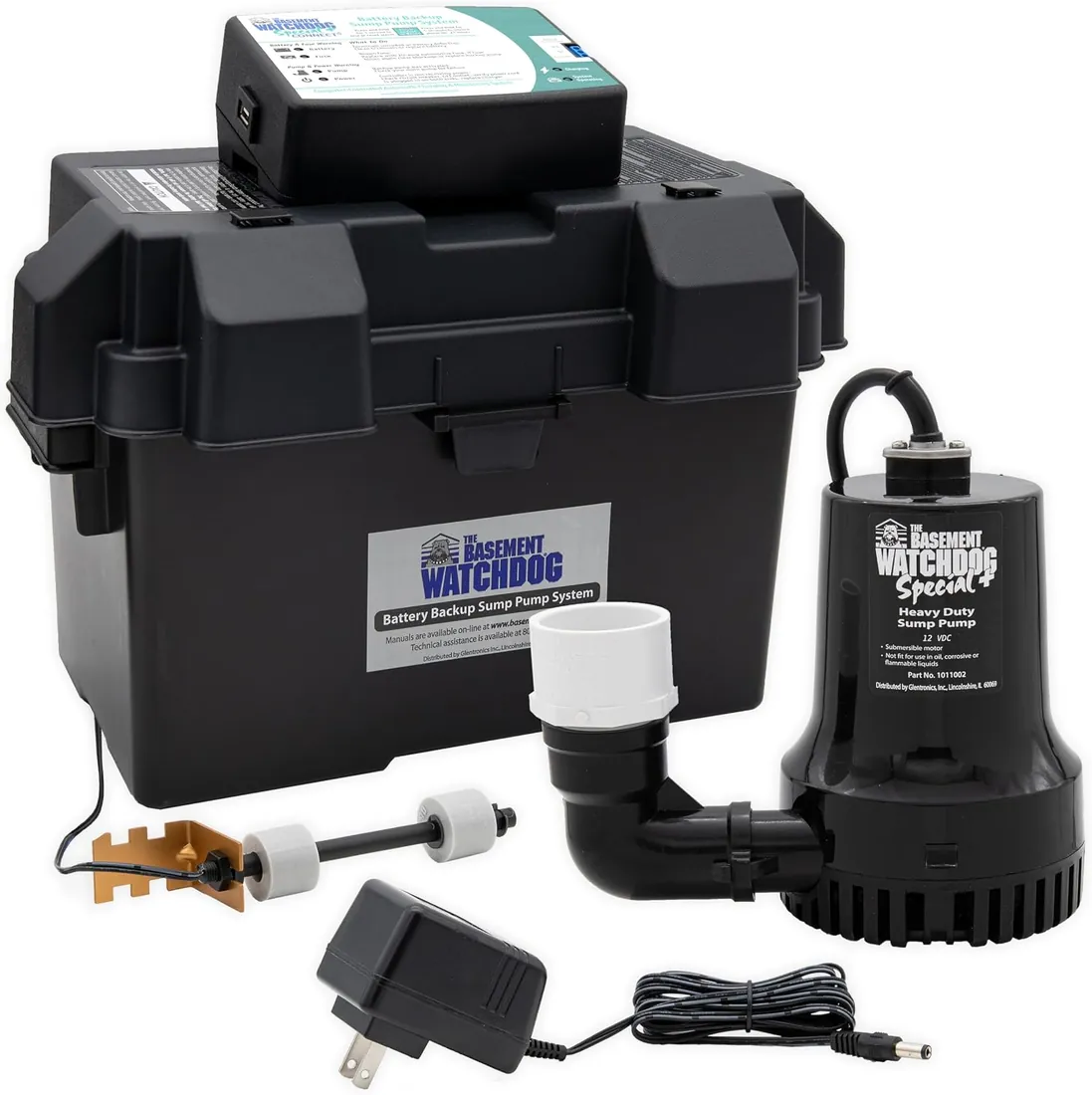
Basement Watchdog Special CONNECT (BWSP) Battery Backup Sump Pump
Backup with a published maintenance checklist and a self-test routine.
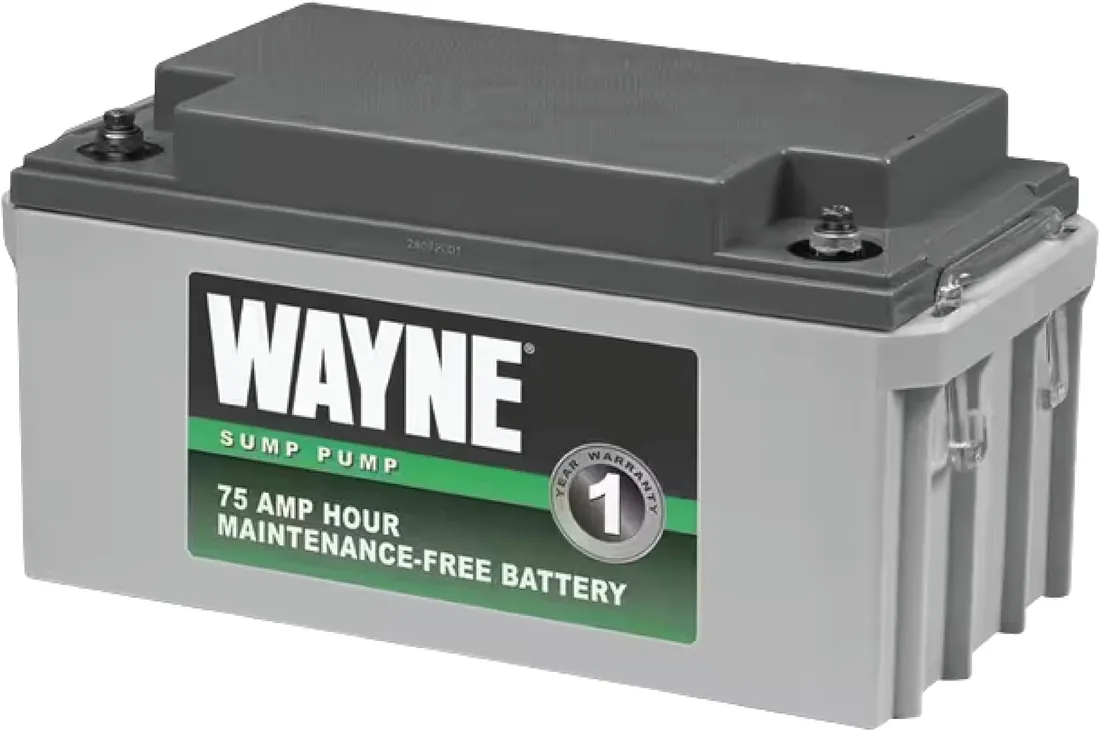
Wayne WSB1275 Standby Battery
Replacement battery for backup systems once the old one fails its test.
Questions readers ask
How often should a sump pump be serviced?
Wayne asks for an inspection three to four times a year, and Liberty lists float, check valve and corrosion checks quarterly with a basin cleaning once a year. A professional visit is rarely needed if you do these checks yourself.
Do sump pumps need oil or lubrication?
No. Oil-filled submersible pumps have sealed, permanently lubricated bearings. Liberty states that no lubrication or other maintenance is required on the motor, and Wayne says its pumps need no added lubrication. Never open the motor to top up oil.
How do I clean a sump pump without removing it?
You can clear the float and the area around the inlet screen with the pump unplugged, but a proper clean means lifting it out once a year. That is the only way to remove sludge from the pit floor and inspect the screen and base.
What maintenance does a battery backup need?
Run the backup on purpose every few months by unplugging the main pump and lifting the backup float, check battery connections and fluid if it is a wet-cell type, and replace the battery on schedule, often every three to five years.