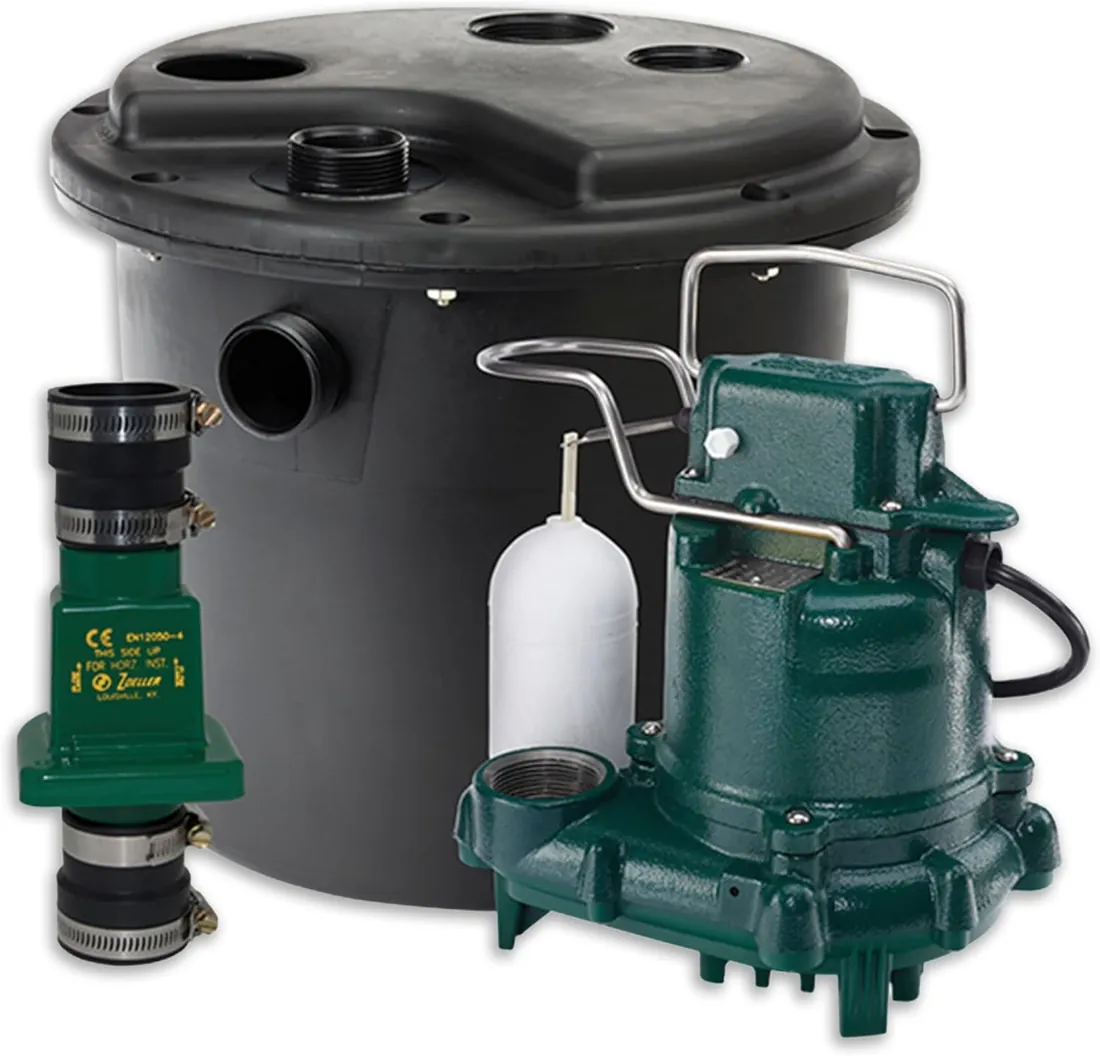
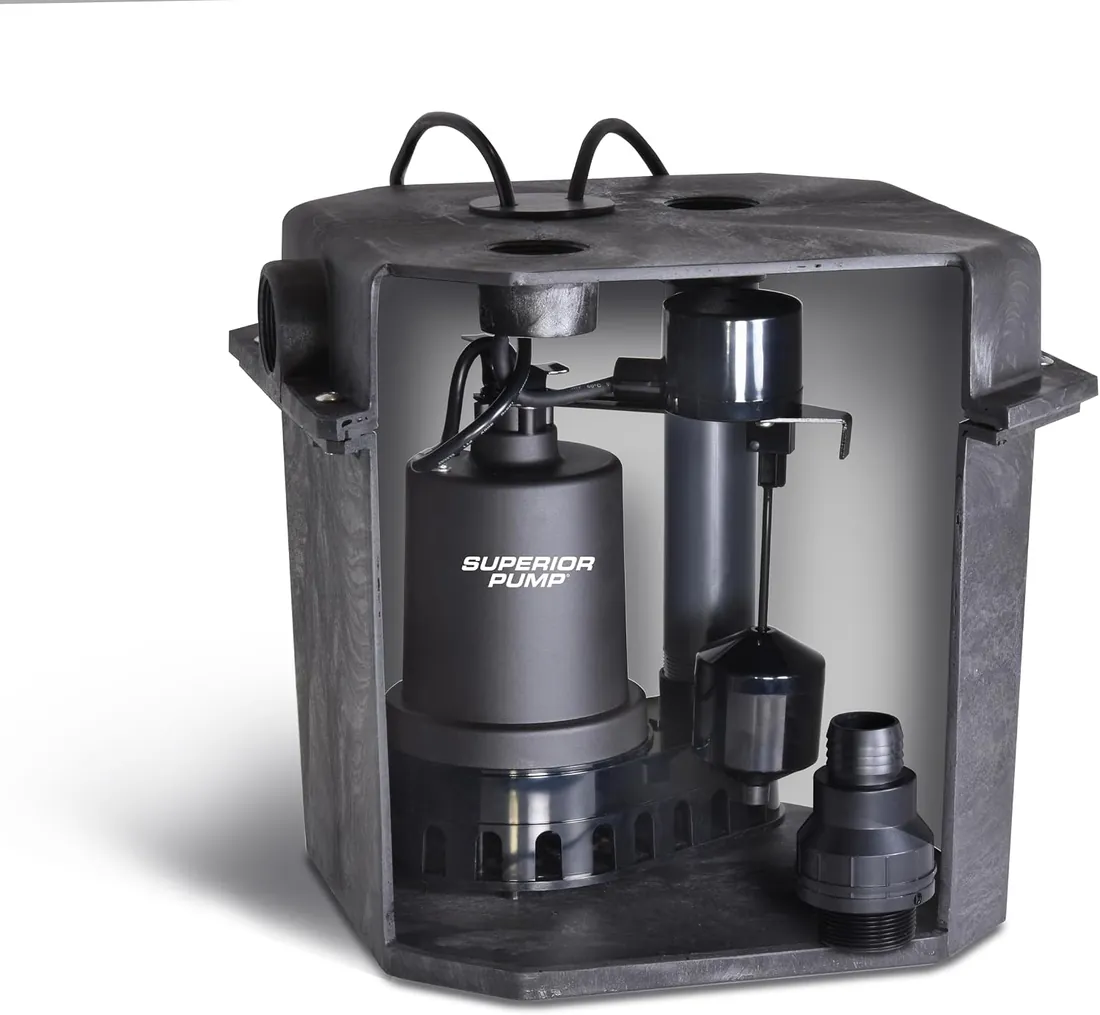
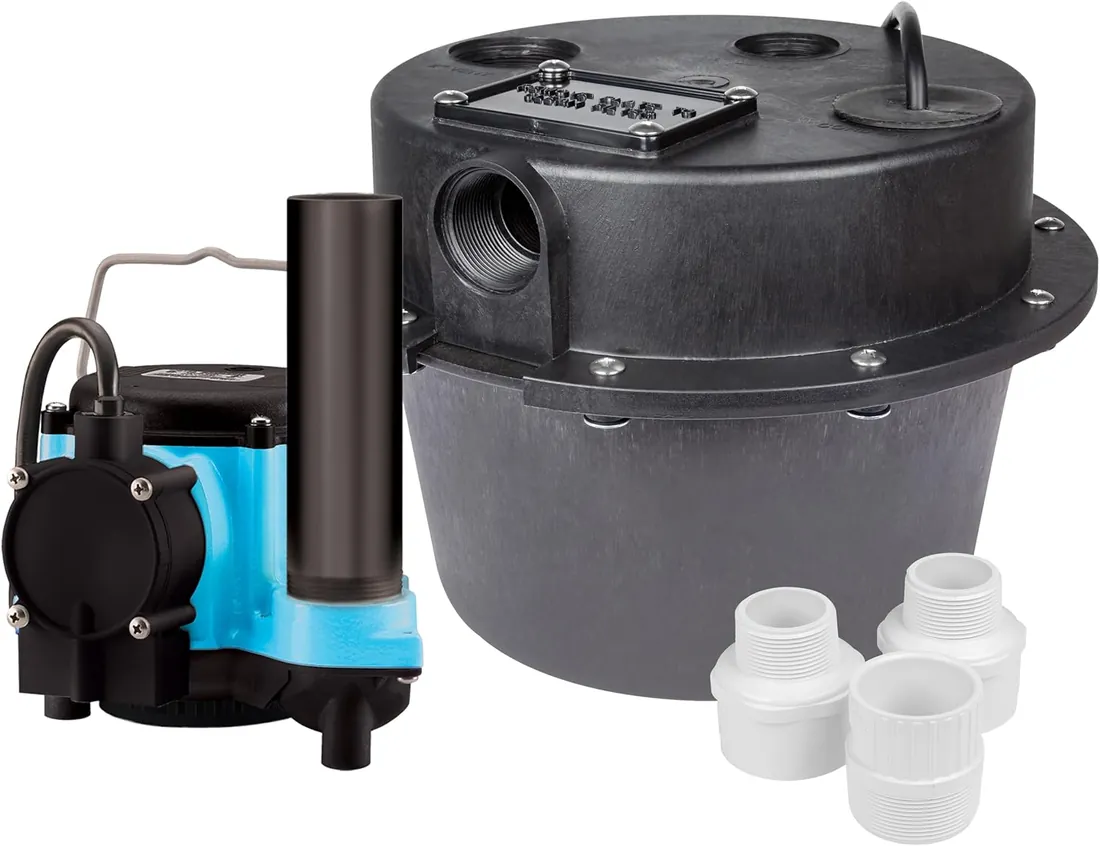
A laundry or sink drain pump (often called a gray-water pump system) collects water from a basement washer, utility sink or bar sink in a small sealed basin and pumps it up to the main drain or sewer line. Choose a system rated for the washer's discharge rate (a modern washer pumps about 15 to 20 gallons per minute in bursts), with a basin of at least 15 to 20 gallons for washing machines, a check valve on the discharge and a vent connected to the plumbing vent system.
When you need one
Water drains by gravity only if the fixture sits above the drain line it empties into. In many basements the main drain exits the house through the wall several feet above the floor, so a basement utility sink or washing machine has nowhere to drain. A drain pump system solves that without breaking up the floor to lower the drain.
- Basement laundry: the most common use; the washer empties into the basin rather than a standpipe.
- Utility or bar sink: a small under-sink unit works for one sink.
- Gray water only: these systems are not for toilets; a toilet needs a sewage ejector or macerating system (see sewage ejector vs grinder vs sump pump).
Sizing for a washing machine
A washer does not drain steadily: its pump empties 15 to 25 gallons in a minute or two, several times per cycle. The drain system has to swallow that surge without overflowing, so basin volume matters as much as pump speed.
| Use | Basin | Pump | Notes |
|---|---|---|---|
| Utility or bar sink only | Compact under-sink tank | Small integrated pump | Fits inside a cabinet |
| Washing machine | 15 to 30 gallon sealed basin | 1/3 hp or more, rated for laundry | Lint is the main enemy; choose a model with a filter or lint-tolerant pump |
| Washer plus sink | Larger basin | 1/3 to 1/2 hp | Check the combined inflow rate |
Installation steps
- Place the basin next to the washer or sink, on a level floor or set into a shallow recess.
- Connect the inlet: the washer hose or sink trap drains into the basin's inlet hub.
- Run the discharge up to the drain line, with a check valve and a shut-off valve so the pump can be serviced.
- Vent the basin to the plumbing vent system; most codes require it, and it prevents gurgling and sewer odor.
- Plug the pump into a GFCI outlet within reach of its cord, and test with a full washer drain cycle.
Keeping it running
- Fit a lint trap on the washer discharge hose; lint is the most common cause of clogged laundry pumps.
- Open the basin and clean the pump and float every six to twelve months.
- Run clean water through after draining anything greasy from a sink.
- Listen for the pump running longer than usual, which often means a sticking check valve or a partly clogged impeller.