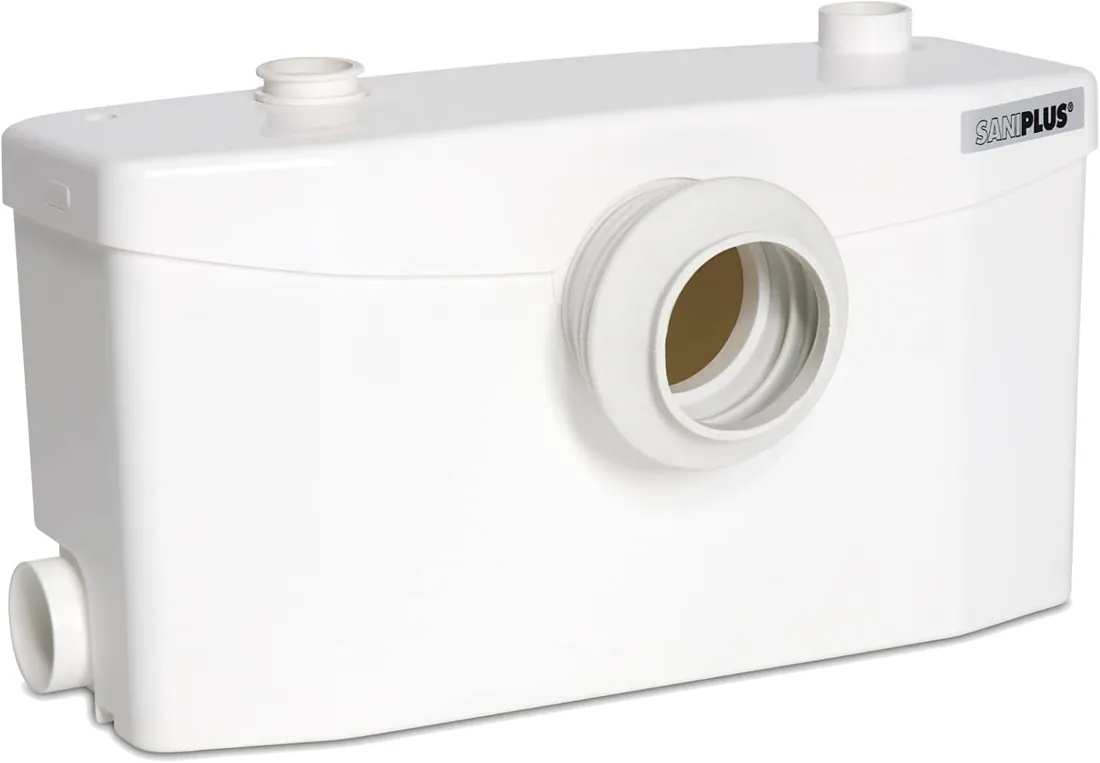
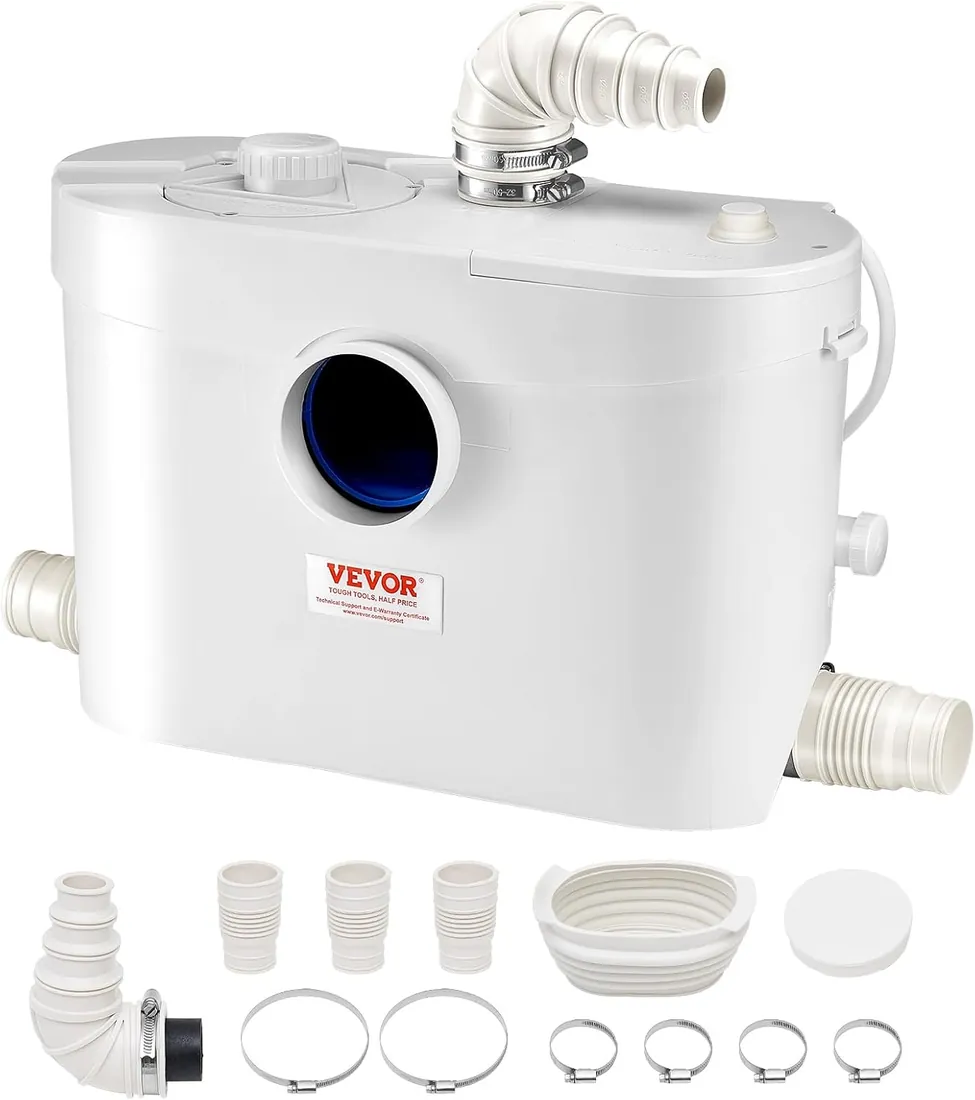
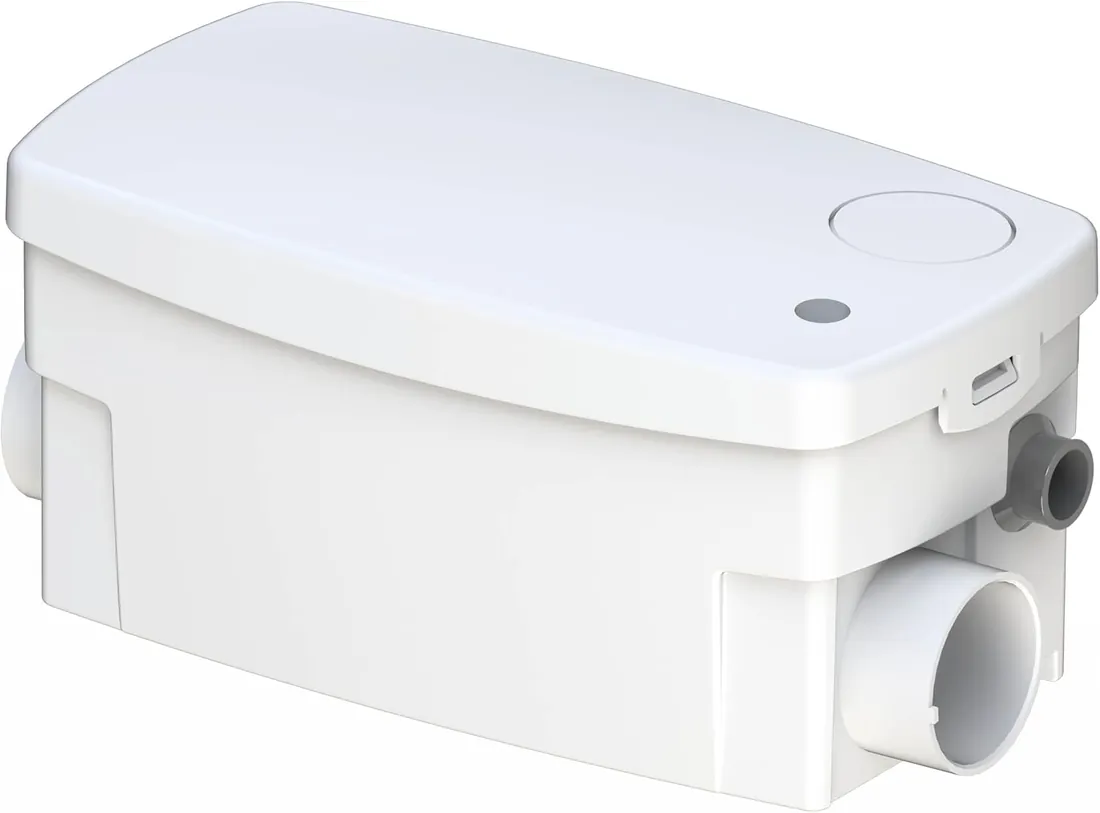
A macerating toilet sends waste into a box behind or beside the toilet where blades liquefy it, then pumps it through a small-diameter pipe (usually 3/4 to 1 inch) up and across to your existing drain. That lets you add a bathroom in a basement or extension without cutting the slab. Typical systems lift about 9 to 15 ft vertically or push more than 100 ft horizontally, and many accept a sink and shower too. They are noisier than a gravity toilet, cannot take anything but waste and toilet paper, and need occasional descaling.
How they work
The toilet flushes into a sealed macerator unit. A float or pressure switch starts a motor that spins cutting blades, reducing waste to a slurry, and a pump pushes it through narrow pipe to a drain stack or sewer line. Because the discharge pipe is small and pressurized, it can run up through a wall or ceiling to reach a drain that is higher than the toilet.
| Option | Handles | Breaking the floor | Typical use |
|---|---|---|---|
| Macerating toilet system | Toilet plus sink and shower on many models | No | Adding a half or full bath where there is no drain |
| Sewage ejector pit | A whole basement bathroom | Yes, for the basin | Full basement bathroom on new construction |
| Gray-water pump | Sink, shower, washer only | No | Laundry or wet bar |
How far and how high they pump
Makers publish a combined chart: the higher the lift, the shorter the horizontal run. A common rule from macerator makers is that every foot of vertical lift reduces the allowable horizontal run by about 10 ft. Lift first, straight up, then run horizontally with a slight downward slope toward the drain.
- Fixtures: many units have extra inlets for a sink and shower; tubs and floor-level showers may need a raised base or a separate gray-water pump.
- Vent: most systems require a vent connection.
- Electrical: a GFCI-protected outlet near the unit.
Living with one
- Noise: expect a 10 to 20 second whir after each flush, louder than a normal toilet. Insulating the wall helps.
- What goes in: human waste and toilet paper only. Wipes, sanitary products, cotton swabs and hair clog or damage the blades, even 'flushable' wipes.
- Descaling: in hard-water areas, run the maker's descaler through the unit once or twice a year.
- Power cuts: the toilet cannot be used during an outage.
Choosing a system
- Measure the vertical lift and horizontal run to the drain you will tie into.
- List every fixture you want to connect: toilet, sink, shower.
- Pick a unit whose published chart covers your lift and run with margin, and that accepts your fixtures.
- Prefer brands with replacement parts and descaler readily available.
For shower and sink water only, a gray-water drain pump costs less. For a full basement bathroom in a new build, compare a sewage ejector.