A 1/3 HP pump is enough for most basements with a lift under about 10 ft and ordinary inflow. Choose 1/2 HP when the vertical lift is higher, the discharge run is long, or the pit refills fast in storms. At 20 ft, Wayne's 1/2 HP CDU800 still moves 2,040 GPH against 1,200 GPH for the 1/3 HP CDU790.
What the extra horsepower actually buys
Horsepower is a rating of the motor, not of how much water leaves your house. What matters is the flow a pump delivers at your total head: the vertical distance from the water in the pit to the highest point of the discharge pipe, plus a little extra for friction in the pipe and fittings. A pump that looks strong at zero lift can fade badly by the time the water has climbed a basement wall.
Comparing pumps from the same maker removes most of the noise, because the housing, impeller style and test method are similar. Within each pair below, the 1/2 HP model gains a little at low lift and a lot near the top of the range. That pattern is the whole answer to the 1/3 or 1/2 question: work out your lift first, then read across the table at that height.
Wayne CDU790 vs CDU800 at each lift
Wayne's coated steel pair shares the same body, the same vertical float switching at about 9 in on and 4 in off, the same top-suction intake and the same three-year warranty. Only the motor differs, which makes it the cleanest comparison available. At a 5 ft lift the 1/2 HP CDU800 moves about 18 percent more water than the 1/3 HP CDU790. At 15 ft the margin is close to 38 percent, and at 20 ft the larger pump delivers about 70 percent more.
If your discharge rises 7 or 8 ft out of a typical basement pit, either pump has plenty in hand. If it climbs to a grade-level outlet from a deep pit, or runs up to a ceiling joist before heading out, the CDU800 keeps a useful reserve where the CDU790 is near the end of its curve.
| Model | 0 ft | 5 ft | 10 ft | 15 ft | 20 ft |
|---|---|---|---|---|---|
| CDU790 (1/3 HP) | 4,600 | 3,810 | 3,060 | 2,220 | 1,200 |
| CDU800 (1/2 HP) | 5,100 | 4,500 | 3,840 | 3,060 | 2,040 |
Liberty, Red Lion and Superior pairs
The same pattern holds across other brands. Liberty's 1/3 HP 257 reaches 23 ft of shut-off head and 44 GPM at 5 ft, while its 1/2 HP 287 reaches 37 ft and 62 GPM at 5 ft. The Liberty curves themselves are graphics, so only those published end points are shown here. Red Lion's RL-SC33V and RL-SC50V are a closer pair: three feet more shut-off head and an extra 840 GPH at 5 ft for the larger motor. Superior's thermoplastic 92372 and 92572 are almost level at low lift but separate sharply at 20 and 25 ft, where the 1/3 HP model is nearly spent.
| Pair | 1/3 HP model | 1/2 HP model |
|---|---|---|
| Liberty: flow at 5 ft | 257: 44 GPM | 287: 62 GPM |
| Liberty: shut-off head | 257: 23 ft | 287: 37 ft |
| Red Lion: flow at 5 ft | RL-SC33V: 3,000 GPH | RL-SC50V: 3,840 GPH |
| Red Lion: flow at 20 ft | RL-SC33V: 960 GPH | RL-SC50V: 1,440 GPH |
| Red Lion: shut-off head | RL-SC33V: 25 ft | RL-SC50V: 28 ft |
| Superior: flow at 10 ft | 92372: 30 GPM | 92572: 42 GPM |
| Superior: flow at 20 ft | 92372: 12 GPM | 92572: 25 GPM |
Figures: Liberty Pumps 250-Series engineering specifications (R04/2025); Liberty Pumps 280-Series engineering specifications (R04/2025); Red Lion RL-SC series sump pump manual 998495; Superior Pump sump pump owner's manual, models 92370/92372/92570/92572.
When a 1/3 HP pump is enough
For a basement pit with a modest lift and inflow that a pump clears in well under a minute, a good 1/3 HP pump is the sensible choice. It usually costs less to replace, often draws less current, and runs a little longer per cycle, which is kinder to the switch than a powerful pump that empties the pit in seconds. Oversizing has a real cost in short cycling, especially in a small basin.
Signs that 1/3 HP will do: your current pump of that size keeps up in the heaviest storms, it never runs continuously, and your lift is roughly 10 ft or less. If you are replacing a pump that coped, matching its horsepower is reasonable. The 1/3 HP sump pump list compares the cast iron and steel options in our catalog.
When to step up to 1/2 HP
Move up when the lift is high, the discharge pipe is long with several elbows, or the pit refills quickly during wet seasons. A high water table, a large drain tile system feeding the pit, or a pump that has ever run nonstop in a storm all point the same way. A second reason is margin: a pump working near its shut-off head moves very little water, so a small partial blockage or a frozen outlet extension can stop it entirely.
Plenty of 1/2 HP pumps also differ in switching. Liberty's 287 starts at 9.5 in and stops at 4 in, a longer cycle than the 257's 7 in and 4 in, which suits a pump that empties the pit faster. The 1/2 HP and larger list covers the stronger options.
- Measure from the pit floor water level to the top of the discharge pipe.
- Add an allowance for long runs and elbows using the sizing calculator.
- Time how quickly the pit refills during heavy rain.
- Read each candidate's flow at your head, not its zero-lift maximum.
Run the numbers for your own pit
The sump pump sizing calculator turns your lift, pipe length and inflow into a target flow, and the basin cycle calculator shows how often a given pump will start in your basin. Together they settle the horsepower question better than any rule of thumb. If both sizes pass comfortably, take the 1/3 HP pump with better construction over a 1/2 HP pump you do not need.
Electrical draw is a separate check. Horsepower does not predict amps well, and the amps and watts guide lists maker figures if you are planning a circuit or backup power.
Common mistakes
- Comparing maximum flow at zero lift instead of flow at your actual head.
- Buying 1/2 HP for a small basin and then fighting rapid short cycling.
- Ignoring a long horizontal run and extra elbows when judging the lift.
- Assuming a 1/2 HP pump always draws more current than a 1/3 HP pump.
- Downsizing a replacement when the old pump of that size could barely keep up.
Products that fit
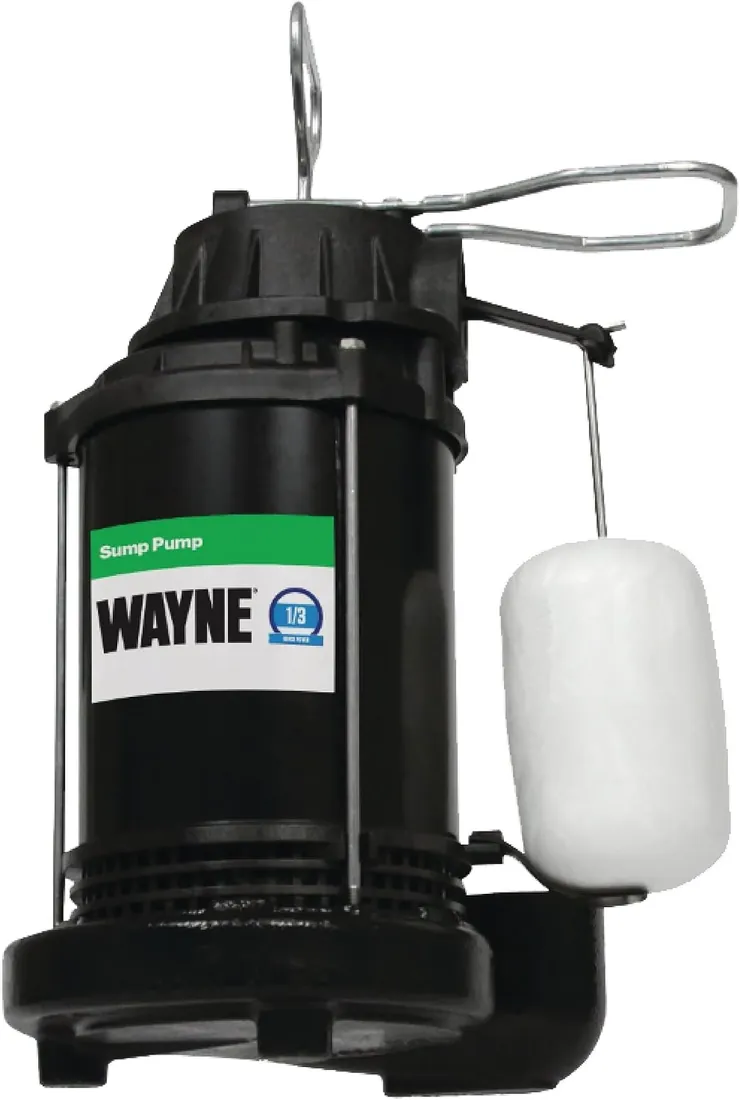
Wayne CDU790 Sump Pump
1/3 HP model with a published flow figure at every 5 ft step.
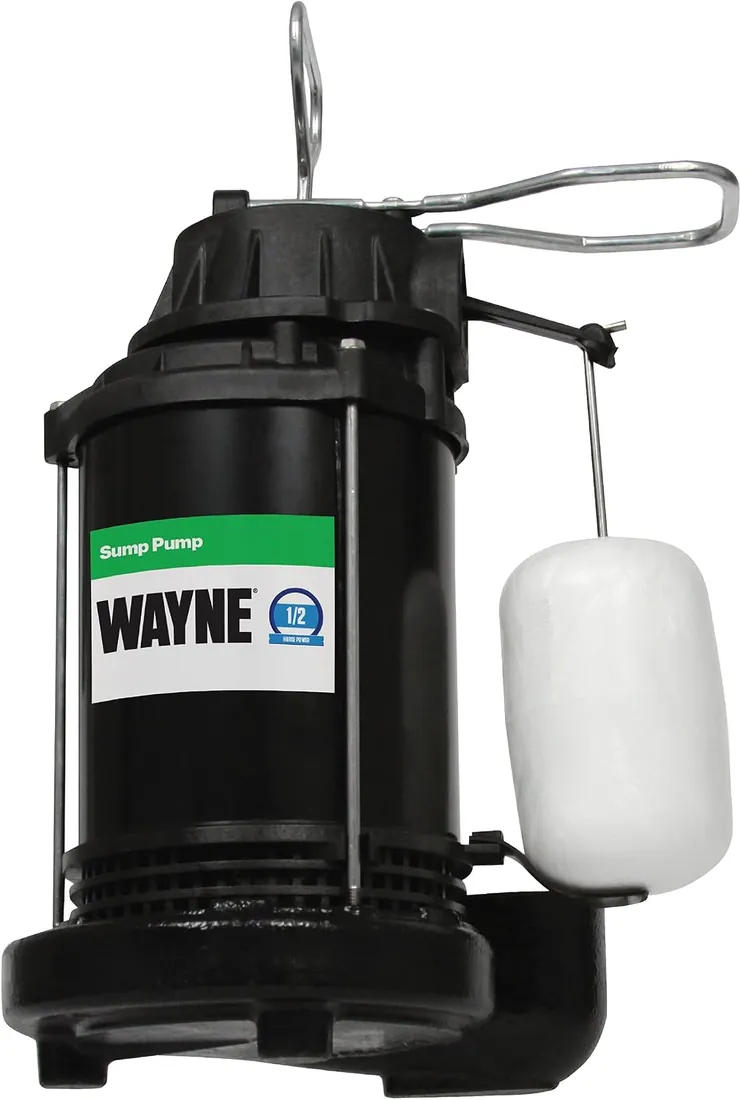
Wayne CDU800 Sump Pump
The 1/2 HP twin that holds far more flow at 15 and 20 ft.
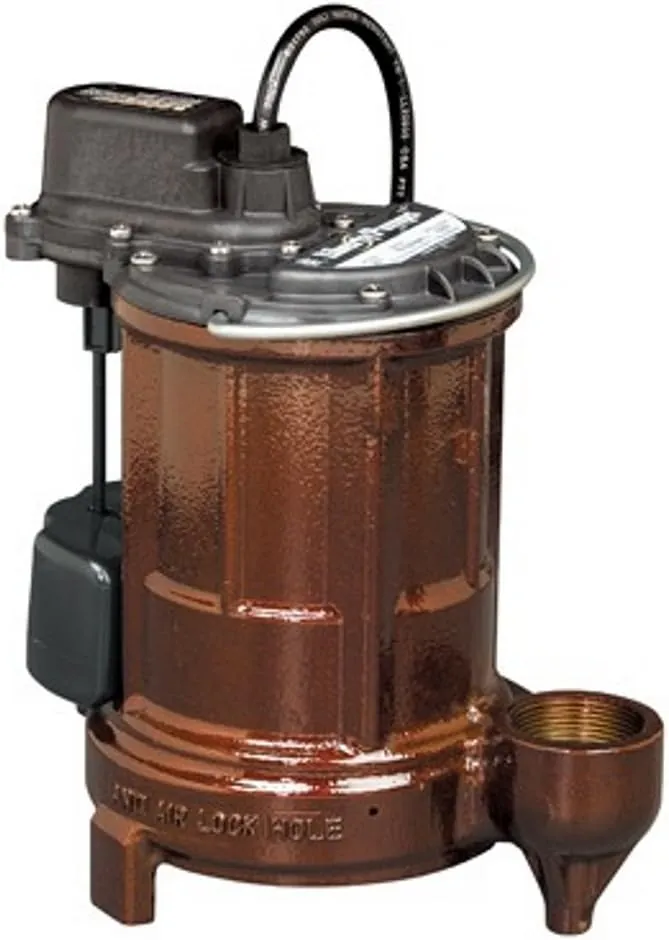
Liberty Pumps 257 Sump Pump
1/3 HP cast iron pump rated to 23 ft of shut-off head.
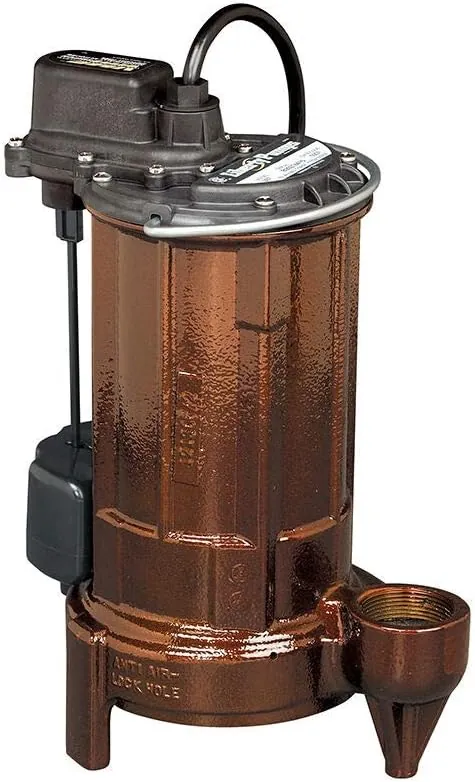
Liberty Pumps 287 Sump Pump
1/2 HP cast iron pump reaching 37 ft of shut-off head.
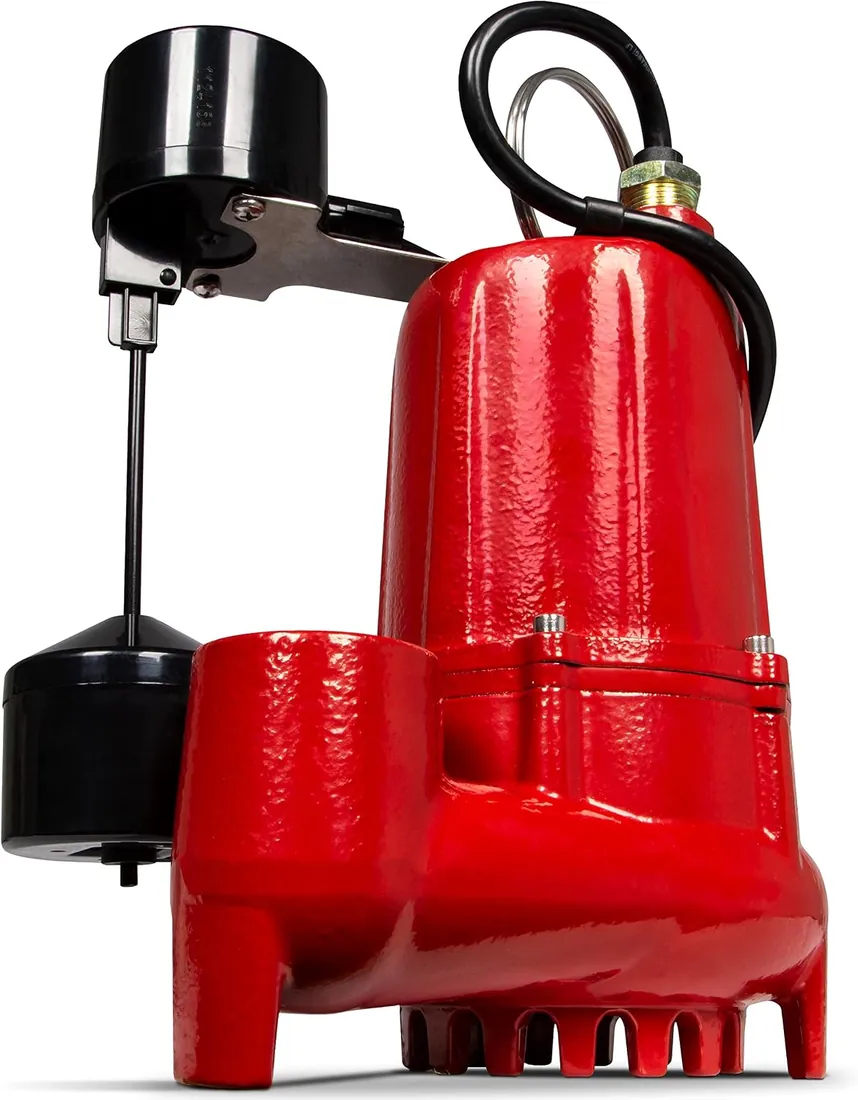
Red Lion RL-SC50V Sump Pump
1/2 HP cast iron pump with a vertical float and a 28 ft shut-off head.
Questions readers ask
Is a 1/3 HP sump pump enough for a basement?
Usually, if the lift is around 10 ft or less and inflow is ordinary. Wayne's CDU790, for example, still moves 3,060 GPH at a 10 ft lift. Check the flow at your own head and how fast your pit refills in heavy rain before deciding.
Is 1/2 HP too much for a small sump pit?
It can be. A strong pump empties a small basin very quickly, which means frequent short runs that wear the switch. If your lift is modest, a 1/3 HP pump or a larger basin is often the better fix than more power.
Does a 1/2 HP sump pump use more electricity?
Not necessarily per gallon moved. Motor design matters more than horsepower, and a stronger pump runs for less time per cycle. Compare nameplate amps for the exact models you are considering.
Should I choose 1/2 HP or 3/4 HP?
Only step past 1/2 HP for high lifts or very heavy inflow. Wayne's 3/4 HP CDU980E is rated at 3,500 GPH at 20 ft against 2,040 GPH for the 1/2 HP CDU800, a gain that matters only near the top of the range.