Most 1/3 HP sump pumps on 115 V draw between about 4 and 10 running amps, and most 1/2 HP pumps between about 5 and 9.4 amps, depending on motor design. Starting current is higher: Liberty lists 8 locked-rotor amps for its 1/3 HP 257 and 23 for its 1/2 HP 287. Multiply volts by amps for a rough volt-amp load.
Running amps that makers actually print
Searches for a 1/3 HP or 1/2 HP sump pump amp draw usually expect one number. There isn't one. Each maker prints the running current for its own motor on the data sheet or the nameplate, and the spread inside a single horsepower class is wide. The figures below are taken straight from the maker documents for pumps in our catalog, all at 115 V unless the row says otherwise.
Two things stand out. First, Zoeller's shaded-pole M53, rated at only 3/10 HP, draws 9.7 A, which is slightly more than the 9.4 A of its 1/2 HP M98 Flow-Mate. Second, Liberty's 1/3 HP 257 runs at 5.2 A, roughly half the Zoeller figure for a similar job. If you are planning a circuit, a battery or a generator, look up the exact model rather than the horsepower.
| Pump | Horsepower | Running amps | Motor type |
|---|---|---|---|
| Zoeller M53 / M63 | 3/10 HP | 9.7 A | Shaded pole |
| Zoeller M98 | 1/2 HP | 9.4 A | Permanent split capacitor |
| Zoeller D98 (230 V) | 1/2 HP | 4.7 A | Permanent split capacitor |
| Liberty 257 / 253 | 1/3 HP | 5.2 A full load | Not stated on the data sheet |
| Liberty 287 | 1/2 HP | 8.0 A full load | Not stated on the data sheet |
| Red Lion RL-SC33V | 1/3 HP | 4.3 A | Not stated on the data sheet |
| Red Lion RL-SC50V | 1/2 HP | 5.3 A | Not stated on the data sheet |
| Superior 92372 | 1/3 HP | 4.1 A | Capacitor start |
| Superior 92572 | 1/2 HP | 4.9 A | Not stated on the product page |
| Superior 92151 | 1 HP | 10 A | Not stated on the product page |
Figures: Zoeller technical data sheet FM2778, Mighty-Mate series; Zoeller technical data sheet FM2899, Model 63; Zoeller technical data sheet FM2779, Flow-Mate Model 98; Liberty Pumps 250-Series engineering specifications (250_P3, R04/2025); Liberty Pumps 280-Series engineering specifications (280_P3, R04/2025); Red Lion RL-SC series sump pump manual 998495; Superior Pump 92372 product page; Superior Pump 92572 product page; Superior Pump 92151 product page; Superior Pump sump pump owner's manual, models 92370/92372/92570/92572.
Why horsepower is a poor guide to current
Horsepower describes mechanical output at the shaft. Current describes what the motor pulls from the wall to produce it, and that depends on efficiency. Shaded-pole motors, like the one in Zoeller's 3/10 HP M53 and M63, are simple and durable but waste more energy as heat, so they draw a lot of current for their size. Permanent split capacitor (PSC) motors, which Zoeller uses in the M98 and Wayne uses across its CDU pumps, convert more of the input into pumping work.
That is why a 1/2 HP pump can sit on the same circuit as a 1/3 HP one without trouble, and why two 1/3 HP pumps from different makers can differ by more than double in current. When the question is whether a pump will fit an existing outlet, the nameplate amps decide it. When the question is whether it will keep up with your water, the flow at your lift decides it, and the sump pump sizing calculator is the place to start.
Starting current and surge
Every induction motor pulls a burst of current for a fraction of a second as it starts, before the rotor comes up to speed. Makers call the worst case the locked-rotor current. Few sump pump makers publish it, but Liberty does on its engineering sheets, and the numbers show how much larger the start can be than the run.
For the 1/3 HP 257, the start is modest: 8 A against 5.2 A running. For the 1/2 HP Liberty 287, it is 23 A against 8.0 A running, nearly three times the running figure. That burst is what trips an undersized generator, a weak inverter or a breaker already loaded with other appliances, even when the running total looks safe. For pumps whose maker does not publish a starting figure, treat it as unknown rather than guessing a multiplier.
| Model | Voltage | Full-load amps | Locked-rotor amps |
|---|---|---|---|
| Liberty 257 | 115 V | 5.2 | 8 |
| Liberty 257HV | 230 V | 2.6 | 4 |
| Liberty 287 | 115 V | 8.0 | 23 |
| Liberty 287HV | 208–230 V | 4.0 | 12.5 |
Figures: Liberty Pumps 250-Series engineering specifications (250_P3, R04/2025); Liberty Pumps 280-Series engineering specifications (280_P3, R04/2025).
Turning amps into watts
Volts multiplied by amps gives volt-amps (VA), which is the load a generator, inverter or battery backup actually has to supply. Real watts are a little lower because motors have a power factor below one, and sump pump makers do not publish power factor, so VA is the honest number to plan with. It errs on the safe side.
Using the maker figures above, the M98 works out to roughly 1,081 VA while running and the Liberty 257 to roughly 598 VA. On start, the 257 needs around 920 VA and the 287 around 2,645 VA. Those are back-of-envelope figures from the published amps, not maker ratings, but they show why a small portable power station that runs one pump comfortably may refuse to start another.
- Find running amps on the pump nameplate, cord tag or maker data sheet.
- Multiply by the supply voltage to get running volt-amps.
- If the maker lists locked-rotor amps, multiply that too for the starting load.
- Add anything else on the same circuit or backup source before comparing with its rating.
Circuit, outlet and cord requirements
The makers are consistent here. Wayne's sump manual asks for a 120 V supply on a circuit of at least 15 A, a grounded outlet protected by a GFCI, and a fuse or breaker rated for the current on the nameplate. It also says not to use an extension cord or surge protector, and to have an electrician add a receptacle if the cord will not reach. Superior's manual likewise calls for a 15 A, 120 V supply with a grounded outlet within 6 ft of the basin, and if an extension cord cannot be avoided, it should be no longer than 25 ft and no lighter than 14/3.
Because pumps run in bursts, the running current matters less for the breaker than what else shares the circuit. A freezer or dehumidifier on the same breaker, plus a sump pump start, is a common reason for nuisance trips; the breaker and GFCI guide covers the fault side.
Sizing backup power from the amps
For a battery backup, energy per cycle matters more than the peak. A pump that draws more current but empties the pit faster can use similar energy per cycle to a weaker one that runs longer, so the runtime estimate needs both the draw and how often the pump starts. The battery backup runtime calculator works through that with your own pit and inflow.
For a generator, size for the starting load plus everything else you plan to run, and read the pump manual first: Wayne states that its CDU pumps are not designed to be used with a portable generator. If your pump's manual is silent, a dedicated battery backup pump avoids the question entirely, and the battery backup sump pump list compares the systems in our catalog.
Common mistakes
- Assuming every 1/3 HP pump draws the same current as every other 1/3 HP pump.
- Sizing a generator or inverter on running amps and ignoring the starting surge.
- Running the pump through an extension cord or surge protector the maker forbids.
- Sharing the pump's breaker with a freezer or dehumidifier and blaming the pump for trips.
- Treating volt-amps as exact watts when power factor is not published.
Products that fit
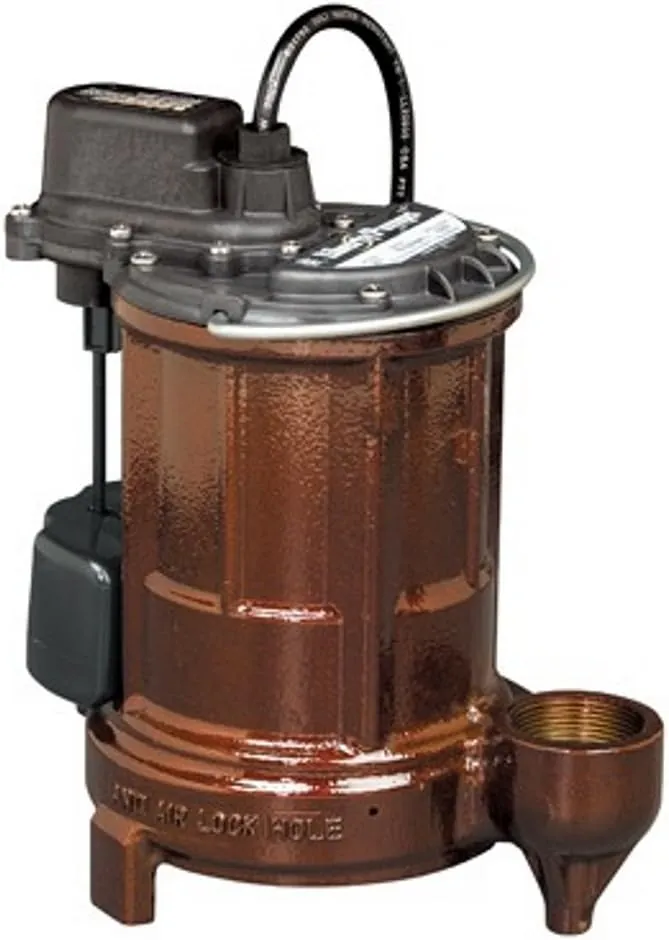
Liberty Pumps 257 Sump Pump
1/3 HP at 5.2 full-load amps with a published locked-rotor figure of 8 A.
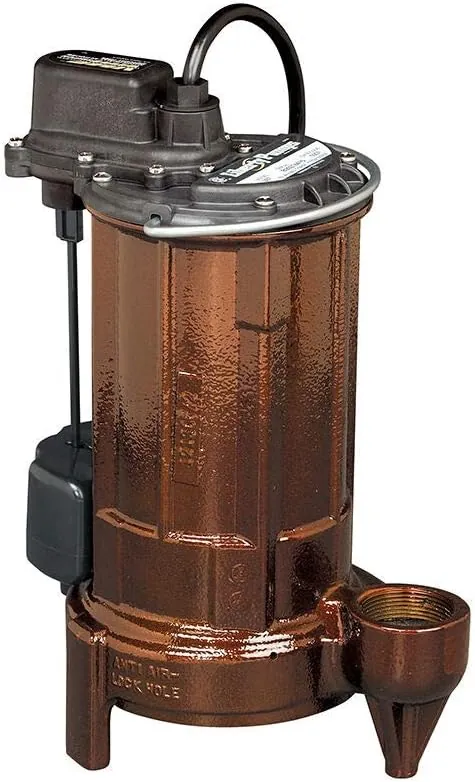
Liberty Pumps 287 Sump Pump
1/2 HP model whose sheet lists both running and starting current.
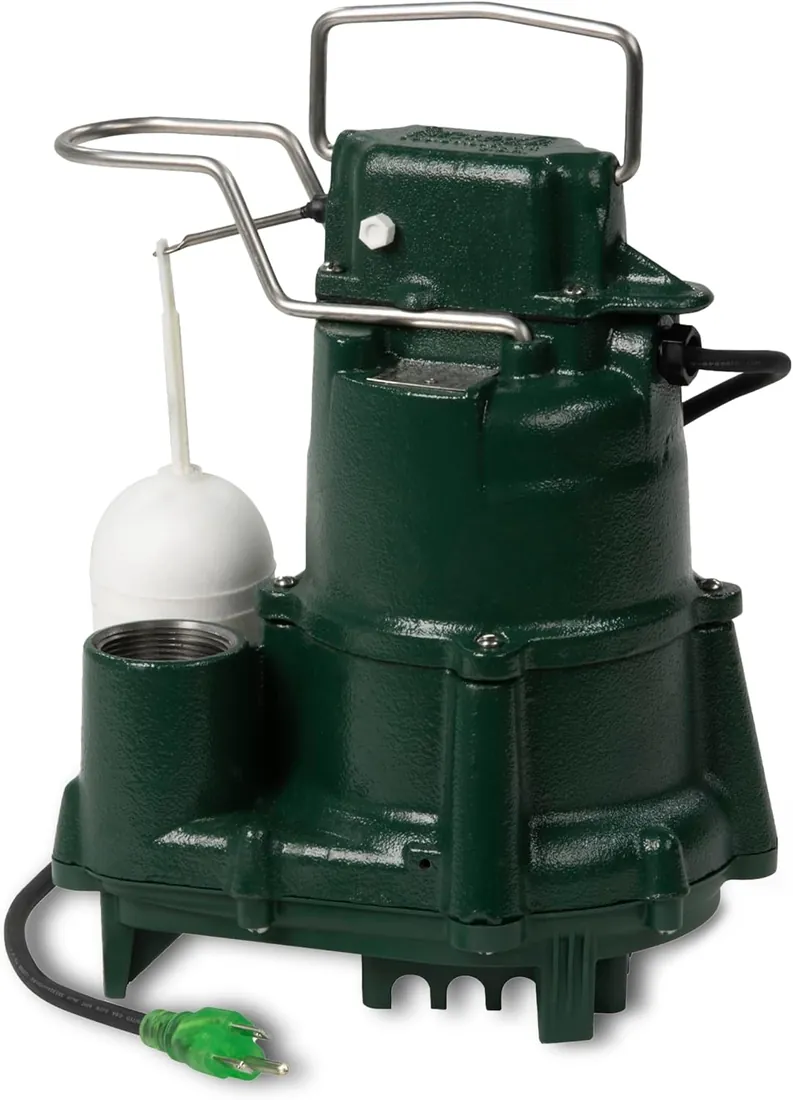
Zoeller M98 Flow-Mate Sump Pump
1/2 HP PSC motor at 9.4 A on 115 V, or 4.7 A in the 230 V D98 version.
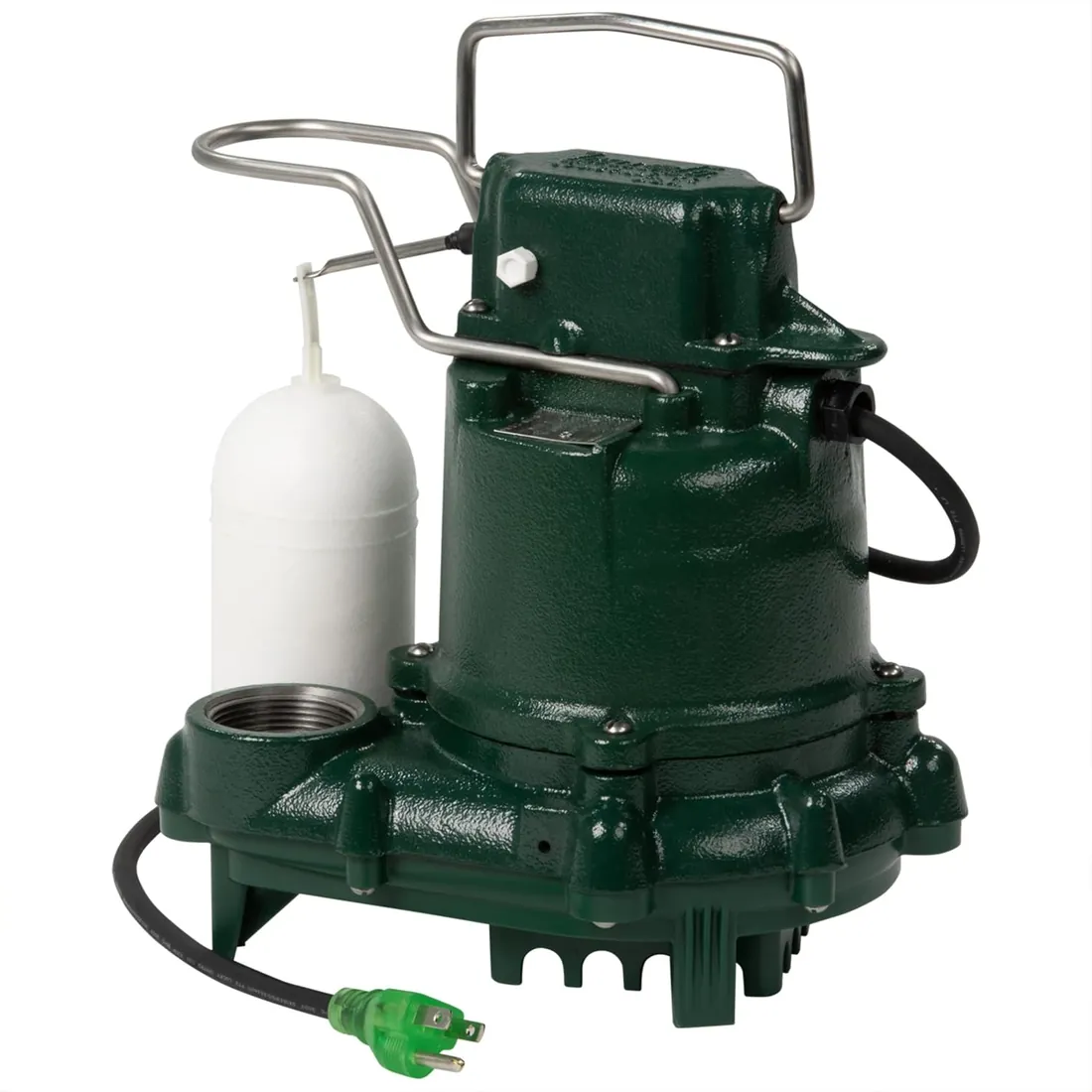
Zoeller M53 Mighty-Mate Sump Pump
3/10 HP shaded-pole motor that draws 9.7 A, more than many larger pumps.
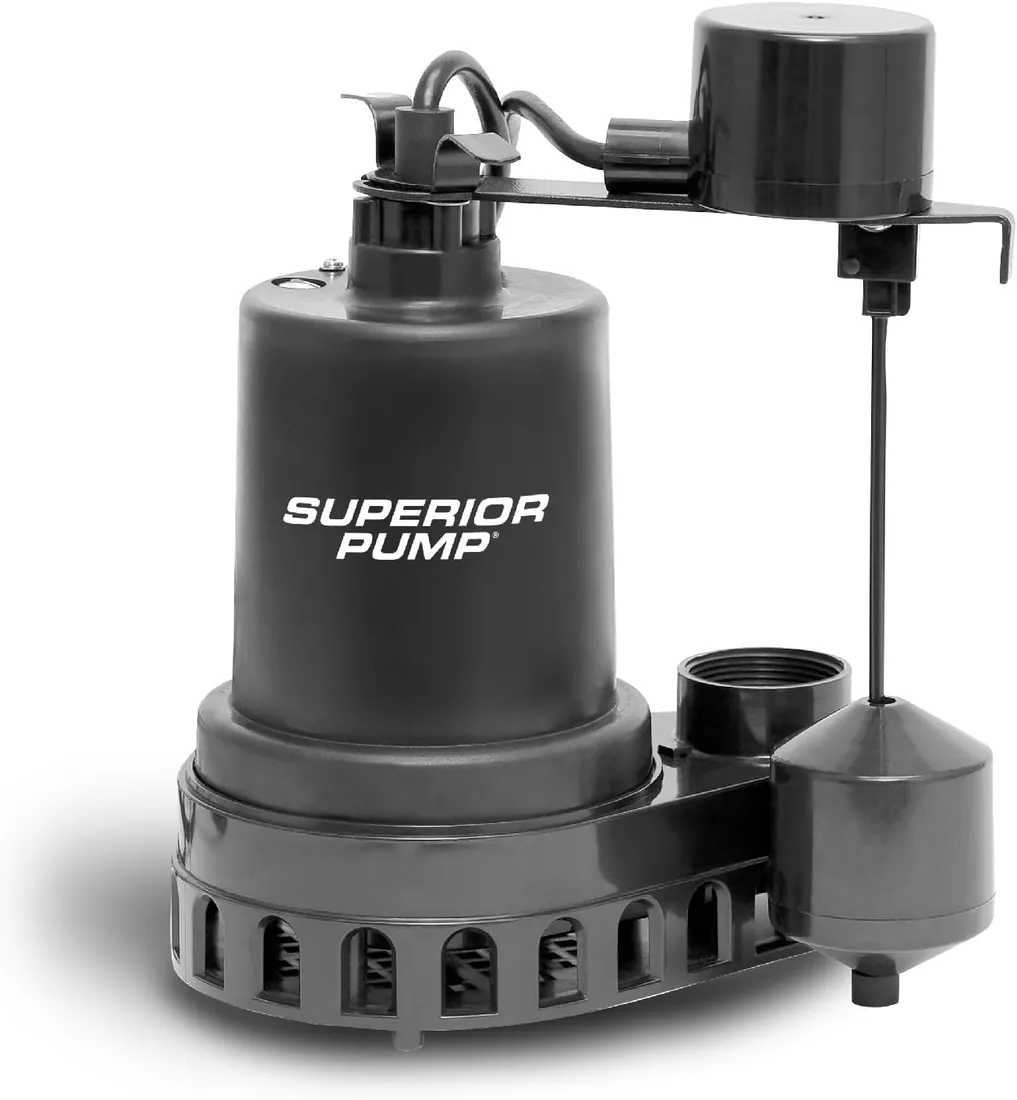
Superior Pump 92572 Half-Horsepower Sump Pump
1/2 HP thermoplastic pump listed at 4.9 A on the maker's product page.
Questions readers ask
How many amps does a 1/2 HP sump pump draw?
It depends on the model. Maker figures in our catalog range from 4.9 A for the Superior 92572 and 5.3 A for the Red Lion RL-SC50V to 8.0 A for the Liberty 287 and 9.4 A for the Zoeller M98, all on 115 V. Check the nameplate on your pump.
Can a sump pump share a circuit with other appliances?
The makers ask for a properly rated, grounded, GFCI-protected circuit and do not require it to be dedicated in the documents we hold, but shared loads add up. A pump start on top of a running freezer is a common cause of trips, so a separate circuit is the safer layout.
What size generator do I need for a sump pump?
Add the pump's starting load to everything else you will run. Liberty's figures put the 287 near 2,645 VA at start and the 257 near 920 VA, but check your own pump's manual first, because Wayne says its CDU pumps are not designed for portable generators.
Does a 230 V sump pump use less power?
It draws about half the current, as Zoeller's D98 at 4.7 A versus the M98 at 9.4 A shows, but the power used is about the same. The benefit is a smaller current on the circuit, not lower energy use.