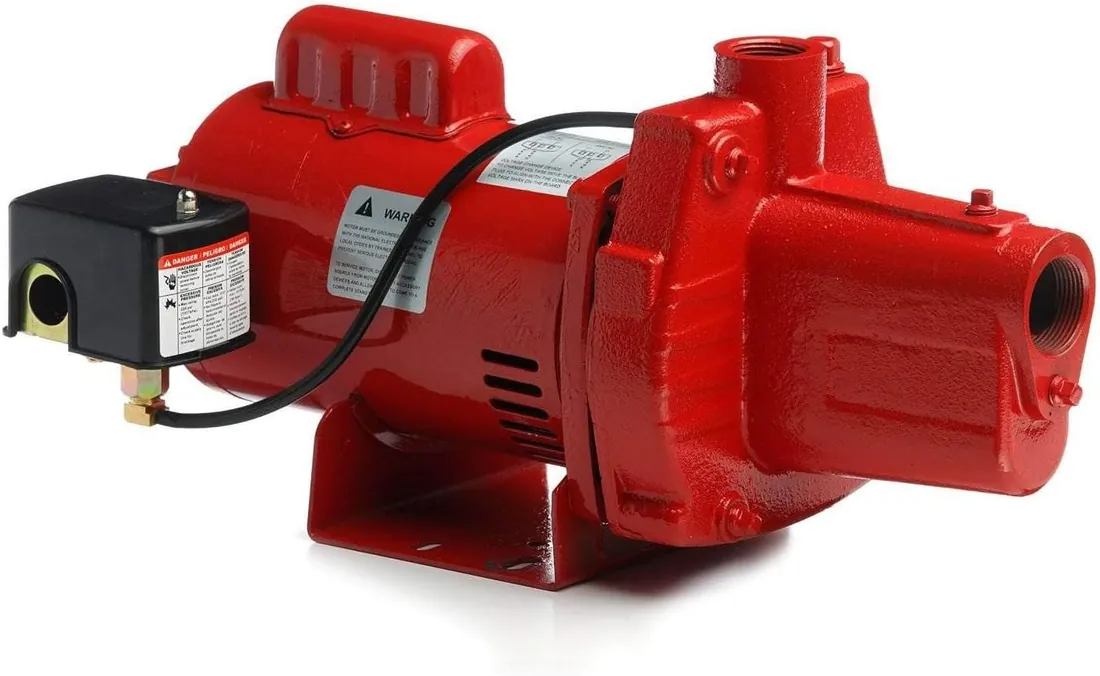
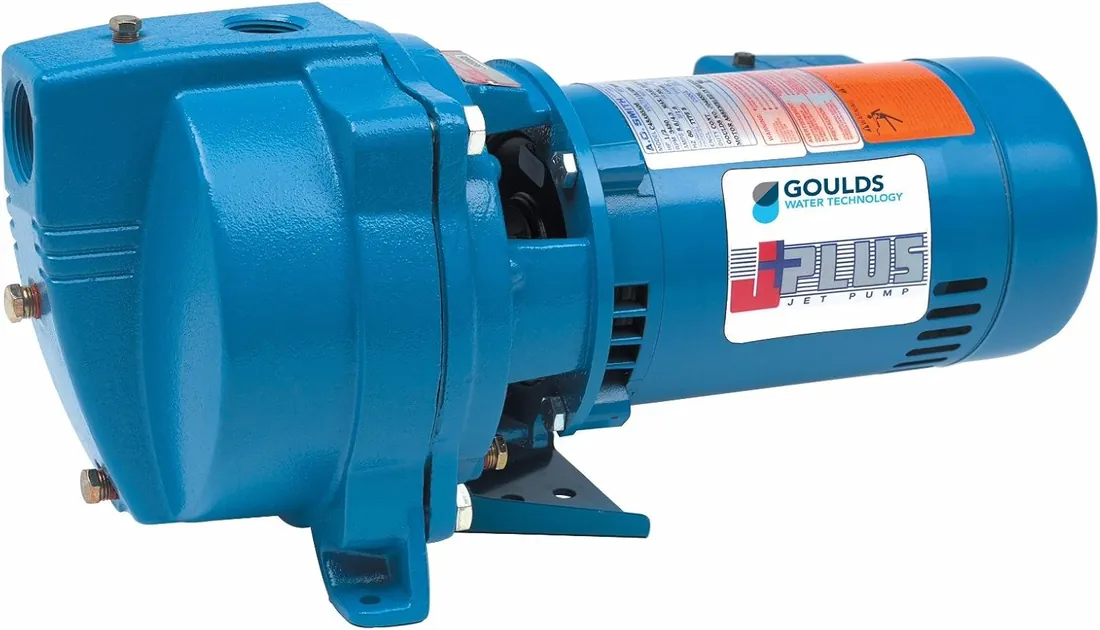
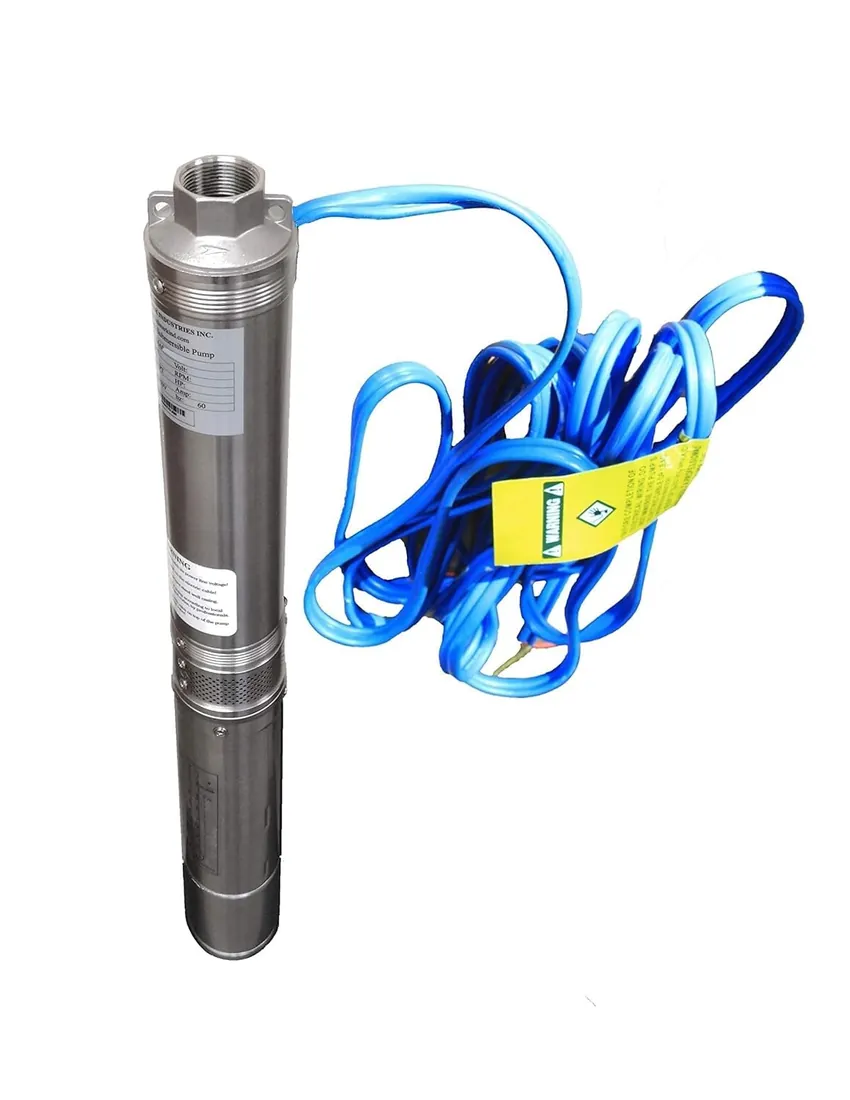
Match the pump to the depth of the water while pumping. Up to about 25 ft, a shallow-well jet pump above ground is simplest and cheapest. From about 25 to 90 ft, a convertible jet pump with the ejector down the well works, though flow falls with depth. Beyond about 90 ft, or wherever you need strong flow, use a deep-well submersible pump in the casing. The 25 ft figure is a physical limit: a surface pump cannot pull water higher than atmospheric pressure can push it.
Matching pump to depth
| Depth to pumping water level | Pump type | Where the pump sits |
|---|---|---|
| Up to about 25 ft | Shallow-well jet pump | Above ground, with a suction pipe and foot valve |
| About 25 to 90 ft | Convertible jet pump (deep mode) | Above ground, ejector down the well on two pipes |
| About 90 ft and deeper | Deep-well submersible | Down in the well casing, below the water |
Use the pumping water level, which is the depth to water while the pump runs, not the static level when the well is resting. Well logs and drillers' records usually give both. Altitude matters too: the suction limit falls by about 1 ft for every 1,000 ft above sea level.
The trade-offs
| Jet pump | Submersible | |
|---|---|---|
| Purchase cost | Lower | Higher, plus wire and drop pipe |
| Installation | Above ground, DIY-friendly | Pump must be lowered and pulled with the pipe |
| Priming | Needed; loses prime if the foot valve leaks | Never needed |
| Noise | Audible in the pump house or basement | Silent at the surface |
| Efficiency | Lower, especially in deep mode | Higher |
| Servicing | Easy, motor at the surface | Needs a pump puller or contractor |
| Typical life | 8 to 15 years | 8 to 15+ years |
Sizing a submersible
Compare models in deep well submersible pumps, and size the tank so the pump runs at least a minute per cycle (see pressure tank sizing).
Switching from jet to submersible
- A water level that has dropped over the years often explains a jet pump that keeps losing prime or delivering less.
- A submersible needs a 4-inch or larger casing for most residential models.
- Plan for new drop pipe, submersible wire, a pitless adapter and possibly a 230 V circuit.
- Keep or upgrade the pressure tank; a larger tank reduces cycling with the more powerful pump.
For the middle range, see convertible jet pumps for deeper wells.