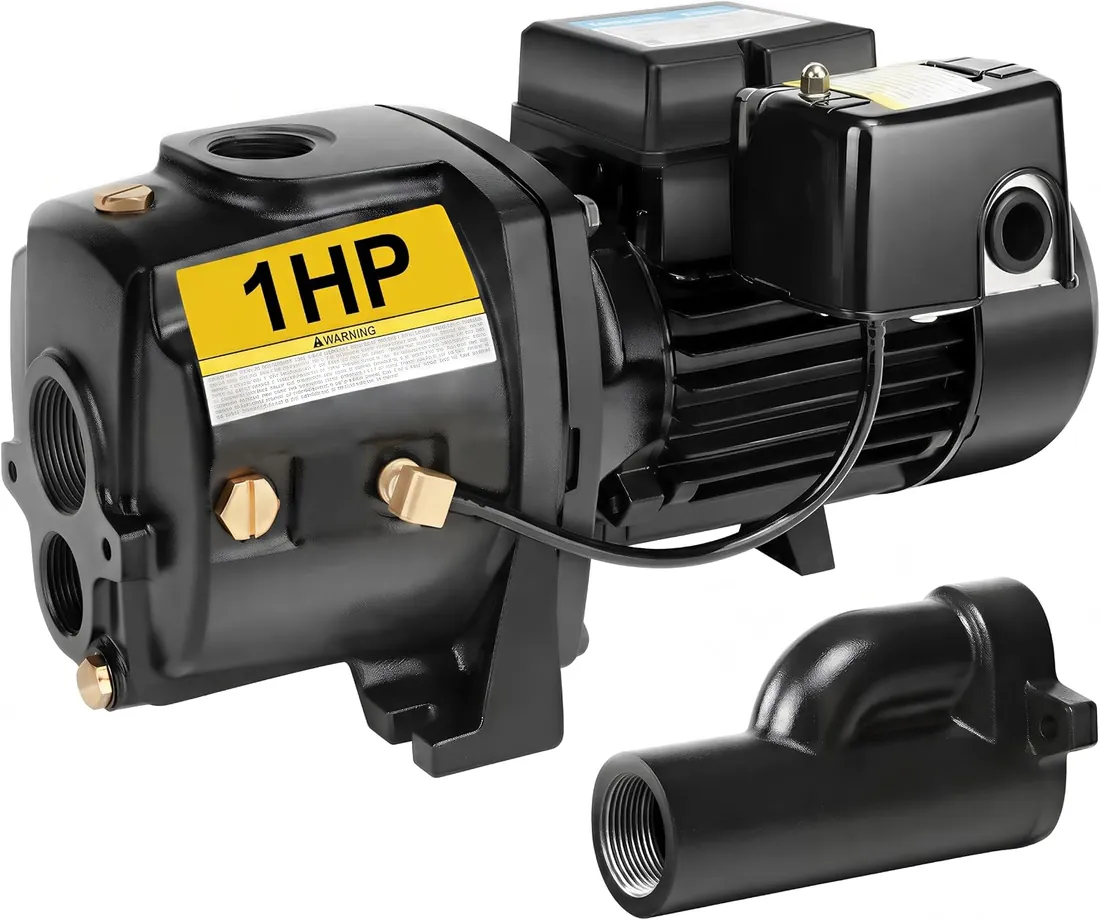
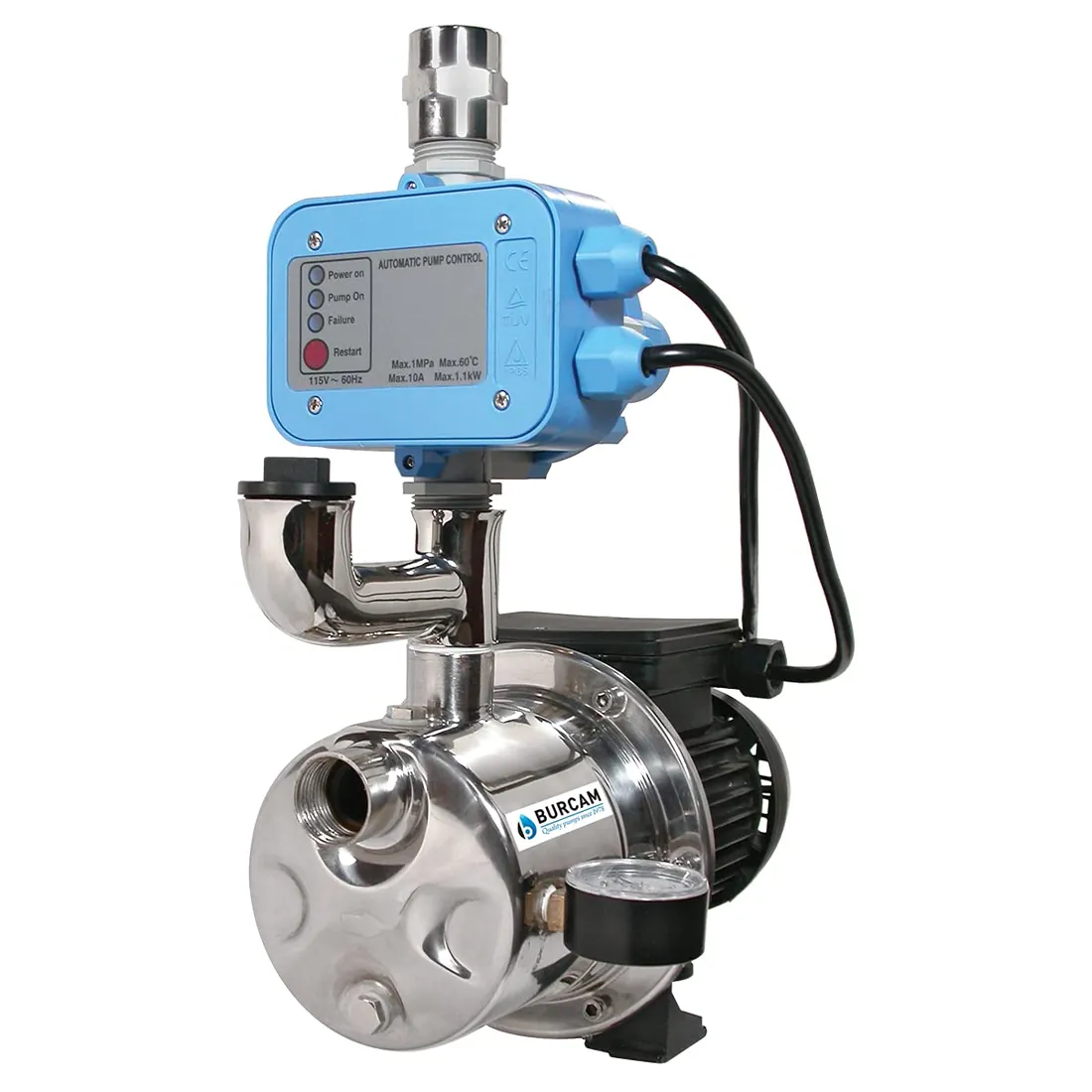
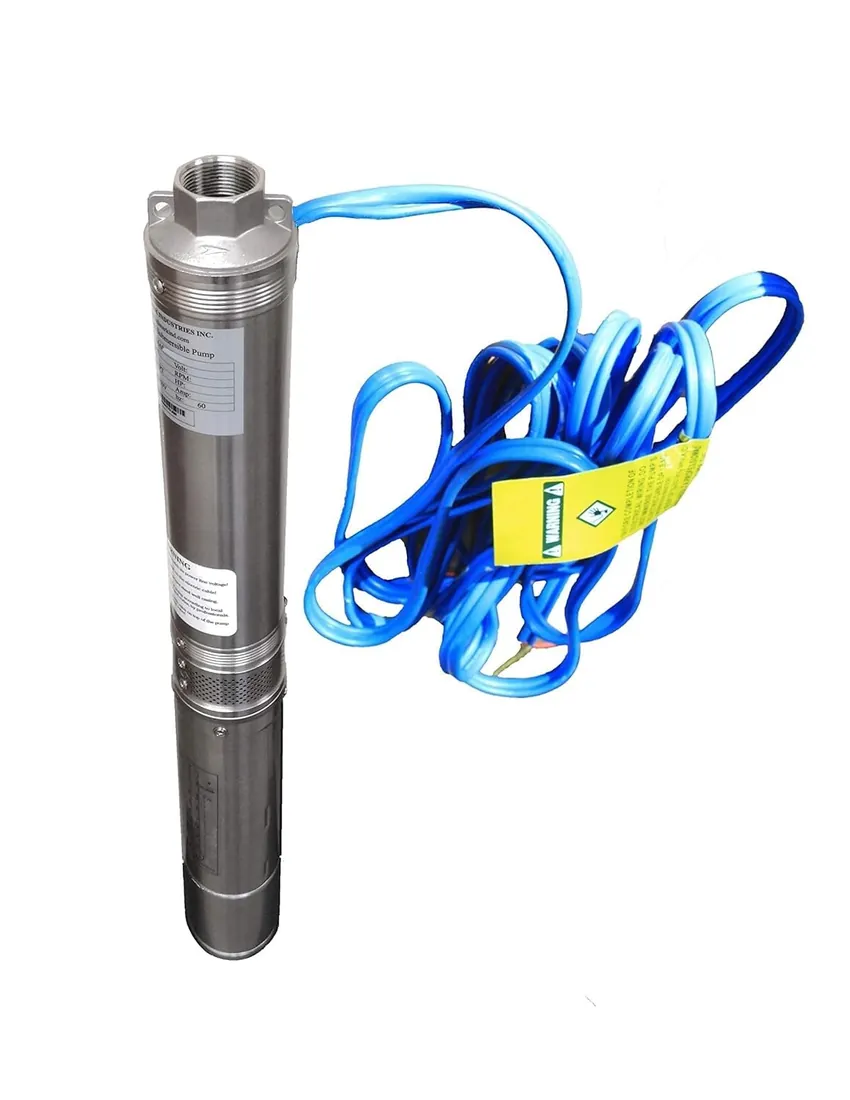
A convertible jet pump sits above ground and can run in two modes. In shallow mode the ejector (jet) is mounted on the pump, and it can lift water from about 25 ft. In deep mode the ejector goes down the well on two pipes, and the pump can draw from roughly 25 to 90 ft, with flow dropping as depth increases. It suits wells with water in that range where you want the motor serviceable at the surface; for deeper wells or higher flow, a submersible pump is usually better.
How a jet pump lifts water
No surface pump can 'suck' water from more than about 25 ft at sea level, because atmospheric pressure can only push water up that far into a vacuum. A jet pump gets around this by sending some of its output back down to an ejector: a nozzle and venturi that uses the fast-moving water to drag more water up with it. In deep mode, the ejector sits below the water, pushing rather than pulling.
| Shallow mode | Deep mode | |
|---|---|---|
| Ejector location | Bolted to the pump | Down the well, below the water |
| Pipes in the well | One suction pipe | Two pipes (drive and suction), or a packer in 2-inch casing |
| Typical depth to water | Up to about 25 ft | About 25 to 90 ft |
| Flow | Highest | Falls as depth increases |
| Extra part | None | Pressure control (regulating) valve on the pump |
Depth and flow trade-off
In deep mode much of the pump's output is recirculated to drive the ejector, so delivered flow drops steadily with depth. A pump that delivers 10 or more gallons per minute at 30 ft may manage only 3 to 5 gpm at 80 ft. Makers publish performance tables for each ejector; choose the ejector matched to your depth, and check the flow at your pressure setting.
Setting one up in deep mode
- Install the ejector on the drive and suction pipes, with a foot valve below it, and lower it into the well so it sits 10 to 20 ft below the pumping water level but well above the bottom.
- Connect both pipes to the pump: the drive line to the pressure side, the suction line to the inlet.
- Fit the pressure control valve on the pump discharge and set it to the maker's minimum operating pressure for your depth.
- Prime the pump through the priming port until both pipes and the pump are full of water.
- Set the pressure switch and check the tank precharge (see pressure switch settings and pressure tank sizing).
Jet pump or submersible?
- Choose a convertible jet if water is 25 to 90 ft down, demand is modest, and you want the motor above ground for easy service or replacement.
- Choose a submersible for water deeper than about 90 ft, for higher flow at depth, for quieter operation (the noise stays down the well) and for better efficiency.
- Jet pumps lose prime if the foot valve leaks; submersibles do not need priming.
See shallow vs deep well pumps and deep well submersible pumps.