A breaker that trips usually means too much current: a shared circuit, an extension cord, low voltage, or a jammed or failing pump. A GFCI that trips means current is leaking to ground, from a damp outlet, a damaged cord or a motor whose insulation has broken down. If a GFCI trips the instant the pump starts, every maker's chart ends with replacing the GFCI or the pump.
First, which device is tripping?
A circuit breaker in the panel protects the wiring from overload. It trips when the current on the circuit is too high for too long, or instantly on a short circuit. A GFCI, usually the outlet with test and reset buttons next to the pit, does something different: it compares the current going out on the hot wire with the current returning on the neutral, and trips if even a small amount is missing, because that current may be flowing through water or a person.
So the first step is to look. If the outlet's reset button has popped and the panel breaker is still on, the GFCI tripped and you are hunting a leak to ground. If the panel breaker is off, you are hunting overload or a short. If the outlet is a plain one fed from a GFCI breaker in the panel, the breaker itself has a test button and you are again hunting a ground fault.
Breaker trips: overload and shared circuits
Liberty's troubleshooting matrix has a row just for repeated tripping, and it reads like a checklist: circuit protection underrated, another appliance on the same circuit, an extension cord or poor wiring, improper voltage, an obstruction in the pump, and foreign matter built up on the motor housing. For a shared circuit, Liberty's corrective action is simply that the pump requires a separate circuit.
Red Lion says the same in its RL-SC manual: the pump should have its own circuit with no other receptacles or equipment on it, and should not share with a fan or anything that runs intermittently. Zoeller recommends a separate branch circuit sized for the nameplate current. The reason is the start. A motor draws several times its running current for a moment as it starts; Liberty's own figures for its 1/2 HP 287 are 8.0 A running and 23 A locked rotor. If a freezer, dehumidifier or washer is already drawing on the same breaker, that start can be enough to trip it.
| Maker | Circuit | GFCI | Extension cord |
|---|---|---|---|
| Wayne (CDU pumps) | 15 A minimum, breaker rated for nameplate amps | Receptacle must be GFCI protected | Not allowed |
| Zoeller (FM2676) | Separate branch circuit recommended | May be added for added safety | Not allowed |
| Red Lion (RL-SC) | Own circuit, nothing else on it | Required if code requires it | Not stated in the troubleshooting chart |
| Liberty (7035000R) | Separate circuit if tripping | Reset as a power check | Listed as a tripping cause |
Figures: Wayne submersible sump pump manual 600002W-001 J; Zoeller installation instructions FM2676, 3-year warranty pumps; Red Lion RL-SC series sump pump manual 998495; Liberty Pumps installation manual 7035000R.
Breaker trips caused by the pump itself
If the pump has its own circuit and still trips the breaker, look at the pump. A jammed impeller stalls the motor at locked-rotor current until something gives. Pull the pump, unplug it, and turn the impeller by hand through the inlet; it should move freely. Zoeller also lists a mechanically bound seal, a shorted motor and, on pumps that use one, a failed capacitor or relay.
Zoeller adds a less obvious cause: negative head, where the discharge opens lower than normal so the pump runs with almost no resistance and draws more current. Wayne makes a related point, listing very low heads alongside high or low voltage and poor wiring as reasons the thermal protector trips. In either case, if the motor is near the end of its life, the windings run hot and draw more, and the remedy in every chart is a replacement pump. The cast iron sump pump list compares replacements.
- Unplug the pump and lift it out of the pit.
- Clear the inlet screen and turn the impeller by hand.
- Plug the pump into a different dedicated outlet for a short trial.
- If it still trips with nothing else on the circuit, replace the pump.
GFCI trips: leaks to ground
Wayne's chart for a pump that trips its GFCI has only two lines: a bad GFCI, which an electrician should replace, or a bad pump, which should be replaced. That is blunt but accurate. GFCIs do wear out, and Wayne notes that in damp basements they can trip and quietly leave the pump off. A motor whose seal has let water reach the windings, or a cord nicked against the pit lid, will also leak current and trip a good GFCI every time it runs.
To tell them apart, press the test button and then reset. A GFCI that will not reset, or trips with nothing plugged in, is faulty. If it holds until the pump starts and trips at once, the pump is the likely cause. A piggyback switch adds a second suspect: plug the pump directly into the outlet. If it now runs without tripping, the switch cord is leaking, and a new switch such as the Superior 92010 is the fix.
When the pump shuts itself off instead
Sometimes the outlet and breaker are fine but the pump stops mid-run and restarts later by itself. That is the motor's own thermal protector, which every major maker fits and which resets automatically once the motor cools. Wayne lists water warmer than 77 °F, a stuck switch, a blocked discharge pipe and low voltage as causes. Superior notes that its protector is a safety device that will eventually fail if it trips repeatedly.
A pump that trips its thermal protector in a working pit is overheating for a reason. A float stuck in the on position makes the pump run dry and hot; a partly blocked discharge makes it work harder. Clear those first. The basin cycle calculator helps show whether the pump is simply running far longer than it should.
Should a sump pump be on a GFCI?
The makers' documents do not agree on one rule. Wayne requires a GFCI-protected receptacle for its CDU pumps. Zoeller presents ground-fault protection as an option for added safety. Red Lion asks for it where the electrical code requires it. Local code decides in the end, and codes have broadened GFCI requirements in basements over the years, so ask an electrician what applies to your home rather than removing protection.
The real risk of a GFCI is a silent trip. The answer is an alarm, not an unprotected outlet. A high-water alarm or a Wi-Fi monitor that reports power loss, or a battery backup like the Wayne ESP25n that sounds a tone when AC power is lost, will tell you the pump has lost power before the water reaches the floor.
Common mistakes
- Sharing the sump pump circuit with a freezer, dehumidifier or washer.
- Running the pump through an extension cord to reach a different outlet.
- Replacing a tripping GFCI with a plain outlet to keep the pump running.
- Resetting the breaker repeatedly without checking for a jammed impeller.
- Forgetting that a piggyback switch cord can leak current too.
Products that fit
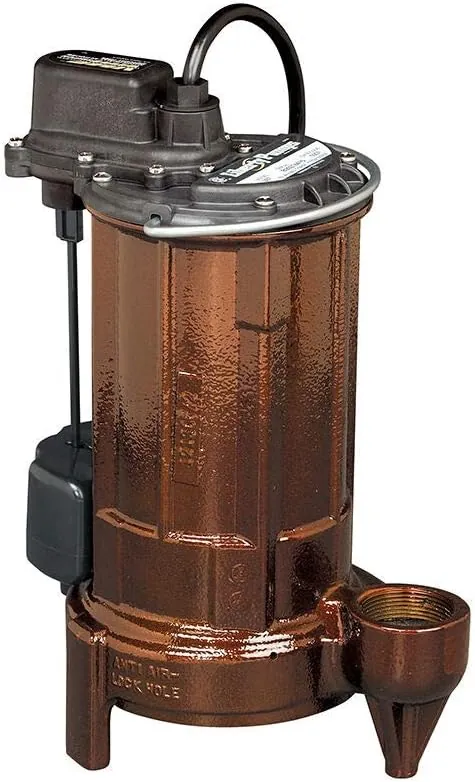
Liberty Pumps 287 Sump Pump
Its sheet lists 8.0 A running and 23 A starting, which shows why shared circuits trip.
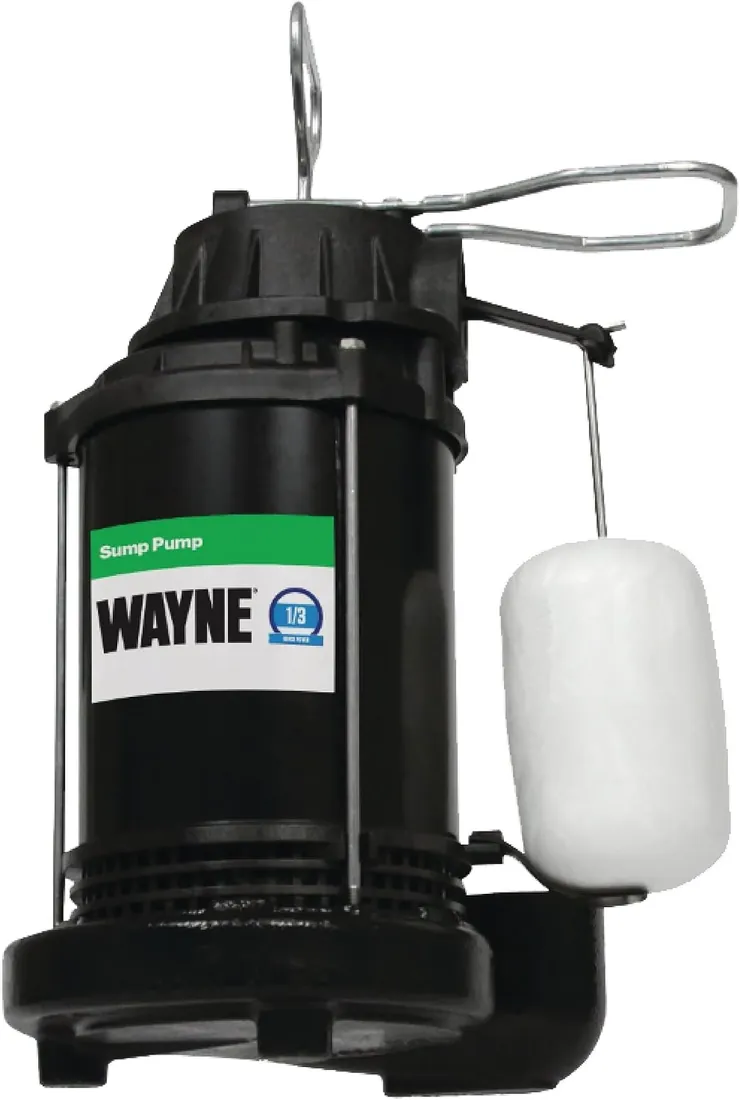
Wayne CDU790 Sump Pump
Wayne's manual gives a two-line GFCI chart and requires GFCI protection.
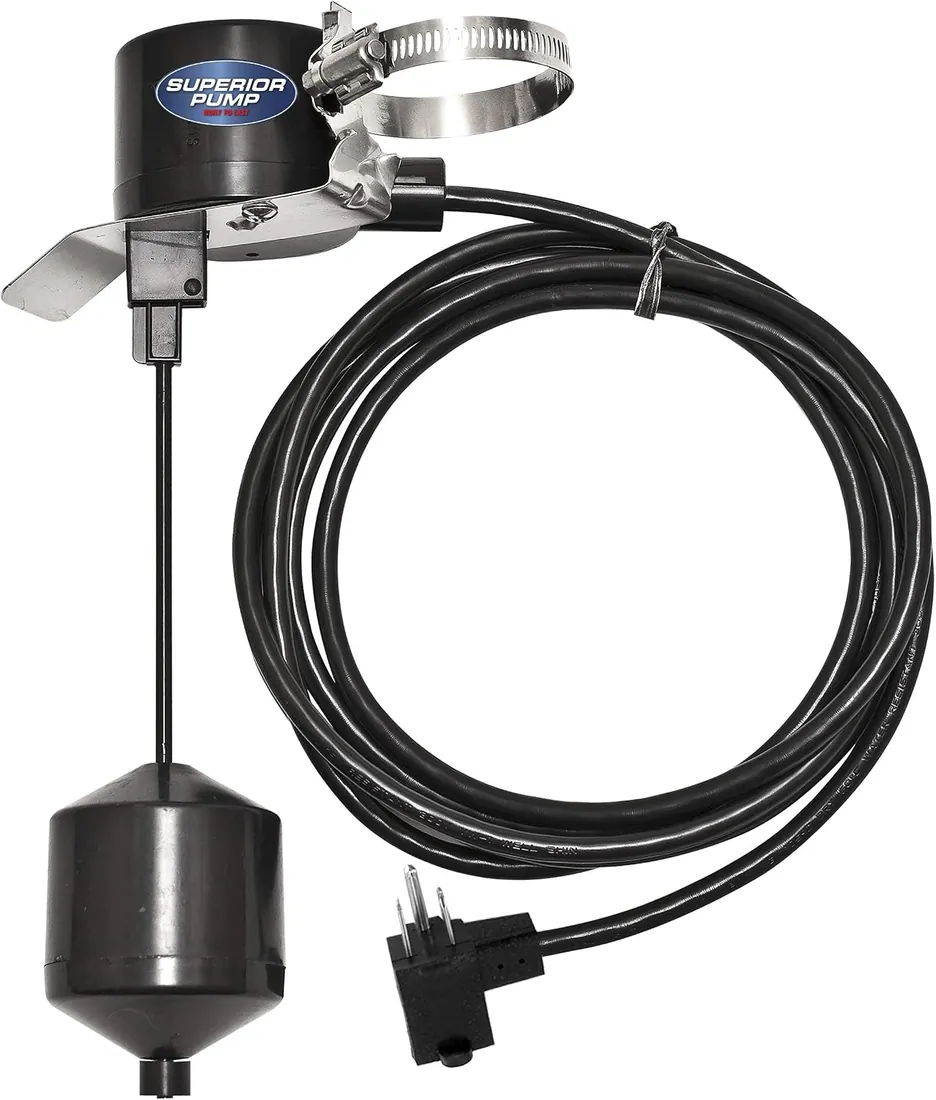
Superior Pump 92010 Vertical Float Switch
Replacement piggyback switch when the old switch cord is leaking.
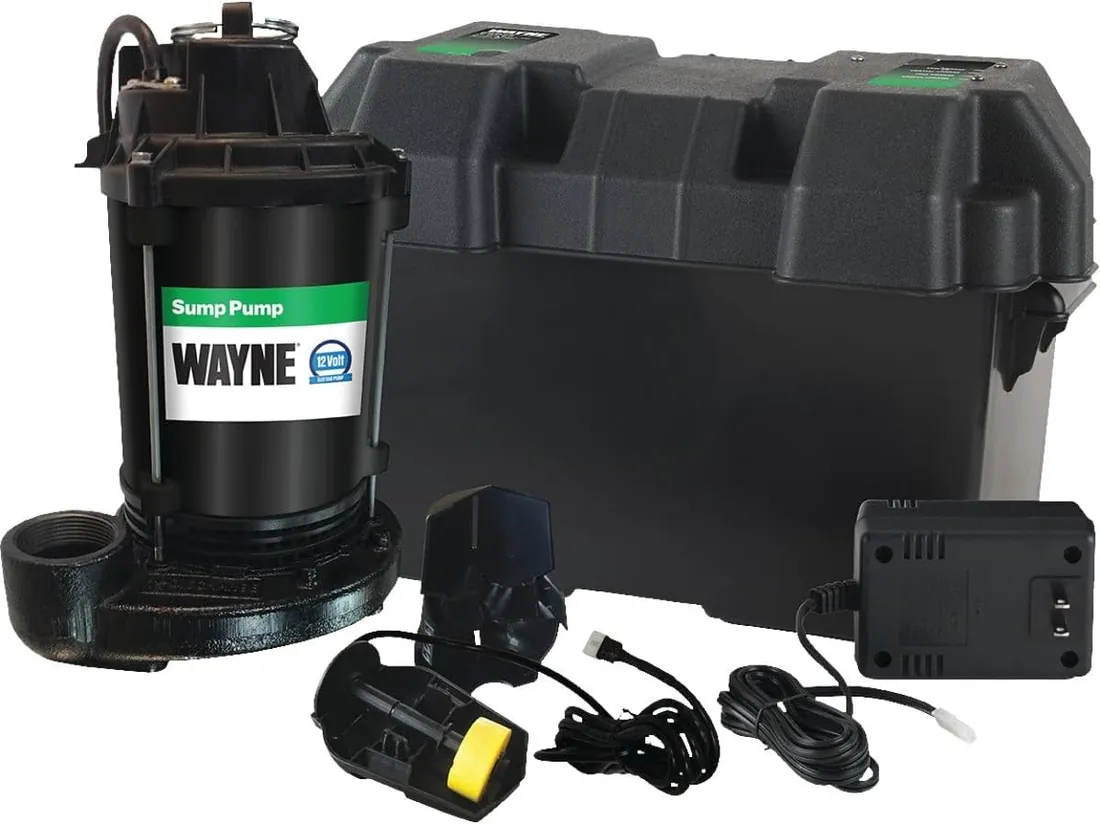
Wayne ESP25n Battery Backup Sump Pump
Backup that sounds an alert when AC power to the system is interrupted.
Questions readers ask
Why does my sump pump trip the breaker as soon as it is plugged in?
An instant trip on plugging in points to a short: a damaged cord, water in the motor or a failed switch. Unplug it and look at the cord and plug. If both are sound, the motor is the likely cause, and the maker charts call for replacing the pump.
Does a sump pump need a dedicated circuit?
Red Lion asks for the pump to have its own circuit, Zoeller recommends a separate branch circuit, and Liberty says a pump that trips on a shared circuit requires a separate one. A dedicated circuit removes the most common cause of nuisance trips.
Can a bad float switch trip a GFCI?
Yes. A piggyback switch carries the full pump current through its own cord and switch body, and water getting into either can leak current to ground. Plug the pump straight into the outlet to see whether the trips stop.
Why does my sump pump trip the GFCI only when it rains?
Rain means the pump runs more and the basement is damper, so a marginal leak in the motor, cord or outlet shows up then. Wayne notes that damp conditions alone can trip GFCIs. Check the outlet, then the pump.