If the pit is nearly empty and the pump still runs, the float switch is stuck up: debris, a float caught on the wall or cord, or a failed switch. If the pit stays full while the pump runs, water is coming in faster than the pump can move it, or the discharge is partly blocked, frozen or held back by a faulty check valve.
First, look at the water level
Lift the cover with the pump running and note where the water sits compared with the pump's off level. Makers publish that level, so you know where the switch should open. Liberty's 257 is set to stop at 4 in of water, its 287 also at 4 in, and Wayne's vertical-float models at about 4 in. If the water is already at or below that mark and the motor keeps going, the switch is the suspect. If the water stands well above the on level, the pump is losing a race with the inflow.
A third pattern looks like constant running but is really fast cycling: the pump empties the pit, stops for a few seconds, and starts again. That is usually water falling back through a leaking check valve or a pit too small for the switch range, which the check valve guide linked below covers.
| Pump | Switch | Off level | On level |
|---|---|---|---|
| Liberty 257 | Vertical magnetic float | 4 in | 7 in |
| Liberty 287 | Vertical magnetic float | 4 in | 9.5 in |
| Liberty 253 | Wide-angle float | 4 in | 11 in |
| Wayne vertical models | Vertical float | About 4 in | About 9 in |
| Wayne tether models | Tether float | About 7 in | About 13 in |
Figures: Liberty Pumps installation manual 7035000R, Table 1 float settings; Wayne submersible sump pump manual 600002W-001 J.
A float held in the on position
Zoeller's service checklist gives the causes of a pump that will not shut off in one line: debris under the float, a float or float rod bound by the pit sides or something else, or a switch that is defective, damaged or out of adjustment. Wayne lists the same switch and obstruction causes, and both makers want the float clear of the basin wall; Wayne asks for at least 1 in of side clearance.
Pumps also walk. Vibration can shift a pump until a tethered float rests against the wall or a vertical float rubs the discharge pipe. Wayne warns that a tilted pump can jam its float, and both Wayne and Zoeller want the power cord taped or tied to the discharge pipe so it cannot tangle the float.
- Unplug the pump before reaching into the pit.
- Lift the float by hand and let it drop; it should fall freely.
- Pick out gravel, string or sludge under or around the float.
- Stand the pump level and move it so the float clears every surface.
- Tie the cords to the discharge pipe, away from the float travel.
- Plug in, fill the pit and watch one full on and off cycle.
When the switch itself has failed
If the float moves freely and the motor still never stops, the switch contacts may have welded closed. On a pump with a piggyback plug the test is quick. Unplug the switch plug from the wall: if the pump is plugged through it and stops, the switch was passing power. Liberty and Superior both build their wide-angle models this way, with the pump cord plugged into the back of the switch plug. You can then fit a new switch, such as the Superior 92010 vertical float switch, and keep the pump.
A switch built into the pump body is different. Zoeller's support page says a pump with an integral float that needs a shake of the pipe to start or stop has a failing switch, and that switch life averages four to seven years. Wayne's fix for its own fixed-switch models is a new tether switch or a new pump, and it asks owners to replace tether switches every two years whatever their condition.
When the pump cannot keep up
During a long storm or a spring thaw, a pump may genuinely run for hours. That is not a fault as long as the water level holds or falls. It becomes a problem when the level creeps up even though the motor never stops. Wayne's chart names excessive inflow and a pump not sized for the job, while Zoeller and Red Lion point to restrictions: a clogged screen, a partly blocked or frozen discharge, or a check valve that sticks.
Red Lion adds a caution worth repeating: a partly plugged inlet can pass for a bad switch, because the pump runs long but moves less. Clean the screen before you buy anything. Then compare your lift with the maker's curve. The sizing calculator estimates the flow you need, and if your pump is simply too small, the half-horsepower and larger list shows stronger options. A battery backup in the same pit buys time when the main pump falls behind.
Heat, thermal trips and a motor that stops on its own
A pump that runs for very long periods can trip its thermal protector, cool down and restart by itself, which looks like random on and off behavior. Wayne lists warm water as one trigger, since its sump pumps are not meant for water above 77 °F, along with a blocked discharge, low voltage and a jammed switch. Superior adds that its overload device is a safety feature that will eventually fail after repeated trips.
So treat a pump that has run nonstop for a day as worn even if it seems fine. Fix the cause, then watch the next storm. If it trips again, plan a replacement before the motor quits in the middle of one.
Common mistakes
- Assuming nonstop running in a heavy storm is a fault when the level is holding.
- Leaving the pump cord loose where it can wrap the float.
- Replacing the pump when only the piggyback switch has failed.
- Ignoring a clogged intake screen and blaming the switch.
- Letting a stuck-on pump run dry for hours in an empty pit.
Products that fit
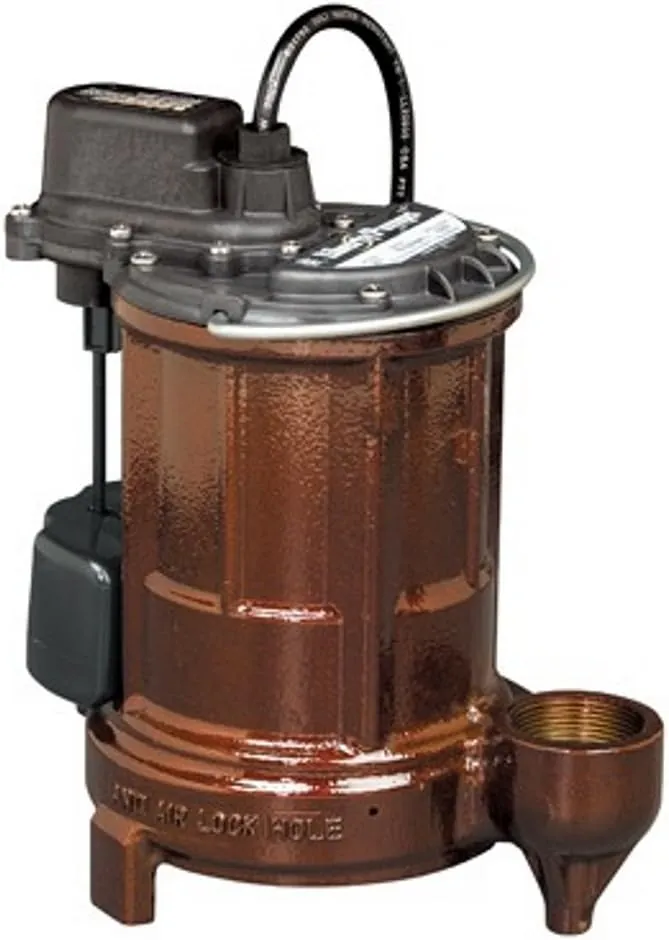
Liberty Pumps 257 Sump Pump
Vertical magnetic float with a preset 4 in off level for narrow pits.
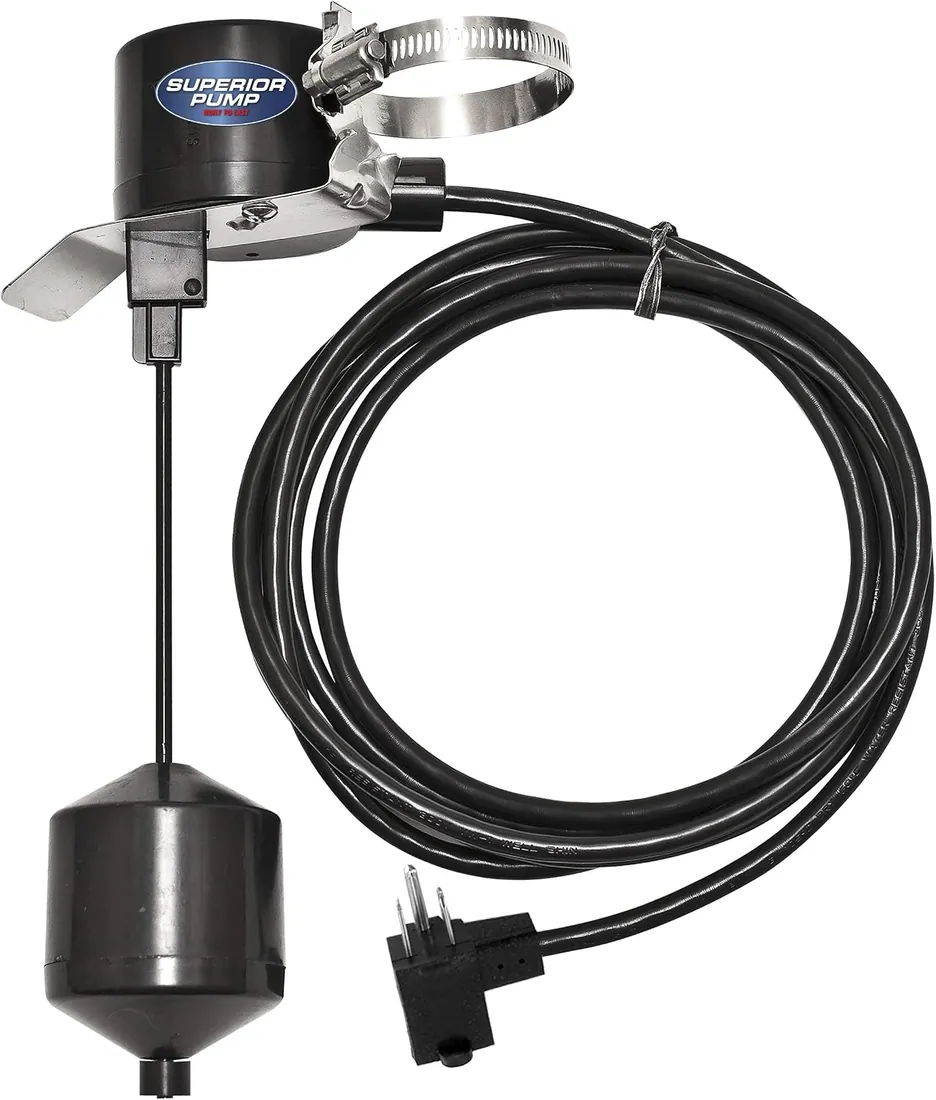
Superior Pump 92010 Vertical Float Switch
Replacement vertical switch for any pump wired through a piggyback plug.
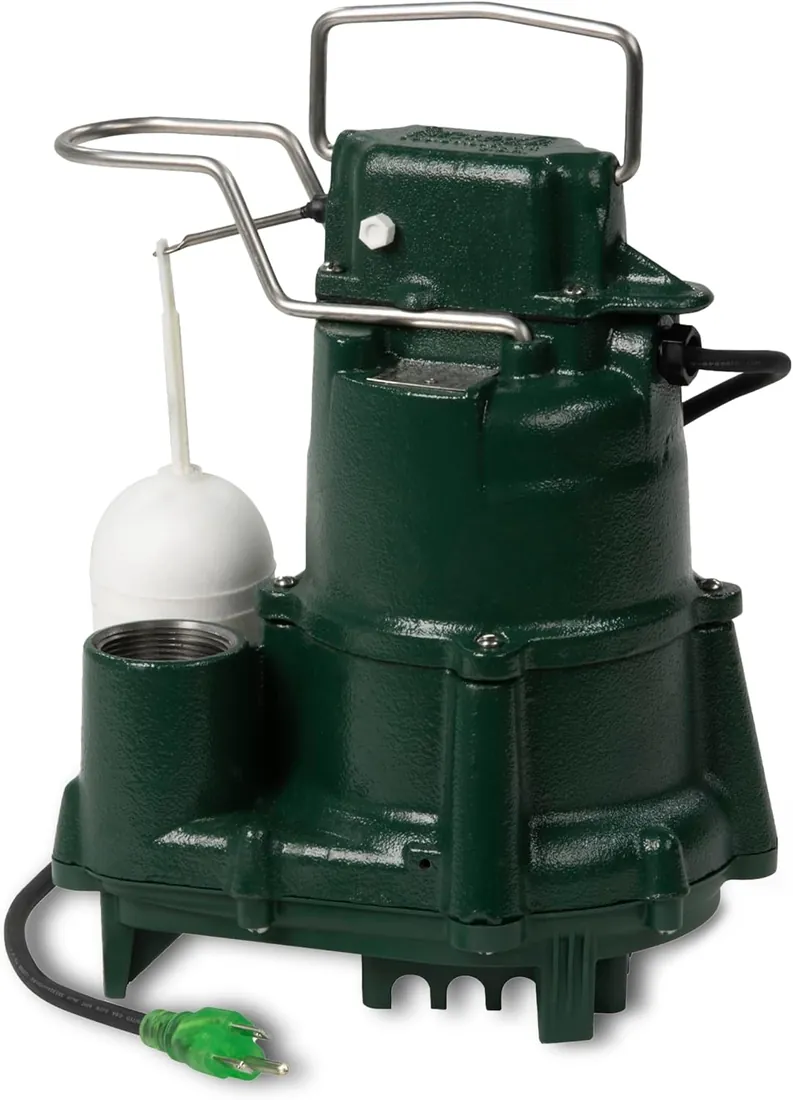
Zoeller M98 Flow-Mate Sump Pump
Half-horsepower cast iron pump for pits that fill faster than a small pump can clear.
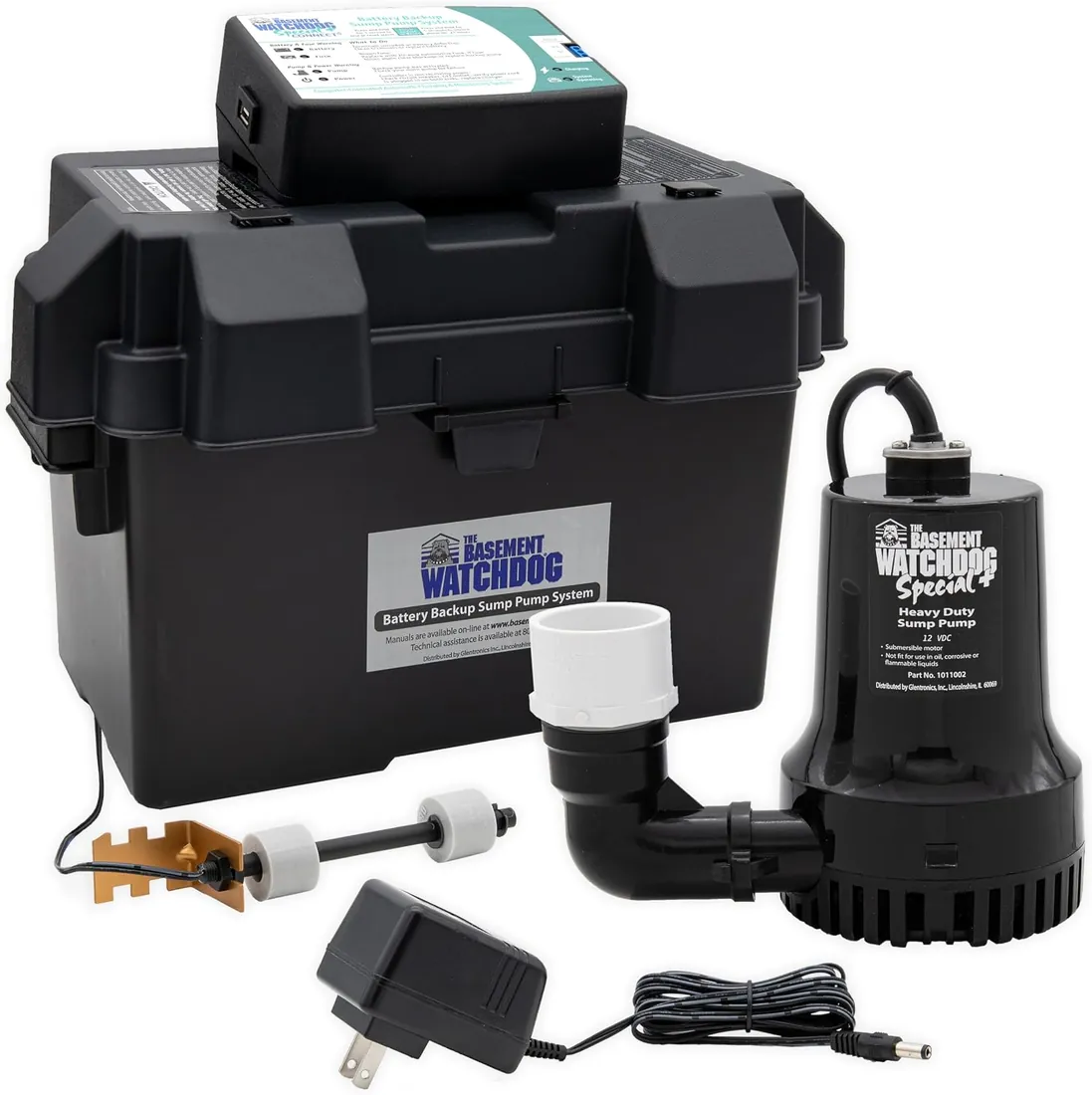
Basement Watchdog Special CONNECT (BWSP) Battery Backup Sump Pump
Battery backup that takes over when the main pump falls behind.
Questions readers ask
Is it normal for a sump pump to run constantly?
It can be during heavy rain or a high water table, as long as the level in the pit is steady or falling. If the pit is empty and the motor keeps going, or the level keeps rising while it runs, something is wrong with the switch, the discharge or the pump size.
How do I stop a sump pump that will not shut off?
Unplug it, then free the float: clear debris, move the pump so the float cannot touch the wall or pipe, and tie up the cords. If the float moves freely and the motor still runs when plugged in, replace the switch or, for built-in switches, the pump.
Can I adjust the float so the pump runs less?
Only on some models. Liberty states its vertical-float 257 and 287 are preset and not adjustable, and Wayne says its tether switch should not be adjusted. Piggyback tethered switches allow a wider range, which lengthens rest periods between runs.
Will a sump pump burn out if it runs all the time?
Constant running shortens its life, and running with no water can overheat the motor quickly. Zoeller estimates a service life of seven to ten years under normal conditions, so a pump that runs nonstop for days ages faster than that.