The usual cause is an air lock: air trapped in the pump body under a closed check valve, so the impeller spins in air. Clear or drill the small vent hole below the check valve, then check that the valve is not stuck shut or installed backwards, that the intake screen is clean and that the discharge pipe is not frozen or blocked.
Start with safety and a quick look
Unplug the pump or switch off its breaker before you reach into the pit. Wayne asks owners to let a submersible pump cool for at least two hours before servicing it, because the oil inside is hot and under pressure after a long run, and Zoeller gives a similar wait of two and a half hours.
Then note exactly what the pump does. A motor that hums without spinning is different from one that spins freely and moves nothing, and both differ from a pump that moves a trickle. Listen at the discharge pipe while someone plugs it back in for a few seconds. If you hear water rush and then stop, the pump is moving water that falls back into the pit, which is a check valve problem rather than a pump problem.
Air lock: the most common reason
When a check valve sits above the pump, the column of water above it keeps the valve shut. If the pit ran dry or the inflow churned air into the water, the pump case can fill with air that has nowhere to go. The impeller spins, the motor sounds normal, and nothing leaves the pit.
Makers handle this with a small hole. Zoeller calls for a vent hole of about 3/16 in drilled in the discharge pipe below the check valve and below the pit cover, and its support page lists an air lock as the first thing to suspect when a pump hums but moves nothing. Liberty puts an air bleed hole in the base of its dewatering pumps and adds a 1/8 in anti-airlock hole in the pipe just above the pump outlet when a check valve is fitted. A small spray from that hole while the pump runs is normal.
- Unplug the pump and find the vent hole on the pipe between pump and check valve.
- Clear it with a paper clip or pipe cleaner, as Superior suggests.
- If there is no hole, drill one at the size your pump maker gives.
- Plug the pump back in and watch for a thin jet from the hole.
A check valve that is stuck, reversed or leaking
A check valve that is stuck closed or fitted with its arrow pointing down blocks the discharge completely, and Wayne, Liberty and Superior all list it in their charts for a pump that runs but delivers little or no water. Look for the flow arrow on the valve body: it must point up and away from the pump. Unscrew the union or rubber coupling above the pit, lift the valve out and push the flapper by hand. It should swing freely one way and seal the other.
A valve that leaks causes the opposite symptom. The pump empties the pit, water drains back down the pipe, and the pump runs again a minute later. If you are replacing the valve anyway, a spring-loaded silent type such as the Zoeller Quiet Check Valve also stops the bang when the pump shuts off.
Clogged screens, frozen lines and closed valves
Silt, gravel and bits of drain tile collect on the intake screen. Wayne lists a clogged inlet screen under both a pump that will not start and one that delivers little water, and Red Lion warns that a partly plugged inlet is easy to mistake for a faulty switch because the pump runs far longer than it should. Pull the pump, rinse the screen and check that the impeller turns freely.
Next follow the discharge outside. A line that runs through a cold garage or ends in a buried pipe can freeze solid, and Superior's answer is simply to let it thaw. Wayne asks for the outdoor end to slope down and away so the pipe drains between cycles. Inside, check any gate or ball valve on the line: Wayne's chart includes a shut-off valve left closed, which happens after a pump swap more often than anyone admits.
Too much lift, low voltage or a worn impeller
Every pump has a height it cannot push past. Superior's manual is blunt about its sump models: above roughly 25 ft the pump will not move water. Long horizontal runs, small pipe and extra elbows add friction on top of the vertical lift, so a pump that worked on a short run can stall after a discharge reroute. The table shows how quickly flow falls with lift on two common Wayne pumps; the sump pump sizing calculator adds pipe friction to your vertical lift so you can compare.
Low voltage slows the motor and cuts output, which is why every maker tells owners not to use an extension cord. Finally, a pump that pumped well for years and now delivers less may have a worn or broken impeller. Zoeller lists abrasive material wearing the impeller and housing as a cause of lower flow after a period of use; at that point replacement is usually the practical fix.
| Pump | 0 ft | 10 ft | 20 ft |
|---|---|---|---|
| Wayne CDU790 (1/3 HP) | 4,600 | 3,060 | 1,200 |
| Wayne CDU800 (1/2 HP) | 5,100 | 3,840 | 2,040 |
| Wayne CDU1000 (1 HP) | 6,100 | 5,100 | 3,840 |
When the pump itself is the problem
If the vent hole is clear, the valve swings freely, the screen and pipe are open and the pump still spins without moving water, the impeller or volute is damaged. Wayne's remedy for a broken impeller is a new pump, and most sealed residential pumps are not built for owner repair. Zoeller and Liberty both say service must go through their authorized centers during the warranty period.
Size the replacement for your real lift rather than buying the biggest motor on the shelf. For a typical basement, the Wayne CDU790 and the Zoeller M53 cover modest lifts, while the list of half-horsepower and larger pumps suits taller discharge runs.
Common mistakes
- Running a humming pump for hours hoping it will catch, which overheats the motor.
- Installing the check valve with its flow arrow pointing toward the pump.
- Sealing over or never drilling the vent hole below the check valve.
- Replacing the pump before pulling it to clean a clogged intake screen.
- Adding a long horizontal run without checking the pump's flow at that lift.
Products that fit
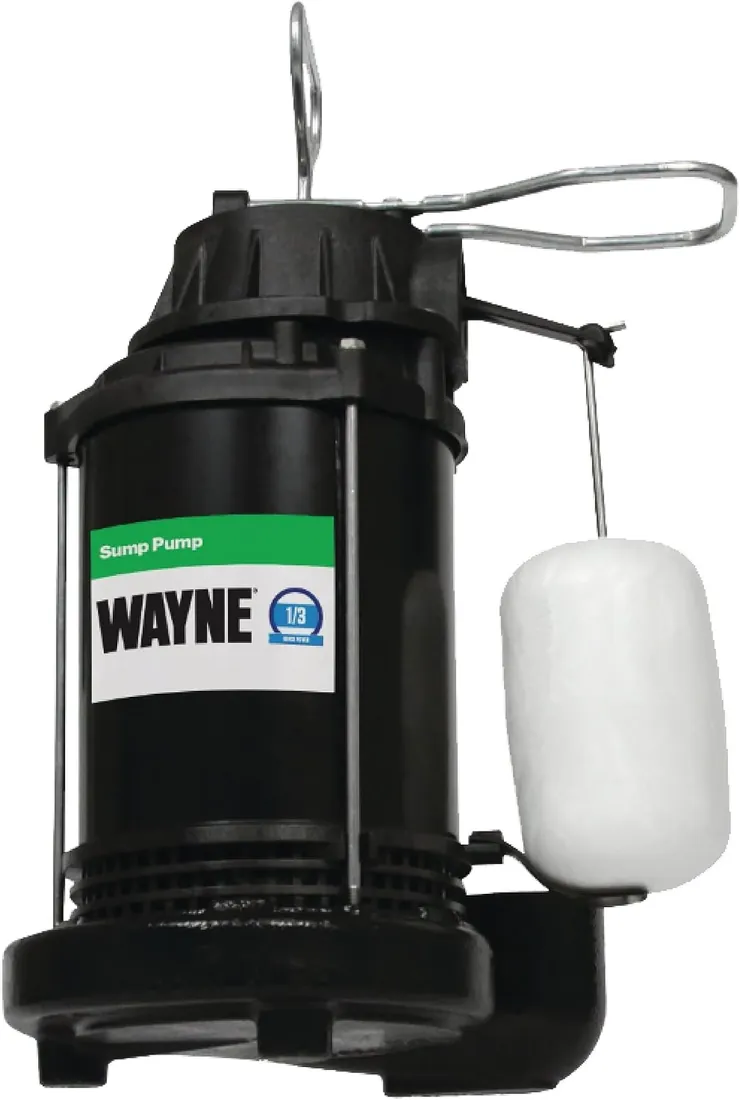
Wayne CDU790 Sump Pump
Top-suction 1/3 HP pump that keeps its intake above bottom silt.
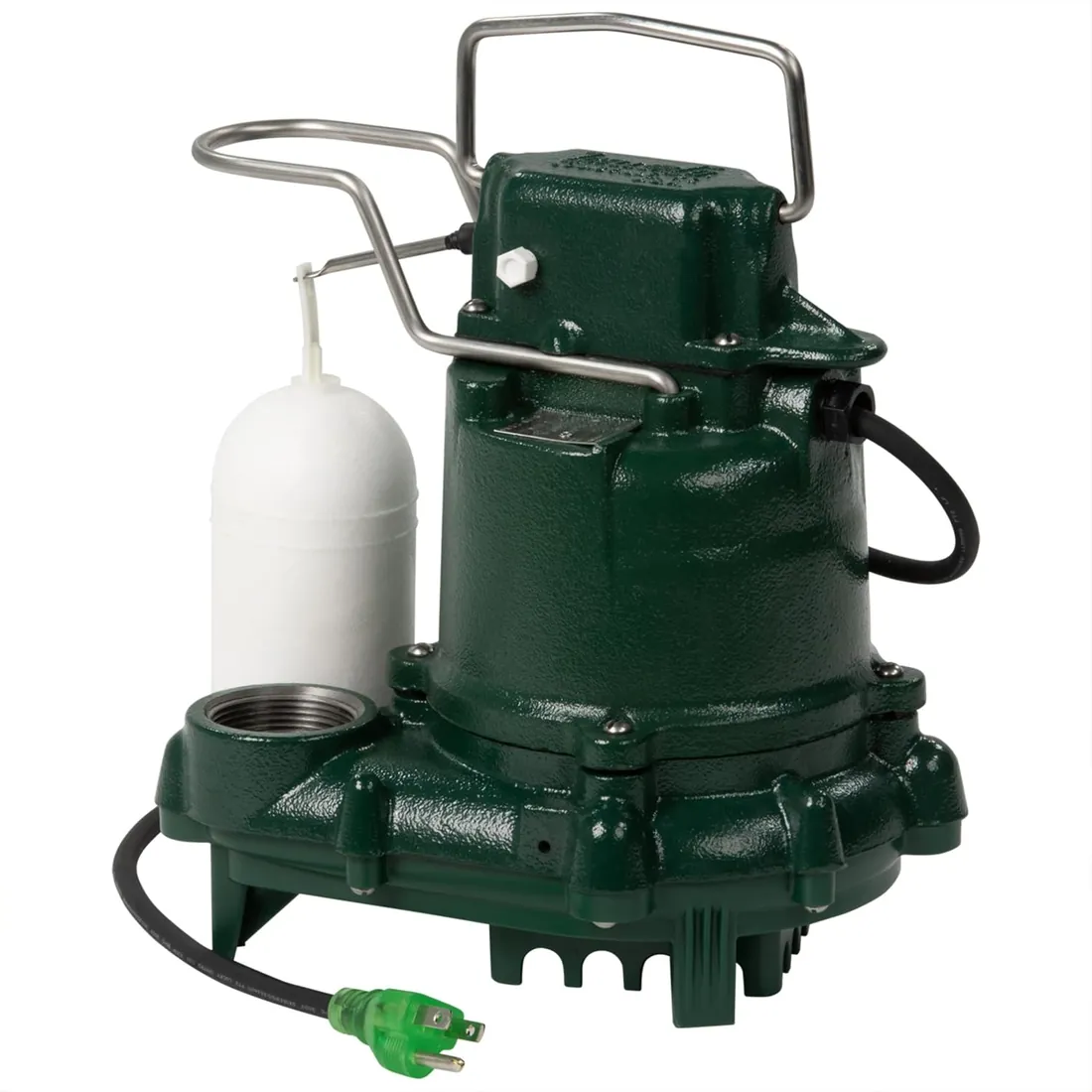
Zoeller M53 Mighty-Mate Sump Pump
Cast iron pump with a vent built into the housing beside the float.
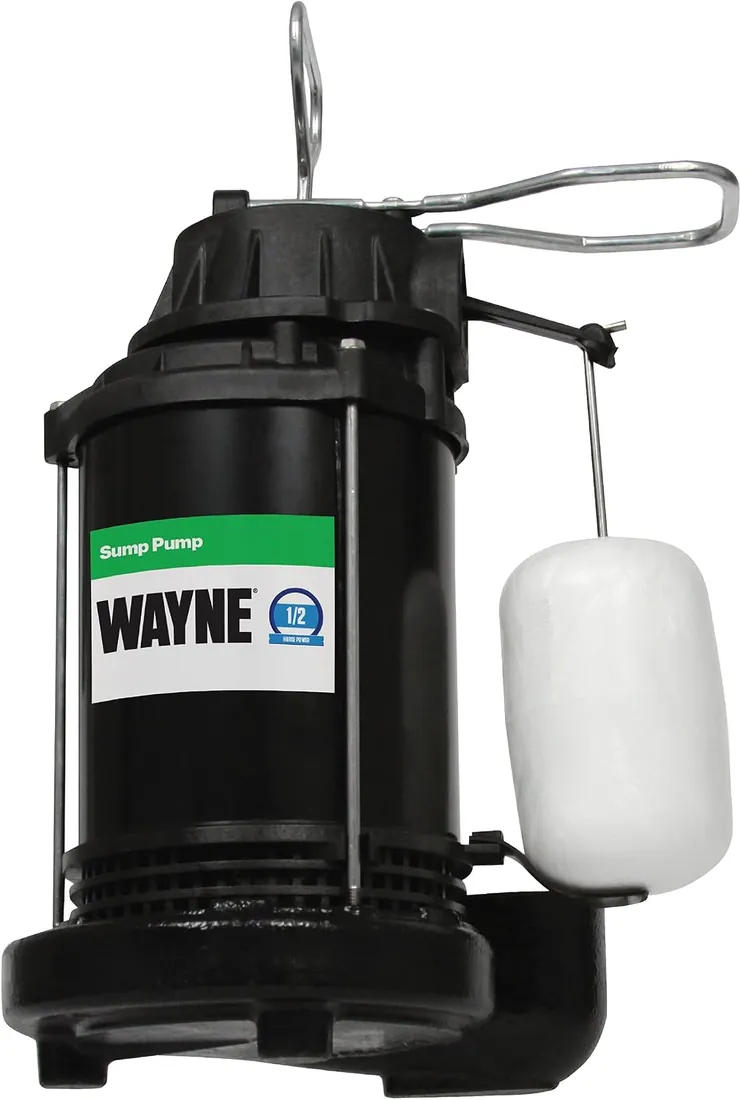
Wayne CDU800 Sump Pump
Half-horsepower step up for longer or taller discharge runs from one pit.
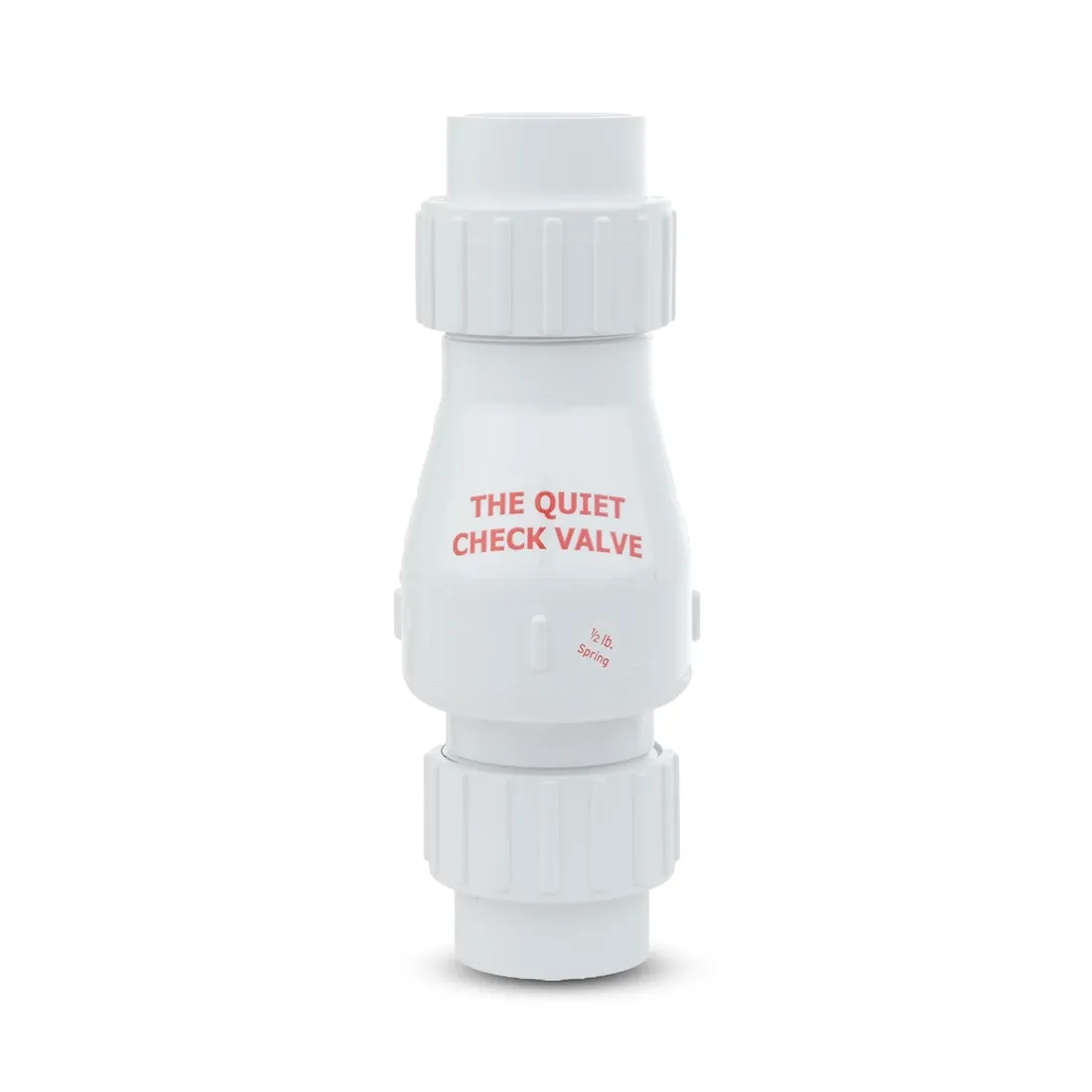
Zoeller 30-0040 Quiet Check Valve
Silent check valve to replace a stuck or slamming flapper.
Questions readers ask
How do I fix an air-locked sump pump?
Unplug it, clear or drill the small vent hole in the discharge pipe below the check valve, and plug it back in. Liberty also suggests turning the pump off for several minutes before restarting so trapped air can escape. A thin jet from the hole during the next run shows the vent is working.
Can a check valve stop a sump pump from pumping?
Yes. A valve stuck closed or installed backwards blocks the discharge completely, so the motor runs and the pit stays full. Take it out, check the arrow points away from the pump and make sure the flapper swings freely before refitting it.
Why does my sump pump hum but not spin?
A hum with no rotation points to a jammed impeller, a failed start component or low voltage. Unplug the pump, clear debris from the intake and impeller, and make sure it is plugged straight into a grounded outlet, not an extension cord. If it still only hums, it needs replacing or service.
Is it bad to let a sump pump run without pumping?
Yes. The motor relies on the water it moves for cooling, and running it in air or against a blocked line trips the thermal protector and shortens its life. Superior warns that its overload device is a safety feature that will eventually fail with repeated trips.