A loud thud right after the pump stops is the check valve slamming shut, which a spring-loaded silent check valve cures. Rattling or vibration usually travels through rigid pipe and is fixed with a rubber coupling. A pump that starts every few minutes in dry weather is often refilling with water that drains back through a leaking check valve.
Match the noise to its cause
Stand by the pit through two or three cycles and listen for when the noise happens: as the motor starts, while it runs, or the moment it stops. That timing narrows the cause more than the type of sound. The table collects what Zoeller, Wayne and Liberty say about each one.
Write down how often the motor starts in dry weather too. A pump that runs only when it rains is behaving normally, however loud it is, while one that runs on a sunny afternoon is telling you water is circulating somewhere it should not.
| When you hear it | Likely cause | Maker's fix |
|---|---|---|
| Bang just after the pump stops | Check valve slamming (water hammer) | Silent or quiet check valve |
| Buzz or rattle through the house | Pipe fixed too rigidly to the structure | Rubber coupling in the discharge |
| Grinding or rough running | Worn bearings, broken impeller or debris | Clean impeller cavity or replace pump |
| Hum with no water moving | Air lock or jammed impeller | Clear vent hole; clear intake |
| Starts every few minutes | Backflow through check valve or small pit | Repair valve; widen switch range |
Figures: Zoeller product support FAQ; Wayne submersible sump pump manual 600002W-001 J, troubleshooting chart; Liberty Pumps installation manual 7035000R, troubleshooting matrix.
The bang when the pump shuts off
When the motor stops, the water in the discharge pipe reverses and falls back. A swing check valve catches it by slamming its flapper shut, and that impact rings through the pipe and the joists. Zoeller's support page calls this water hammer and describes it as more annoying than harmful, but the shock still loosens fittings over time.
The fix is a different style of valve. Spring-loaded silent check valves close before the column of water builds speed. The PumpSpy CV-150 and Zoeller's Quiet Check Valve are built for this. Fit the new valve with its arrow pointing away from the pump, keep the anti-airlock hole below it, and support the pipe so the valve is not carrying its weight.
Rattles and vibration while it runs
A pump that sounds fine in the pit can still fill the house with a drone if the discharge pipe is clamped hard to a joist or rim board. Wayne and Liberty both list piping attachments that are too rigid as a cause of noise. Wayne suggests a rubber coupling in the line to isolate the vibration, and Liberty recommends replacing a short section of pipe with rubber hose or a flexible connector.
Check two more things while the cover is off. Make sure the pump stands level and does not rock on an uneven pit floor, and that the discharge pipe does not touch the basin wall or the lid. Wayne notes that vibration can tip a pump over time; a tilted pump is both noisier and more likely to jam its float.
- Unplug the pump and look for pipe touching the basin or lid.
- Set the pump on a solid, level base.
- Add a rubber coupling between the check valve and the wall run.
- Use padded or isolating hangers on long horizontal runs.
Grinding, screeching and rough running
Noise from inside the pump body is more serious. Liberty lists foreign objects in the impeller cavity and a broken impeller, while Wayne lists worn bearings and a broken impeller. Gravel is the usual culprit in pits with a dirt floor, which is why every maker wants the pump on a solid surface rather than earth or stone.
Unplug the pump, lift it out, and remove the intake screen to look at the impeller. Clearing stones or a twig may cure it. A chipped impeller or a growl from the bearings usually means replacement, because sealed residential pumps are not designed for owner repair. If the pump is due, a top-suction model such as the Wayne CDU790 draws water from above the pit floor and picks up less grit.
Running every few minutes in dry weather
If the pump starts every two or three minutes when it has not rained, listen at the check valve right after it stops. A gurgle or trickle down the pipe means the valve is leaking, so the same water is pumped again and again. Wayne, Liberty and Superior all list a missing or leaking check valve as the cause of a pump that starts and stops too often.
With a sound valve, frequent starts mean the pit is small for the switch range or groundwater is high. Zoeller's support page explains that cycling depends on the basin diameter and the on and off range, and that a fixed built-in switch cannot be changed. Its options are a long-cycle kit or a non-automatic pump on a variable-level piggyback switch. The basin cycle calculator shows how much a wider range would lengthen the rest between runs.
Common mistakes
- Strapping the discharge pipe tight to a joist with no rubber coupling.
- Removing the check valve to stop the bang, which causes constant recycling.
- Ignoring a grinding sound until the impeller locks.
- Mistaking the normal spray from the anti-airlock hole for a leak.
- Setting the pump on gravel, which feeds stones into the impeller.
Products that fit
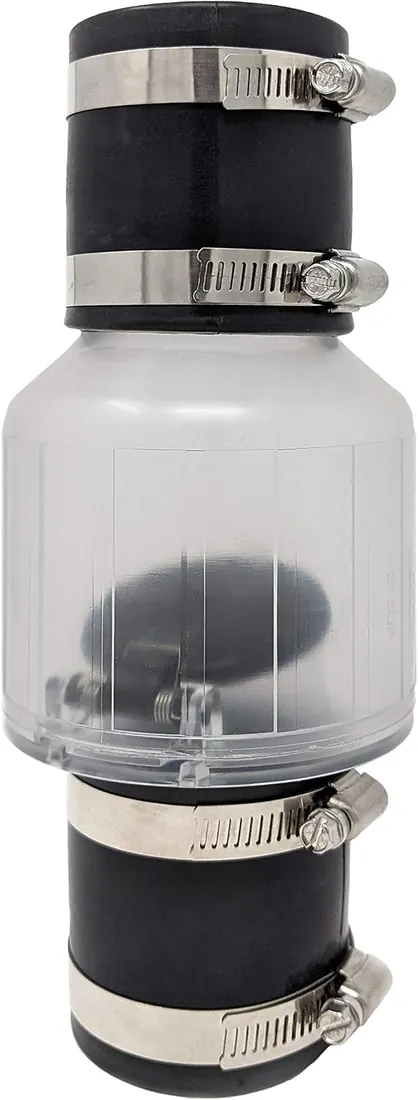
PumpSpy CV-150 Silent Check Valve
Spring-loaded silent check valve that ends the slam at shutoff.
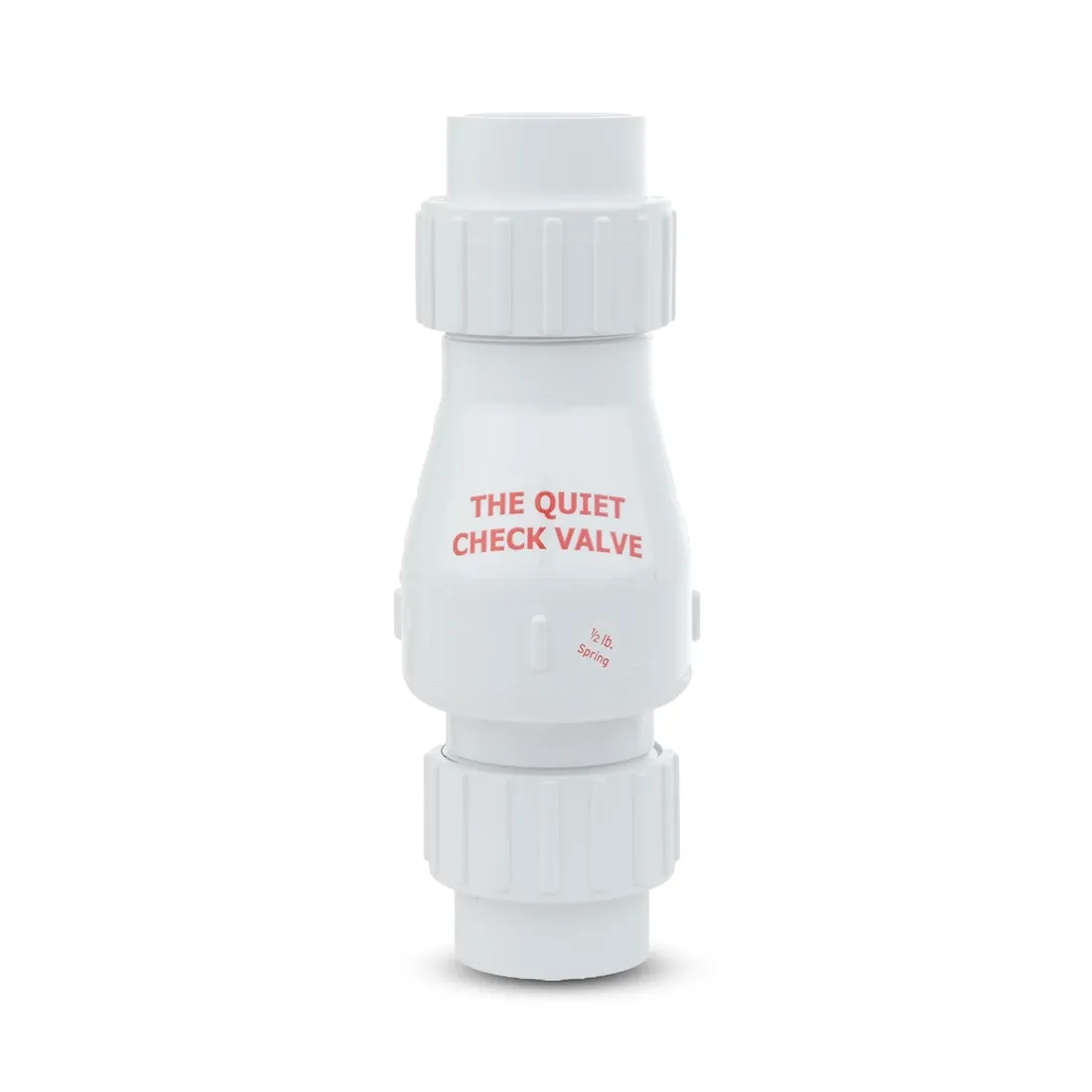
Zoeller 30-0040 Quiet Check Valve
Zoeller's quiet valve, the maker's own answer to water hammer.
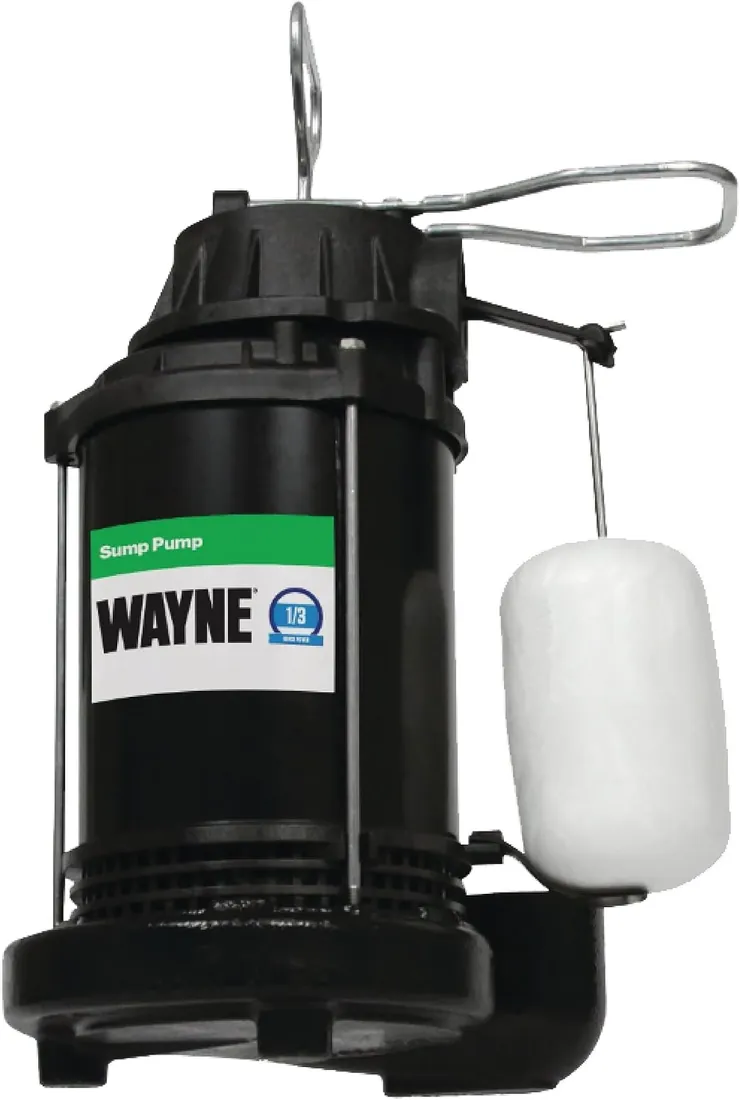
Wayne CDU790 Sump Pump
Top-suction pump that draws above the grit on the pit floor.
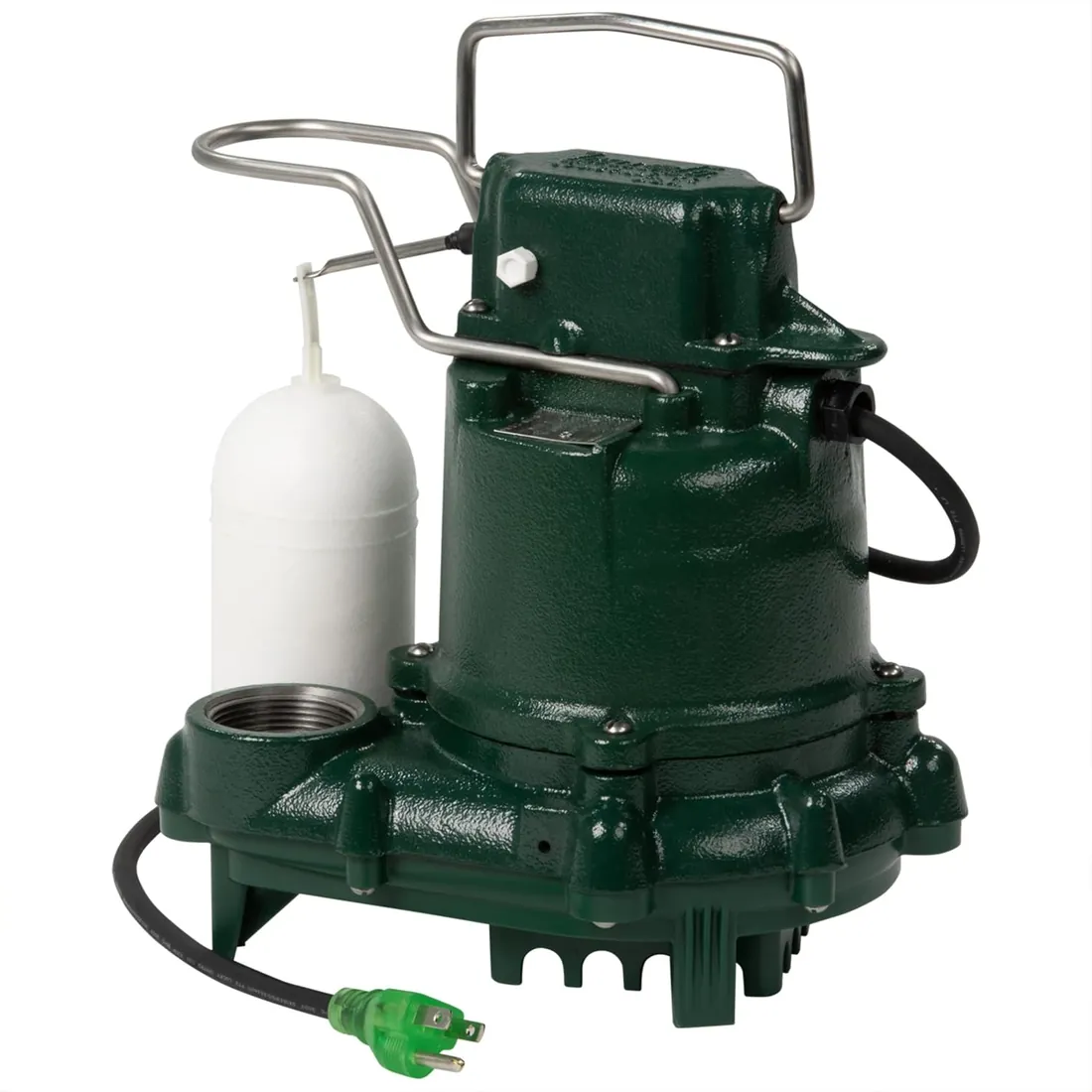
Zoeller M53 Mighty-Mate Sump Pump
Compact cast iron pump with a guarded float that stays clear of pipes.
Questions readers ask
Why does my sump pump bang when it shuts off?
That is the check valve slamming as the water in the pipe reverses. Zoeller calls it water hammer. Replacing a swing valve with a spring-loaded silent check valve, and supporting the pipe well, usually ends it.
Is it normal for a sump pump to run every few minutes?
During or after heavy rain, yes. In dry weather it usually means water is draining back through a leaking check valve, or the pit is small for the switch range. Check the valve first, then look at the basin size and switch type.
How do I make my sump pump quieter?
Fit a silent check valve, add a rubber coupling between the pump and the pipe run, keep the pump level on a solid base and close the basin with a sealed lid. Those steps cover the noises makers list for normal operation.
Should a sump pump make a grinding noise?
No. Grinding or screeching points to debris in the impeller, a broken impeller or worn bearings. Unplug the pump, clean the intake and impeller, and replace the pump if the noise continues.