Most sump pump faults come from the float switch, the power supply or the discharge line rather than the motor. Unplug the pump, clear anything touching the float, and plug the pump straight into the outlet if it has a piggyback switch. If it runs that way, the switch is at fault; if it hums without pumping, look at airlock, the check valve or a jammed impeller.
Before you touch the pump
A sump pit combines water, a submerged motor and a wall outlet, so the makers open their troubleshooting pages with the same warning: disconnect power before you reach in. If the floor is already wet and the electrical panel is in the basement, Wayne tells owners to call an electrician rather than walk through the water.
Oil-filled motors also stay hot and pressurized after they stop. Wayne asks for at least 2 hours of cooling before service, and Zoeller asks for 2-1/2 hours after disconnecting. Neither maker wants the motor opened at home: Zoeller sends repairs to its authorized service centers, and Liberty warns that field disassembly voids the warranty.
Symptoms and the usual causes
The table pulls together the causes that Wayne, Liberty and Zoeller list for each complaint. Where all three agree, the cause is listed first. Use it to decide which of the sections below to read.
Two habits make the chart far more useful. First, note what the pump does during one full cycle before you change anything, because a pump that never starts and one that starts but cannot empty the pit need different fixes. Second, change one thing at a time and pour in water again after each change, so you know which step solved it.
| Symptom | Check first | Then check |
|---|---|---|
| Will not start | Float blocked, power or breaker | Switch failed, clogged inlet screen, motor |
| Starts and stops too often | Check valve missing or leaking | Switch fault, pit too small for inflow |
| Will not shut off | Float held up by pit wall or debris | Switch fault, blocked discharge, undersized pump |
| Runs or hums, little water | Airlock, check valve backward or stuck | Clogged screen, closed valve, head too high |
| Trips GFCI or breaker | Faulty GFCI or damp outlet | Pump fault, wiring, low voltage |
| Noisy or vibrating | Rigid pipe fastened to the house | Worn bearings or broken impeller |
Figures: Wayne submersible sump pump manual 600002W-001 J; Liberty Pumps installation manual 7035000R; Zoeller installation instructions FM2676, 3-year warranty pumps.
Float switch problems
The float is the part most likely to fail, because it moves on every cycle and sits in silt and debris. Wayne lists a blocked switch or a failed switch under almost every symptom in its chart, and Liberty's matrix does the same with a float that cannot reach its on or off position.
Start by looking. Check that the pump is still standing upright, since Wayne notes that vibration can tip a pump onto its side and pin the float. Then make sure the float clears the pit wall, the inlet pipe and the power cord. Wayne asks for at least 1 in of clearance between the switch and the basin wall and wants the cord tied to the discharge pipe so it cannot tangle.
Zoeller gives a telling clue in its support answers: if you have to shake the discharge pipe to get an automatic pump going, the integral switch is wearing out, and the switch, arm and case gasket should be replaced. It puts average switch life at 4 to 7 years. Wayne asks owners to replace tether switches every two years as routine maintenance.
- Unplug the pump and any piggyback switch plug.
- Clear debris, string or gravel from around the float.
- Stand the pump level on a solid base, not on gravel or clay.
- Plug the pump cord straight into the outlet to bypass a piggyback switch.
- If the pump runs bypassed but not through the switch, replace the switch.
Pump runs or hums but moves no water
A motor that runs without lowering the water usually has a blocked path rather than a dead motor. Zoeller's first suspect is airlock: air trapped between the impeller and a closed check valve. Its fix is a small vent hole in the discharge pipe below the valve, kept clear of debris. Liberty says an airlocked pump can be switched off for several minutes and restarted, and it builds an air bleed hole into the base of its pumps for the same reason.
If air is not the issue, work outward from the impeller. Pull the pump and clear the inlet screen. Look for a check valve fitted backward or stuck shut, a closed gate or ball valve, and ice in any length of pipe that runs outdoors. Finally, compare the lift with the pump's rating; Wayne and Liberty both list a pump undersized for the total head as a cause of weak flow. The sump pump sizing calculator estimates that head from your pipe run.
Short cycling and a pump that never stops
Frequent starts usually come from water falling back down the discharge pipe. Both Wayne and Liberty name a missing or leaking check valve first. Zoeller adds that short cycling is a function of the basin diameter and the switch range, and that a fixed integral switch cannot be adjusted, so the fix is a long-cycle kit or a non-automatic pump with a piggyback variable level switch.
A pump that runs nonstop is the opposite problem. Either the float is hung up in the on position, the discharge is blocked so the level never drops, or more water is coming in than the pump can move. Wayne's chart tells owners in that last case to redo the sizing calculation. During a heavy storm, constant running can be normal; if it continues in dry weather, check for a stuck float first.
Reset buttons, GFCI trips and overheating
Many owners look for a reset button on the pump itself. The submersible pumps covered here have none: Wayne and Zoeller fit an automatic-reset thermal protector that switches the motor off when it overheats and back on once it cools. Wayne lists the causes of repeated tripping as low head, wrong voltage, poor wiring, motor trouble or the end of the pump's life, and asks that the pump not handle water above 77 °F. Zoeller rates its standard pumps to 130 °F, so check the limit for your model.
The reset you can use is on the GFCI outlet or the breaker. Wayne notes that GFCI outlets in damp basements can trip and quietly shut the pump off, and recommends checking and resetting them during routine visits. If the GFCI trips again as soon as the pump starts, its chart blames either the outlet or the pump. Never plug a sump pump into an extension cord or surge strip to get around the problem.
Checks that prevent most failures
Wayne asks for an inspection three to four times a year, Zoeller for a full system check at least every three months, and Liberty for a quarterly look at the float, the check valve and corrosion. Each visit, pour water into the pit and watch a full cycle. Zoeller expects its pumps to last roughly 7 to 10 years in normal service, so an older pump showing several of these symptoms may be due for replacement rather than repair. Cast iron automatic models such as the Zoeller M53 and Zoeller M98 keep their floats inside a guard, which reduces the snagging that causes so many calls; the cast iron sump pump list compares them.
Common mistakes
- Opening a hot, oil-filled motor before it has cooled for the time the maker states.
- Replacing a pump when only the piggyback switch had failed.
- Shortening a tethered float to stop frequent cycling, which narrows the range further.
- Ignoring a damp GFCI outlet that keeps tripping and silently cutting power.
- Running the pump on an extension cord after a breaker problem.
- Testing the pump once at install and never pouring water in again.
Products that fit
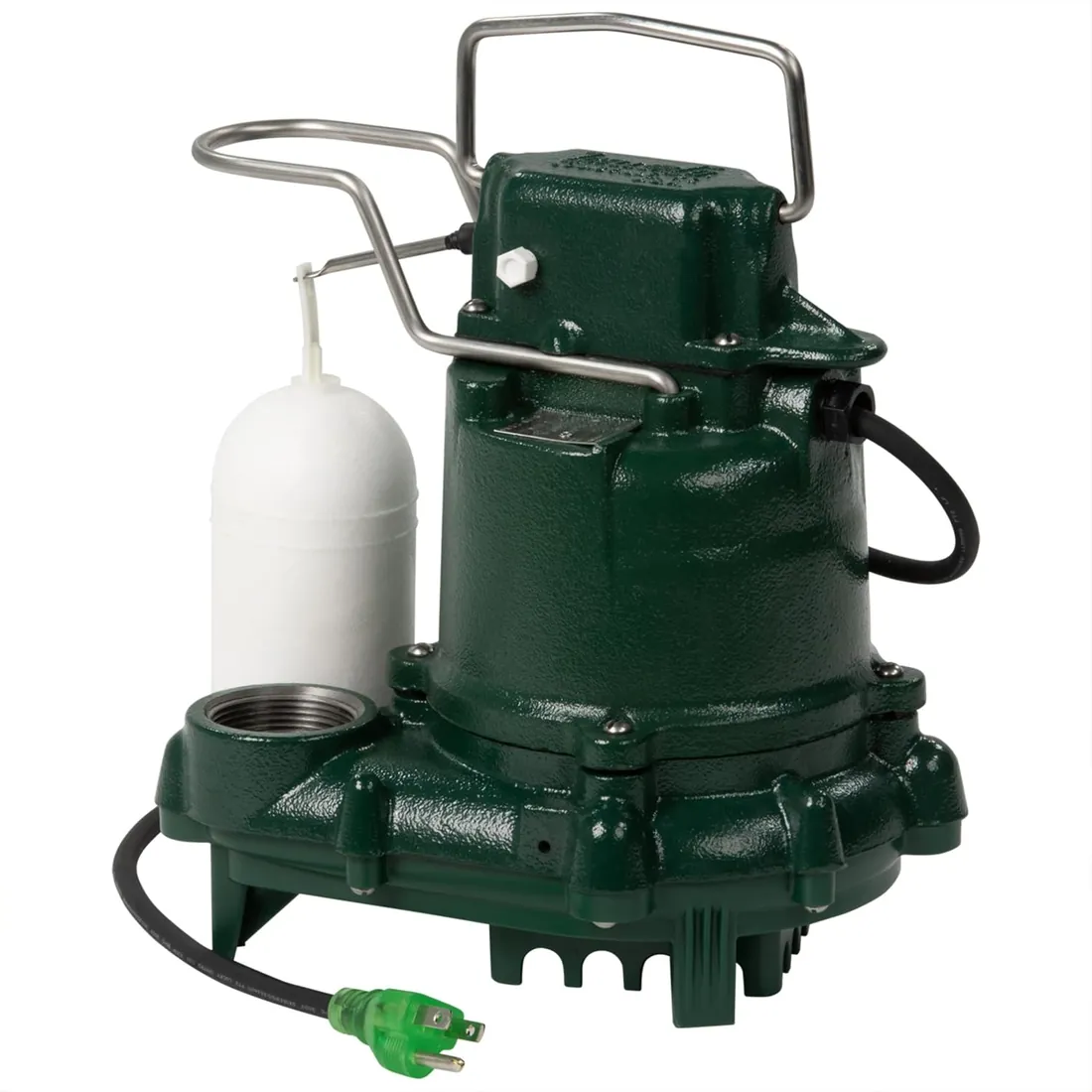
Zoeller M53 Mighty-Mate Sump Pump
Guarded integral float with fixed on and off points, a common pick when floats keep snagging.
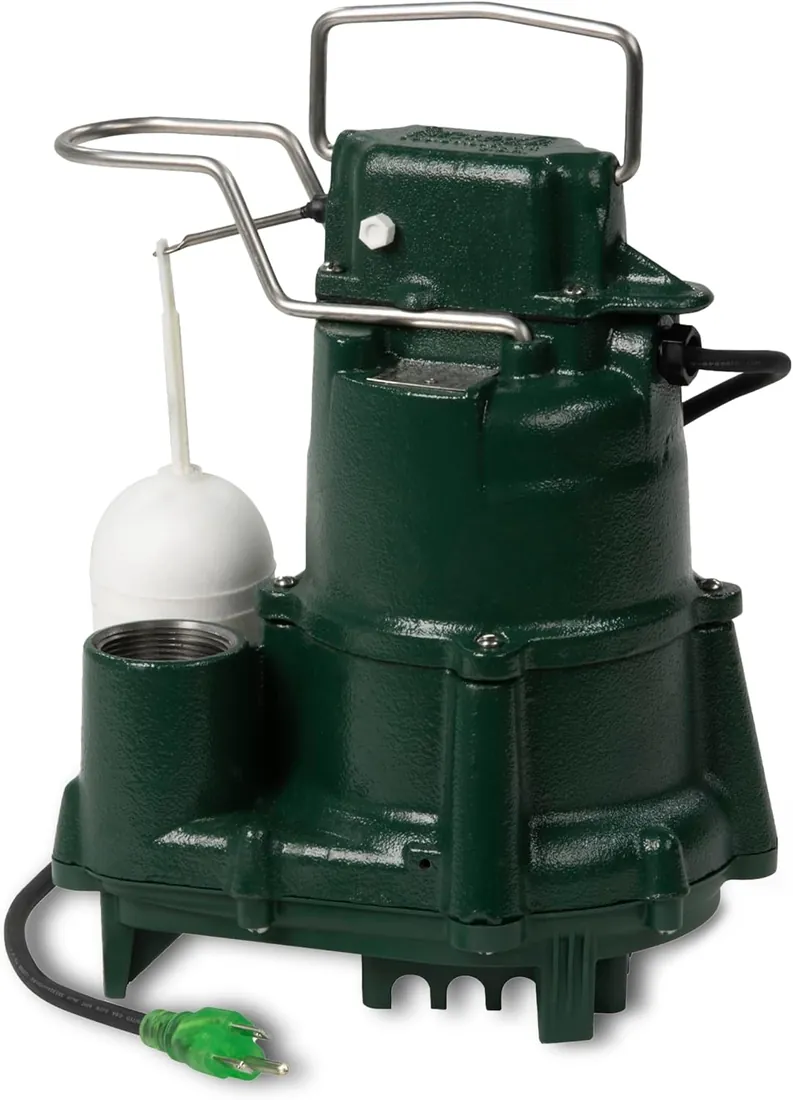
Zoeller M98 Flow-Mate Sump Pump
Larger 1/2 HP cast iron pump with a guarded float and an LED plug that shows power.
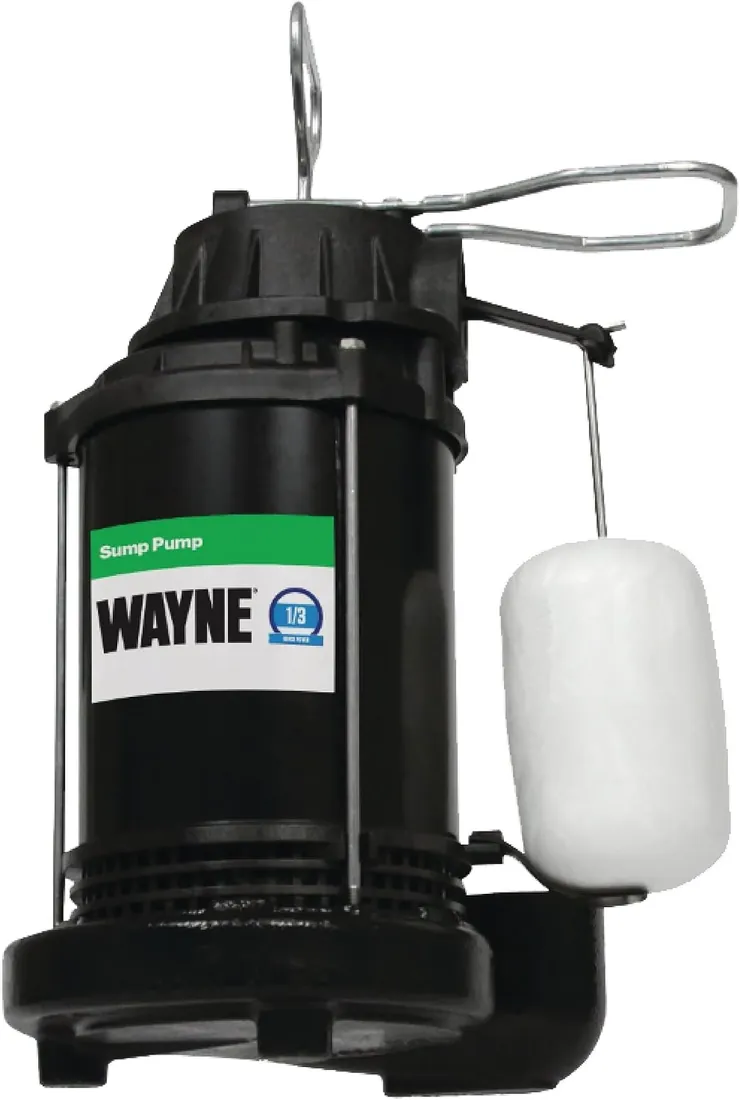
Wayne CDU790 Sump Pump
Top-suction pump with a vertical float; the Wayne manual's troubleshooting chart covers it.
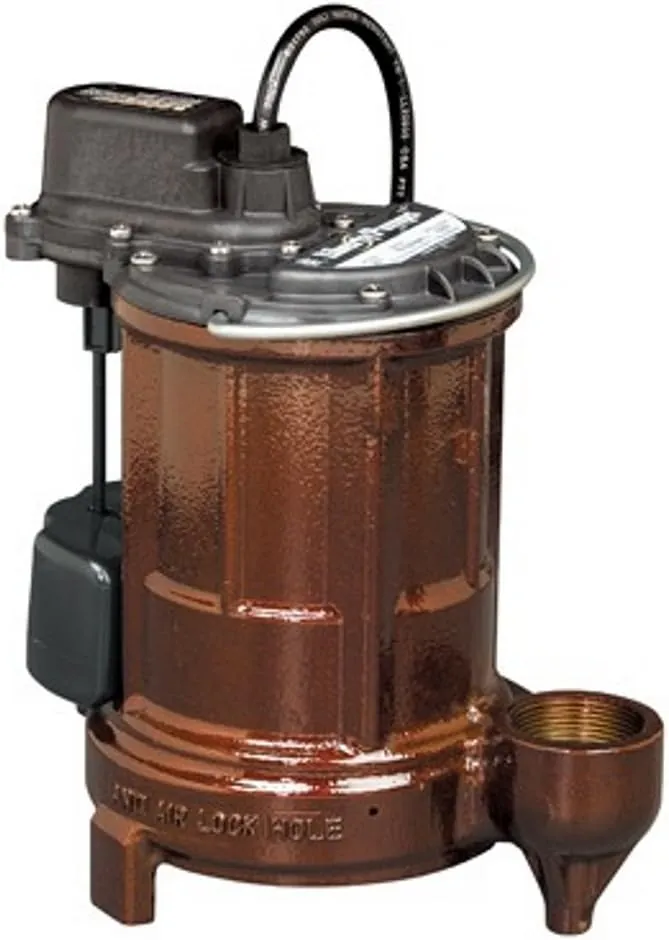
Liberty Pumps 257 Sump Pump
Vertical magnetic float that fits pits as narrow as Liberty's stated minimum.
Questions readers ask
Where is the reset button on a sump pump?
The submersible pumps in this guide have no manual reset button. Their thermal protector resets itself once the motor cools. The reset you can press is on the GFCI outlet or the circuit breaker, which Wayne notes can trip in damp basements and cut power to the pump.
How do I test a sump pump float switch?
Unplug the pump, clear the float, then pour water into the pit and watch it start and stop. If the pump has a piggyback plug, run it plugged straight into the outlet; if it runs that way but not through the switch, the switch has failed.
How long does a sump pump float switch last?
Zoeller puts the average life of its integral switches at 4 to 7 years, depending on use. Wayne asks owners to replace tethered switches every two years as routine maintenance, regardless of whether they have failed yet.