First unplug the pump from the piggyback switch and plug it straight into the outlet. If it runs, the switch is at fault; a 92010 vertical float switch replaces it. If it doesn't, check the GFCI, the breaker and the thermal protector, which resets itself once the motor cools. A pump that runs without moving water usually has a clogged screen, a blocked airlock hole or a reversed check valve.
Start by separating the switch from the pump
Superior's sump pumps, including the 92341, 92372, 92572 and 92151, use a piggyback switch: the pump cord plugs into the back of the switch plug, and the switch plug goes into the wall. That design gives you the quickest diagnosis of any pump type. Unplug both, plug the pump cord straight into a grounded GFCI outlet, and listen.
If the pump runs, the motor is fine and the switch has failed or is stuck. If it stays silent, the problem is power or the pump itself. Superior's setup instructions use the same logic in reverse: once installed, the pump should stay off until the float rises. If it runs immediately, the switch is stuck up, or the pump has been plugged directly into the wall instead of through the piggyback plug.
- Unplug the switch plug and the pump plug from the wall.
- Plug the pump cord directly into the GFCI outlet for a few seconds.
- If it runs, replace or free the float switch.
- If it does not run, check power and let the motor cool.
Superior pump not turning on
Superior's table for a pump that will not start runs from the obvious to the mechanical. Is the pump plugged in and the breaker on? Has a fuse blown, a breaker tripped or the GFCI outlet tripped? Then the switch: it may be defective, or stuck against the side of the basin or an obstruction. Superior asks for a basin at least 14 in across so the float can swing freely without touching the wall.
The last cause is the motor's thermal protector. If the pump overheated, it shuts itself off and resets once it cools, and Superior's instruction is simply to let it cool. There is no reset button on these pumps. Repeated thermal trips are a warning: Superior notes that the protector is a safety device that will fail after repeated use, and that the pump is not intended for liquid above 120 °F.
| Pump | Switch | On level | Off level |
|---|---|---|---|
| 92341 (1/3 HP cast iron) | Piggyback vertical float | 6 in | 2 in |
| 92372 (1/3 HP thermoplastic) | Piggyback vertical float | 6.5 in | 2 in |
| 92572 (1/2 HP thermoplastic) | Piggyback vertical float | 6.5 in | 2 in |
| 92151 (1 HP stainless) | Piggyback vertical float | 8.5 in | 3 in |
| 92250 (1/4 HP thermoplastic) | Piggyback tether float | 9 in | 4 in |
Figures: Superior Pump 92341 product page; Superior Pump 92372 product page; Superior Pump 92572 product page; Superior Pump 92151 product page; Superior Pump 92250 product page.
Running but moving little or no water
Superior lists eight causes for a pump that runs without pumping, more than any other symptom. Work through them from the inlet outward. A clogged intake screen comes first; clean or replace it. Next is airlock, where trapped air stops the impeller from priming; Superior says to clear the airlock hole with a paper clip or pipe cleaner. Then the discharge: a clogged or frozen pipe, a check valve stuck shut, or a check valve installed backward.
Low line voltage also appears, with the advice to check the wire size. Worn or damaged pump parts and simple over-lift close the list. Superior's sump manual is blunt about the last one: past 25 ft of pumping height the pump will not move water at all, and flow falls steeply well before that. If your discharge is high, compare your lift with the performance table and consider the 1/2 HP and larger list.
Short cycling, or running and won't shut off
A Superior pump that starts and stops too often has two listed causes: water flowing back down the discharge pipe, and a defective float switch. Superior recommends a full-flow swing check valve, the same size as the pump outlet and as close to the pump as possible, and says a new check valve greatly increases pump life. Corrugated drain hose is meant for temporary use only, so a permanent install should be rigid PVC, DWV or ABS pipe.
For a pump that will not shut off, the table offers only switch causes: obstructed, stuck or defective. On vertical switches the older Superior manual says the cut-out level is the only adjustment available, so a switch that never drops is either jammed or failed. The basin cycle calculator helps judge whether frequent starts are normal for your basin and inflow.
Replacing a Superior float switch
Because the switch is separate, replacing it is a plug-in job. Superior's 92010 is a non-mercury piggyback vertical float switch rated at 120 V and 10 A with a 10 ft cord, built by SJE Rhombus. It suits pumps up to that current, which covers every Superior sump pump in our catalog including the 1 HP 92151 at 10 A. For a wider pumping range in a large basin, the 92005 tethered switch gives longer cycles.
Mount the new switch so its float clears the basin wall, the inlet pipe and the pump cord, then run a bucket test: the pump should start as the float rises and stop as it drops.
Superior utility pumps
Superior's portable utility pumps share the same habits. The manual for the 91270, 91370 and 91570 describes an automatic resetting thermal protector and an anti-airlock hole that sprays a small stream while the pump runs, which is normal. It also warns against liquid above 120 °F. If a utility pump stops on its own during a long drain, it has usually overheated, often because it was running nearly dry; let it cool and lower it into deeper water. For most utility pumps, Superior's manuals for the thermoplastic and cast iron models are scans without a text layer, so the 91570 manual is the clearest written reference.
Common mistakes
- Plugging the pump straight into the wall permanently after a switch fails.
- Using corrugated drain hose as a permanent discharge line.
- Sealing the anti-airlock hole because it sprays water.
- Installing the pump in a basin narrower than Superior's 14 in minimum.
- Putting a pump on a piggyback switch rated for less current than the pump draws.
Products that fit
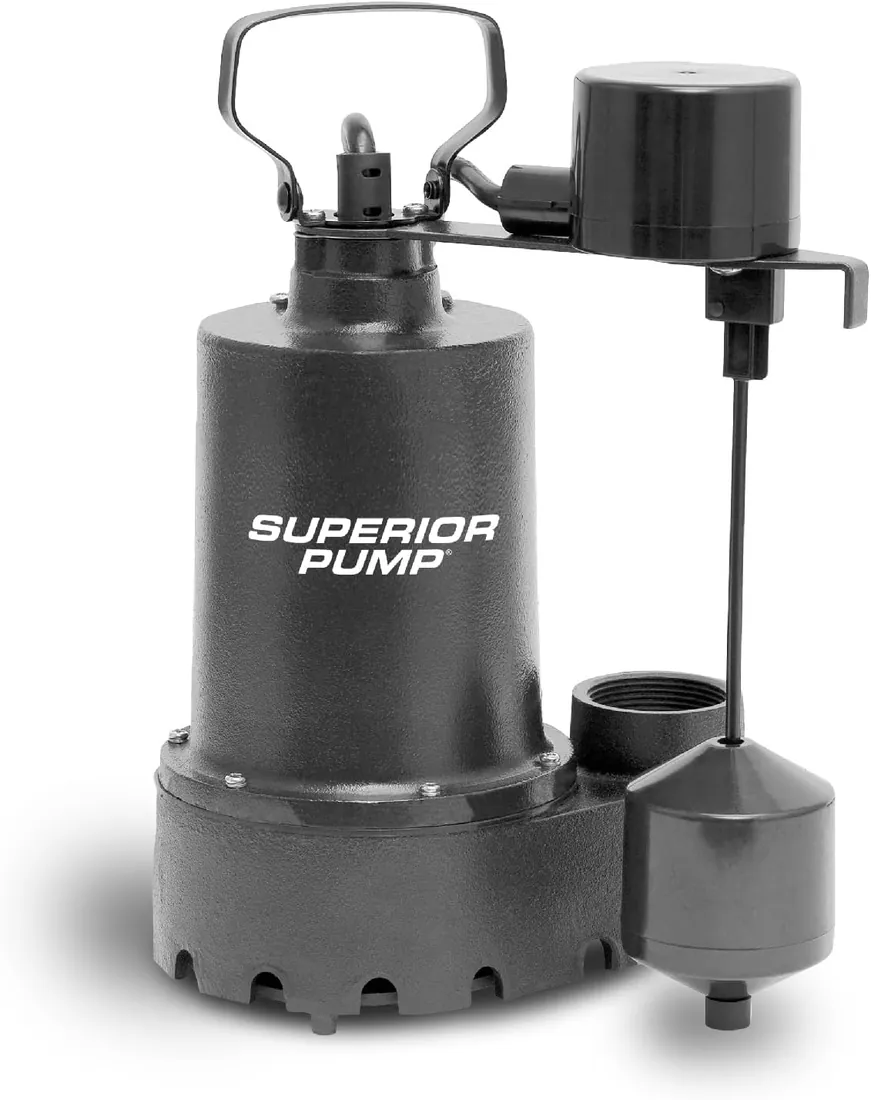
Superior Pump 92341 Cast Iron Sump Pump
1/3 HP cast iron pump with a piggyback vertical switch at 6 in on and 2 in off.
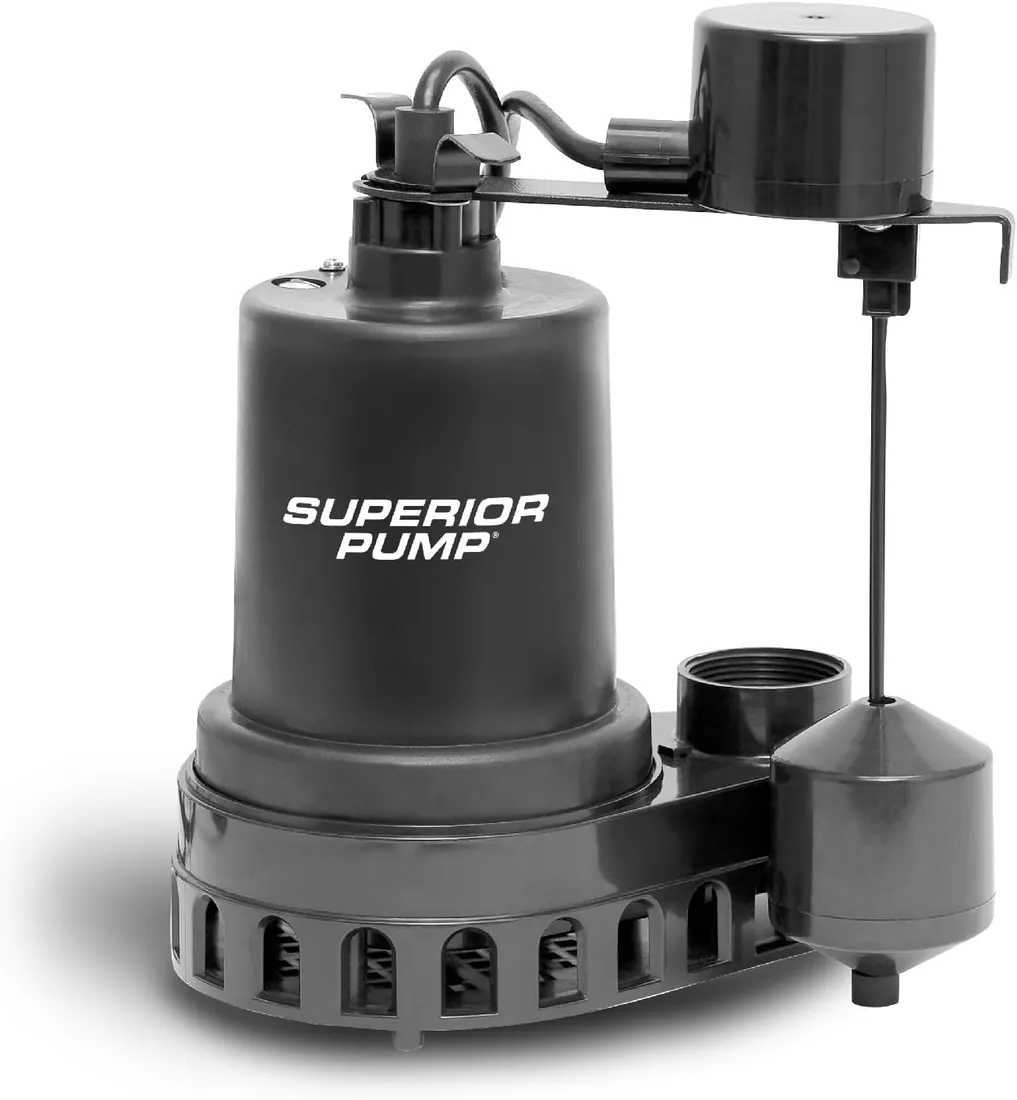
Superior Pump 92572 Half-Horsepower Sump Pump
1/2 HP thermoplastic model that shares the same switch style.
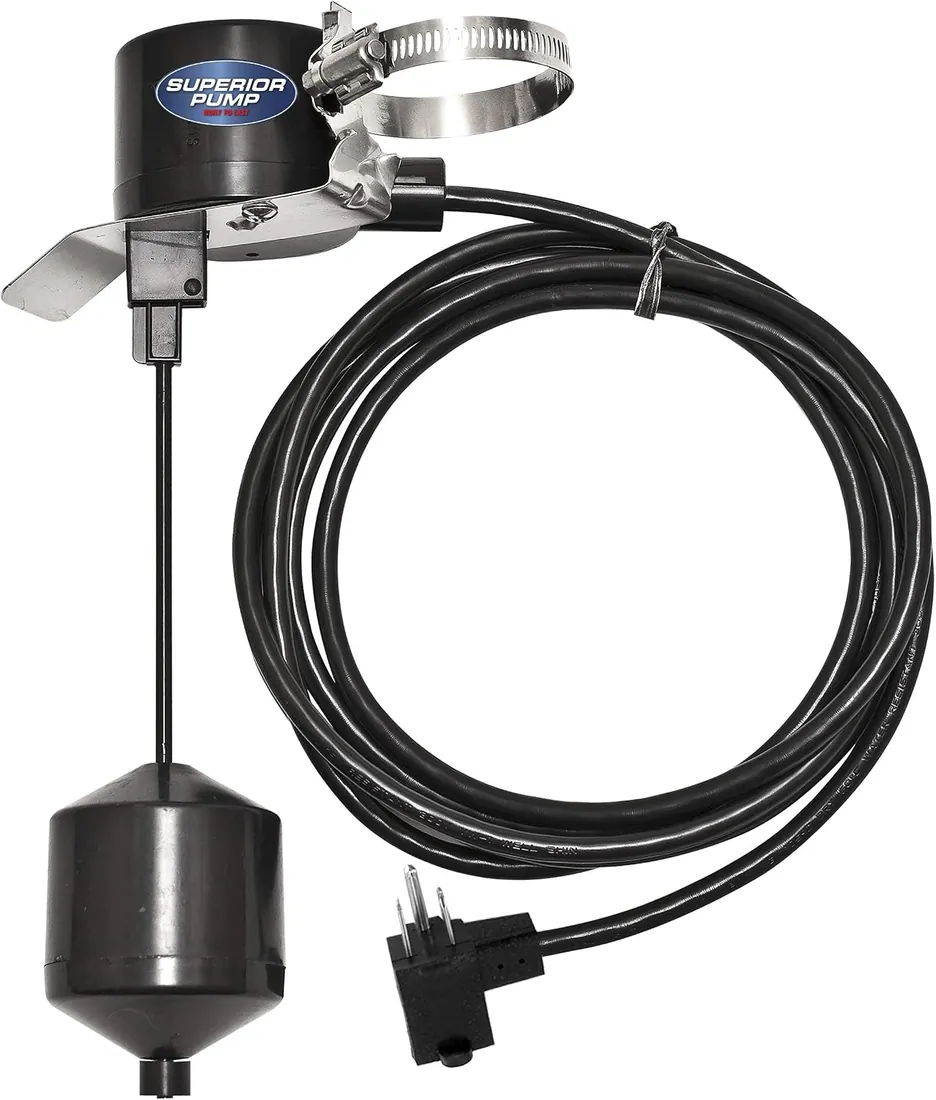
Superior Pump 92010 Vertical Float Switch
Plug-in replacement vertical switch rated 10 A at 120 V.
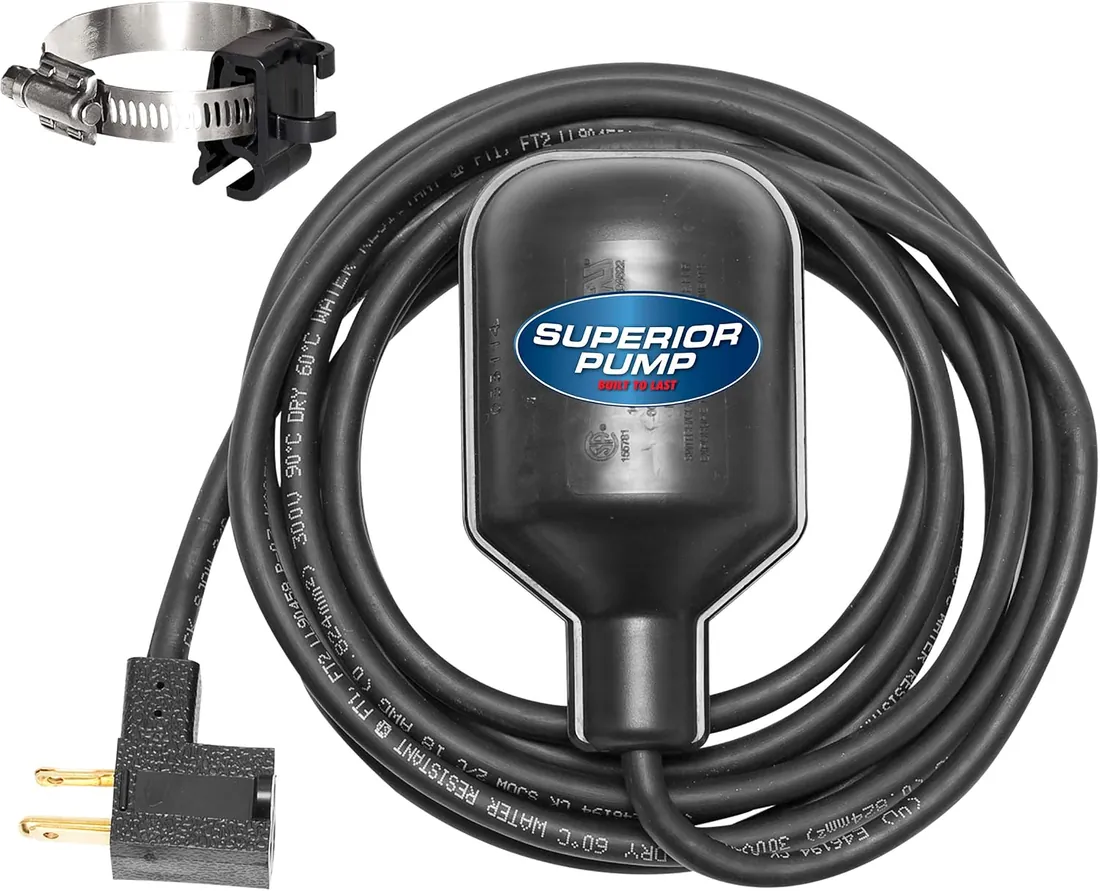
Superior Pump 92005 Tethered Float Switch (25 ft)
Tethered piggyback switch for longer pump cycles in a wide basin.
Questions readers ask
Where is the reset button on a Superior pump?
There isn't one. Superior's motors have an automatic resetting thermal protector, and the manual's instruction for a tripped protector is to let the pump cool so it resets itself. If it keeps tripping, look for a jam, low voltage or very warm water.
How do I know if my Superior float switch is bad?
Plug the pump directly into the outlet, bypassing the piggyback plug. If the pump runs, the motor is healthy and the switch is the fault. Check that the float isn't jammed before replacing it with a 92010 or a matching switch.
Why does my Superior pump hum but not pump?
Superior lists a clogged intake screen, an airlock, a frozen or blocked discharge, and a check valve stuck closed or fitted backward. Clear the airlock hole with a paper clip and look at the check valve's flow arrow first.
What does the 92010 float switch fit?
It is a piggyback switch, so it works with any 120 V pump that has a standard plug and draws no more than its 10 A rating. That covers Superior's own sump pumps, including the 1 HP 92151.