Most people searching for a sump pump need one of a handful of things: a dependable all-rounder, a pump for a gritty pit, something light enough to carry, a budget-friendly plastic model or a heavy hitter with a long warranty. This list picks one pump for each of those jobs instead of five versions of the same pump.
Every pick switches itself on and comes with maker-published switch levels and warranty terms. For narrower shortlists, see the basement list, the cast iron list and the 1/3 HP list.
- Qualifies if
- Automatic operation out of the box.
- Switch levels published by the maker.
- A warranty term stated by the maker.
- Primary sump duty named by the maker.
- On the list
- 5 pumps
The picks
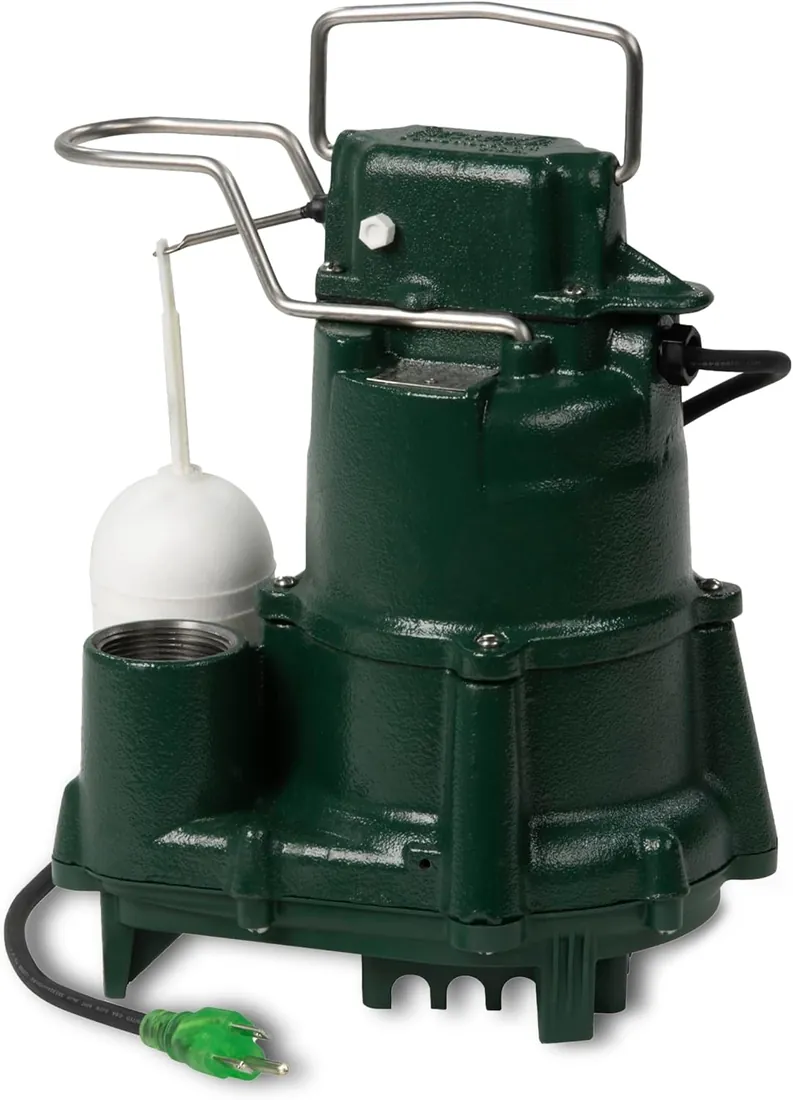
Zoeller M98 Flow-Mate Sump Pump
Best for: Most basements, including wet ones
The M98 combines a cast iron cap, motor housing and pump housing with a 1/2 HP split-capacitor motor, so it has headroom for storms without being oversized for an ordinary pit. Zoeller rates it at 72 GPM and 23 ft of shut-off head and supplies the automatic version with an LED plug. A three-year warranty applies.
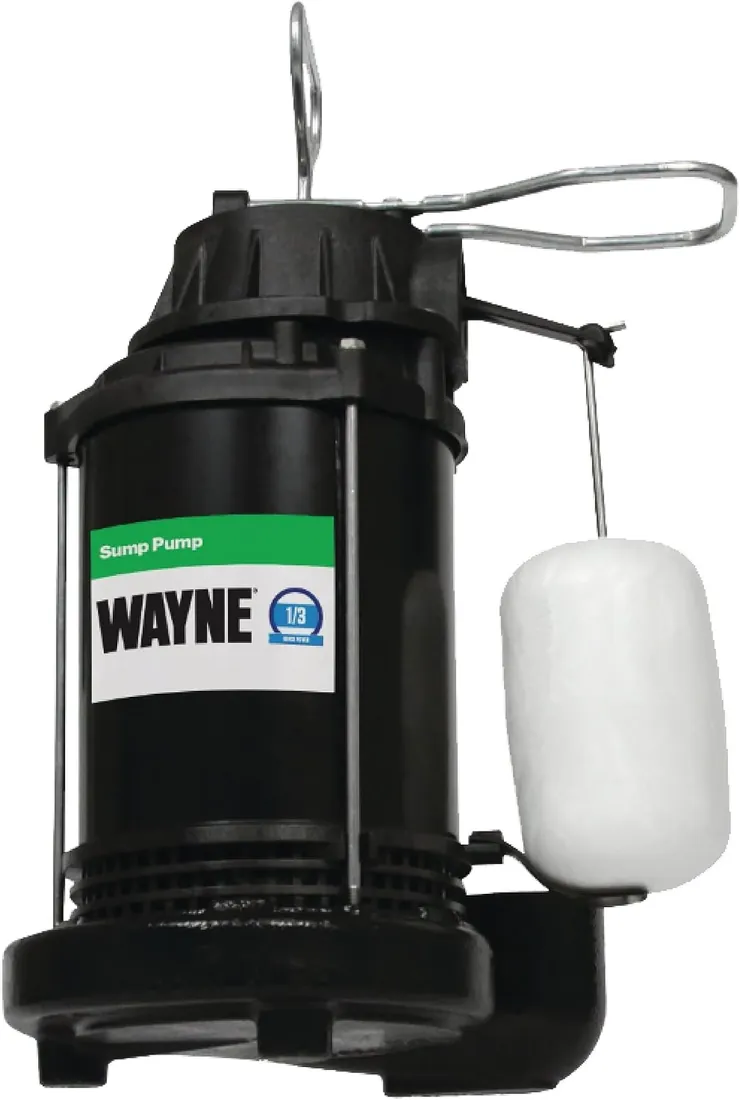
Wayne CDU790 Sump Pump
Best for: Pits with sand, silt or gravel
Wayne's top-suction intake keeps the CDU790 drawing from above the debris layer, and the maker says the design also avoids air lock. This 1/3 HP pump is listed at 4,600 GPH with no lift and 2,220 GPH at 15 ft. Its integrated vertical float needs only an 11 in basin.
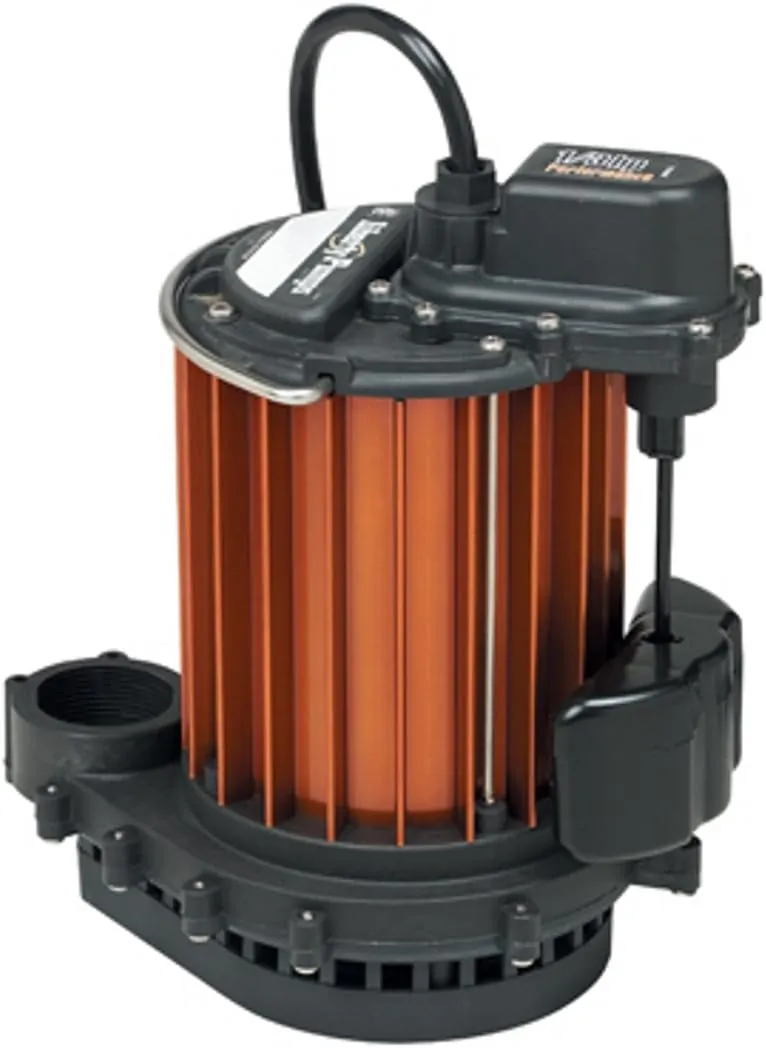
Liberty Pumps 237 Sump Pump
Best for: Crawl spaces and owners who lift the pump out
At 11 lb, the 237 is the lightest pump here with a full 1/3 HP motor. Its powder coated aluminum housing and polypropylene parts cannot rust, and the vortex impeller passes 3/8 in solids. Liberty allows a 10 in sump and backs the pump for three years, the same term as its cast iron models.
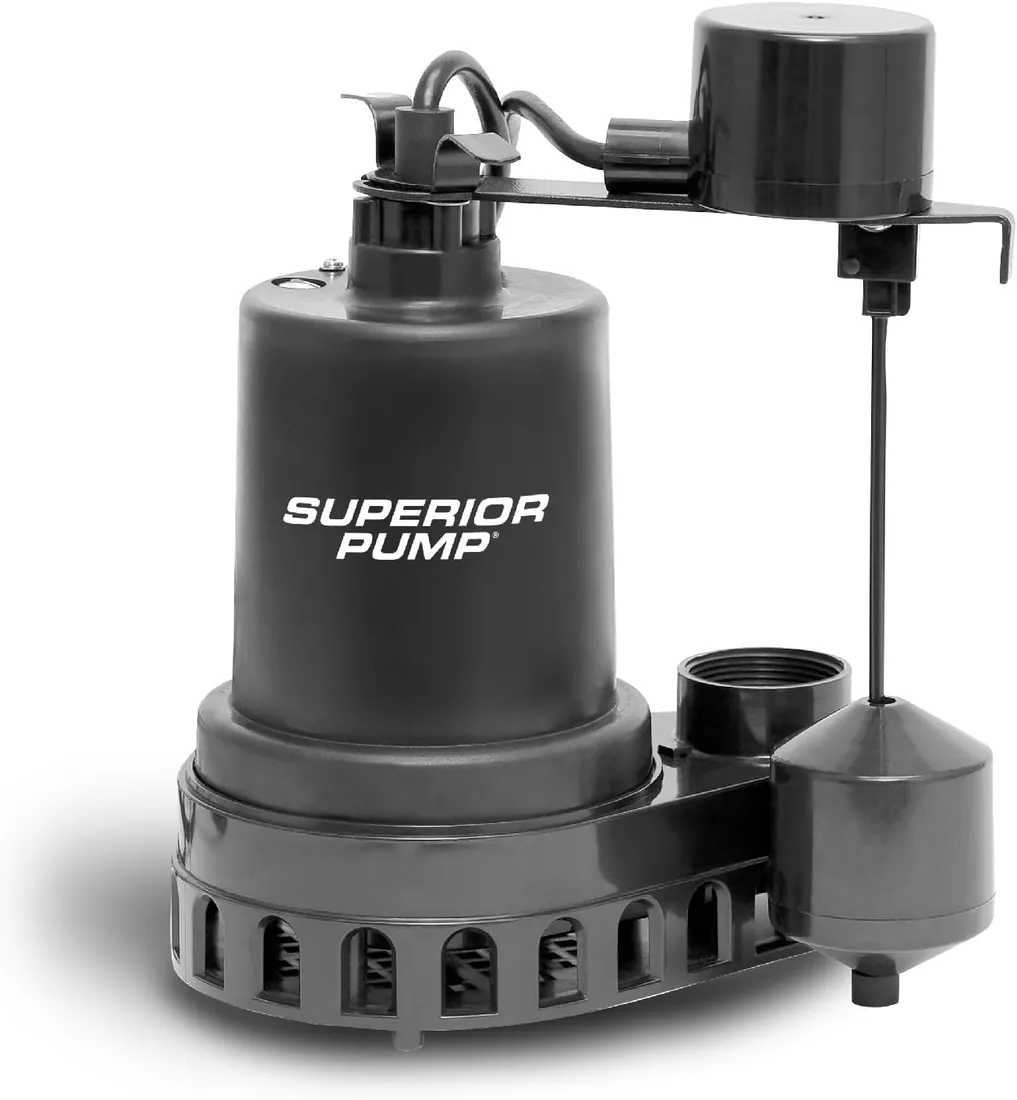
Superior Pump 92572 Half-Horsepower Sump Pump
Best for: Lighter duty at a lower outlay
Superior's 92572 pairs a fiberglass reinforced thermoplastic body with a stainless steel impeller and a 1/2 HP motor, rated for 3,300 GPH at no lift and 2,520 GPH at 10 ft. It weighs 11.8 lb and carries a three-year warranty, longer than the one year Superior gives its smaller plastic pumps.

Wayne CDU980E Sump Pump
Best for: Wet basements where a long warranty matters
The CDU980E moves to a 3/4 HP motor in a stainless steel housing over a cast iron volute, with 85 GPM at 5 ft on Wayne's sell sheet. It keeps top suction and the 9 in on, 4 in off vertical float. Wayne covers it for five years, the longest term among these five picks.
Side by side
| Pump | Power | Build | Switch | Weight | Warranty |
|---|---|---|---|---|---|
| Zoeller M98 Flow-Mate Sump Pump | 1/2 HP | Cast iron | Built-in float | Not stated on the data sheet | 3 years |
| Wayne CDU790 Sump Pump | 1/3 HP | Coated steel, cast iron volute | Integrated vertical float | 22 lb | 3 years |
| Liberty Pumps 237 Sump Pump | 1/3 HP | Aluminum and polypropylene | Vertical magnetic float | 11 lb | 3 years |
| Superior Pump 92572 Half-Horsepower Sump Pump | 1/2 HP | Reinforced thermoplastic | Vertical piggyback float | 11.8 lb | 3 years |
| Wayne CDU980E Sump Pump | 3/4 HP | Stainless steel, cast iron volute | Integrated vertical float | 22 lb | 5 years |
Figures: Zoeller technical data sheet FM2779, Model 98; Zoeller installation instructions FM2676, three-year warranty; Wayne coated steel sump pump sell sheet, CDU790 and CDU800; Liberty Pumps 230-Series sales literature; Liberty Pumps installation manual 7108000, 230 and 450 series; Superior Pump 92572 product page and technical data; Wayne stainless steel sump pump sell sheet, CDU980E and CDU1000.
How the list was narrowed
All of the primary sump pumps on this site with maker documents were grouped by build: cast iron, coated or stainless steel, aluminum and thermoplastic. From each group the strongest candidate for a specific household need was kept, judged on flow at a working lift, switch design, weight and warranty. A pump could not take a slot that another pick already filled better.
Who should skip this list
This list is for primary pumps that sit in a pit full time. If your concern is a power cut, start with a battery backup system. Sewage from a basement bathroom needs an ejector, and draining a flooded room or a pool cover calls for a portable utility pump.
Final recommendation
Pick by the pit, not the brand. A normal basement is well served by the M98, a gritty one by the CDU790. Choose the Liberty 237 when weight or rust is the worry, the Superior 92572 for lighter duty, and the CDU980E when you want the most motor and the longest warranty in one pump.
Questions readers ask
What is the best type of sump pump for a house?
A submersible pump with a cast iron or metal housing suits most homes because it sits quietly in the pit and sheds heat into the water. Pedestal pumps suit very narrow pits, and thermoplastic pumps suit lighter duty.
How long do sump pumps last?
It depends on how often the pump runs and how clean the pit is. The warranty gives a floor: three years for most picks here and five for the Wayne CDU980E. Regular checks of the switch and the check valve matter more than the brand.
Should a sump pump have a vertical or tethered float?
A vertical float suits narrow pits because it moves straight up and down. A tethered float needs room to swing but gives a longer run per cycle. Every pick here uses a built-in or vertical float that fits ordinary pits.
What horsepower sump pump should I buy?
Size from your lift and how fast the pit fills, not from the motor alone. Many homes do well with 1/3 HP. Choose 1/2 HP for heavy inflow or a taller climb, and look at 3/4 HP only for very wet sites. The sizing calculator turns your pipe run into a total head to compare against each curve.
Do I need a backup pump as well?
If a flooded basement would be costly, yes. Every primary pump stops when the power fails or the switch sticks, and storms often bring both. A battery backup in the same pit, or a water-powered unit where city water pressure allows, covers the hours when the primary cannot run.