If the booster will not start, check power, the breaker or GFCI and the inlet supply. If a failure or dry-running light is on, the pump has seen no water: restore the supply, prime it and press reset. If it starts and stops on its own with every tap closed, look for a leak or a check valve that will not seal.
How an automatic booster decides to run
Modern boosters start on falling pressure or rising flow and stop shortly after flow ends. Simer's 3075SS describes its controller in these terms: the pump restarts when flow exceeds 1/4 GPM or pressure drops below the starting point, and runs until several seconds after flow stops, a delay that prevents rapid cycling when taps open and close. The same controller watches for run-dry, frequent starts caused by small leaks, and pressure drop.
Grundfos's SCALA2 works similarly but reports faults through its indicator lights and numbered alarms. Knowing which design you have tells you where to look: a light on the controller, or the wiring and switch on an older pressure-switch booster.
The pump will not run
Start with power. Simer lists a blown fuse, a tripped breaker and an unplugged cord, and requires a grounded, GFCI-protected 115 V outlet for the 3075SS. Grundfos lists power supply failure and voltage outside the nameplate range first. If the motor only hums or runs hot and trips its overload, Simer points to low voltage or an impeller that cannot turn freely.
After a long idle period a pump may stick. Grundfos names a seized shaft seal and impurities blocking the pump among SCALA2 faults that do not reset automatically, and refers owners to its procedure for starting after standstill. If the overload on a Simer motor trips repeatedly, Simer says to look for the cause, such as low voltage or a clogged impeller, rather than just waiting for it to reset.
- Check the breaker, GFCI and plug.
- Confirm voltage at the outlet matches the nameplate.
- Unplug and check the impeller or shaft turns freely.
- Read the controller lights before pressing reset.
Failure or dry-running lights: no water at the inlet
Boosters protect themselves from running dry. On the Simer 3075SS, if the pump starts and sees no flow and no pressure rise, it stops after several seconds and lights its failure LED. Restore the supply, make sure the suction is open, and hold the restart button for 5 seconds. On the SCALA2, dry running means the pump was not primed and must be primed and reset by hand, while a water shortage triggers automatic retries: eight restarts at five-minute intervals, then another cycle after 24 hours.
Check the obvious first: a closed inlet valve, a clogged filter, or a well pump that is not keeping up. Simer warns that its booster must have at least 10 psi and no more than 50 psi at the inlet. Air leaks on the suction side also stop priming; Simer notes that a leak can draw air in although no water leaks out.
| Item | Simer 3075SS | Grundfos SCALA2 |
|---|---|---|
| Inlet pressure | 10 to 50 psi | Not stated in this summary |
| Dry-run response | Stops, failure LED on | Alarm; prime and reset manually |
| Reset | Hold restart 5 seconds | Press reset after clearing the cause |
| Relief valve | Full flow at 100 psi | Per local code |
Figures: Simer 3075SS automatic booster pump owner's manual 253P7930; Grundfos SCALA2 installation and operating instructions.
Cycling on and off with taps closed
A booster that starts by itself every few minutes is usually reacting to a pressure loss in the house. Simer warns that if you boost a well system, the system check valves must be tight; if pressure drops while the well pump is idle, the booster may start and cycle, and rapid cycling can damage the motor and void the warranty. Grundfos lists leakage from the pipe system, a non-return valve held open by debris, and small continuous use such as a dripping tap.
The SCALA2 can catch this itself. With its anti-cycling function off, it raises an alarm when it starts 40 times in a fixed pattern but keeps running; switched on, it stops and shows alarm 3 for leakage. A maximum runtime option stops the pump after 30 minutes of continuous running and shows alarm 6, which must be reset by hand.
Running but pressure is still low
If the booster runs but the house pressure barely improves, Simer's chart lists a pump short of water at its inlet, piping that is too small, corroded pipes and low voltage. The 3075SS uses 1 in NPT ports, and Simer says anything smaller will cut performance and can damage the pump through cavitation. A clogged filter on the discharge side, a partly closed valve or a frozen pipe also appear in its list.
Boosters cannot create water the supply does not have. If the inlet pressure is low because the well pump or the street main is weak, fix that first. For upgrades, compare the Simer 3075SS with the Grundfos SCALA2 3-45 and other picks on the water pressure booster list.
Common mistakes
- Pressing reset repeatedly without restoring the water supply.
- Using pipe joint compound on a Simer controller, which damages it.
- Boosting a well system with a leaking check valve.
- Piping the pump with lines smaller than its ports.
- Installing without a relief valve on the discharge.
Products that fit
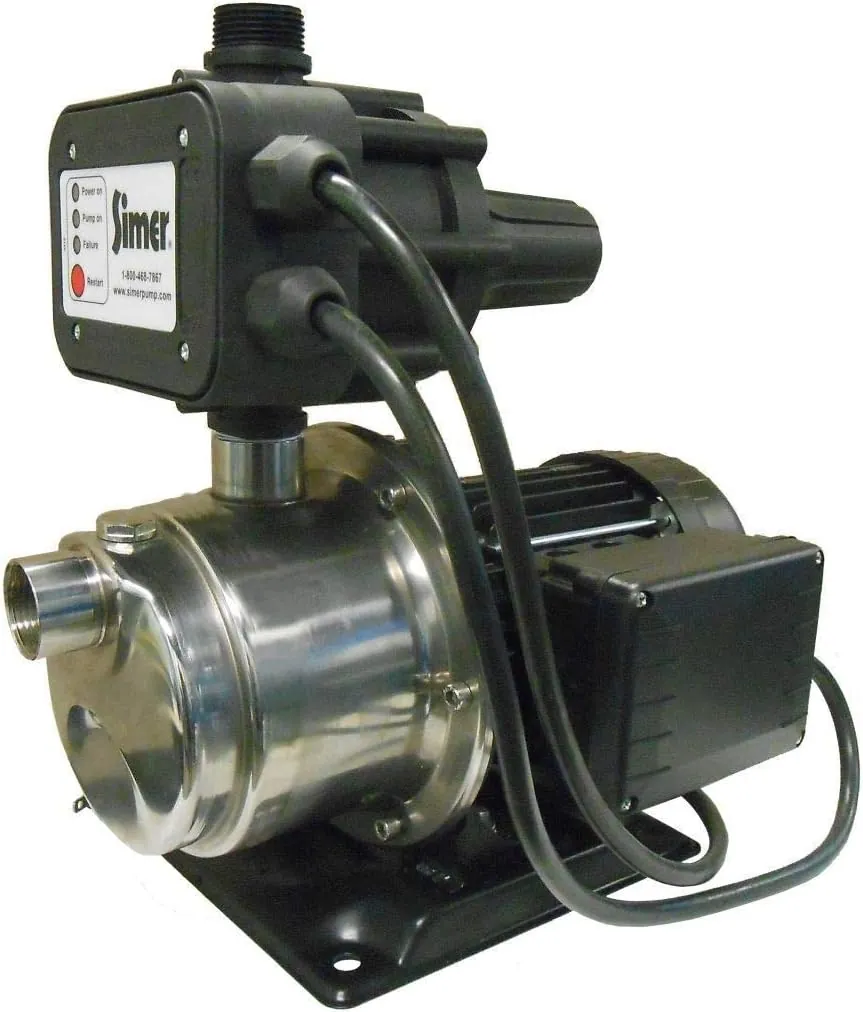
Simer 3075SS Pressure Booster Pump
Simer automatic booster with a controller that guards against dry running and leaks.
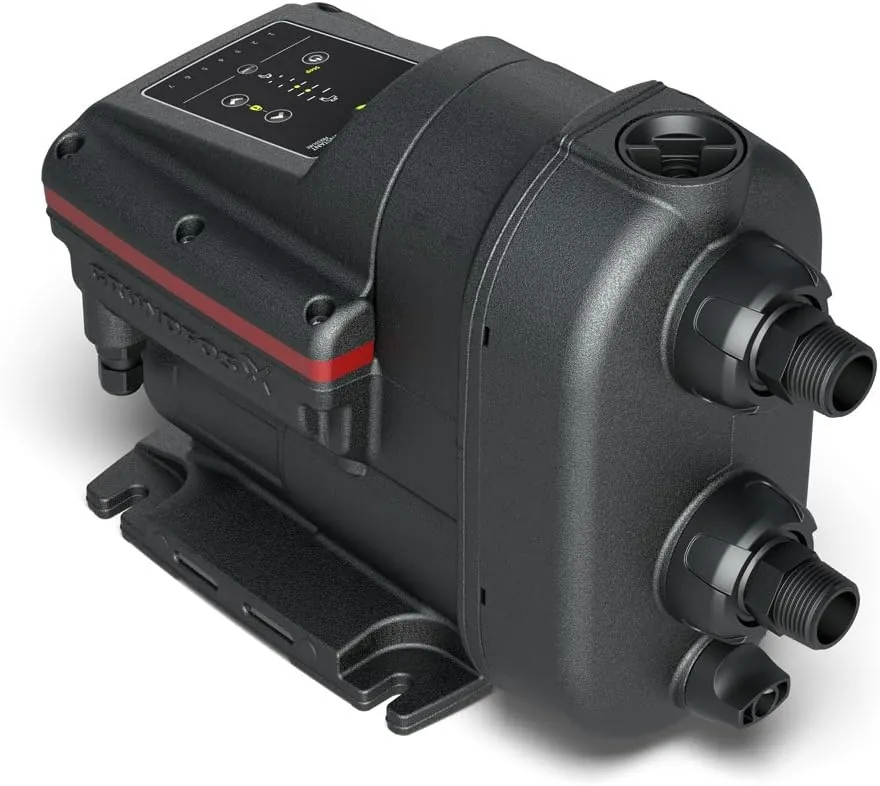
Grundfos SCALA2 3-45 Booster Pump
Grundfos booster with numbered alarms, auto reset and optional anti-cycling.
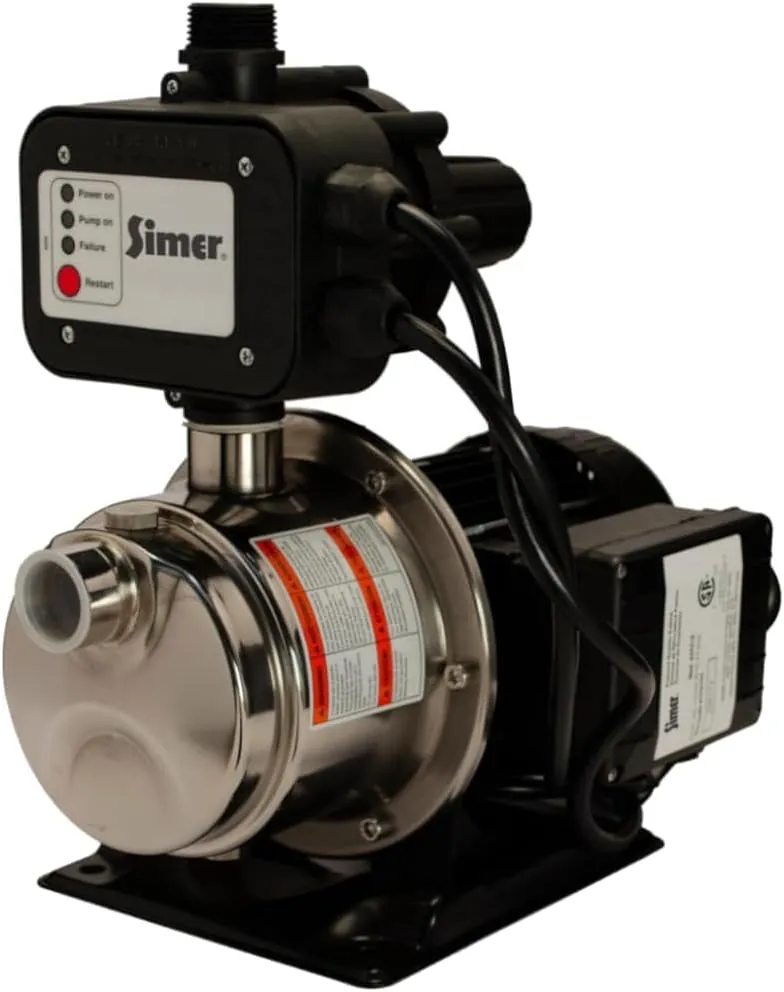
Simer 4075SS Pressure Booster Pump
Simer's higher-output booster for homes that need more flow than the 3075SS.
Questions readers ask
Why does my booster pump keep turning on and off?
Usually a leak or a check valve that does not seal lets pressure fall, so the pump restarts. Close every tap and watch for pressure loss. Simer and Grundfos both list leaks and faulty non-return valves for this symptom.
How do I reset a booster pump?
Fix the cause first. On the Simer 3075SS, hold the restart button for 5 seconds. On the Grundfos SCALA2, press the reset button; some faults clear automatically if auto reset is on, but dry running needs priming and a manual reset.
Why is my booster pump running but not increasing pressure?
Not enough water is reaching it, the piping is undersized or corroded, a filter is clogged, or voltage is low. Check inlet pressure and pipe size against the manual before replacing the pump.
Can a booster pump run dry?
No. Simer warns that running dry can damage the impeller and seal and voids the warranty. Both Simer and Grundfos boosters stop and signal a fault when they detect no water.