With power off, look for burned or pitted contacts and check the settings against the tank precharge. With power on, a qualified person can read the terminal voltage. If voltage reaches the line side but not the load side when pressure is below cut-in, the switch has failed. A pump that will not shut off may instead be fighting low voltage, a leaking drop pipe or a low well.
What the switch does and how it is set
A diaphragm in the switch senses water pressure. When pressure falls to the cut-in point, the contacts close and power the pump; at cut-off they open. Pentair's instructions describe the usual design: a 20 PSI gap between cut-on and cut-off, adjustable on one-post or two-post switches. On a two-post switch the large nut moves both settings together and the small nut moves only the cut-off.
Pentair also sets the limits. A standard switch should never cut on below 20 PSI or cut off above 60 PSI, and the cut-off must sit at least 5 PSI below the pressure the pump makes against a closed valve. Square D's 9013FSG2J24, a 40/60 switch, has an adjustable differential and double-pole contacts that open both power legs.
| Switch | Cut-in | Cut-off | Tank precharge |
|---|---|---|---|
| 20/40 | 20 PSI | 40 PSI | 18 PSI |
| 30/50 | 30 PSI | 50 PSI | 28 PSI |
| 40/60 | 40 PSI | 60 PSI | 38 PSI |
Figures: Flotec owner's manual FP874, 4 in submersible pumps; Pentair instructions U80-129, adjusting well pump pressure switches.
Pump will not start
Red Lion's jet pump guide lists two causes for a motor that will not start: no power reaching the pressure switch because of blown fuses, open switches or loose connections, and a pressure switch that has not closed. Its submersible guide adds a step-by-step voltage check: full voltage at the fuse box, voltage passing through the pressure switch terminals, then voltage at the control box or disconnect.
That middle step is the test of the switch. If the gauge shows pressure below cut-in and power reaches the line terminals but not the load terminals, the contacts are not closing. Contacts that are pitted, burned black or welded shut mean the switch should be replaced, not cleaned. Insects and corrosion inside the cover can also stop the contacts from meeting.
- Read the pressure gauge to confirm pressure is below cut-in.
- Switch the breaker off and remove the switch cover.
- Look for burned contacts, loose wires and debris.
- Have a qualified person check voltage at the line and load terminals.
- Replace the switch if power stops at the contacts.
Pump will not shut off
When a pump runs on and on, the switch is only one suspect. Red Lion's submersible chart lists four causes under a pressure switch that fails to shut off the pump: low voltage that slows the motor so it cannot reach cut-off pressure, a faulty switch, a leaking drop pipe, and a well level that falls too far while the pump runs.
The gauge helps decide. If pressure climbs past the cut-off setting and the pump keeps running, the contacts are stuck closed; switch off power right away and replace the switch. If pressure stalls below cut-off, the switch is doing its job and the pump cannot build pressure. Then the cause is the voltage, the pipe, a worn pump or the water supply. For jet pumps on driven wells that run low, Red Lion suggests a low-pressure cut-off switch that stops the pump when pressure collapses.
Chattering and rapid clicking
A switch that clicks on and off in quick bursts is usually reacting to pressure swings rather than failing. A tank without enough air, a switch mounted far from the tank and settings squeezed too close together all cause it. Red Lion and Flotec want the switch within one foot of the tank. Amtrol explains why: friction and height between tank and switch make the switch bounce.
Check the tank precharge before adjusting anything, with the system drained. Then confirm the differential. If someone has turned the small cut-off nut down so the gap is only a few PSI, restore the factory range. The short cycling guide covers the tank and leak checks in detail.
Adjusting or replacing the switch
Pentair gives the arithmetic: each full clockwise turn of the main nut raises both settings by 2 1/2 PSI, so four turns add 10 PSI. Turn counterclockwise to lower. Change the cut-off alone only if you understand the pump's limits, and reset the tank precharge to 2 PSI below the new cut-in afterwards. Amtrol cautions that a tank in service should not be pumped up if it has lost air or shows corrosion.
Replacement switches are simple to match. Copy the range from the old switch, usually 30/50 or 40/60, and the voltage. The Square D FSG2J21CP covers the common 30/50 setting, and the Telemecanique 9013FSG2J24 is the 40/60 version. Wire the incoming power to the line terminals and the pump to the load terminals, as Red Lion's jet pump manual shows, and keep the ground connected.
Common mistakes
- Opening the switch cover with the breaker still on.
- Filing pitted contacts instead of replacing the switch.
- Raising the cut-off above what the pump can reach, so it never stops.
- Changing switch settings without resetting the tank precharge.
- Blaming the switch when low voltage keeps the pump from reaching cut-off.
Products that fit
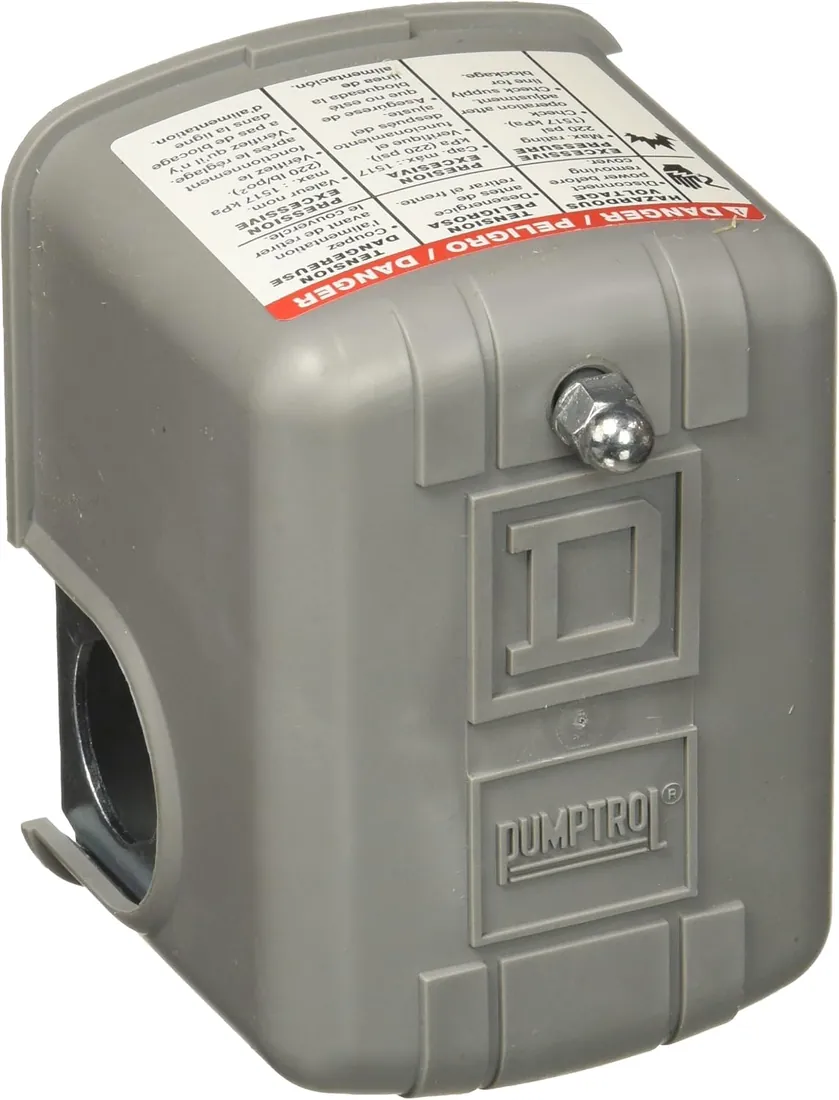
Square D FSG2J21CP 30/50 PSI Pressure Switch
Square D Pumptrol replacement for the common 30/50 setting on household wells.
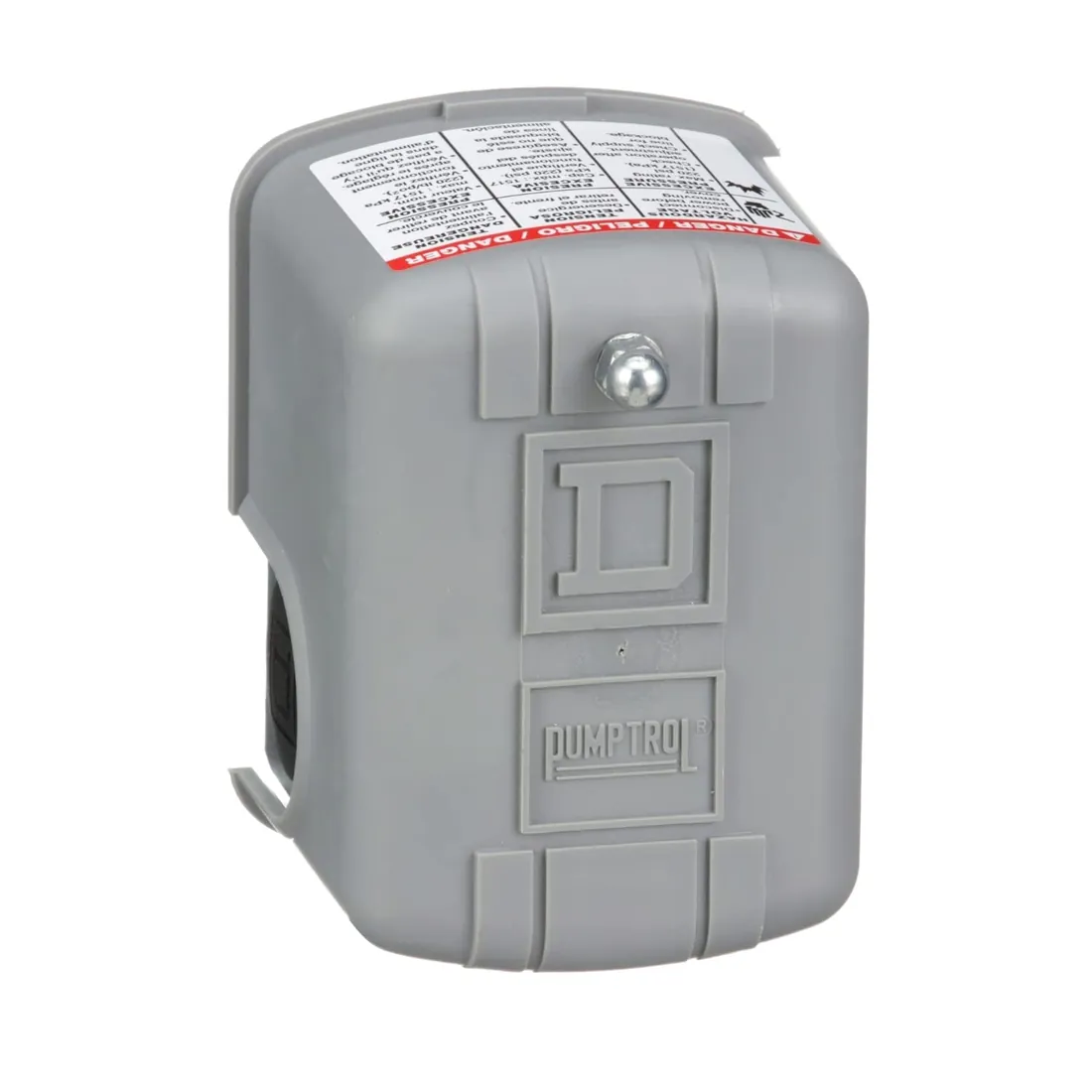
Square D 9013FSG2J24 40/60 PSI Pressure Switch
Factory-set 40/60 switch with an adjustable differential and double-pole contacts.
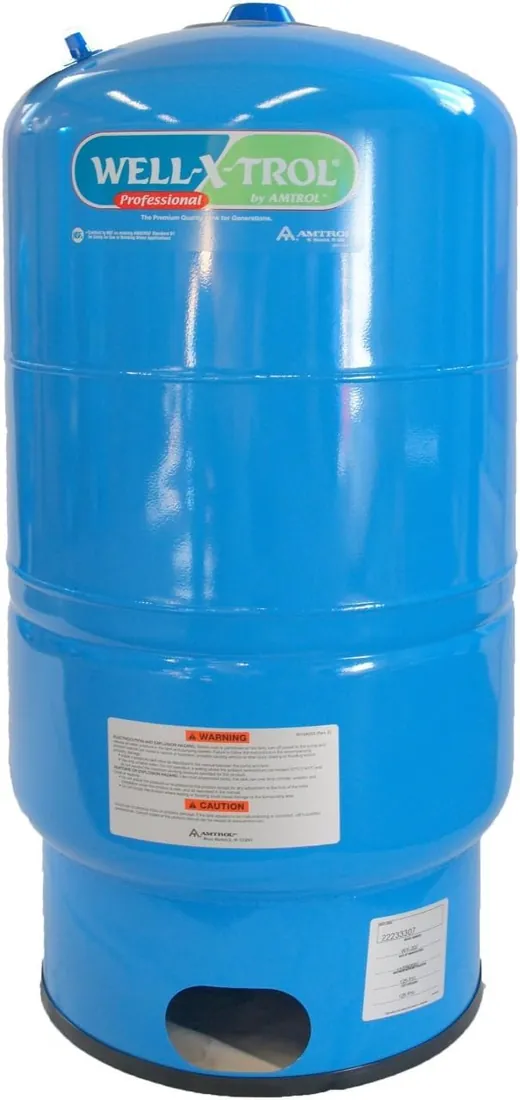
Amtrol WX-202 Well-X-Trol Pressure Tank
Bladder tank to pair with a new switch when the old tank has lost air.
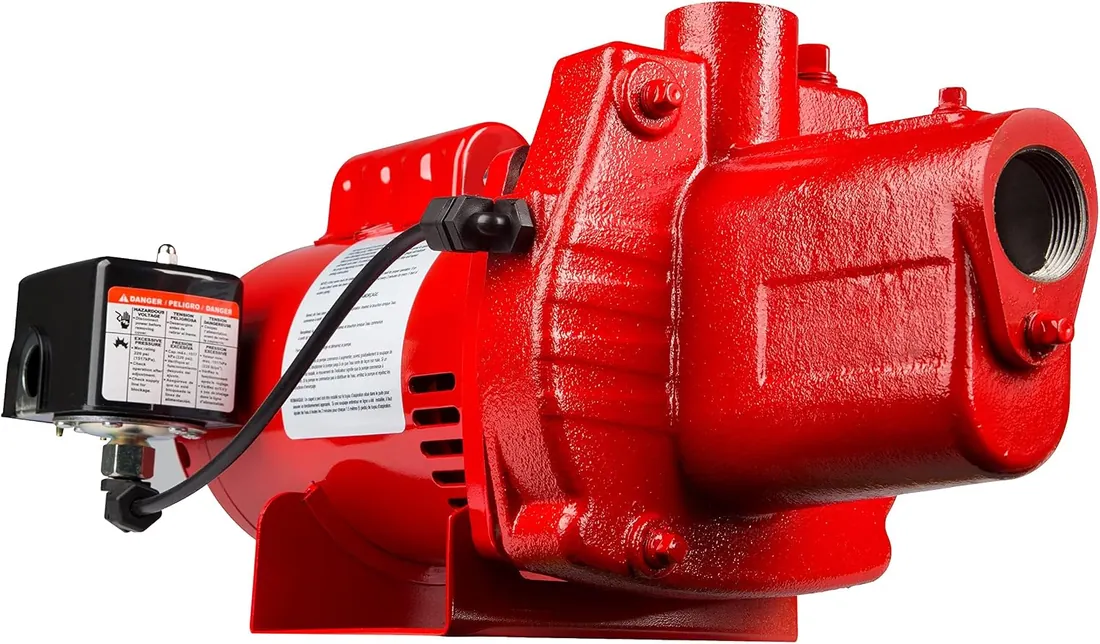
Red Lion RJS-50-PREM Shallow Well Jet Pump
Shallow well jet pump whose switch Red Lion wires line to L1 and L2.
Questions readers ask
How do I know if my well pressure switch is bad?
If pressure is below cut-in, power reaches the switch, and the pump still does not start, the contacts are not closing. If pressure rises past cut-off and the pump keeps running, they are stuck closed. Burned or pitted contacts confirm it.
Can I adjust my well pump pressure switch?
Yes. Turning the main nut clockwise raises both settings about 2 1/2 PSI per turn, per Pentair. Keep cut-on at 20 PSI or more and cut-off at 60 PSI or less on standard switches, and reset the tank precharge to match.
Why does my pressure switch click on and off rapidly?
Usually the tank has lost its air charge, the switch is too far from the tank, or the gap between settings is too narrow. Check the precharge with the system drained before replacing anything.
What pressure switch setting is best for a well?
Most homes use 30/50 or 40/60. The pump must be able to exceed the cut-off by at least 5 PSI, and the tank precharge should be 2 PSI below cut-in.