Unplug the pump so it does not run against the blockage, keep the pit down with a utility pump and temporary hose, then thaw the outdoor pipe with warm water or gentle heat. To stop it happening again, slope the outdoor run downhill so it drains after every cycle, remove dips that hold water, and end it where snow cannot bury it.
Signs the line is frozen
The classic sign is a pump that runs and runs while the pit level barely moves, often with a strained hum. Liberty's troubleshooting table lists exactly that symptom, a pump that runs or hums but does not pump, and tells owners to check the discharge line for ice where it passes through cold areas. Little Giant lists frozen water in the discharge hose both as a reason a pump will not shut off and a reason it runs without moving water.
Outside, look at the end of the pipe. No water coming out during a run, an ice plug at the outlet, or a mound of ice built up around it all point to the same problem. A pump that keeps running against a blocked line can trip its thermal overload and restart over and over, which Wayne treats as a sign of an obstruction in the discharge pipe.
What to do right now
Protect the pump first. Unplug it so it is not running dead-headed against ice, and keep the pit from overflowing by another route. A portable utility pump with a garden hose, run out a door or window to a spot that drains away from the house, can hold the level down while you work on the frozen line. Lay the hose so it drains completely when you are done, or bring it inside, so it does not freeze too.
Many outdoor discharge lines have a removable section near the house wall. If yours does, disconnecting it lets water spill out at the wall as a short-term emergency outlet, though you should restore the full run as soon as possible so water does not soak back to the foundation.
- Unplug the sump pump before touching anything.
- Lower the pit with a utility pump and temporary hose.
- Find the frozen section, usually the lowest point or the outlet.
- Thaw it with warm water or gentle heat, never an open flame.
- Plug the sump pump back in and watch water reach the outlet.
Thawing the pipe safely
Ice almost always forms where water sits: at the outlet, in a dip or sag along the run, or in a flexible extension lying on the ground. Pour warm (not boiling) water over that section, wrap it in a towel soaked in hot water, or use a hair dryer or heat gun on its lowest setting, keeping the heat moving. PVC softens with too much heat, so go slowly. Never use a torch.
Once water runs, clear any slush from the outlet and check the whole outdoor run for low spots that still hold water. If the line is buried and frozen deep below ground, it may need to wait for a thaw or a plumber with a pipe-thawing tool; in that case keep the temporary outlet running and an eye on the pit.
Stopping it from freezing again
Slope is the single most important fix. Wayne's manual says that if the discharge line is exposed to freezing temperatures, the pipe must run in a downward slope away from the foundation so any remaining water drains away and does not freeze. A line that stays full between cycles turns into an ice plug overnight; a line that empties after every cycle has nothing to freeze.
Match the pipe size to the pump. Liberty and Little Giant both warn against reducing the discharge below the pump outlet, and a narrow hose holds more standing water for its length. End the line where snow drifts and ice from the roof will not bury it, and keep it at least 3 ft from the foundation, the minimum Wayne gives. Buried lines should run below the frost line or slope steadily to a free outlet such as a pop-up emitter that drains back.
| Maker | Guidance |
|---|---|
| Wayne | Slope exposed pipe downward away from the foundation; carry water at least 3 ft away |
| Liberty | Check the discharge line for ice where it passes through cold areas |
| Little Giant | Frozen water in the discharge hose stops flow; thaw or replace the hose |
| Little Giant SPDK | Hose kit rated -40 °F to 110 °F |
Figures: Wayne submersible sump pump manual 600002W-001 J; Liberty Pumps installation manual 7035000R; Little Giant APCP-1700 owner's manual 998295; Little Giant sump pump discharge kit SPDK product page.
Lay-flat and flexible hoses in winter
Flexible and lay-flat hoses are useful for carrying water across a yard, and they collapse flat when empty, which helps them drain. They also sag into low spots and hold water in every dip. Little Giant's SPDK discharge kit is a 24 ft length of 1-1/4 in hose with adapters, rated down to -40 °F. That rating means the hose material survives the cold; it does not stop water inside it from freezing.
Treat a flexible extension as a seasonal or emergency part. Wayne forbids flexible hose in a permanent installation, so keep the rigid pipe through the wall and use the hose only beyond it, laid on a steady downhill slope and removed or drained when a hard freeze is forecast.
Get a warning before the pit overflows
A frozen line fails quietly at night, so an alarm is the best insurance. A high water alarm sits in the pit above the pump's on level and sounds when the pump stops keeping up for any reason, frozen pipe included. The Superior 92060 sump alarm is a simple example; Wi-Fi monitors add phone alerts.
A backup pump does not help here, because it usually shares the same discharge pipe. If freezing is a yearly problem, ask a plumber about a second, independent outlet for emergencies.
Common mistakes
- Leaving the pump running against a frozen line until its thermal protector trips.
- Using a torch or high heat on PVC discharge pipe.
- Running a flexible hose through low spots where water collects and freezes.
- Reducing the discharge to a narrow hose that stays full between cycles.
- Ending the line under a downspout or snow pile.
Products that fit
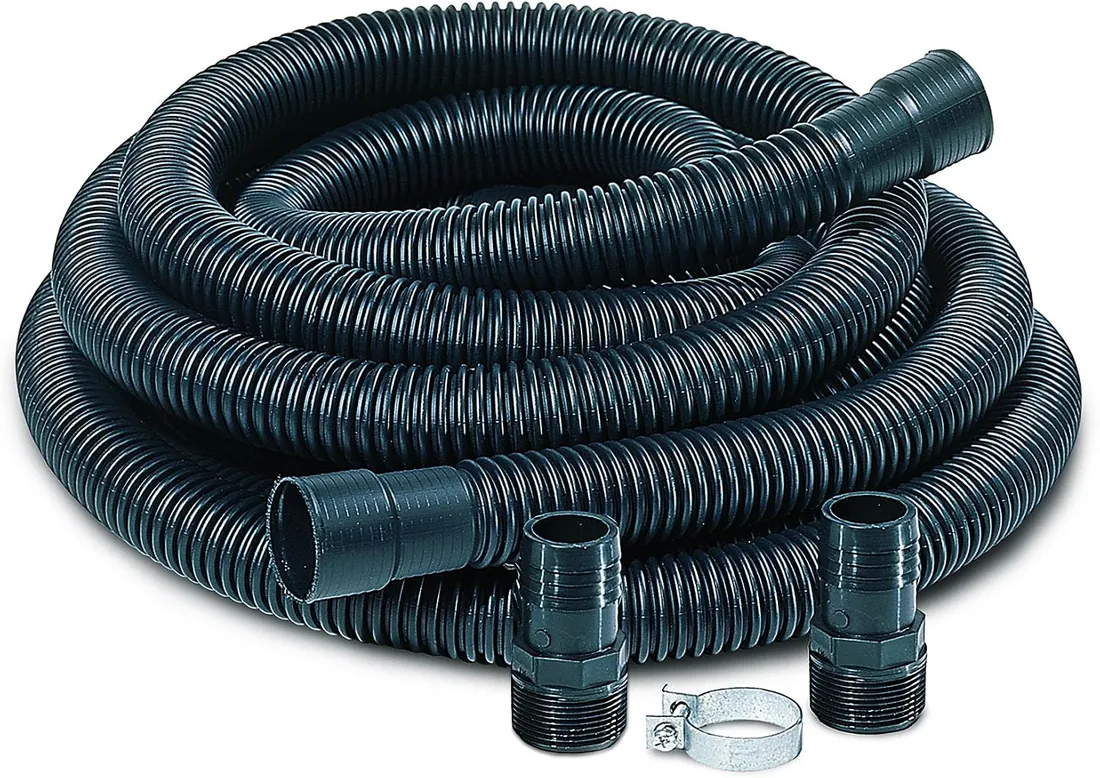
Little Giant SPDK Discharge Hose Kit
Flexible hose kit for carrying water away from the house, rated for deep cold.
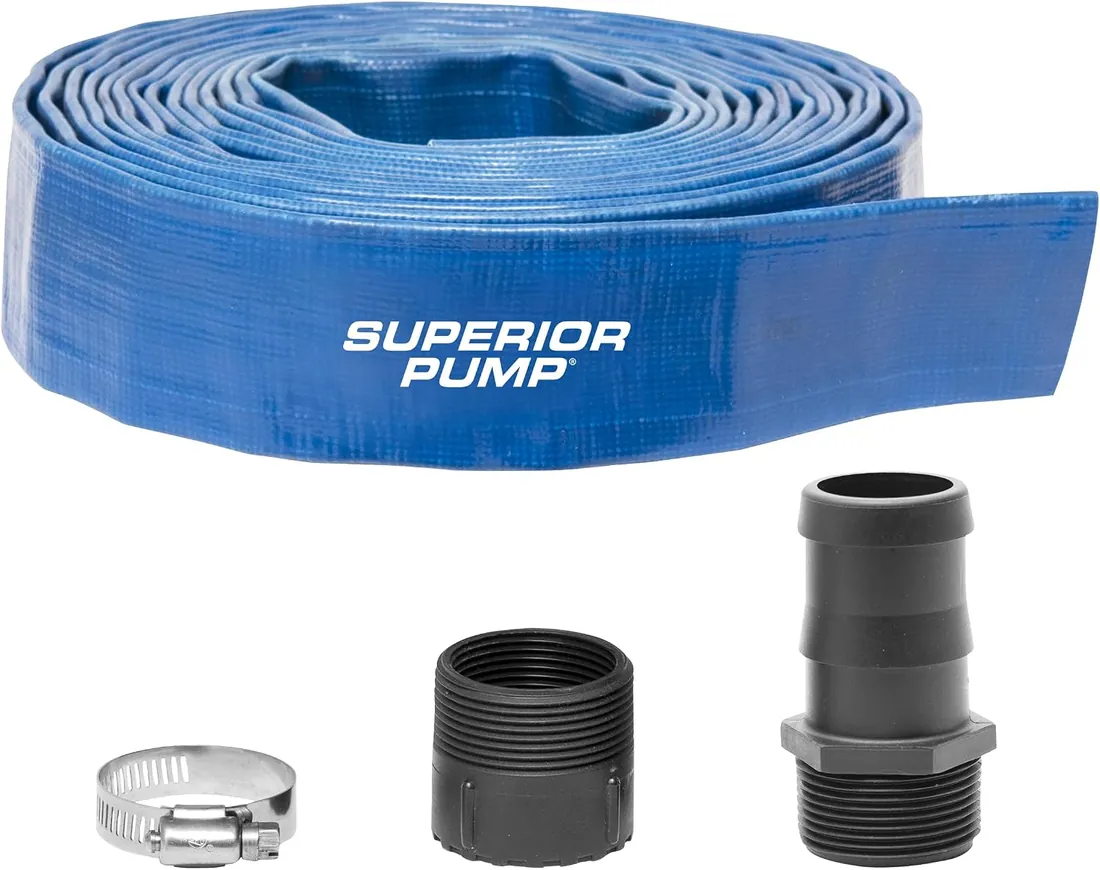
Superior Pump 99621 Lay-Flat Hose Kit
Lay-flat hose that collapses when empty and rolls up for winter storage.
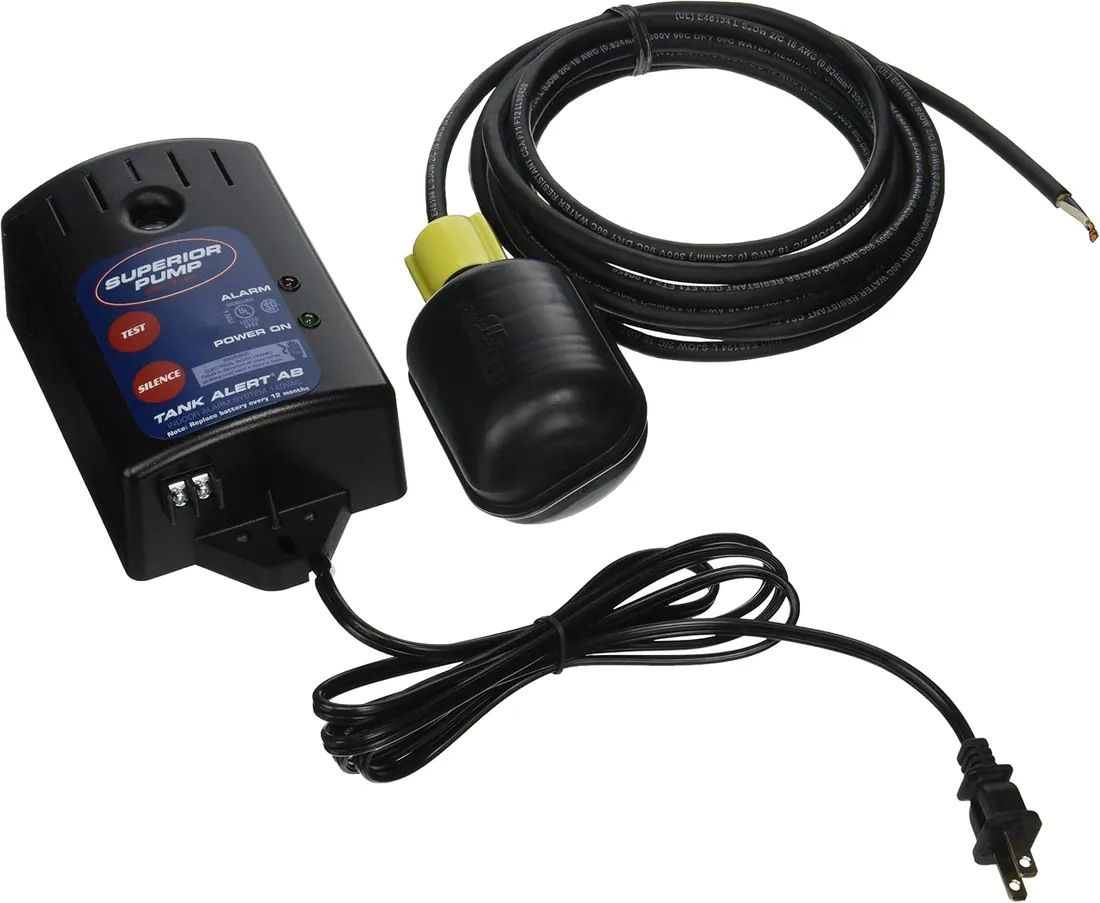
Superior Pump 92060 Sump Alarm
High water alarm that sounds if a frozen line stops the pump keeping up.
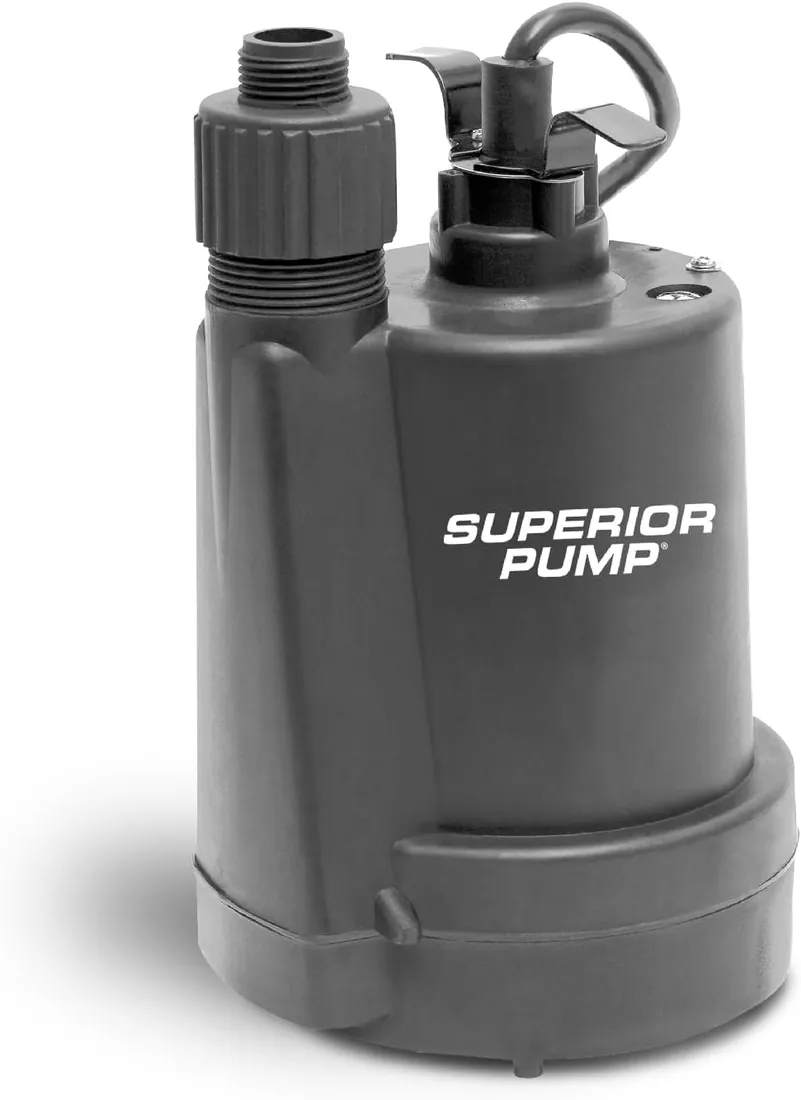
Superior Pump 91250 Thermoplastic Utility Pump
Portable utility pump to hold the pit down while a frozen line thaws.
Questions readers ask
Can a frozen discharge line damage my sump pump?
Yes. The pump runs against a closed line, heats up and cycles on its thermal protector. Repeated overheating shortens its life. Unplug it and lower the pit another way until the line is clear.
Should I disconnect my sump pump hose in winter?
If you use a flexible extension outdoors, draining or removing it before a hard freeze is sensible. Keep the rigid pipe through the wall in place and make sure the outdoor run slopes downhill so it empties after every cycle.
Why does my discharge line freeze when others don't?
Usually because water sits in it. A flat run, a dip, a long flexible hose on the ground or an outlet buried by snow all hold water between cycles. Re-sloping the pipe so it drains fixes most repeat freezes.
Does a check valve cause the line to freeze?
The check valve keeps water above it in the vertical pipe indoors, where it is warm. Freezing happens outdoors, where water left in a poorly sloped run turns to ice. The valve is still required by makers such as Wayne.