Send sump water outside, well away from the foundation, to ground that slopes away from the house: a lawn, a rain garden, a dry well or, where allowed, a storm sewer or street gutter. Pump makers ask for at least 3 ft from the foundation, and farther is better. Many towns forbid connecting a sump pump to the sanitary sewer, so check local rules before choosing.
The goal: water that does not come back
Groundwater reaches a sump pit through the drain tile around the footings. If the pump drops that water right beside the wall, it soaks back through the backfill, reaches the tile again and returns to the pit. The pump ends up moving the same water in a loop, running far more than it should and wearing out sooner.
Wayne's sump manual sets a floor: when testing a new installation, make sure the discharge carries water at least 3 ft from the foundation. Treat that as a minimum, not a target. On flat lots or clay soil, ten feet or more and a surface that slopes away from the house work far better. Also look at where the water goes next. An outlet that floods a neighbour's yard, ices a sidewalk or soaks a septic field creates new problems.
Common discharge destinations
Most homes use one of a handful of outlets. The right one depends on your lot, your soil and what your town allows. The table sums up the trade-offs.
Whatever you choose, keep the pipe as short as possible with as few elbows as possible; both Little Giant and Liberty say this in their installation steps, because every bend and foot of pipe adds friction and costs flow. A long run to a distant outlet may need a stronger pump, which the sump pump sizing calculator can estimate from the length and lift.
| Outlet | Works well when | Watch out for |
|---|---|---|
| Lawn or yard, surface outlet | Lot slopes away from the house | Ice on paths, erosion, neighbours |
| Buried pipe to a pop-up emitter | You want the yard clear of hoses | Freezing if the pipe holds water |
| Dry well | Sandy soil that absorbs water | Clay soil and high water tables |
| Rain garden | Moderate flows and room to plant | Overflow in long storms |
| Storm sewer or street gutter | Town permits the connection | Permits and local bans |
| Sanitary sewer | Rarely allowed | Often prohibited by local code |
Figures: Wayne submersible sump pump manual 600002W-001 J; Little Giant sump pump models 6 and 8 instructions 993865.
Codes and rules: the sanitary sewer question
Sump water is clean groundwater, but many cities do not want it in the sanitary sewer, because extra clear water overloads treatment plants during storms. Connecting a sump pump to a floor drain, laundry tub or sewer stack is banned in many places, and some cities inspect for it. Other towns limit discharge onto streets or require a permit to tie into a storm sewer. The rules vary so widely that the only reliable answer comes from your local building or public works department.
Pump makers point to the same authority. Wayne says to install discharge plumbing according to local, regional and state codes, and to add a gate or ball valve if local code requires one. Ask before you dig, not after the line is buried.
Plumbing the line correctly
Inside, the pump needs rigid pipe. Wayne requires rigid PVC and a check valve, and forbids flexible hose in a permanent installation because the movement can stop the switch working. Keep the pipe at least as large as the pump outlet; Liberty warns that reducing the discharge cuts performance and can void its warranty, and Little Giant says not to use piping smaller than the discharge.
Outside the wall, the line should slope steadily away so it empties after each cycle. A flexible extension such as Little Giant's SPDK hose kit or Superior's lay-flat hose kit can carry water across a yard, but lay it downhill with no dips. In cold climates, read the guide on frozen discharge lines before burying anything.
- Confirm the allowed outlet with your town.
- Run rigid pipe from the pump through a check valve and out of the wall.
- Keep the pipe the same size as the pump outlet or larger.
- Slope the outdoor run so it drains after every cycle.
- End it at least 3 ft out, farther on flat ground.
Sump pump vs French drain
These are not rivals so much as partners. A French drain is a gravel-filled trench with a perforated pipe that collects water and moves it by gravity. An interior French drain, the drain tile around the basement floor, collects water from under the slab; it needs somewhere to go, and in most basements that somewhere is a sump pit and pump, because the basement floor sits below any gravity outlet.
An exterior French drain can carry surface water around a house without a pump if the lot slopes enough to let it daylight downhill. Where it cannot, it ends in a pit just like interior tile. So the choice is usually not one or the other: the drain collects, and the pump lifts when gravity cannot.
When gravity beats a pump
If any part of your lot sits lower than the basement floor, a gravity drain to daylight needs no power, no switch and no backup battery, and it never fails in a power cut. That is the strongest argument for a French drain where the land allows it. Pumps win wherever the ground is flat or the basement sits below everything around it.
If you rely on a pump, make the outlet as reliable as the pump itself, and consider a backup or alarm. Cast iron pumps such as the Zoeller M53 handle long seasons of steady inflow from drain tile.
Common mistakes
- Ending the discharge right beside the foundation so water cycles back to the pit.
- Tying the sump into the sanitary sewer without checking local rules.
- Using a garden hose or flexible tube as the permanent line indoors.
- Running a long outdoor line with dips that hold water and freeze.
- Aiming the outlet at a neighbour's yard, a driveway or a septic field.
Products that fit
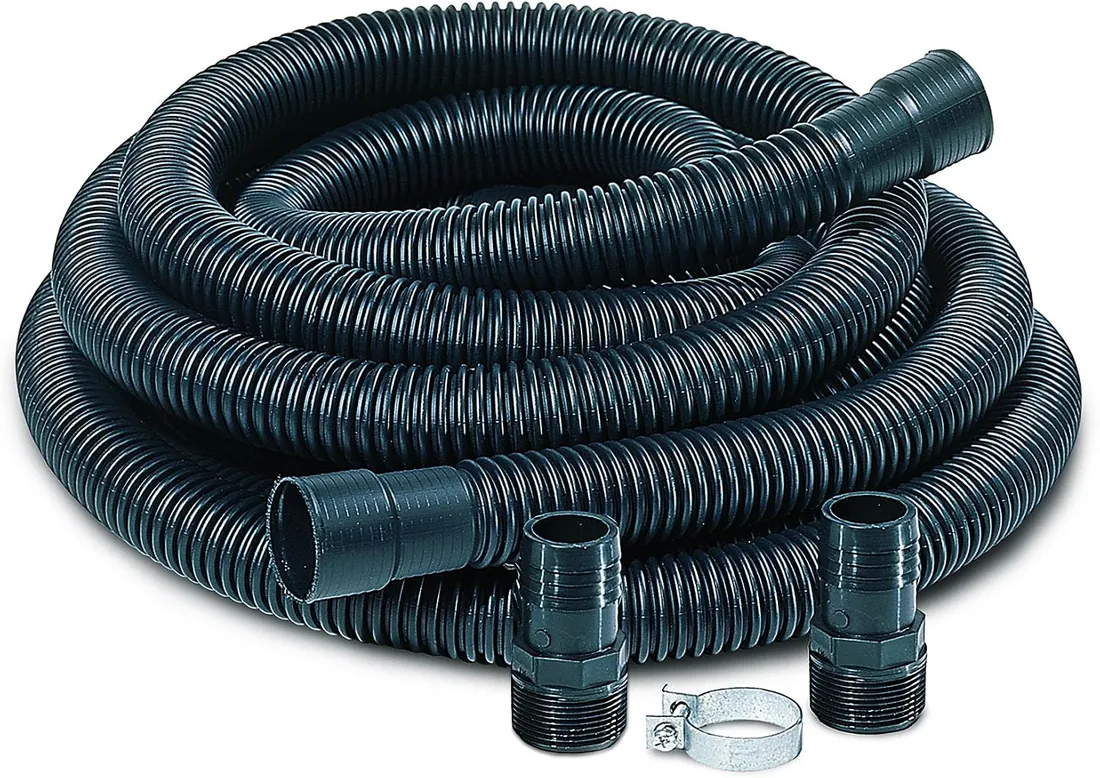
Little Giant SPDK Discharge Hose Kit
Flexible hose and adapters to carry water across a yard beyond the wall.
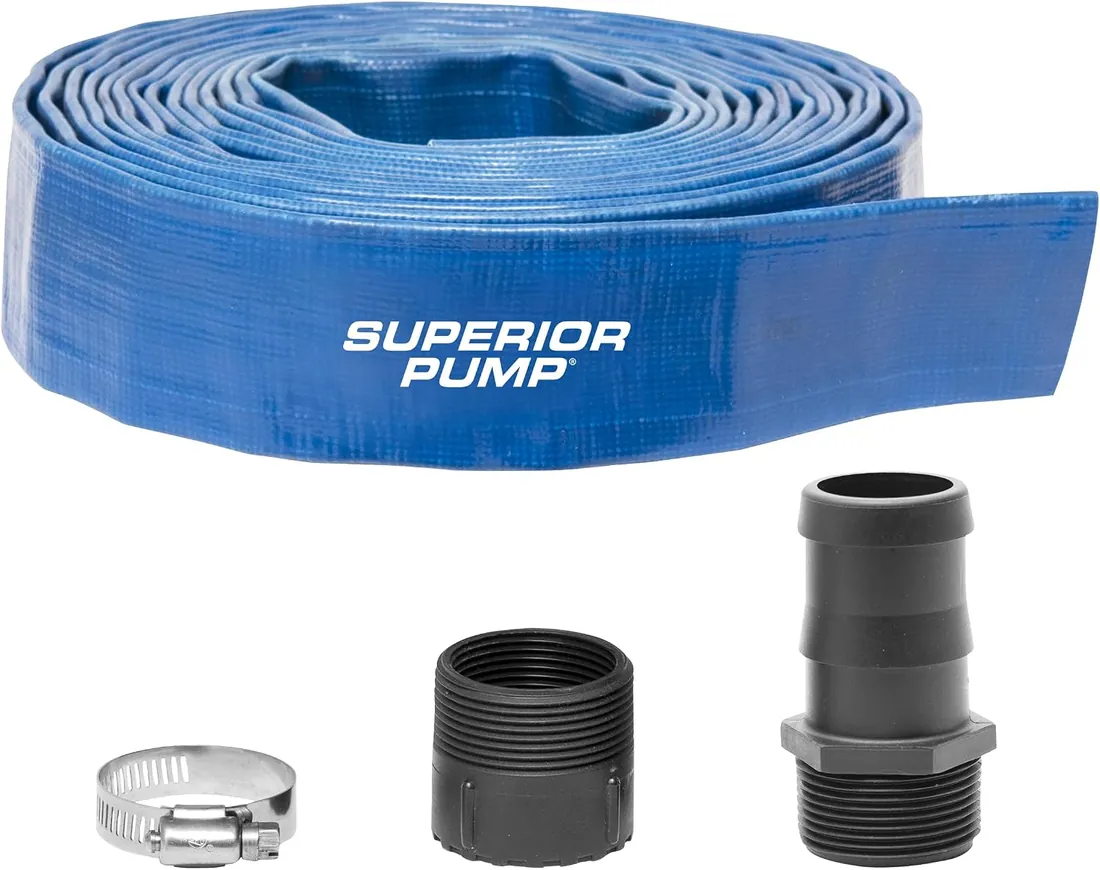
Superior Pump 99621 Lay-Flat Hose Kit
Lay-flat hose kit that rolls up when it is not needed.
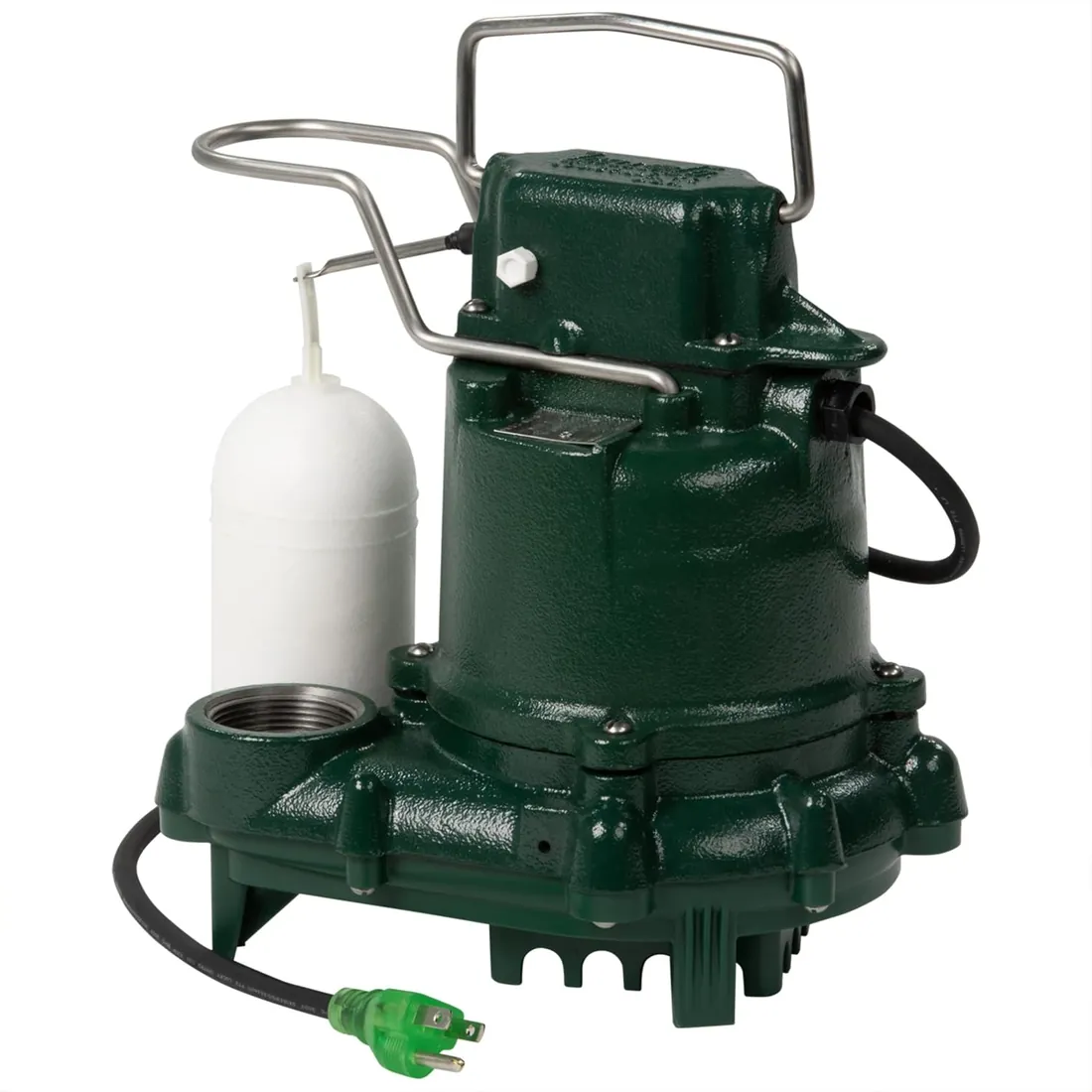
Zoeller M53 Mighty-Mate Sump Pump
Cast iron sump pump suited to the steady inflow that drain tile delivers.
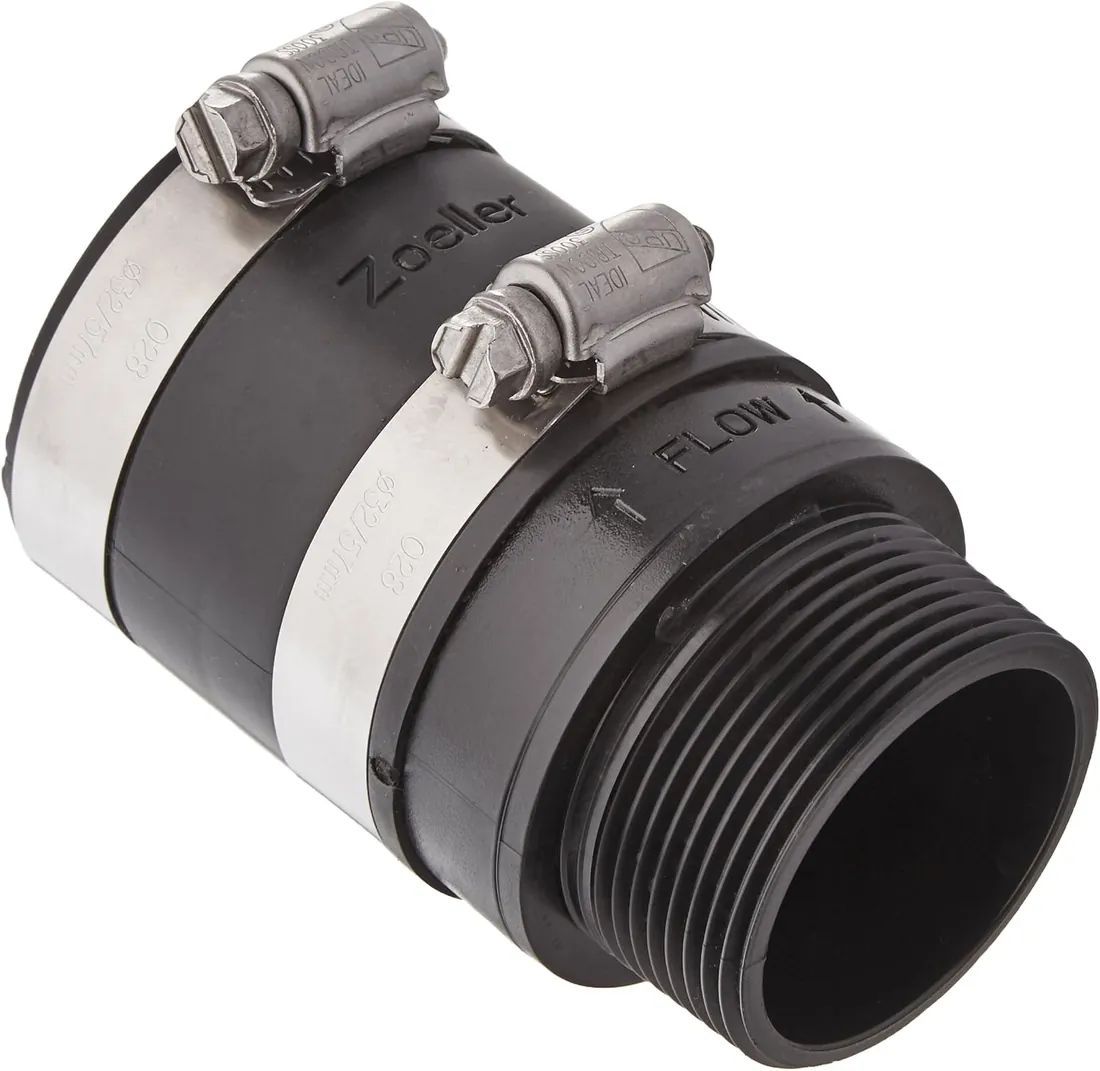
Zoeller 30-0238 Inline Check Valve
Inline check valve for the rigid pipe between pump and wall.
Questions readers ask
How far should a sump pump discharge be from the house?
Wayne's manual gives at least 3 ft from the foundation as the minimum. Farther is better on flat ground or clay soil, as long as the water keeps flowing away from the house and does not reach another building or the street illegally.
Can a sump pump drain into the sewer?
Often not into the sanitary sewer; many towns ban it because storm water overloads treatment plants. Some allow a storm sewer connection with a permit. Ask your local building or public works department.
Can I drain my sump pump into a dry well?
Yes, where the soil absorbs water well. In clay or where the water table is high, a dry well fills up and stops working during long storms. A surface outlet or storm connection is more dependable there.
Is a French drain better than a sump pump?
If your lot lets a French drain run downhill to daylight, it needs no power, which is a real advantage. In most basements, though, the drain tile still needs a sump pump to lift water up and out.