With the power off, remove the priming plug, fill the pump and suction pipe with clean water until it overflows, refit the plug and start the pump with a faucet open. If water does not flow within a few minutes, stop and refill. Long or repeated failures mean air is getting into the suction side or the water is too far below the pump.
Why a jet pump needs priming
A jet pump moves water by spinning an impeller and driving part of the flow through a nozzle and venturi, which creates suction. Air does not carry that suction, so a pump full of air spins without lifting anything. Every maker forbids running it dry: Red Lion says not to apply power until the pump is primed, and Wayne warns that the motor must not start until the pump has been filled with water.
There is also a hard limit on height. A shallow well pump works only when the water is less than about 25 ft below it, as Wayne and Flotec both state. Beyond that, no amount of priming helps, and a deep well jet or a submersible is needed.
Priming step by step
The steps below combine the procedures in the Wayne SWS and Flotec shallow well manuals. Fill through the priming plug on top of the pump body, or through a priming tee in the suction line if one is fitted, and use clean water so grit does not reach the seal. Have a bucket or a hose ready before you start, because a long suction line can take far more water than the pump body alone.
- Switch off power and open a faucet to release pressure.
- Remove the priming plug on top of the pump.
- Fill the pump and suction pipe until water reaches the plug hole.
- Refit the plug and leave a nearby faucet open to vent air.
- Start the pump and watch the open faucet.
- If no steady water after a few minutes, stop and refill.
- Once water runs solid, close the faucet and let pressure build.
How long priming should take
Priming time grows with the amount of air in the suction pipe. Wayne tells owners to stop and refill if the pump has not primed in 5 minutes. Flotec suggests stopping after 2 or 3 minutes without water, refilling, and repeating as needed, and notes that a pump lifting water 25 ft may take as long as 15 minutes.
Red Lion's RJS manual gives the most detailed method for a system with an in-line check valve rather than a foot valve. Pour about 1 quart of water per 3 ft of suction line, run the pump for 2 minutes, stop, and repeat for every 5 ft of suction line. It expects two to six repeats, and says to stop and look for suction leaks if the pump has not drawn water within eight tries.
| Manual | Guidance |
|---|---|
| Wayne SWS | Refill if not primed in 5 minutes; foot valve 5 ft below lowest water level |
| Flotec P15002 | Refill after 2 or 3 minutes without water; up to 15 minutes at 25 ft lift |
| Red Lion RJS-PREM | About 1 quart per 3 ft of suction; check for leaks after 8 tries |
Figures: Wayne SWS shallow well jet pump manual 640002W-001 G; Flotec shallow well pumps manual P15002; Red Lion RJS-PREM series owner's manual 106905101.
When the pump will not prime or keeps losing prime
Flotec's troubleshooting chart splits this into two cases. In a new installation, the usual causes are improper priming, air leaks and a leaking foot valve or check valve. In a system that worked before, it is air leaks or water that has dropped below the end of the suction pipe. Red Lion's guide adds a foot valve buried in mud or plugged, and suction lift that is simply too great.
Air leaks are the classic culprit because the suction pipe is under vacuum, so a leak pulls air in instead of dripping water out. Flotec suggests brushing joints on the suction line, air volume control and ejector with soapy water or shaving cream and watching for the foam to be drawn in. Red Lion notes that even a pinhole can stop the pump working, and asks for PTFE tape or thread compound on every joint.
- Brush every suction joint with soapy water while the pump runs.
- Tighten or reseal any joint that pulls the foam in.
- Check the foot valve is submerged and clear of mud.
- Measure the depth to water while the pump runs.
- Re-prime the pump after each repair you make.
Set the system up so it stays primed
Good installation prevents most repeat priming. Wayne asks for the foot valve to sit 5 ft below the lowest expected water level but at least 18 in above the well bottom so sediment is not drawn in, and for horizontal suction pipe to slope upward toward the pump so it cannot trap air. Red Lion recommends installing the pump as close as possible to the water source to keep the suction line short.
If the water level in your well drops past 25 ft during dry spells, Flotec's advice is a deep well setup. A convertible pump such as the Wayne CWS50 can run with an ejector in the well, while a shallow well pump like the Red Lion RJS-50-PREM suits a water level well within its lift. The shallow well jet pump list compares more options.
Common mistakes
- Starting the motor before the pump body is full of water.
- Using pipe dope that misses one thread and lets air in.
- Running the pump for long periods without water while hoping it catches.
- Letting the suction pipe sag so it traps an air pocket.
- Trying to pull water from more than about 25 ft with a shallow well pump.
Products that fit
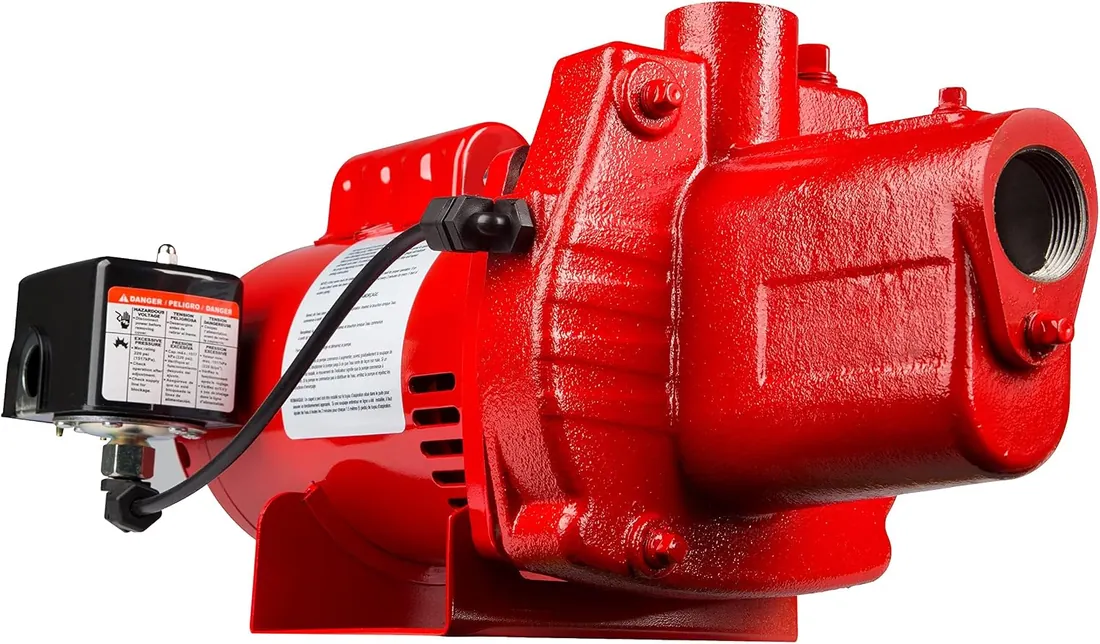
Red Lion RJS-50-PREM Shallow Well Jet Pump
Cast iron 1/2 HP shallow well jet pump with a detailed priming procedure in its manual.
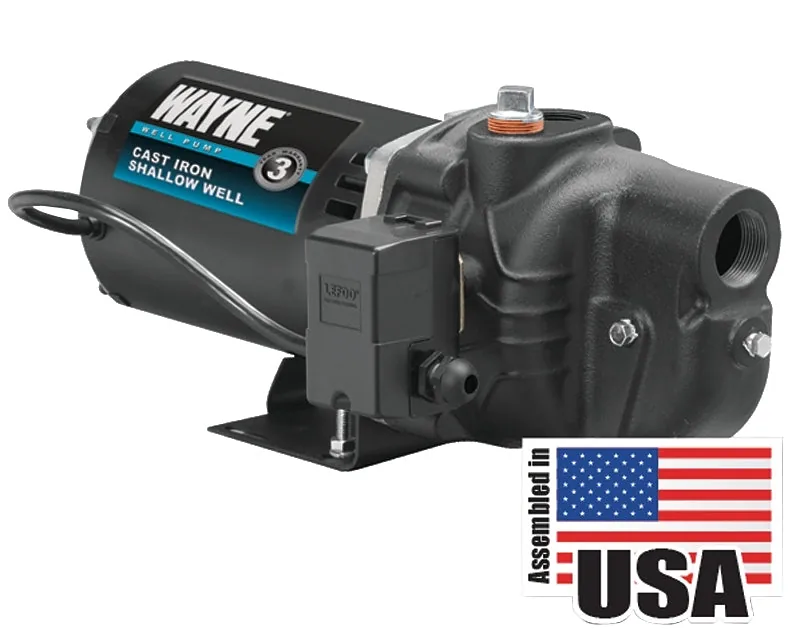
Wayne SWS50 Shallow Well Jet Pump
Wayne shallow well jet pump for water within about 25 ft of the pump.
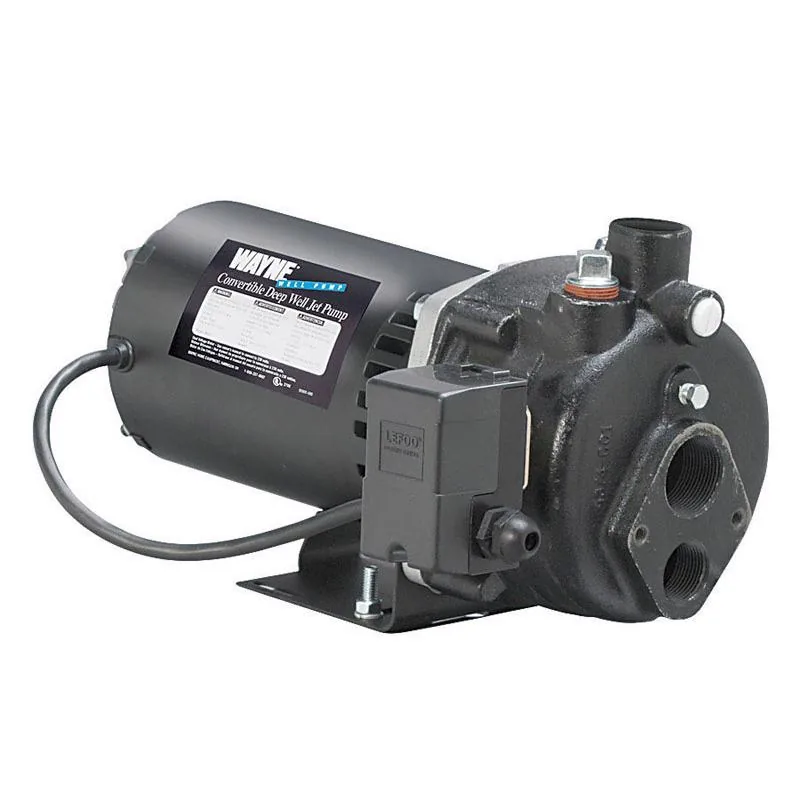
Wayne CWS50 Convertible Jet Well Pump
Convertible jet pump that can move to a deep well ejector setup when the water drops.
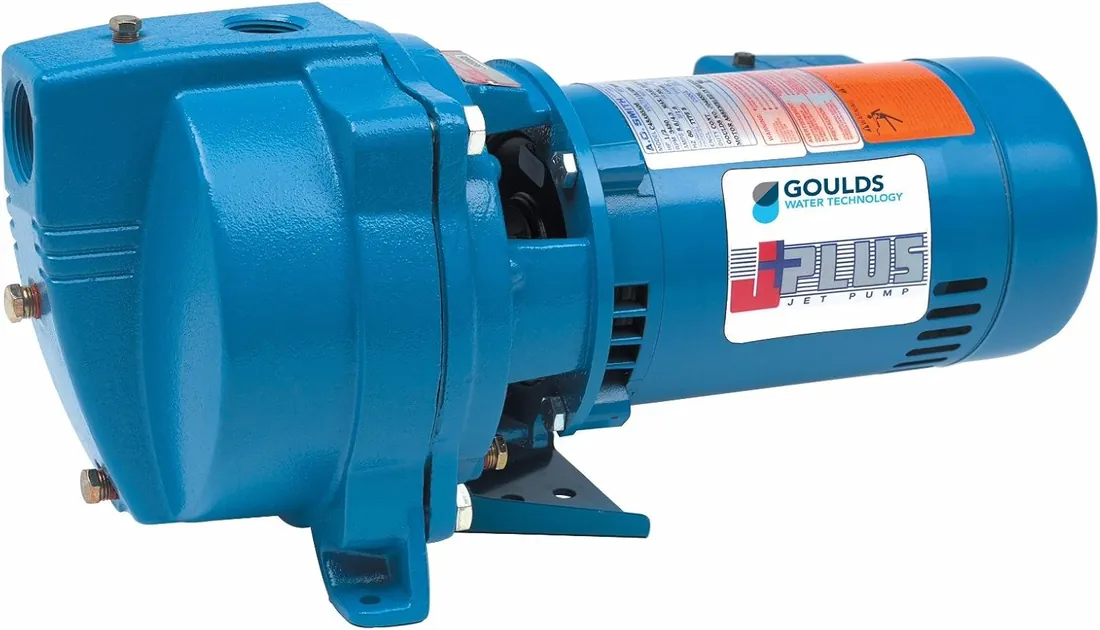
Goulds J5S Shallow Well Jet Pump
Goulds shallow well jet pump, a common choice for lake and point wells.
Questions readers ask
How much water does it take to prime a jet pump?
Enough to fill the pump body and the whole suction pipe. Red Lion's rule of thumb for its RJS pumps is about 1 quart for every 3 ft of suction line, poured through the priming plug until water reaches the hole.
Why does my jet pump keep losing prime?
Usually air is leaking into the suction line or the foot valve is not holding water. Water dropping below the suction pipe end, or a lift greater than the pump can manage, also cause it. Check suction joints with soapy water first.
Can you prime a jet pump from the discharge side?
The makers prime through the priming plug on the pump body or a priming tee on the suction side. Filling from the discharge side does not reliably fill the suction pipe, so use the priming port your manual shows.
How long can a jet pump run without prime?
As briefly as possible. Red Lion warns that running dry overheats the pump and damages the impeller and seals, and voids its warranty. Stop after a few minutes without water and refill.