If a Liberty pump will not start, check power first (breaker, GFCI, plug), then whether the vertical float can rise freely and the water reaches its on level: 7 in for the 257, 9.5 in for the 287. If it hums or runs without pumping, look for an airlock, a check valve installed backward or stuck, or ice in the discharge line.
Liberty pump not turning on
Liberty's matrix lists power before anything mechanical, and that order saves time. Reset a tripped breaker or GFCI, make sure the plug is fully seated, and look along the cord for damage. Then watch the float. The 257 and 287 use a vertical magnetic float that rides a short stem beside the motor; if the pump has shifted against the basin wall, or a stone, string or silt is holding the float down, the switch never closes. Liberty's fix is simply to reposition the pump or float so it has clear travel.
Also confirm the water is high enough. The vertical float switches are factory set and cannot be adjusted, so a pump that seems dead may be waiting for the level shown below. Pour a bucket of water into the pit and watch: if the float lifts past its on point and nothing happens, unplug the pump and look for a jammed impeller before suspecting the switch itself.
| Model | Horsepower | Turn on level | Turn off level |
|---|---|---|---|
| 257 | 1/3 HP | 7 in | 4 in |
| 287 | 1/2 HP | 9.5 in | 4 in |
Figures: Liberty Pumps installation manual 7035000R; Liberty Pumps 280-Series sales literature LLIT002000.
Running or humming but not pumping
When the motor runs but the pit does not drop, Liberty points to the discharge side. A check valve fitted backward or stuck shut blocks all flow; a closed gate or ball valve does the same. Ice is a common winter culprit where the line passes through a cold garage or crawl space. If the total lift is beyond what the pump can reach, it will spin without moving water: the 257 runs out of head at 23 ft and the 287 at 37 ft.
Airlock is the other cause. Air trapped in the volute under a full column of water lets the impeller spin in a bubble. Liberty builds an anti-airlock hole into the volute, and a small spray from it while the pump runs is normal. If the hole is clogged after a cleanout, clear it. The 237 manual also suggests drilling a hole no larger than 1/8 in low on the discharge pipe, just above the pump connection, to speed air bleed.
- Unplug the pump and wait a few minutes before restarting it.
- Check that the check valve arrow points away from the pump.
- Open any gate or ball valve on the discharge line.
- Look for ice or debris where the pipe leaves the house.
- Clean the inlet screen and the anti-airlock hole.
Pump keeps running and won't shut off
A pump that never stops is either still being called for or cannot finish the job. Liberty's matrix lists an airlocked pump, a float held up against the basin wall or the inlet pipe, a failed switch, and, on systems with panels, a selector left in Hand. On a single vertical-float pump like the 257, the usual cause is mechanical: the float is stuck high, or the pump simply cannot keep up with inflow at the lift involved.
To tell them apart, watch the water. If the level is falling, the pump is working and just faces heavy inflow; a stronger pump such as the 287 or a second pump may be needed. If the level is steady or rising while the motor runs, go back to the not-pumping checks above. If the pit is empty and the motor still runs, the switch has failed in the on position.
Short cycling: starting and stopping too often
Vertical magnetic floats have a short stroke by design, which is why Liberty says the 257, 287 and 297 are not recommended for effluent duty. In a sump that still works well, but in a narrow basin the pump will start often. Liberty allows these vertical-float models in a sump as small as 10 in across, while recommending at least 14 in for ordinary groundwater and saying a larger basin gives longer cycles and less switch wear.
The first thing to check is the check valve. If it is missing, stuck open or leaking, the water in the discharge pipe falls back into the pit after every run and restarts the pump. Liberty lists exactly this cause. Because the vertical float cannot be adjusted, the cures for a correctly working pump are a larger basin or a model with a wider differential; the basin cycle calculator shows how much a wider basin helps.
Liberty pump keeps tripping the breaker
Repeated tripping has its own row in Liberty's matrix. The causes listed are an undersized breaker, another appliance on the same circuit, an extension cord or poor wiring, wrong voltage, an obstruction in the pump, and debris built up on the motor housing. Liberty's corrective action for a shared circuit is direct: the pump requires a separate circuit.
Liberty does not describe a reset button on these sump pumps. Their thermal overload is built into the motor windings and resets as the motor cools; the only resets an owner has are the breaker and the GFCI. If a GFCI trips the moment the pump starts after you have cleared obstructions and removed any extension cord, have an electrician check the outlet and the pump insulation. The breaker and GFCI guide covers the electrical checks in more detail.
Noise, maintenance and when to call Liberty
For a noisy pump, Liberty first blames rigid piping that carries vibration into the house and suggests replacing a short section with a rubber connector. A rattle from inside the pump points to debris in the impeller cavity or a broken impeller, which needs factory guidance. Liberty's motors are oil-filled and need no lubrication, but the manual asks for quarterly checks of float movement and the check valve, and an annual basin cleaning.
Liberty also states that repairs during the warranty period need factory approval, and that field disassembly by anyone other than an authorized service center voids the warranty, which runs three years on these models. If the checks above do not find the fault, contact Liberty before opening the pump. For a replacement, the cast iron sump pump list compares Liberty with other makers.
Common mistakes
- Trying to adjust the factory-set vertical float on a 257 or 287.
- Plugging the anti-airlock hole with sealant during a reinstall.
- Running the pump on an extension cord or a shared circuit.
- Installing the check valve with its arrow pointing toward the pump.
- Opening the pump during the warranty period without Liberty's approval.
Products that fit
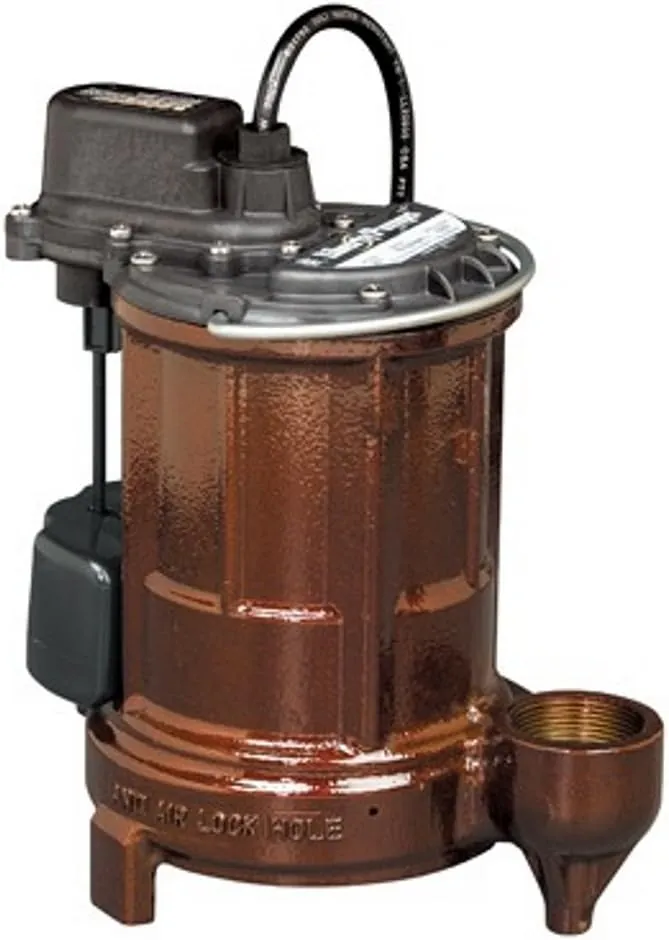
Liberty Pumps 257 Sump Pump
1/3 HP vertical magnetic float pump with fixed 7 in and 4 in levels.
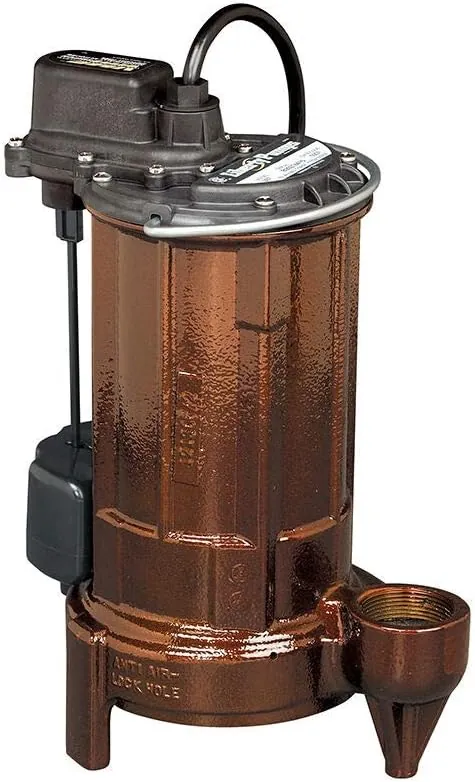
Liberty Pumps 287 Sump Pump
1/2 HP cast iron version with a taller 9.5 in turn-on level and more head.
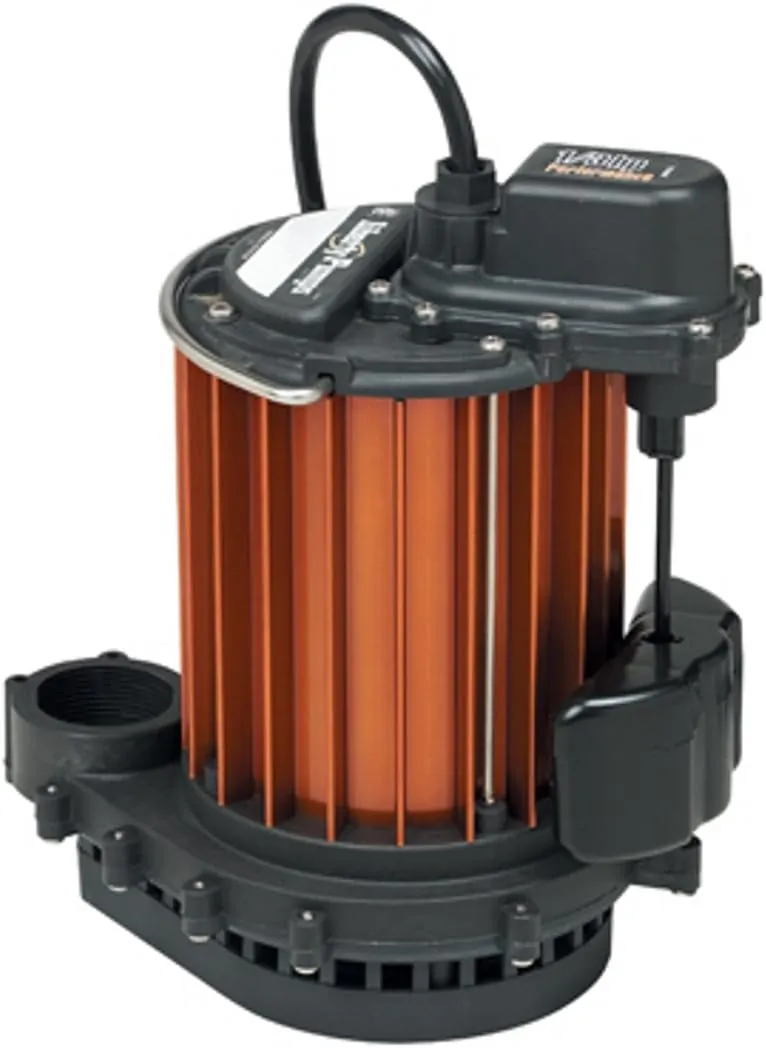
Liberty Pumps 237 Sump Pump
Aluminum vertical-float pump whose manual covers the anti-airlock hole in detail.
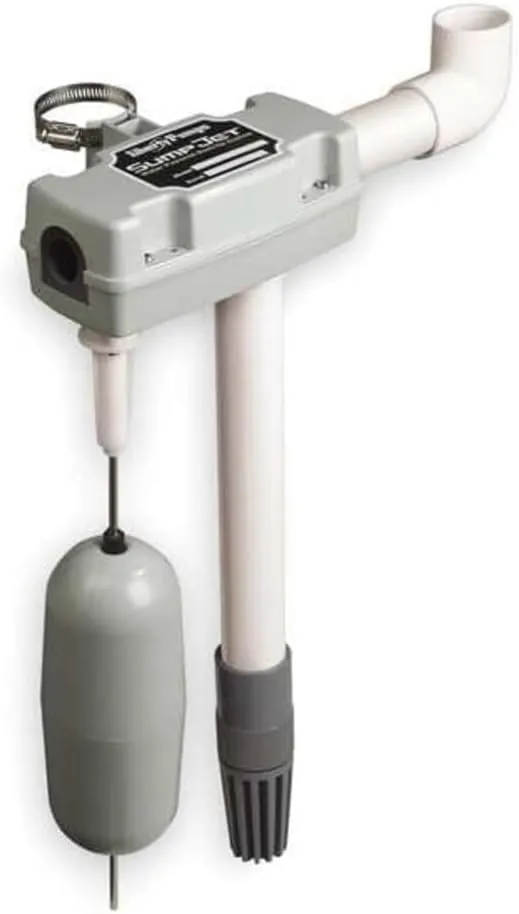
Liberty SumpJet SJ10 Water-Powered Backup Pump
Water-powered backup Liberty suggests where losing the main pump would cause damage.
Questions readers ask
Does a Liberty sump pump have a reset button?
Liberty's manuals describe no reset button on these sump pumps. The thermal overload sits in the motor windings and resets itself as the motor cools. If the pump is dead, reset the breaker or GFCI and check the plug, then follow the troubleshooting steps.
Can I adjust the float on a Liberty 257?
No. Liberty states that the 257, 287 and 297 have factory-preset float switches that are not adjustable. For different on and off levels you need a model with a wide-angle or piggyback switch, or a separate control.
Why does water spray from a small hole on my Liberty pump?
You are seeing the volute's anti-airlock vent doing its job. It lets trapped air escape so the pump can prime, and Liberty says a small spray while the pump runs is normal. Keep it clear rather than sealing it.
Why does my Liberty pump run when it hasn't rained?
Liberty lists a missing, stuck or leaking check valve as the main cause: water in the discharge pipe drains back and refills the pit. Groundwater can also keep flowing for days after rain, so watch how fast the pit refills.