A well pressure tank stores pressurized water so the well pump does not start every time a tap opens; it sits at the pressure switch and is sized by pump flow. A thermal expansion tank is a small tank on the water heater cold supply that absorbs the extra volume of heated water in a closed system. They do different jobs and are not interchangeable.
What a well pressure tank does
In a well system, the pump fills the tank until the pressure switch reaches its cut-off, then stops. As you use water, the pressurized air in the tank pushes it out, and the pressure falls until the switch reaches cut-in and starts the pump again. Amtrol calls the water delivered between pump starts the drawdown: the larger the tank, the greater the drawdown and the less the pump needs to run, which saves energy and extends pump life.
The air side is set before installation. Amtrol ships its Well-X-Trol tanks precharged to 38 psig, which suits a 40/60 switch, and says to set precharge 2 psig below the cut-in pressure with the tank drained. Wayne asks owners to check tank precharge yearly, and Amtrol warns that only licensed professionals should adjust the precharge on a tank that has been in service, because a corroded tank can burst.
| Model | Tank volume | 30/50 psig | 40/60 psig | 50/70 psig |
|---|---|---|---|---|
| WX-102 | 4.4 gal | 1.4 | 1.2 | 1.0 |
| WX-200 | 14.0 gal | 4.3 | 3.8 | 3.3 |
| WX-202 | 20.0 gal | 6.2 | 5.4 | 4.7 |
| WX-203 | 32.0 gal | 9.9 | 8.6 | 7.6 |
| WX-250 | 44.0 gal | 13.6 | 11.8 | 10.4 |
What a thermal expansion tank does
Water expands as a water heater warms it. In an open system, the extra volume backs out into the supply pipe. When a check valve, backflow preventer or pressure-reducing valve closes that path, the system becomes closed and the pressure climbs every time the heater fires. A thermal expansion tank, fitted on the cold supply near the heater, gives that extra water somewhere to go, so the relief valve on the heater does not drip and fixtures are not stressed.
Thermal expansion tanks are small, usually a few gallons, and are sized from the water heater's volume and the supply pressure rather than from a pump. Their air charge is set to match the incoming water pressure. Boilers use a similar hydronic expansion tank on the heating loop, sized to that loop and filled with heating water rather than drinking water.
Side by side
The two share a design: a steel shell, a diaphragm or bladder, and an air charge behind it. Amtrol makes both and says it invented the diaphragm expansion tank, the pre-pressurized well tank and the thermal expansion tank at different points in its history. That shared design is why people confuse them, but the jobs differ completely. The pressure tank is the working reservoir of a well system and cycles every time water is used. The thermal tank only takes up a small amount of water as the heater runs, and most of the time it sits idle.
So a pressure tank is sized by pump flow and pump run time, while a thermal tank is sized by heater volume and supply pressure.
| Point | Well pressure tank | Thermal expansion tank |
|---|---|---|
| Job | Stores water so the pump cycles less | Absorbs heated water expansion |
| Where | Between well pump and house, at the pressure switch | Cold supply at the water heater |
| Sized by | Pump flow and minimum run time | Heater volume and supply pressure |
| Air charge | 2 psig below pump cut-in | Matched to incoming water pressure |
| Needed when | Any well system with a pressure switch | Closed system with a water heater |
Figures: Amtrol Well-X-Trol installation and operation instructions 9015-868; Amtrol Well-X-Trol specification card MC7025.
Sizing a well pressure tank
Amtrol's quick sizing table works from pump flow and a minimum run time: pumps up to 3/4 hp should run at least 1 minute per cycle, and pumps over 3/4 hp at least 2 minutes. On that basis, a pump making about 5 GPM on a 30/50 or 40/60 switch pairs with a WX-202, and one making about 10 GPM on a 40/60 switch with a WX-250. Amtrol sums it up as larger tank, fewer cycles, longer tank and pump life.
If your pump short cycles even with a healthy tank, the tank may simply be too small. The Amtrol WX-202 and the larger WX-203 cover most small and mid-sized household pumps.
Can one replace the other?
Not well. A thermal expansion tank is far too small to give a well pump useful drawdown, so the pump would short cycle badly. A well pressure tank on a water heater line would work as an expansion tank in principle, but it is oversized for the job and its precharge would be wrong. Use each for its own purpose.
Booster pumps are a special case. Some installations add a small pressure tank after a booster pump to reduce how often it starts; the tank acts as a pressure tank there, not a thermal one. Follow the booster maker's instructions on tank size and precharge.
Signs your pressure tank is failing
Rapid pump cycling, pressure that jumps up and down at the tap, and water spurting from the tank's air valve are the classic signs. Wayne says a bladder that leaks water through the air valve cannot be repaired and the tank must be replaced. Amtrol adds that a tank which has lost air or shows external corrosion should not be re-pressurized, because it could rupture. Replacement tanks such as the WaterWorker HT-20B come precharged and ready to plumb in.
Common mistakes
- Fitting a small thermal expansion tank where a well pressure tank is needed.
- Setting a well tank's precharge with water still inside it.
- Adding air to a corroded tank that has been losing pressure.
- Leaving out the relief valve near the well tank.
- Choosing a tank too small for the pump, so it short cycles.
Products that fit
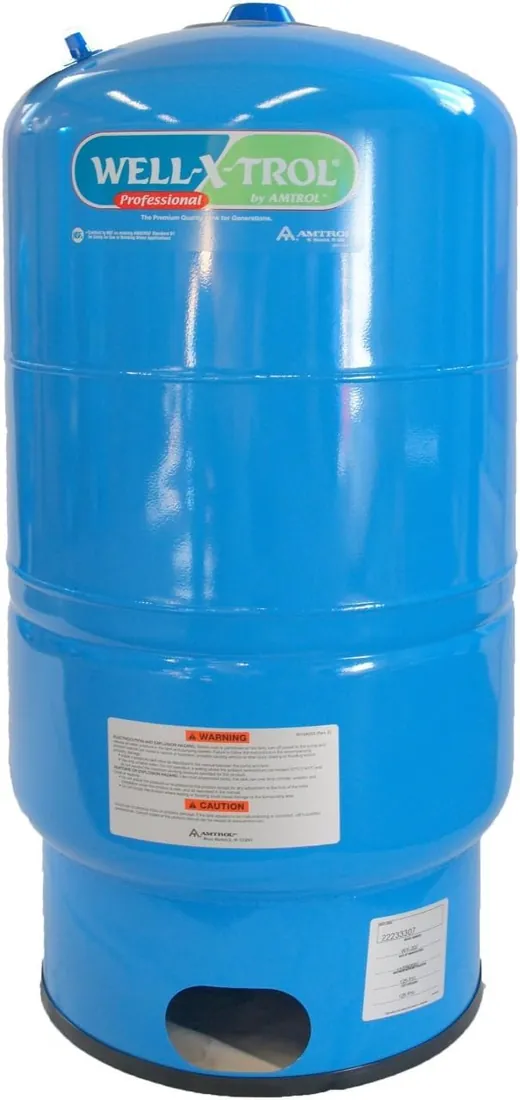
Amtrol WX-202 Well-X-Trol Pressure Tank
20 gallon Well-X-Trol well tank shipped precharged to 38 psig for a 40/60 switch.
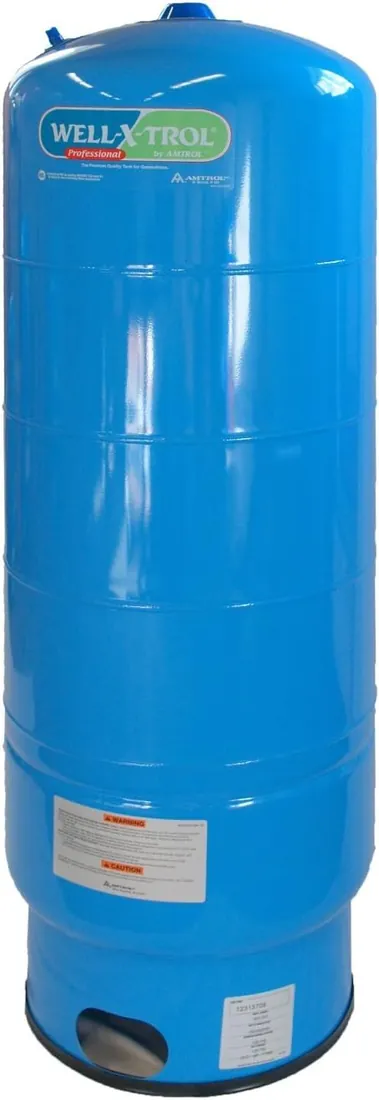
Amtrol WX-203 Well-X-Trol Well Tank
32 gallon Well-X-Trol that gives more drawdown for larger household pumps.
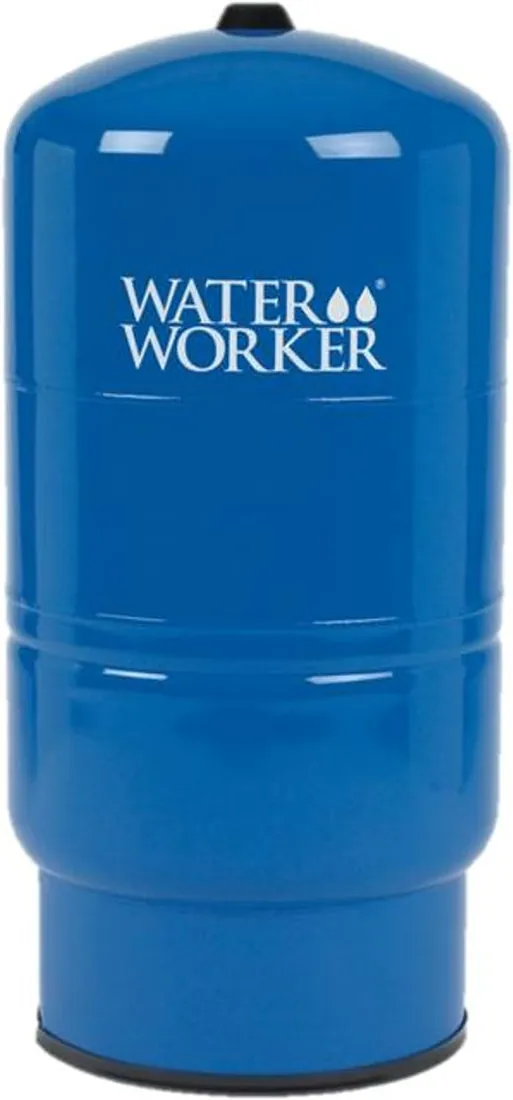
WaterWorker HT-20B 20-Gallon Well Tank
Precharged well pressure tank for replacing a failed small tank.
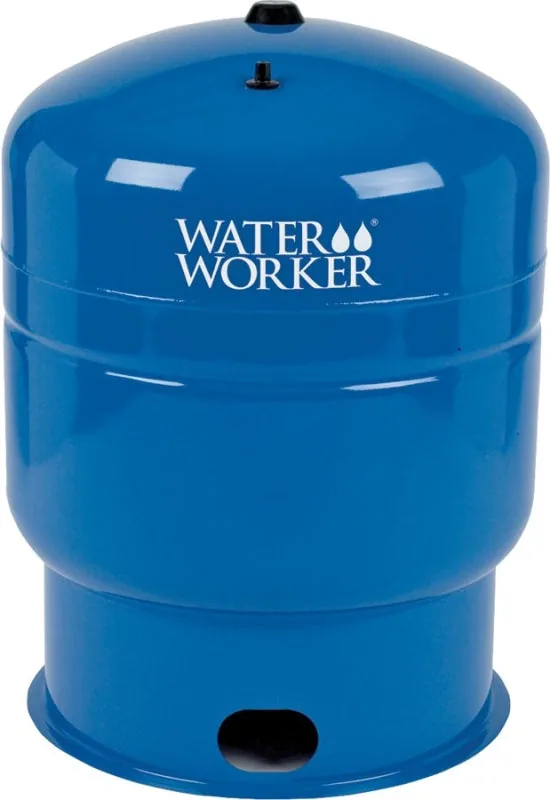
Water Worker HT-44B 44 gal Well Tank
Larger well tank for pumps that need longer run times.
Questions readers ask
Is a pressure tank the same as an expansion tank?
No. A well pressure tank stores water so the pump cycles less. A thermal expansion tank absorbs the extra volume of heated water on a water heater line. They share a diaphragm design but are sized and placed differently.
Do I need an expansion tank if I have a well pressure tank?
Possibly. The well tank sits before the water heater and is separated from it by plumbing, and if a check valve or backflow device closes the system, heated water has nowhere to go. A plumber can tell whether your water heater needs its own expansion tank.
What pressure should my well tank be set to?
Two psig below the pump's cut-in, with the tank drained and the pump off. Amtrol ships Well-X-Trol tanks at 38 psig for a 40/60 switch. Recheck it every year with the system drained.
How big a pressure tank do I need?
Size it from pump flow and a minimum run time. Amtrol's table uses at least 1 minute for pumps up to 3/4 hp and 2 minutes for larger pumps, which points to tanks of roughly 20 gallons and up for typical household pumps.