A well pump that will not shut off usually cannot reach its cut-off pressure: a leak or open tap is draining the system, the well is drawing down, the jet or impeller is clogged, or the pressure switch is set too high or stuck. A pump that turns on and off rapidly points instead to a waterlogged tank or wrong tank air charge. Watch the pressure gauge to tell which.
Start at the pressure gauge
Every well system has a gauge near the tank and pressure switch. With all taps closed, watch it while the pump runs. If the needle climbs steadily and the pump stops near the switch's cut-off setting, the system is healthy and something else, such as a running toilet or an irrigation zone, is calling for water. If the needle climbs part way and stalls, the pump cannot make enough pressure. If the needle swings up and down quickly as the pump clicks on and off, the tank is the suspect.
Know your settings. Wayne's SWS shallow well jet pumps ship with a 30 PSI cut-in and 50 PSI cut-out, and Flotec lists the common pairs as 20/40, 30/50 and 40/60 PSI. A pump on a 40/60 switch that stalls just above 50 PSI has a different problem from one on a 30/50 switch that stops right at 50.
| Cut-in | Cut-off | Tank precharge |
|---|---|---|
| 20 PSI | 40 PSI | 18 PSI |
| 30 PSI | 50 PSI | 28 PSI |
| 40 PSI | 60 PSI | 38 PSI |
Figures: Flotec 4-inch submersible pump installation manual FP874; Pentair instructions for adjusting well pump pressure switches U80-129.
Runs nonstop: it cannot reach cut-off
Goulds lists the usual causes for a pump that delivers water but will not shut off: a worn or plugged impeller, a missing or plugged jet, system head too high, excessive suction lift, a plugged or misadjusted pressure switch, and leaks in the piping or the house. Flotec adds open faucets, welded switch contacts, a clogged venturi or nozzle and leaking foot valves. Work from the easy checks to the hard ones.
Walk the house first: toilets that run, an outdoor tap, a leaking hose bib or a broken pipe in a crawl space can all keep the pump running. Then shut the valve after the tank. If the pump now stops, the leak is downstream. If it still runs, the problem is the pump, the well or the switch. A jet pump with a clogged nozzle or worn impeller makes flow but not pressure, so it may top out a few PSI short of cut-off forever.
- Close every faucet and check toilets and outdoor taps.
- Close the valve after the tank and watch whether the pump stops.
- Tap the pressure switch gently and look for burned or stuck contacts.
- Compare the pressure where it stalls with the cut-off setting.
- Turn the pump off if the gauge cannot climb, to protect the pump.
Running with low pressure: the well may be drawing down
If the pump runs and pressure is low or falling, the pump may be outrunning the well. Red Lion's guide for convertible jet pumps describes a pump that runs hot and will not shut off because it cannot build pressure without water at the source, and recommends a low pressure cut-off switch that stops the pump before it is damaged. Its submersible manual points to insufficient well yield as a cause of reduced output.
A pump that keeps running with no water is in danger. Jet pumps rely on water for seal cooling, and submersibles overheat when they run dry. Shut the pump off and let the well recover, then restart and watch whether pressure builds. A well that runs low every summer, or after a new bathroom or sprinkler system was added, may need a different pump or a storage strategy.
Running on and off: tank and switch problems
Rapid on-off cycling is the other kind of "keeps running". Wayne's troubleshooting table lists a waterlogged tank, wrong precharge, a ruptured bladder, leaks, a stuck foot or check valve and a misadjusted pressure switch. Red Lion adds a pressure switch mounted too far from the tank and a tank that is simply too small.
Test a bladder tank at its air valve. Wayne says if water comes out of the valve when you press it, the bladder is broken and the tank must be replaced; it cannot be repaired. If only air comes out, check the precharge with the pump off and the system drained: it should be 2 PSI below cut-in, which Pentair and Flotec both give, and Wayne asks owners to check it yearly. The Amtrol WX-202 is a common replacement tank for small systems.
When the pressure switch is to blame
A pressure switch has contacts that close at cut-in and open at cut-off. Contacts can pit and weld closed, and the small tube under the switch can clog with sediment so the switch never feels the pressure. Goulds lists a plugged or misadjusted switch among the reasons a pump will not shut off, and Wayne's fix for a faulty switch is to replace it with a matching 30/50 kit.
Pentair's adjustment sheet says each full turn of the main nut changes both settings by 2-1/2 PSI and warns never to set cut-in below 20 PSI or cut-off above 60 PSI, and to keep cut-off at least 5 PSI below the pump's dead-head pressure. A switch set above what the pump can reach will never open. Replacements such as the Telemecanique 9013FSG2J24 are rated for 100,000 electrical cycles.
When to call a well contractor
Call a professional if the pump runs with no pressure after the well has had time to recover, if a submersible pump trips its overload, or if you see water in the bladder tank's air valve and do not want to replace the tank yourself. Never work on the switch with power on; makers say to disconnect power and release system pressure first. If the pump itself has worn out, the shallow well jet pump list compares replacements.
Common mistakes
- Raising the cut-off setting above what the pump can actually reach.
- Letting a pump run dry while waiting for pressure to build.
- Adding air to a tank whose bladder is already broken.
- Checking tank precharge with water still in the tank.
- Overlooking a running toilet or hose bib that drains the system.
Products that fit
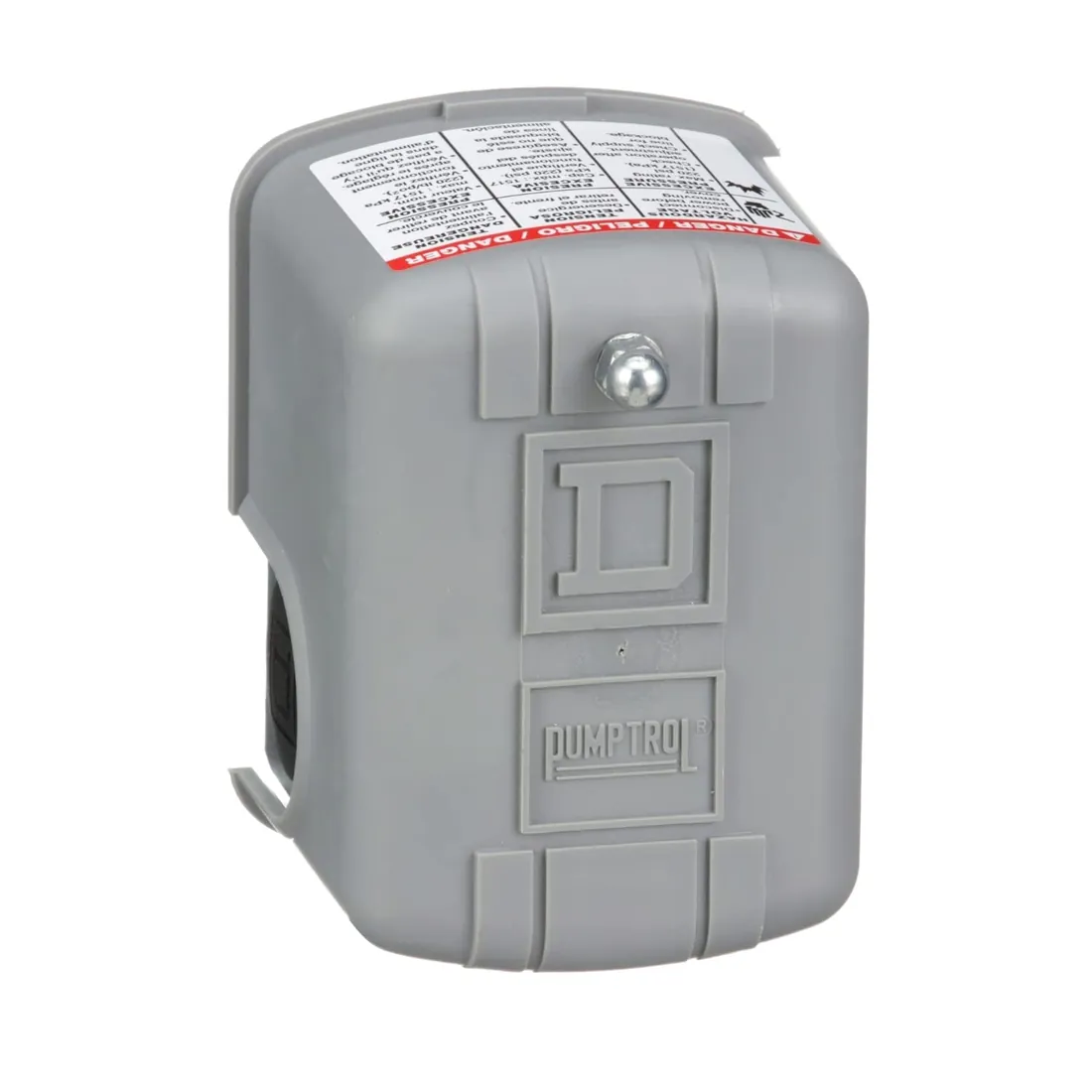
Square D 9013FSG2J24 40/60 PSI Pressure Switch
Replacement 40/60 PSI pressure switch with an adjustable differential for jet and submersible systems.
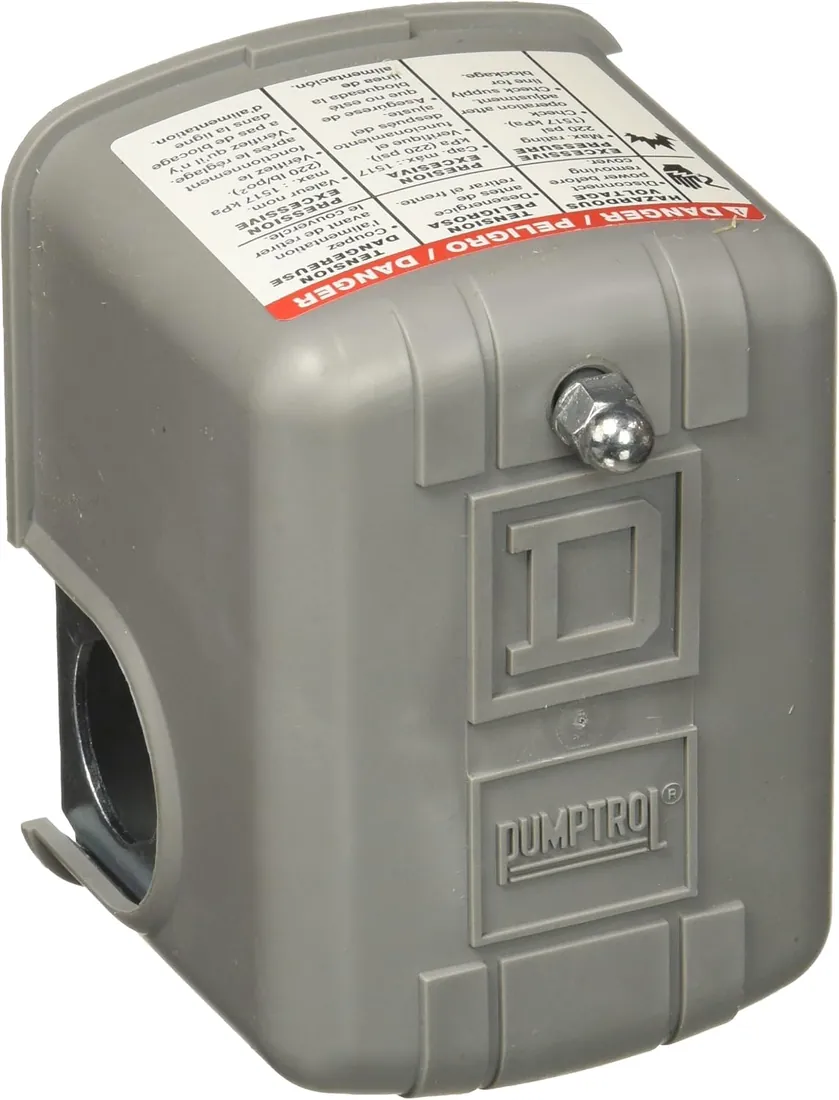
Square D FSG2J21CP 30/50 PSI Pressure Switch
Replacement 30/50 PSI pressure switch for systems set at the common jet pump setting.
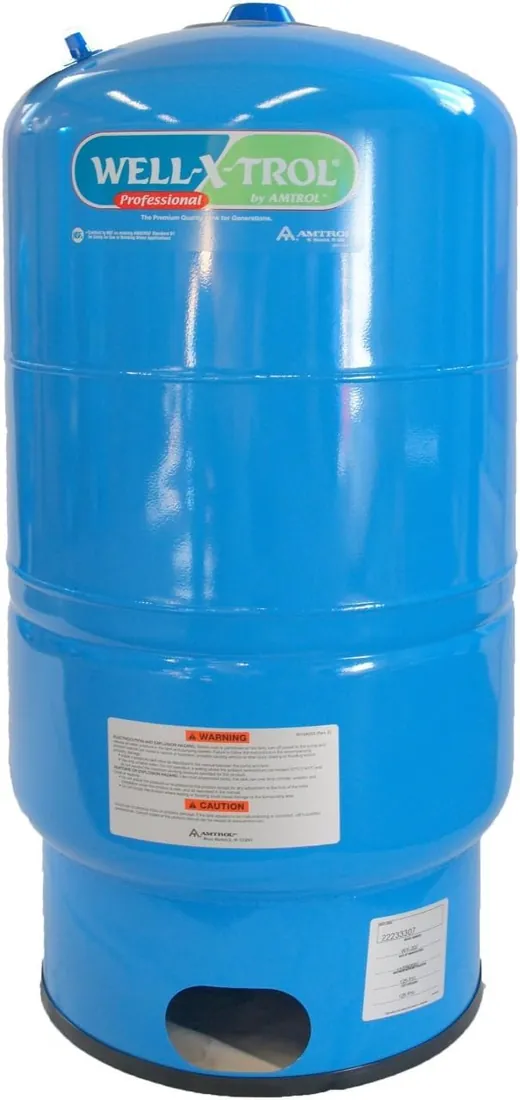
Amtrol WX-202 Well-X-Trol Pressure Tank
Diaphragm well tank to replace a waterlogged tank on a small system.
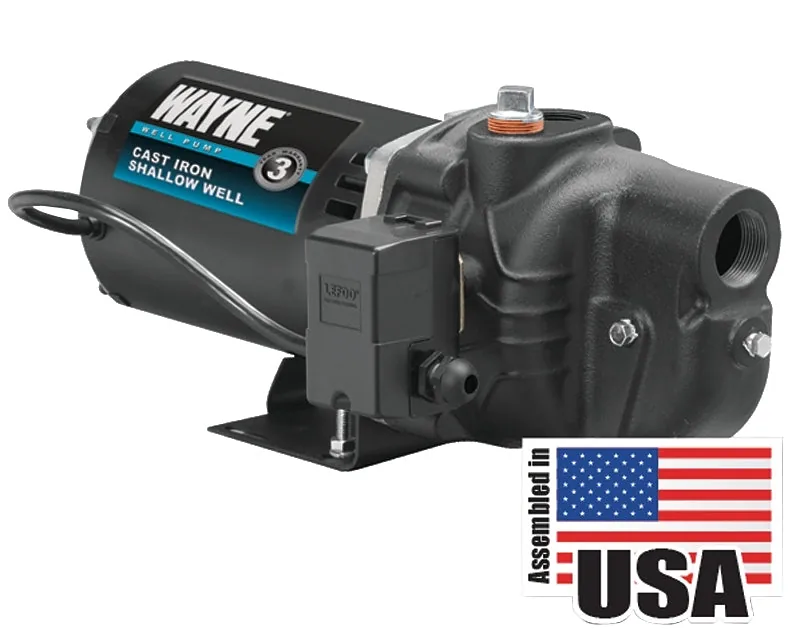
Wayne SWS50 Shallow Well Jet Pump
Shallow well jet pump shipped with a 30/50 PSI switch.
Questions readers ask
Why does my well pump keep running when no water is being used?
Usually a hidden leak, a running toilet, a stuck pressure switch, or a pump that cannot reach its cut-off pressure because the well is low or the jet is clogged. Shut the valve after the tank to see whether the leak is in the house or the pump side.
Why does my well pump turn on and off every few seconds?
That rapid cycling points to the tank: a waterlogged tank, a broken bladder or the wrong precharge. Press the tank's air valve; if water comes out, Wayne says the bladder has failed and the tank must be replaced.
Can a well pump run continuously without damage?
Not if it is short of water or blocked from reaching pressure. Running dry overheats seals and motors. Red Lion suggests a low pressure cut-off switch to stop the pump before that happens.
What should my well tank pressure be?
Two PSI below the pump's cut-in pressure, measured with the pump off and the tank drained. For a 30/50 switch that is 28 PSI, as Pentair and Flotec list. Recheck it every year.