To empty a rain barrel or move pond water through a garden hose, drop a small submersible utility pump such as Liberty's 260 or Wayne's WaterBUG into the water. To pull from a pond while the pump stays dry on the bank, use a transfer pump with a strainer, like Liberty's 331. Sprinklers need pressure, and all-day running needs a continuous-duty pump.
First decide: volume or pressure
Two jobs get lumped together as watering the garden. One is moving water, filling a watering can, a stock tank or a second barrel, where flow through an open hose is all you need. The other is running a sprinkler or a spray nozzle, which needs pressure at the far end of the hose. A small submersible utility pump does the first job well and the second job poorly, because its pressure falls quickly with height and hose length.
Liberty's 260 shows the pattern: about 17 GPM with no lift, 14 GPM at 10 ft and nothing at all at 25 ft of head. That is plenty to drain a barrel into beds downhill, but not enough to drive a sprinkler. Liberty's 331 transfer pump is built differently: Liberty says it delivers up to 40 lbs of pressure, reaches 105 ft of head, and can give an intermittent pressure boost for jobs like washing a car.
| Pump | Type | Key figure | Hose connection |
|---|---|---|---|
| Liberty 260 | Submersible utility | 17 GPM at 0 ft; zero at 25 ft | 3/4 in garden hose adapter |
| Wayne WaterBUG | Submersible utility | Drains to within 1/16 in | Two 3/4 in hose fittings |
| Liberty 331 | Portable transfer | Up to 40 lbs pressure; 105 ft max head; 15 ft suction lift | Garden hose adapters |
| Milwaukee 2771-20 | Cordless transfer | 8 GPM max; 18 ft lift; 75 ft head | 3/4 in GHT |
Figures: Liberty Pumps Model 260-2 sales literature LLIT004700; Wayne WaterBUG operating instructions 620009W-001 E; Liberty Pumps Model 331 sales literature; Milwaukee 2771-20 M18 transfer pump operator's manual.
Pumping from a rain barrel
A barrel is small and clean enough that a submersible utility pump is the simplest choice. Lower it to the bottom, attach a garden hose and plug it into a GFCI outlet. Liberty lists irrigation among the 260's applications, and it pumps down to 1/8 in. Wayne's WaterBUG has two 3/4 in hose outlets and removes water to within 1/16 in, which empties a barrel almost completely.
Two cautions. Do not let the pump run dry once the barrel is empty; Wayne's manual says the WaterBUG's seal depends on water. And keep roof grit out of the intake with a screen or by setting the pump on a brick above the sludge. A pump left in a barrel all season also needs a way to stop when the water runs out, which manual utility pumps do not have.
- Set the pump on the barrel floor or a brick above the sediment.
- Attach the garden hose to the pump outlet.
- Plug into a GFCI outlet and open the hose end.
- Unplug as soon as the pump starts drawing air.
Pumping water from a pond
From a pond, a transfer pump on the bank is often more practical than a submersible, because the pump stays dry and serviceable. Liberty's 331 handles up to 15 ft of vertical suction lift, and Liberty supplies a strainer for exactly this case: use it when pumping from a creek, pond or any source where debris can be drawn in. Liberty also says not to use an ordinary garden hose on the suction side, because it can collapse; a firmer hose such as PEX or washing machine supply hose works better. The pump must be filled with water before it starts.
Liberty lists filling livestock tanks among the 331's uses. For a long run downhill to a stock tank, a transfer pump is the right tool. For a pond far below the pump, a submersible in the water avoids the suction limit, but read its manual about open water first.
Why most sump pumps are poor pond pumps
Fountains, waterfalls and pond circulation run for hours or days at a time. Sump and utility pumps are designed for intermittent duty, and several makers rule this use out in writing. Red Lion's cast iron sump pump page says its pumps are not suitable for pond use. Basement Watchdog says its dual float controller must not be used in continuous duty applications such as fountains or ponds. A Flotec sewage pump manual says that using the pump for fountains or ponds will void the warranty.
Short transfer jobs are fine; leaving a sump pump running in a pond is not. For a garden water feature, choose a pump made and rated for continuous pond duty.
Getting pressure for a sprinkler
A sprinkler needs pressure at the head, so the pump must push water through a long hose and still have pressure left. Liberty's 331 can give an intermittent boost of up to 40 lbs. Milwaukee's cordless 2771-20 reaches 75 ft of head on a battery, but Milwaukee says not to run it more than an hour continuously.
For regular irrigation from a large storage tank, a pressure system is the long-term answer. Grundfos's SCALA2 is designed to draw from a freshwater tank with up to 26 ft of suction lift and hold a set pressure, with a built-in tank. For one-off jobs, the transfer pump list compares portable options.
Water quality and safety
Rain barrel and pond water is not drinking water, and many utility and sump pumps say so. Wayne's sump manual states that its pumps are not designed to transfer water intended for drinking. Use stored rainwater on gardens, not on vegetables you eat raw without washing unless your local guidance allows it.
Electrical safety matters outdoors. Every maker here calls for a grounded, GFCI-protected outlet. Keep plug connections off wet ground, and never leave a running pump in water where people or animals can wade.
Common mistakes
- Using a garden hose on a transfer pump's suction side, where it collapses.
- Expecting a small utility pump to run a sprinkler.
- Leaving a sump pump running continuously as a pond pump.
- Letting the pump run dry when the barrel empties.
- Pumping pond water without fitting the inlet strainer first.
Products that fit
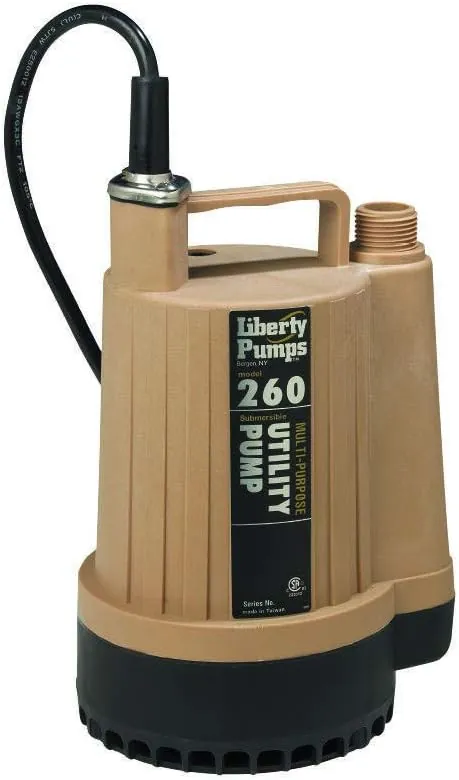
Liberty Pumps 260 Submersible Utility Pump
Submersible utility pump listed for irrigation, with a garden hose adapter.
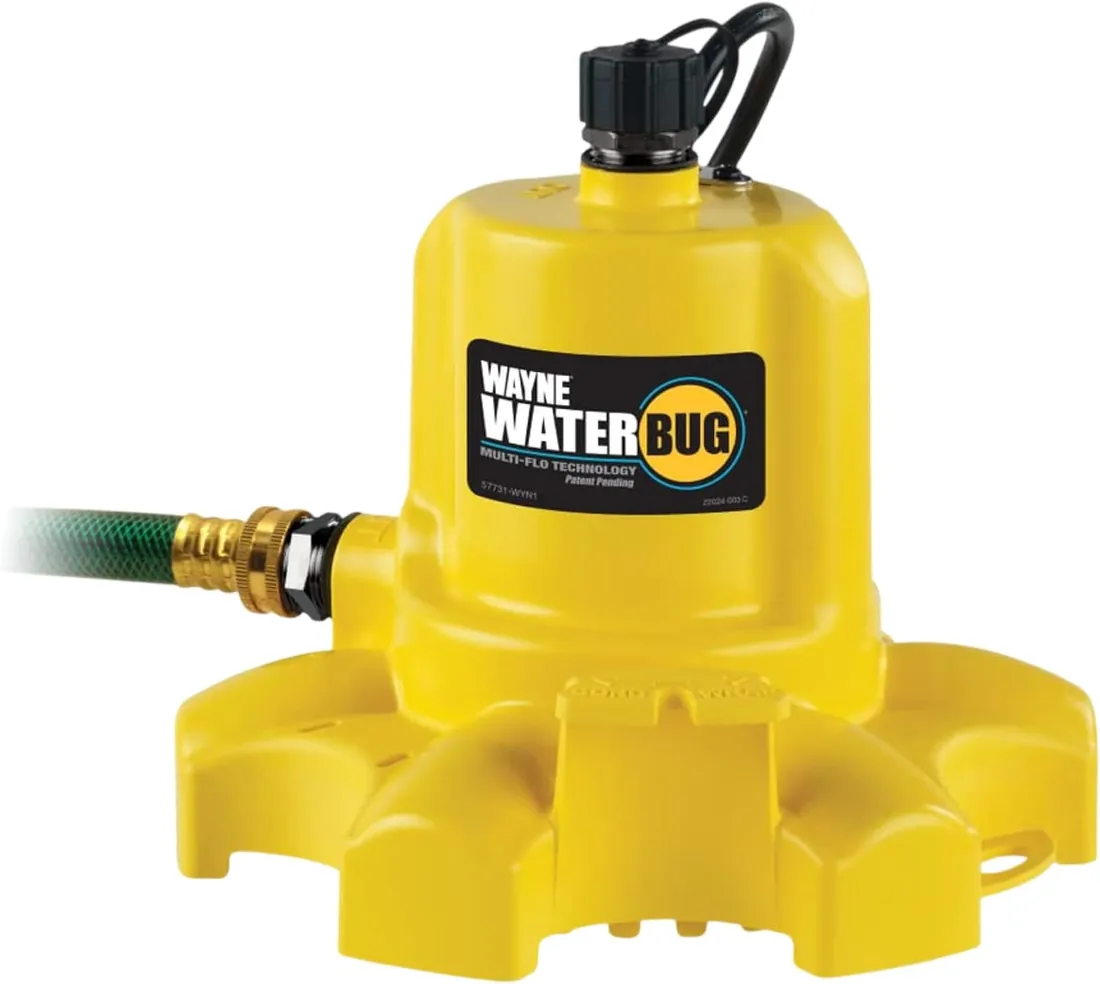
Wayne WaterBUG WWB Multi-Use Pump
Small submersible with two hose outlets that nearly empties a barrel.
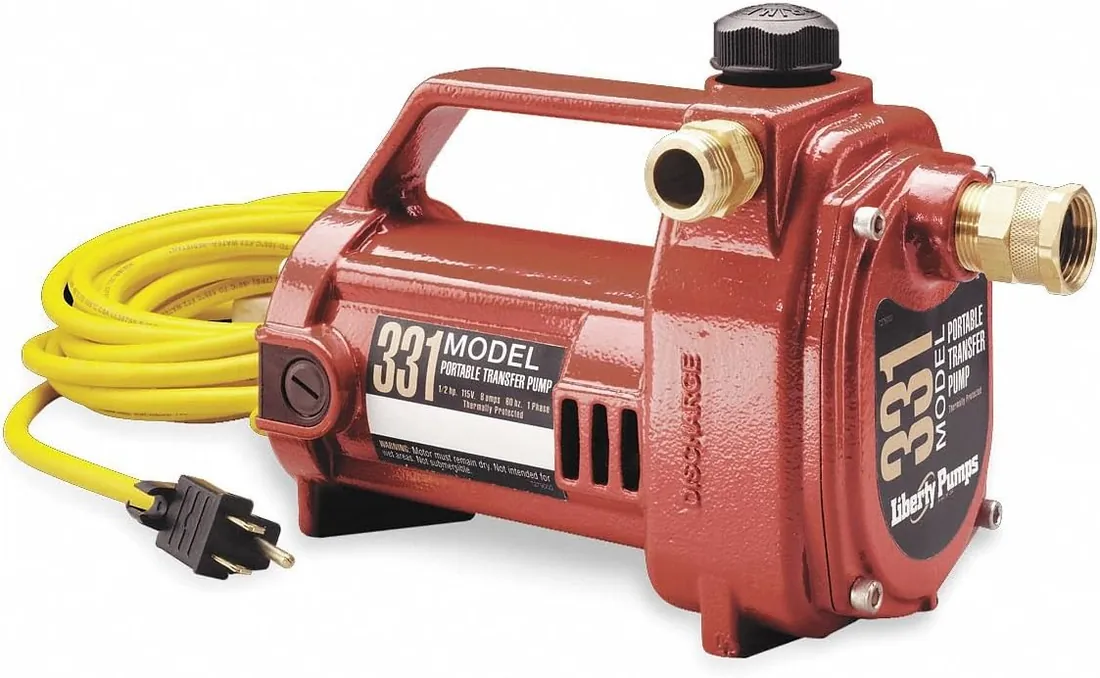
Liberty Pumps 331 Portable Transfer Pump
Bank-side transfer pump with a strainer for pond water and 15 ft lift.
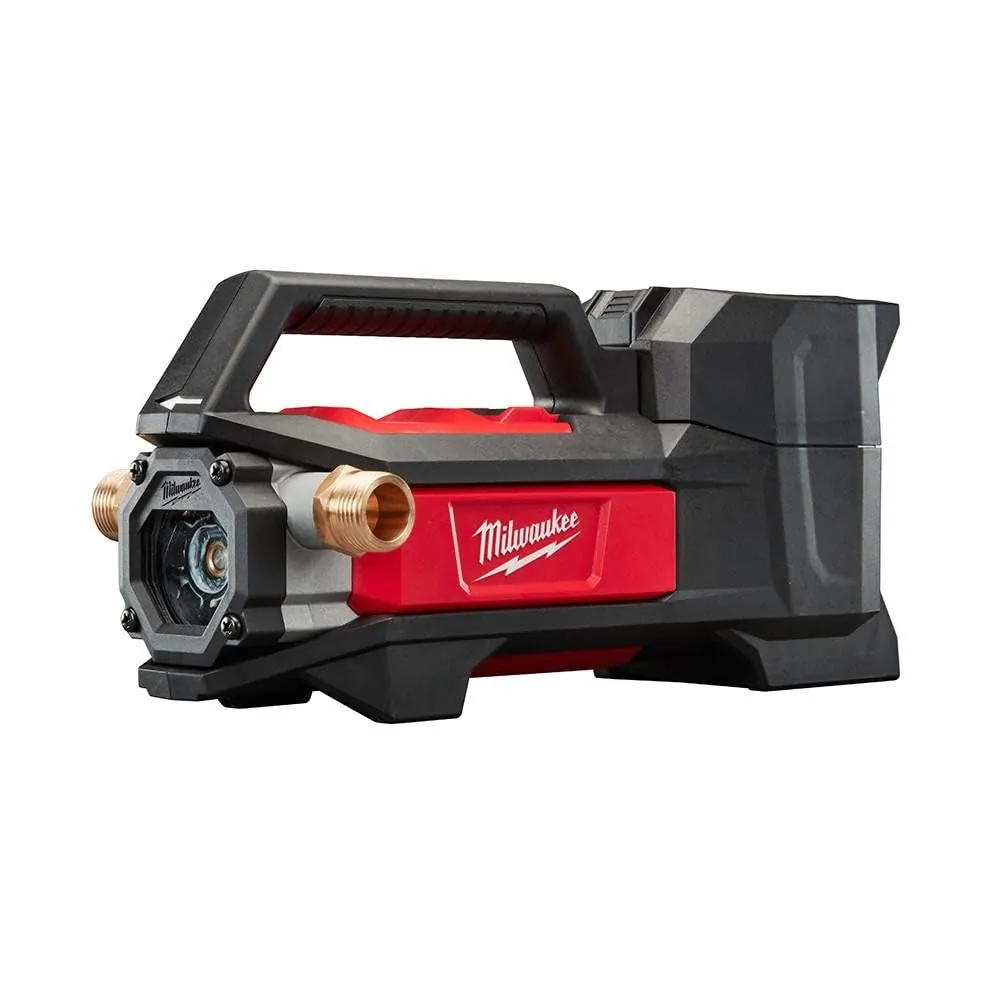
Milwaukee 2771-20 M18 Transfer Pump
Milwaukee cordless transfer pump for spots far from any outlet.
Questions readers ask
Can I use a sump pump to pump water from a pond?
For a short transfer, yes, but not for continuous use. Red Lion says its cast iron sump pumps are not suitable for pond use, and sump pumps generally are not rated for the long run times of fountains or circulation.
What pump do I need for a rain barrel?
A small submersible utility pump with a garden hose adapter, such as Liberty's 260 or Wayne's WaterBUG, is the simplest. For pressure to a sprinkler, a transfer or pressure pump does better.
Can a utility pump run a garden sprinkler?
Usually poorly. Utility pumps lose pressure fast with height and hose length; Liberty's 260 reaches zero flow at 25 ft of head. A transfer pump like Liberty's 331, which can deliver up to 40 lbs of pressure, is better suited.
How do I pump water from a pond to a cattle trough?
Use a transfer pump with its strainer on the suction hose, set as close to the water level as practical. Liberty lists filling livestock tanks as a 331 use, with up to 15 ft of suction lift.