If a submersible utility pump runs but moves little water, check the inlet screen, the hose for kinks, and whether the lift is beyond its limit: 20 ft for Wayne's RUP160. A transfer pump that won't pick up water usually has a suction-side air leak, no prime, or too much lift. A pump that keeps shutting off is overheating or protecting itself from running dry.
Utility pumps and transfer pumps fail differently
A submersible utility pump sits in the water it is removing. Water flows into its inlet by gravity, so it never needs priming; its problems are clogs, over-lift and running dry. Wayne's RUP160, the WaterBUG and Liberty's 260 are this type.
A transfer pump sits outside the water and pulls it up a suction hose. It has to be primed, and any air leak on the suction side stops it. Wayne's PC2, Liberty's 331 and Milwaukee's cordless 2771-20 are this type. Their limits are suction lift, how far below the pump the water can be, and discharge head, how far above. Knowing which kind you have halves the list of suspects.
Submersible utility pump runs but won't pump
Wayne's RUP160 manual gives a short, practical sequence. First, unplug the pump, take off the discharge hose, set the pump in a bucket of water and plug it into a grounded GFCI outlet. If it pumps, the pump is fine and the problem is downstream. Second, connect the hose to a faucet to see whether water flows freely through it, and remove kinks and bends. Third, check the height: if the water has to climb more than 20 ft, the RUP160 will not move it at all.
If the pump itself will not pump in the bucket, clean it. On the RUP160, Wayne's procedure is to unplug it, remove four screws in the base, take off the base and inlet plate, clear the debris and make sure the impeller turns freely. Liberty's 260 has a removable bottom screen for the same reason. These pumps are for clear water; leaves, sand and grass clog them quickly.
| Pump | Lift limit | Pumps down to | Cord |
|---|---|---|---|
| Wayne RUP160 | Will not pump above 20 ft | Not stated in the manual | Not stated in the manual |
| Liberty 260 | Flow reaches zero at 25 ft | 1/8 in | 25 ft |
| Wayne WaterBUG | Max head 25 ft | Within 1/16 in of the surface | 10 ft |
Figures: Wayne RUP160 operating instructions 620004-001 E; Liberty Pumps Model 260-2 sales literature LLIT004700; Wayne WaterBUG sell sheet; Wayne WaterBUG operating instructions 620009W-001 E.
Utility pump not turning on
Start with power. Every one of these pumps is meant for a grounded GFCI outlet, and a tripped GFCI is the most common reason a utility pump is silent. Reset it, check the breaker, and avoid long extension cords; Wayne warns against extension cords for permanent use.
Automatic utility pumps add a sensor. Wayne's EEAUP250 uses its iSwitch to start when water is present and stop when it is gone, and the WaterBUG AUTO works the same way. If an automatic pump will not start in standing water, the water may be too shallow to trigger the sensor, or the sensor may be fouled. Manual pumps simply run whenever they are plugged in, so a manual pump that hums but does not spin has a jammed impeller; Red Lion's utility pump chart lists a jammed impeller, a plugged check valve and a partially blocked inlet for exactly that symptom.
Transfer pump not priming or not suctioning
Wayne's PC2 chart lists eight reasons a transfer pump will not prime or hold prime, and most are about the suction hose: an air leak, a kinked or looped hose, loose fittings, the end of the hose out of the water, or a clogged inlet. The others are a blocked impeller, a worn seal and suction lift that is too high. Milwaukee adds detail for its 2771-20: use a short, heavy-duty inlet hose that will not collapse, seal the inlet with thread tape or a gasket, and remember that even a small leak in the inlet hose can stop it priming.
Priming matters on pumps that need it. Liberty's 331 must have its housing filled with about two cups of water before first start, and Liberty says that at its maximum suction lift of 15 ft through a 3/4 in hose, priming can take up to two minutes. A check valve near the bottom of the suction hose helps when the lift is over 10 ft.
- Fill the pump housing with water if the maker requires priming.
- Use a short, stiff suction hose with a fresh gasket.
- Keep the hose end fully submerged and free of mud.
- Lower the pump closer to the water level.
- Tighten every fitting on the suction side.
Pump keeps shutting off
Most transfer pumps protect themselves. Milwaukee's 2771-20 can shut off within 60 seconds if it runs dry, and shuts off on over-temperature if the outlet line is blocked, too high or too long, or if it has run too long; Milwaukee says not to run it for more than an hour continuously. In both cases you correct the cause, then turn it off and on to reset. Liberty's 331 has a thermal protector that turns the motor off when it overheats; reset by switching off or unplugging, and the switch must be off for it to cool.
Wayne's PC2 lists an overheated motor among the reasons it will not run, with a minimum ten-minute cool-down, and also worn brushes, since it uses a brush-type motor. For submersibles, Superior's and Red Lion's utility manuals both describe automatic resetting thermal protectors, most often tripped by running dry or a jam. Compare your pump's limits with the job in the transfer pump list.
Low flow and leaking seals
When a pump runs and moves some water but far less than expected, the culprit is usually the hose: too long, too thin, kinked or partly clogged. Milwaukee notes that longer or thinner hoses reduce flow, and lists a worn impeller and a loose impeller cover as other causes. Low supply voltage appears on the PC2 chart too.
Water dripping from a transfer pump body points to the shaft seal. Wayne lists a worn seal, a grooved shaft and a loose pump head. Seals fail fastest when a pump runs dry, which every maker here warns against: Wayne's WaterBUG manual says the shaft seal depends on water for cooling and lubrication. For larger jobs, the submersible utility pump list compares stronger options.
Common mistakes
- Using a long, soft garden hose as a transfer pump's suction line.
- Starting a transfer pump without filling its housing first.
- Running a utility pump on an extension cord through standing water.
- Letting a pump run dry after the water is gone.
- Pumping muddy water through a clear-water utility pump.
Products that fit
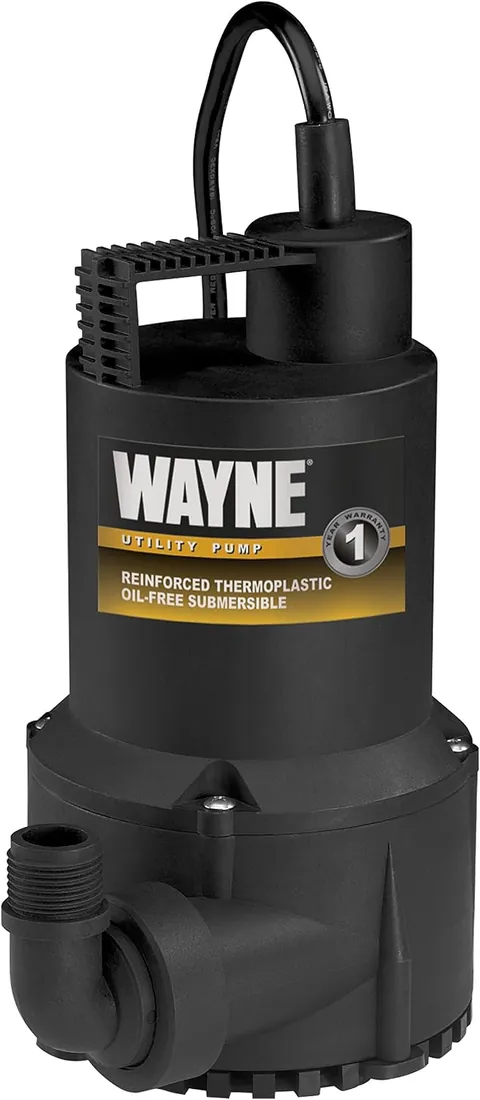
Wayne RUP160 Submersible Multi-Use Pump
Submersible utility pump whose manual gives a bucket check and a 20 ft lift limit.
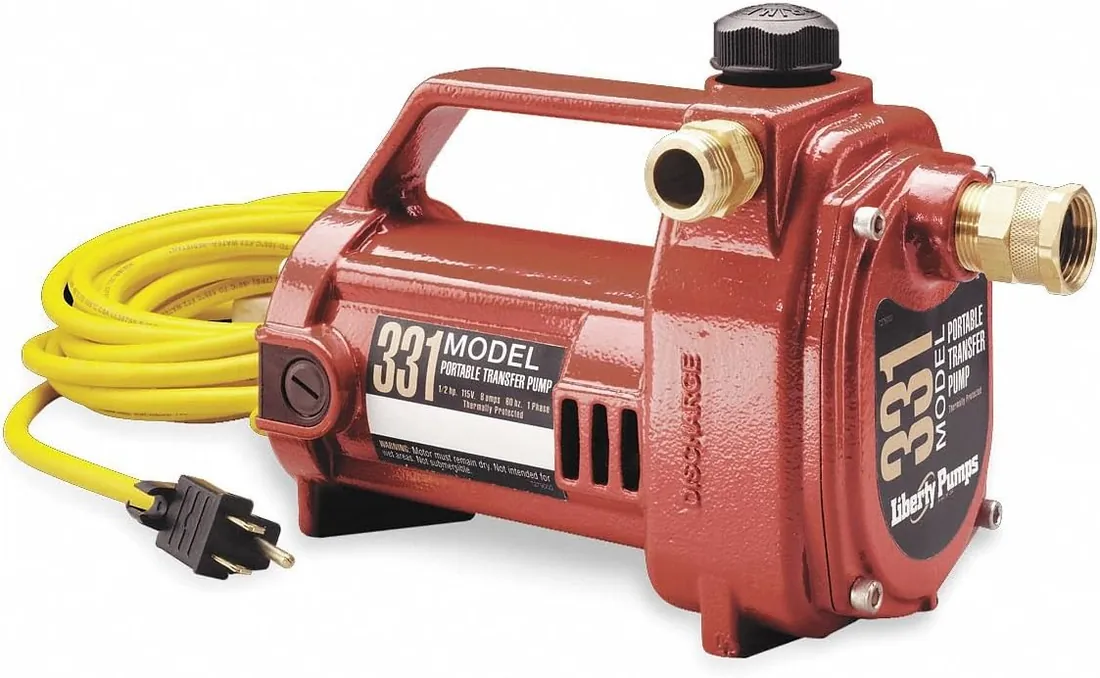
Liberty Pumps 331 Portable Transfer Pump
1/2 hp transfer pump with 15 ft suction lift and a thermal reset.
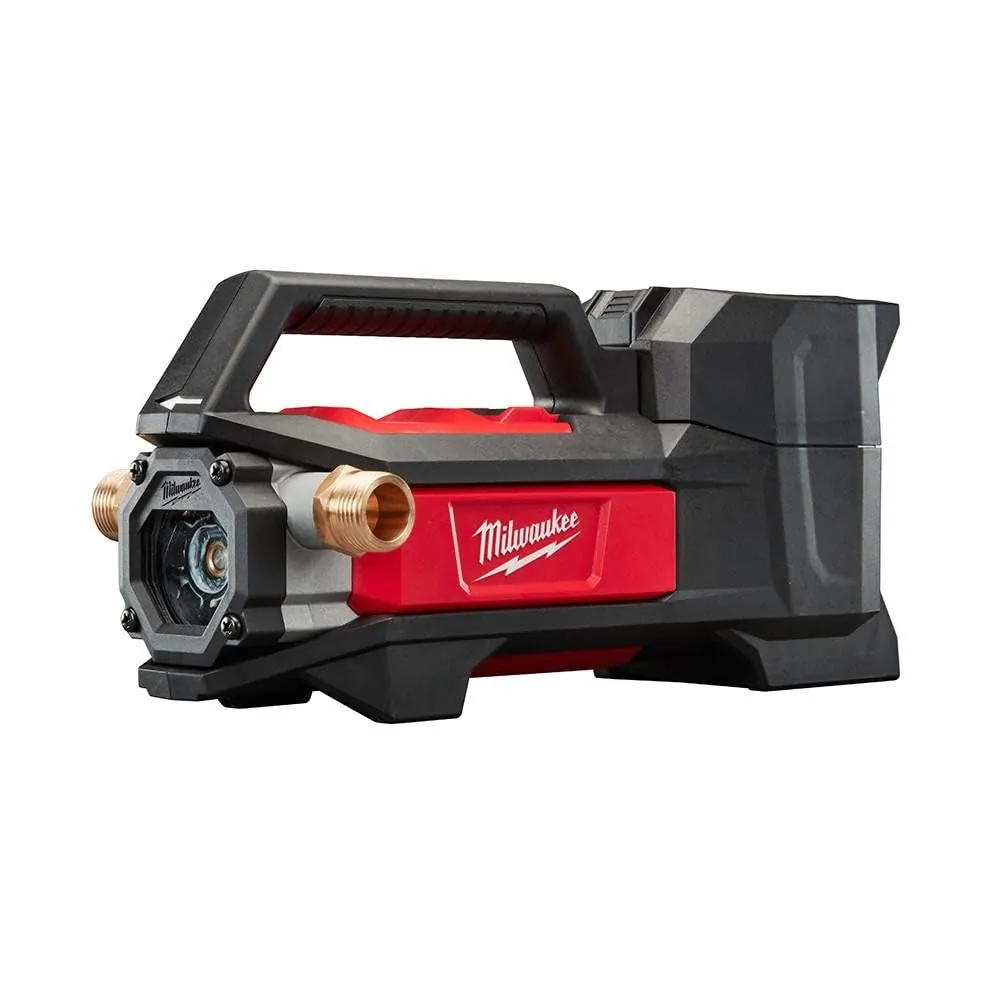
Milwaukee 2771-20 M18 Transfer Pump
Milwaukee cordless transfer pump with dry-run and over-temperature shutdown built in.
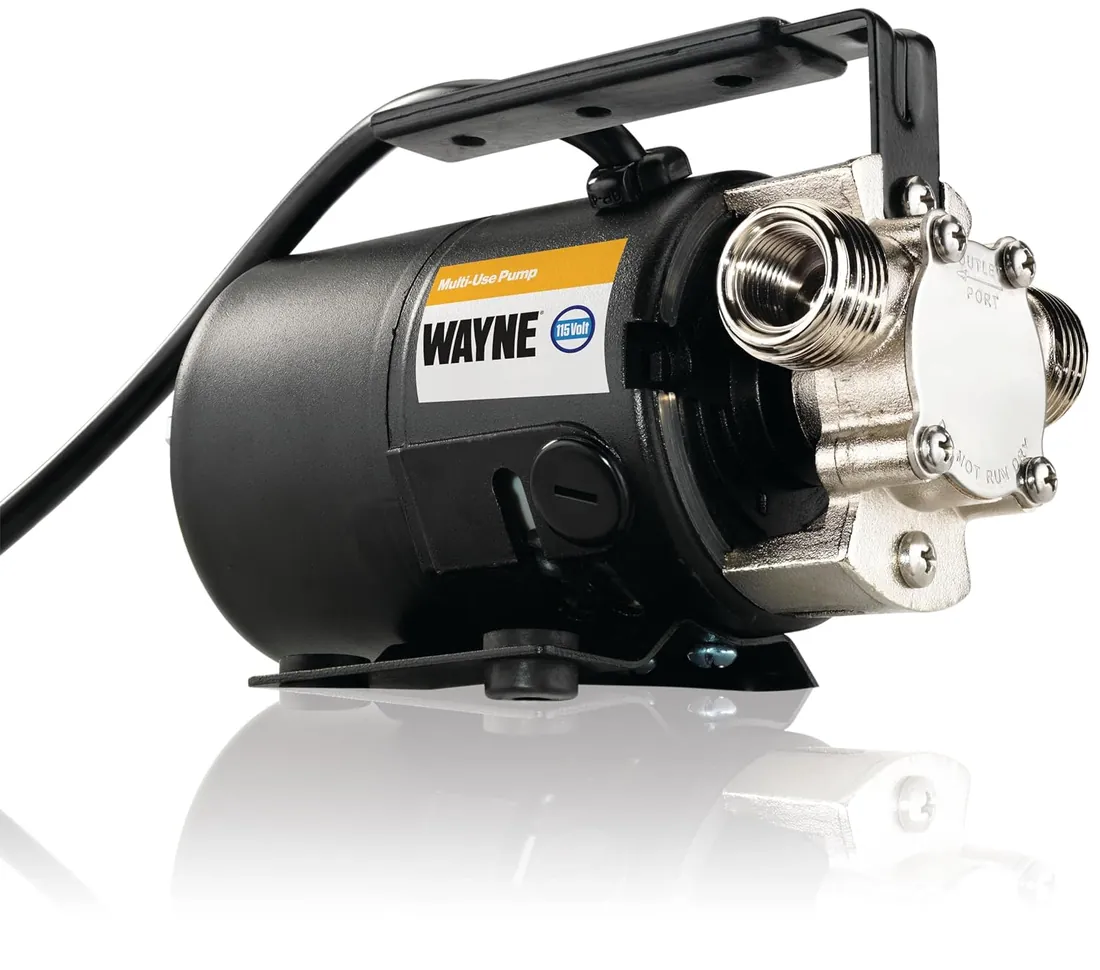
Wayne PC2 Portable Transfer Pump
Wayne brush-motor transfer pump whose manual lists eight causes of lost prime.
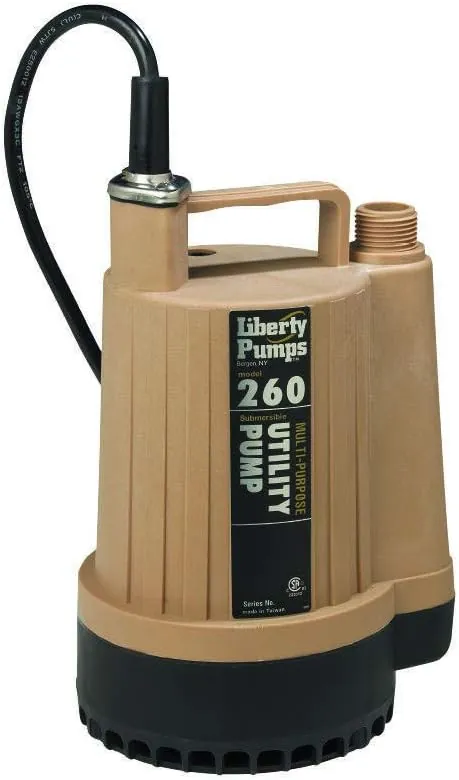
Liberty Pumps 260 Submersible Utility Pump
1/6 hp submersible that pumps down to 1/8 in with a removable screen.
Questions readers ask
Why won't my transfer pump suck water?
Usually air is getting into the suction side through a loose fitting, an old gasket or a pinhole in the hose, or the pump was not primed. Wayne and Milwaukee also list kinked hoses and suction lift beyond the pump's limit.
Why does my transfer pump keep shutting off?
It is protecting itself. Milwaukee's 2771-20 shuts off when running dry or overheating, and Liberty's 331 has a thermal protector. Check for a blocked or very long outlet hose, let the pump cool, and reset as the manual describes.
How high can a utility pump push water?
Less than many expect. Wayne says its RUP160 will not pump above 20 ft, and Liberty's 260 reaches zero flow at 25 ft. Flow drops steadily well before those limits.
Why is my utility pump running but not pumping?
Check the inlet screen and impeller for debris, the hose for kinks, and the lift. Wayne's test is to run the pump in a bucket without the hose: if it pumps there, the problem is the hose or the height.